Young filmmakers gain professional movie-making skills through hands-on projects, learning storytelling, directing, camera work, sound, editing, teamwork, safety, feedback, role rotation, and confidence while completing and premiering their own films.

Young filmmakers learn professional movie-making skills by completing a real production from start to finish. They plan stories, assign crew roles, film scenes, edit footage, and share a finished movie.
The tools matter, but the workflow matters more. A camera alone cannot teach judgment, teamwork, or clear storytelling. Kids learn those skills through guided practice, useful feedback, and shared responsibility.
That answer sounds simple. The learning behind it is rich, active, and sometimes delightfully messy. As filmmakers say, the magic happens behind the scenes.
Professional skill does not mean adult pressure or a miniature Hollywood job. It means learning reliable methods used across real productions.
Kids can learn those methods at an age-appropriate level. They can plan before filming, protect equipment, communicate clearly, and review their work. They can also learn why each choice affects the audience.
The goal is not technical perfection. The goal is thoughtful creative control. A child should understand why a close-up feels different from a wide shot.
Professional habits give imagination a strong frame. Think of them as train tracks for a creative journey. The tracks guide progress without deciding every destination.
For ages 7 to 14, instruction should stay active and visual. Short demonstrations work better than long lectures. Immediate practice helps each lesson stick.
A well-run camp also rotates roles. One child directs, another operates the camera, and another records sound. Later, they switch jobs and see the set differently.
That rotation helps everyone read the room. It also prevents one confident camper from controlling every choice. Each child earns a real place in the production.
Most productions follow three broad stages. These stages are pre-production, production, and post-production. The full filmmaking process may include many specialized departments.
Kids do not need every department. They need a clear version of the same workflow. That structure turns random filming into intentional movie-making.
Pre-production happens before the camera records anything. Campers develop an idea, write scenes, assign roles, and plan shots.
They may also choose props, costumes, locations, and simple effects. These choices help the crew understand what must happen during filming.
Planning protects creative time. Without it, kids can spend an hour debating one scene. With it, the team can hit the ground running.
Production is the filming stage. Campers perform scenes, operate cameras, monitor sound, manage props, and follow the shot list.
Plans often change during this stage. A prop breaks, a line feels awkward, or a shot looks flat. Kids learn to adjust without losing the story.
This is where teamwork becomes visible. The director cannot film, act, record sound, and track continuity alone. Everyone must stay on the same page.
Post-production begins after filming. Editors organize clips, choose strong takes, trim scenes, and build the movie's pace.
Sound, music, titles, and basic color fixes come next. Small changes can completely alter a scene's feeling.
Editing lets kids see cause and effect. A longer pause can add suspense. A quick cut can create energy. The proof is in the final playback.
A filmable story is clear, focused, and possible within the available time. Young writers learn to shrink big ideas into workable scenes.
A child may imagine ten locations, flying robots, and a crowded city chase. The crew may have one room, four actors, and an afternoon.
That limit is not a creative failure. It is a helpful frame. As Austin creators might say, keep it weird, but keep it shootable.
Campers start with a character, a goal, and an obstacle. They decide what changes before the story ends. Then they test the idea aloud.
A short pitch reveals weak spots quickly. If teammates cannot follow the idea, the story needs more work. Clear pitches also help quieter voices enter the discussion.
Instructors can guide without taking ownership. They ask practical questions about time, locations, roles, and audience understanding.
Campers then revise their ideas. They learn that the first idea is a starting point. Rewriting is part of professional work, not a punishment.
This lesson creates a major shift. Kids stop asking whether an idea sounds cool. They start asking whether a crew can film it clearly.
A screenplay gives the whole crew one shared plan. It shows action, dialogue, locations, and scene order.
Young writers learn to write what viewers can see or hear. A camera cannot directly film hidden thoughts. Those thoughts need actions, expressions, or spoken words.
Dialogue also needs room to breathe. Children often write long speeches at first. Reading scenes aloud helps them hear stiff wording.
A table read brings the script off the page. Actors test lines while the writer listens. The crew notices confusing actions and missing details.
The script then changes. Maybe one joke lands flat. Perhaps one character needs a clearer goal. The team fixes those issues before filming.
This process can feel like fitting puzzle pieces. Each scene must support the full picture. One missing piece can confuse the audience later.
Campers also learn basic scene headings and action lines. They do not need complicated formatting rules. They need a readable production document.
A strong film camp curriculum connects writing directly to shooting. That link keeps screenwriting practical, active, and memorable.
Storyboards translate written scenes into planned images. Campers sketch key shots before anyone touches the record button.
Art skill is not required. Stick figures work. The important choices involve framing, movement, character position, and shot order.
A storyboard answers useful questions. Where will the camera sit? Which person appears closest? What must viewers notice first?
Campers may combine storyboards with shot lists. The list records each planned angle, subject, action, and special need.
These tools reduce confusion on set. They also help teams notice repeated or missing coverage before filming begins.
Visual planning is like building a map. The crew may still take a detour. However, everyone knows the intended destination.
Young filmmakers also learn coverage. A scene may need a wide shot, close-ups, and reaction shots. Those options protect the editor later.
In San Francisco, people know fog can change a view quickly. A good plan offers the same protection. It keeps the story visible when conditions shift.
Directing means turning a shared plan into clear choices. Young directors learn to explain what the scene needs.
They practice giving actors playable direction. “Be better” offers no help. “Hide your surprise until the door opens” gives a clear action.
Directors also work with camera and sound teams. They confirm framing, timing, volume, and movement before each take.
A good director listens. Another camper may notice a stronger angle or clearer line. Leadership includes making decisions without shutting down useful ideas.
Kids soon learn that yelling “action” is the easy part. Holding the team together requires patience, focus, and respect.
They also learn set language. “Quiet on set” protects the recording. “Rolling” confirms equipment is ready. “Cut” ends the take safely.
These routines may feel theatrical, but they prevent chaos. Hollywood loves showtime, yet good sets depend on calm preparation.
Role rotation makes the lesson deeper. After recording sound, a director understands why background chatter matters. Experience builds empathy quickly.
Camera operation starts with safe handling, stable support, and basic controls. Cinematography adds visual meaning to those skills.
Campers learn common shot sizes. Wide shots show space and relationships. Medium shots balance action and expression. Close-ups reveal small emotional changes.
They also explore angles. A low angle can suggest power. A high angle may suggest vulnerability. Eye-level framing often feels neutral.
Composition guides attention inside the frame. Campers consider headroom, background clutter, balance, and the direction a person faces.
Focus must support the story. A sharp background with a blurry actor may distract viewers. A planned focus change can reveal new information.
Camera movement needs a reason. A slow push can increase tension. A shaky move may create energy, but it can also confuse.
Young filmmakers review footage immediately. They ask whether the shot communicates the planned feeling. Then they try another version.
That quick feedback loop is gold. It replaces guessing with evidence. Kids learn that better work often begins with “take two.”
Lighting helps viewers see faces, spaces, and emotional tone. Campers first learn to notice existing light.
They check windows, overhead lights, shadows, and reflective surfaces. Then they adjust the scene with simple, supervised tools.
A basic three-light idea can teach many principles. One light shapes the subject. Another softens shadows. A back light separates the subject.
Young campers do not need complex electrical setups. They need safe equipment, clear rules, and visible comparisons.
Instructors can show one scene under different lighting choices. Bright, even light may feel cheerful. Side light may feel mysterious.
The camera then reveals details our eyes missed. Campers compare the image and adjust position, brightness, or distance.
Lighting is often compared to painting. Instead of colored paint, filmmakers shape the frame with light and shadow.
Los Angeles has no shortage of sunshine. Smart filmmakers still control that sunshine. They watch direction, intensity, and changing conditions.
Sound tells viewers where they are and how a moment feels. Clear dialogue is only the first layer.
Campers learn microphone placement, headphone monitoring, and quiet-set behavior. They listen for fans, traffic, footsteps, and clothing noise.
A microphone should stay close enough for strong dialogue. It must also remain outside the camera frame.
Headphones reveal problems before the crew leaves. Without monitoring, a perfect-looking take may contain unusable audio.
Kids also record room tone. This short background recording helps editors smooth gaps between dialogue clips.
They may collect simple sound effects too. A door, footsteps, paper, or keys can add texture during editing.
The lesson changes how children listen. They notice that silence has shape. They also hear how music changes audience expectations.
When sound matters, “loud and clear” becomes more than an idiom. It becomes a technical goal with an emotional purpose.
Screen acting often uses smaller choices than stage acting. The camera can capture a glance, breath, or tiny pause.
Campers learn to hit marks, remember continuity, and repeat useful actions. Repetition helps editors connect different angles.
Actors also learn to respond, not only recite. Listening makes a scene feel alive. It also gives partners something real to play against.
Young performers may test different intentions. One line can sound nervous, proud, suspicious, or playful. Each choice changes the scene.
Not every camper wants center stage. That is okay. Short roles, voice work, or background action can offer gentle entry points.
A supportive crew lowers pressure. Instructors can rehearse privately, simplify lines, or let partners practice together.
The goal is believable communication, not a perfect performance. Some children surprise themselves and steal the scene.
Others discover they prefer directing, camera, sound, or editing. Both results count. Professional crews need many kinds of talent.
Production design creates the story's visible world. It includes spaces, objects, colors, clothing, and practical details.
Campers ask what each character would use or wear. They also consider what belongs in the background.
A simple prop can explain a character quickly. A trophy suggests pride. A packed bag suggests departure. A broken watch may suggest history.
Costumes help viewers separate characters and understand mood. They must also allow safe movement during active scenes.
Makeup can support age-appropriate characters or effects. It should remain supervised, hygienic, and suitable for each child.
Green screen and practical effects add playful options. Campers learn that effects still require planning, lighting, and matching movement.
This department teaches resourcefulness. A cardboard panel may become a spaceship console. A classroom can become a detective office.
As the saying goes, set the stage before the performance. Thoughtful details make a small production feel intentional.
Continuity keeps details consistent between shots. A cup should not jump hands without explanation.
Actors need similar positions, movements, and line timing across takes. Props, costumes, and background items also need attention.
Campers can use simple continuity photos. They may also keep notes about the best take and any changes.
Organization supports every department. File labels, scene numbers, and take records save time during editing.
A small crew may combine jobs. One camper can track continuity while helping the director. Clear responsibility still matters.
This work suits children who notice details. A quiet observer may become the person who saves the scene.
Professional habits often look ordinary. They involve charging batteries, checking memory, labeling clips, and returning gear.
Keeping tabs may sound boring. During post-production, it feels brilliant. Organized footage lets creativity move faster.
Editing turns separate clips into one clear experience. Campers first organize footage by scene and take.
They watch every usable clip. Then they choose performances, camera angles, and reactions that best support the story.
The first assembly may feel slow. Editors remove repeated actions, weak pauses, and confusing moments.
A cut can hide time or reveal information. It can also create a joke through timing. Every edit makes a claim about importance.
Campers learn continuity editing. Movement should connect smoothly across angles. Eye lines should help viewers understand screen space.
They also test pacing. Fast cuts may add excitement. Longer shots may create calm, tension, or emotional weight.
Editing is where kids learn to let go. A favorite shot may not help the movie. Keeping it could weaken the full scene.
That decision hurts a little. Still, professionals cut to the chase. They protect the audience's experience over personal attachment.
The student short film production process offers a deeper roadmap for each production stage. It helps families understand how editing fits the whole project.
Finishing work gives a movie its final shape. Campers balance dialogue, music, effects, titles, and credits.
Music should support the scene without covering speech. Sound effects should feel connected, not added only for noise.
Titles need readable fonts, clear timing, and accurate names. Credits also teach respect for every crew member's contribution.
Basic color correction can improve consistency. One shot should not look strangely brighter than its matching angle.
Campers then export the final movie. They learn that resolution, frame shape, file name, and playback checks matter.
A finished file must open correctly. The team watches it from beginning to end before the premiere.
This final review catches missing audio, spelling errors, black frames, or awkward cuts. Small fixes can save the screening.
The finishing touches are not decoration. They prove the crew can complete what it started.
Professional behavior begins with safety, respect, and clear responsibility. Expensive equipment is never the first priority.
Campers learn where gear may travel and where it must stay. They carry equipment with guidance and keep walkways clear.
Cables, stands, props, and moving actors need supervised spacing. Instructors decide which tasks fit each age group.
Consent matters during any youth production. Children should understand filming boundaries, performance choices, and respectful sharing.
Clear callouts reduce surprises. Actors know when recording starts. Crew members know when equipment moves.
Set etiquette also includes listening during instructions. It includes using kind feedback and respecting another person's role.
A real film crew contains many specialized departments. Youth teams use fewer roles, but the cooperation principle stays.
When everyone knows the rules, creativity can breathe. Safety is the guardrail, not the roadblock.
Role rotation lets campers experience filmmaking from several viewpoints. It also creates fair access to equipment and leadership.
A child who only directs may miss production realities. A child who only acts may never discover a love for editing.
Rotation changes that. Each camper can write, perform, operate equipment, record sound, and support the edit.
They also learn how one role affects another. Poor framing limits the editor. Weak sound limits every later choice.
After switching roles, feedback becomes more respectful. Campers understand the effort behind each contribution.
Rotation can reveal unexpected strengths. A shy child may become a careful camera operator. An energetic child may thrive as director.
Film Camp describes this hands-on model across its summer filmmaking camps. Kids do more than watch demonstrations. They carry real production responsibility.
The result feels fair and active. Everyone gets skin in the game, while instructors keep the work age-appropriate.
A five-day camp moves quickly, but a clear workflow protects learning. Each day adds one production layer.
Campers usually begin with team building and story development. They then move through planning, filming, editing, and screening.
The exact schedule may change. Story complexity, group pace, and location needs can shift the plan.
A strong instructor keeps the final goal visible. Every exercise should help the movie, the crew, or both.
The week works like a relay race. Each day passes useful work to the next day.
Day
Main focus
What campers practice
Day 1
Story and team setup
Pitch ideas, choose roles, draft scenes
Day 2
Pre-production
Rehearse, storyboard, plan shots, learn gear
Day 3
Production
Film scenes, rotate roles, monitor sound
Day 4
Production and editing
Finish shots, organize clips, build scenes
Day 5
Post-production and premiere
Polish, export, present the finished movie
This pace creates healthy urgency. Kids make decisions, test them, and move forward. They cannot polish one line forever.
That pressure should stay playful. The point is progress, not stress. In a nutshell, the schedule teaches completion.
Beginners need early wins and clear demonstrations. They should touch equipment soon after learning each basic rule.
An instructor may show three shot sizes. Campers then film those shots with a partner. Immediate practice turns names into usable knowledge.
Short instructions reduce overload. Kids can master one task before adding another. More experienced campers can try harder variations.
Pairing also helps. A confident child may operate the camera while a beginner checks framing. They can switch after one take.
Questions should feel welcome. No child should pretend to understand a control or instruction. Confusion grows when it stays hidden.
A good camp treats mistakes as information. A blurry shot becomes a focus lesson. Noisy audio becomes a monitoring lesson.
Film Camp welcomes young creators without prior experience. Families can also review the film equipment and gear guide before camp.
The aim is simple. Beginners find their footing quickly, then contribute to something real.
Returning campers need deeper choices, not repeated basics. They can take more responsibility inside the same production structure.
An experienced writer may shape stronger character goals. A returning camera operator may test movement or more complex coverage.
Advanced campers can also mentor without becoming substitute instructors. Teaching one simple skill often strengthens their own understanding.
The production remains collaborative. No child should dominate because of experience. Instructors balance leadership with shared access.
Returning campers may focus on precision. They can improve sound placement, continuity notes, acting direction, or editing rhythm.
They may also evaluate their earlier work. Comparing projects reveals growth better than praise alone.
This level of reflection builds creative identity. Campers begin noticing which roles feel natural and which skills need practice.
There is always another rung on the ladder. Professional craft grows through repeated projects, useful notes, and fresh challenges.
Filmmaking offers visible and less visible ways to contribute. That range can suit shy or introverted children.
A child may begin with storyboards, props, continuity, camera, or sound. These roles offer purpose without immediate performance pressure.
Small teams make participation easier. Clear jobs also remove the social guesswork found in unstructured group activities.
As trust grows, some campers try acting or directing. Others remain happiest behind the camera. Both paths matter.
Instructors should never force a child into a large performance. They can offer smaller roles, partnered tasks, or voice work.
The crew's shared goal also helps. Conversation can focus on the movie instead of personal attention.
A completed task creates confidence. One steady shot or useful sound recording earns real appreciation from teammates.
Some kids come out of their shell slowly. Film production gives them a reason, a role, and time.
Activity alone does not guarantee learning. Feedback helps campers connect choices with results.
Useful feedback stays specific. “Try more light on the face” helps more than “make it better.”
Campers should also review their own footage. They can compare two takes and explain which one communicates clearly.
Instructors may ask questions before giving answers. What does the audience notice first? Can viewers hear every line?
Peer feedback can work too. It needs structure and kindness. Campers can name one strength and one helpful next step.
Repetition completes the loop. A child applies the note, films again, and sees the difference.
This cycle builds independent judgment. Kids stop waiting for approval and start testing their own ideas.
Practice makes progress, not instant perfection. That phrase fits filmmaking better than any promise of flawless work.
Parents should look for specific processes, not broad promises. A real program explains what children make and how.
Ask whether campers write, direct, film, act, and edit. Also ask how often each child handles equipment.
Learn how crews are sized and organized. Small production teams usually create more participation and clearer responsibility.
Ask who guides the camp. Instructors should understand both filmmaking and child learning. Technical skill alone is not enough.
Safety details should be clear. Look for vetted staff, supervised equipment use, defined pickup procedures, and age-appropriate tasks.
A finished project also matters. Exercises teach parts, but a complete movie teaches planning, adjustment, and follow-through.
Parents can review past work through a student film showcase. Finished films reveal more than polished marketing language.
When comparing options, separate the wheat from the chaff. Clear answers usually signal a clear program.
A hands-on camp should look busy, structured, and collaborative. Kids should make decisions instead of only following demonstrations.
Parents may hear about changed scenes, missed takes, funny mistakes, and sudden solutions. That mess can reflect real production work.
The important question is whether instructors guide the process. Productive struggle teaches. Unmanaged confusion does not.
Campers should know their current task. They should also understand how it connects to the finished movie.
Expect different children to love different stages. One may talk about acting. Another may only discuss editing or props.
The final film will not look like a studio feature. It should show clear choices, teamwork, and completed learning.
Parents can ask children specific questions. Which shot changed the scene? What sound problem did the crew solve?
Those questions invite reflection without turning dinner into an exam. Let the good times roll, then let kids explain.
Each Film Camp city brings a different creative atmosphere. The core learning process remains consistent across locations.
Austin families often value creative independence and hands-on learning. The city's “keep it weird” spirit fits original storytelling.
Los Angeles brings visible production energy. A studio setting can make camera, lighting, and set routines feel immediate.
San Francisco blends performance, technology, art, and bold ideas. The City by the Bay rewards curious makers.
Local routines matter for parents too. Day-camp schedules, drop-off, pickup, meals, parking, and travel shape the week.
The camp day runs from 9:00 AM through 4:00 PM during scheduled sessions. Families should confirm current dates before enrolling.
Ages 7 to 14 can participate, with groups organized for suitable challenge. No previous filmmaking experience is required.
Families seeking a studio-centered option can explore the Los Angeles summer film camp. Other location pages provide city-specific dates and details.
A premiere gives the project an audience and a deadline. Both elements strengthen the learning experience.
Campers see how their separate jobs became one finished story. Writers hear dialogue performed. Editors watch the audience react.
Presenting work can feel scary. The group has already shared the production journey, which lowers that pressure.
Children may introduce the film, discuss a role, or simply watch with their crew. Participation can match each camper's comfort.
Families see more than the finished movie. They witness persistence, cooperation, and pride attached to real work.
The premiere also teaches completion. Many creative projects remain unfinished. A public screening creates a reason to finish carefully.
Applause feels good, of course. The deeper win is earned confidence. Kids know what happened before opening night.
They planned, adjusted, helped teammates, and completed a demanding project. That memory can last longer than any certificate.
Movie-making skills support school, friendships, and future creative work. Writing improves when ideas need a clear audience.
Directing develops communication and decision-making. Acting strengthens listening, expression, and comfort with feedback.
Camera and editing work build visual literacy. Kids begin noticing how images shape meaning and attention.
Production challenges also develop practical problem-solving. A scene rarely works perfectly on the first attempt.
Team roles build accountability. Others depend on each camper's preparation, timing, and respectful communication.
Finishing a movie teaches persistence. Children experience the full distance between an idea and a completed result.
These lessons do not require a future film career. They help any child who creates, presents, collaborates, or solves problems.
The final movie is the souvenir. The stronger habits are what kids take home.
Children can learn screenwriting, storyboarding, directing, camera operation, sound, lighting, acting, and editing.
They can also learn continuity, set communication, feedback, and safe equipment habits. The depth should match their age and experience.
In short, they learn both craft and collaboration. Those two sides keep every production moving.
No previous experience is required for Film Camp. Beginners can start with simple demonstrations and guided practice.
Clear role rotation gives each child a useful entry point. Returning campers can take deeper creative or technical responsibility.
Everyone starts somewhere. A first clean shot can open the door to a full movie.
A hands-on program should give every child meaningful equipment time. Role rotation helps protect that access.
Parents should ask how crews share camera, sound, directing, acting, and editing responsibilities.
Fair rotation keeps everyone in the frame. It also helps children discover unexpected interests.
No. Film camp also supports writing, communication, teamwork, confidence, problem-solving, and visual literacy.
Some campers may dream about directing. Others simply enjoy building stories with friends.
There is more than one road to Rome. Useful creative skills can travel anywhere.
Yes. Film crews include many behind-camera roles. Camera, sound, props, storyboards, continuity, and editing all matter.
Instructors can offer gradual performance choices without forcing a child into the spotlight.
A quiet child can become the crew's secret weapon. Careful observation is a powerful production skill.
Professional equipment usually means real cameras, microphones, lights, supports, and editing tools used with supervision.
The exact brand matters less than guided access and safe habits. Children should understand what each tool contributes.
All the gear, no idea, is not the goal. Purpose should lead every equipment choice.
Kids begin by organizing clips and choosing strong takes. They then build scenes, trim pauses, and add sound.
Instructors can simplify the interface while teaching genuine editing decisions. The focus stays on story, pace, and clarity.
A little goes a long way. One strong cut can teach more than twenty flashy effects.
Look for filmmaking knowledge, teaching ability, patience, clear communication, and completed safety screening.
Good instructors demonstrate briefly, observe closely, and give specific feedback. They guide without taking the project away.
The best teachers know when to step in. They also know when to let kids solve problems.
Film Camp sessions are built around creating and premiering finished short films. Campers contribute across major production stages.
The project size must fit the available time. Clear planning makes completion possible.
The proof is in the pudding. A finished screening shows whether the workflow held together.
Ask children to explain one creative choice. Help them plan a tiny movie with available spaces and props.
Keep the project short. A one-minute scene can practice writing, framing, sound, acting, and editing.
Start small and keep the camera rolling. Repeated projects turn camp lessons into lasting skill.
Young filmmakers learn professional movie-making skills by making choices inside a complete production. They write, plan, direct, record, perform, edit, and finish.
The professional part comes from the habits. Campers prepare before filming, communicate across roles, review results, and improve their work.
A good film camp keeps those habits age-appropriate. It also protects fun, safety, belonging, and each child's creative voice.
The finished short film matters. It gives every lesson a purpose and every camper a shared destination.
Parents also get a clear result. They can watch the story, celebrate the crew, and see growth on screen.
Film Camp serves young creators ages 7 to 14 in Austin, Los Angeles, and San Francisco. Background-checked instructors guide the work, and beginners are welcome.
See current summer dates and enroll when your family is ready. Your child may arrive with an idea and leave with a premiere.
That is the whole nine yards. A real project, real teamwork, and a proud young filmmaker.
.jpg)
Discover how kids ages 7–14 learn screenwriting, acting, directing, camera work, editing, teamwork, and confidence at Los Angeles Film Camp in Glendale while creating and premiering their own short film.
Read >Young filmmakers gain professional movie-making skills through hands-on projects, learning storytelling, directing, camera work, sound, editing, teamwork, safety, feedback, role rotation, and confidence while completing and premiering their own films.
Read >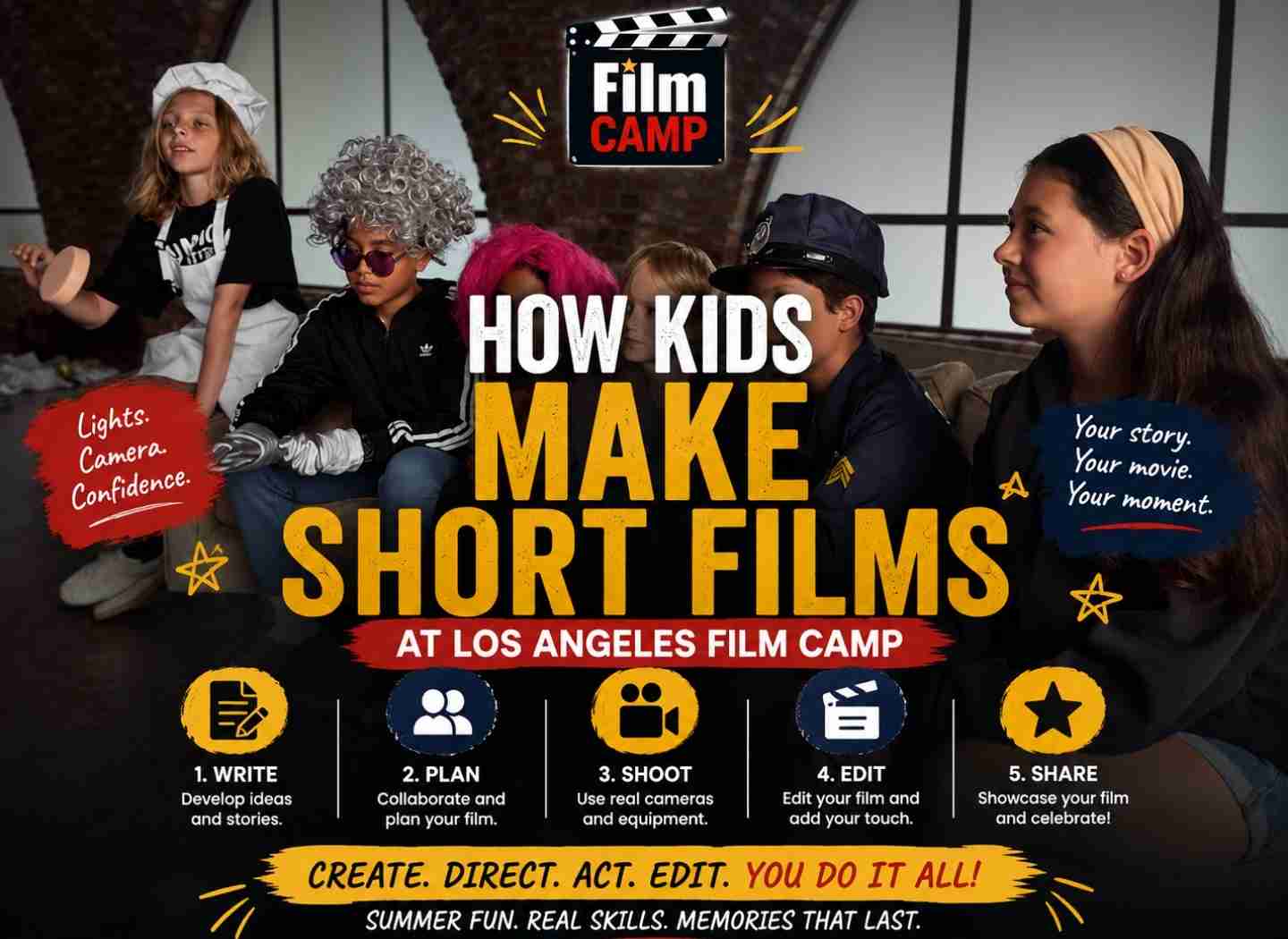
Kids write, shoot, and edit their own short films in one week at Los Angeles Film Camp. Hands-on, safe, and no experience needed. See how it works, from first idea to premiere.
Read >
Kids ages 7 to 14 spend five days in Glendale writing, acting, filming, and editing a real short film, then premiere it for families Friday. No experience needed. Gear included.
Read >.png)