Kids write, shoot, and edit their own short films in one week at Los Angeles Film Camp. Hands-on, safe, and no experience needed. See how it works, from first idea to premiere.
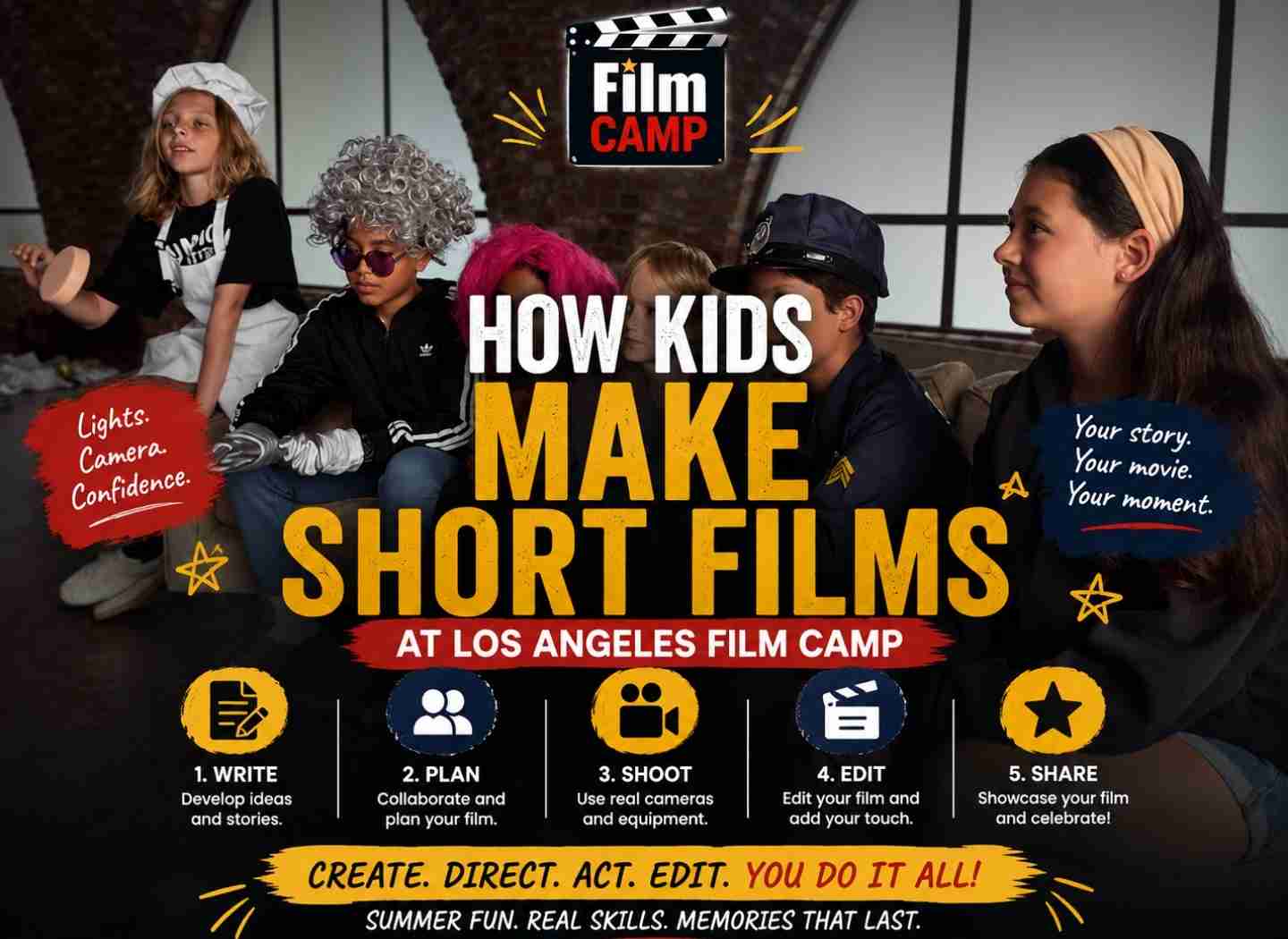
Your kid loves movies. Maybe they quote whole scenes at dinner. Maybe they film goofy videos on your phone all weekend long.
So here is the honest question. Can a child really make a short film in one week? The short answer is yes.
At a good film camp, kids write it. They shoot it. They edit it. Then the whole family watches it on a screen.
This guide walks you through exactly how that happens. You will see the whole trip, from blank page to bright premiere. Film Camp built this process for kids ages 7 to 14, and no prior experience is needed.
In Los Angeles, movies are the family business for the whole city. Your kid gets to join it for a summer. Ready?
"Making your own short film" means your kid owns the story from start to finish. It is not screen time. It is real work.
Real filmmaking has clear stages. Kids move through each one like a crew on a real set. Every stage builds on the last one.
Think of it like building a house. First the plan. Then the frame. Then the paint. A movie grows the same steady way.
So what does a kid actually control here? Almost all of it. They pitch the idea. They pick the shots. They cut the footage.
Want the full nuts and bolts? Our breakdown of how a short film comes together shows each step in plain language. In LA, folks say the reel does not lie, and kids feel that pride fast.
Their name lands in the credits. That small line hits like a home run. It is proof they made something real and whole.
This is a far cry from passive screen time. Kids here are the boss of the story. They call the shots from the very first idea.
And the skills stack up quietly along the way. Writing. Teamwork. Patience. Each one hides inside the fun like a prize in a cereal box.
Every film starts with one idea. Day one is all about finding that spark. Kids brainstorm out loud, and no idea is too wild.
A dog who runs for mayor? Sure. A lost robot in Griffith Park? Perfect. The room fills up with laughs and big dreams.
Instructors help kids shape a rough idea into a clear one. What does the hero want? What stands in the way? Simple questions guide them.
This is where shy kids often surprise their parents. A quiet child with a loud imagination finally gets the mic. The lightbulb clicks on.
Ideas here are like seeds tossed on good soil. Some sprout fast. Some need a day. The camp gives them room to grow.
By lunch, small crews form around the strongest ideas. Kids team up by taste. Friendships spark right next to the story ideas.
Next comes the script. This is the movie on paper. Kids learn how a screenplay looks and why the format matters so much.
Do not picture a hushed classroom with worksheets. Picture kids acting out lines to test them. If a line feels flat, they fix it.
They learn the bones of story. A beginning that hooks you. A middle with a problem. An ending that pays it all off.
Dialogue is where kids really shine. Children write how kids talk, and it sounds true. That honesty is worth its weight in gold.
Ever wonder why some kid videos feel boring? Usually the story is thin. Here, the story comes first, and everything else follows it.
Instructors keep scripts short on purpose. A tight two minute film beats a messy ten minute one. Kids learn that less can say more.
A script tells the story. A plan makes the shoot run smooth. Kids now become planners, and this step saves the whole week.
First they draw storyboards. These are simple sketches of each shot. Stick figures are fine. The point is to see the film early.
Then they build a shot list. It names every angle they need. A shot list is like a grocery list for the camera.
Next, kids pick crew roles. Director. Camera operator. Sound. Actor. Editor. Everyone gets a real job with real weight on it.
Do kids fight over the fun jobs? Sometimes, sure. But crews rotate roles across the week. Every child tries the
Every child tries the camera and the director chair. That way no one sits on the bench all week. Fair is fair.
In LA, they say measure twice and cut once. Good planning means fewer messy reshoots. The crew walks onto set already knowing the plan.
Now the fun part. Shoot day. Kids grab real cameras and head to set. Their storyboard becomes moving pictures right in front of them.
The camera operator learns to frame a shot. Where does the actor stand? What stays in frame? Small choices change the whole mood.
The director calls the shots, plain and simple. "Quiet on set." "Action." "Cut." Those words give a shy kid real command and calm.
Kids learn wide shots and close ups. A close up on a face can say more than a page of talk. Framing is power.
Does it get chaotic? A little, and that is the magic. A film set hums like a beehive, busy but working toward one goal.
Instructors stand close by the whole time. They guide, but they let kids drive. The film belongs to the crew, not the grownups.
Acting for film is different from acting on a stage. Smaller is better. The camera catches every tiny look and quiet feeling.
Kids learn to relax in front of the lens. They run lines with friends first. Comfort grows one take at a time here.
What about a child who hates the spotlight? No problem at all. Camera shy kids often love crew jobs behind the lens instead.
Nobody gets forced onto camera. A kid can direct, film, or edit and never act once. Every role builds the same real pride.
Acting here feels like play with a purpose. Kids pretend, but they also learn focus. Stage fright melts like ice on a hot sidewalk.
By the third take, most kids forget the camera is even on. That ease is the goal. Natural beats perfect every single time.
Shooting gives you clips. Editing turns those clips into a movie. This is where the story finally stands up and walks.
Kids learn video editing on real software. They trim clips, set the order, and match sound to picture. Small cuts make a huge difference.
Editing is like cooking a big meal. You have the raw stuff. Now you mix, trim, and season until it tastes just right.
Kids add music to set the mood. A happy tune or a spooky one changes everything. They learn how sound steers the feeling.
Ever notice how a good cut makes a scene pop? Kids feel that click when a scene finally lands. That moment hooks them for life.
Titles and credits come last. Seeing their own name on screen is the cherry on top. The whole week points to that proud beat.
Kids love movie magic, and camp serves it up. The green screen is always a huge hit. Suddenly a classroom becomes deep space.
They learn how the green screen trick works. Shoot in front of green. Swap the background later. It feels like real wizardry to them.
Sound design gets its moment too. Footsteps. Wind. A door creak. Kids learn that good sound sells a scene as much as picture.
Want to see a kid grin ear to ear? Show them how to add a laser blast. Special effects turn small films into big fun.
Are these tricks hard for young kids? Not the way we teach them. We keep it hands on and simple, one step at a time.
These effects are the sprinkles, not the cake. The story still leads. But a little magic makes the final film shine bright.
Every camp session ends the same sweet way. A premiere. Families gather. The lights dim. The kids see their films on a real screen.
This is not a small thing for a child. It is their name in lights, their story shared out loud. Pride fills the whole room.
Do parents get a little teary here? All the time, and that is okay. Watching your shy kid beam on screen hits you right in the heart.
Kids clap for each other loud and proud. They cheer their crewmates like a home team. Belonging grows thick in that dark room.
Premiere day is the finish line and the starting gun at once. The film ends, but a new love of stories has just begun.
In LA, everyone dreams of their big premiere. Your kid gets a true one this summer. That memory sticks around for years.
Here is the worry we hear most. "My kid has never made a film." Good news. That is exactly who this camp is built for.
No experience is needed at all. Kids start from zero and finish with a real short film. The camp meets each child right where they are.
Beginners and old pros learn side by side. New kids get the basics. Returning kids stretch further. Everyone leaves with more than they came in with.
Think your child is too young at seven? Seven year olds make wonderful, wild little films. Big imagination beats years of practice every time.
So should you wait until your kid is older? No need to wait. The best time to start telling stories is right now.
Safety comes before every single frame we shoot. You are trusting us with your child. We take that trust seriously all day long.
Our staff pass background checks before they ever meet a camper. We follow guidance from groups like the American Camp Association. Trained adults watch over every activity and every hallway.
Group sizes stay small on purpose. Small crews mean more eyes on each kid. No child slips through the cracks on our watch.
Worried about photos and film of your child? We ask for media consent up front. Your rules guide how any footage gets used.
What about drop off and pickup in Glendale? We keep it tight and clear. Only approved adults may sign your child out. No exceptions.
A safe set is like a good seatbelt. You barely notice it. But it lets everyone relax and enjoy the ride with real peace of mind.
Camp runs Monday through Friday, from nine to four. Days are full but never rushed. Kids work hard and laugh even harder.
Mornings often start with a quick warm up game. Then crews dig into the day's task. Writing, shooting, or editing, depending on the week.
The Glendale studio sits on San Fernando Road, easy to reach. Families from Los Feliz, Silver Lake, and Pasadena drop off with no fuss.
Does your kid need to be "on" all day? Not at all. We build in breaks. A rested crew makes a better film, plain and simple.
Each day ends with a small win. A finished scene. A cut that works. Kids leave tired, happy, and eager for tomorrow.
The finished film is the shiny prize. But the real gifts are quieter and deeper. They last long after summer fades away.
Kids gain real filmmaking skills they can use for years. Writing, teamwork, and problem solving all grow fast. These skills reach far past the movie set.
Confidence is the biggest win of all. A kid who once hid now speaks up. Making something real changes how a child sees themselves.
They also learn to work as a team. Films are never a solo act. Kids learn to share, listen, and lift each other up.
What will your kid say at dinner that night? Probably too much to fit in one breath. That spark is worth every penny.
Your child comes home with a movie and a mission. They made something. And now they know they can do it again.
Not all camps are cut from the same cloth. Some are just screen time with a fancy name. You deserve to know the difference.
Ask what the kids actually make each week. A real camp ends with a finished film. A weak one ends with a shrug.
Ask about staff and safety too. Are the adults background checked? Small, honest answers tell you a lot about the whole program.
Watch out for hidden fees, the sneaky kind. A trustworthy camp shares upfront pricing. No surprise charges should land after you enroll.
Should price be your only guide? Please, no. The cheapest camp can cost the most if your kid learns nothing and comes home bored.
Trust your gut like a good detective. A camp that answers plainly and shows real student work is usually the safe, smart bet.
If your child dreams in movies, give that dream a home. Our summer film camp in Los Angeles turns big ideas into finished films. And it does it in one packed, joyful week.
You get hands on learning, real skills, and a family premiere. You also get background checked staff and clear, upfront pricing.
No experience needed. No screen time filler. Just your kid, a crew, a camera, and a story worth telling out loud.
See summer dates and enroll while spots last. Your kid could be taking a bow on premiere day before summer ends.
Spots fill fast in LA every year. Book early and beat the rush. The credits are waiting for your child's name.
Los Angeles breathes movies. Kids here grow up near studios, sets, and stories. That film-town spirit soaks into every camp day.
Your child learns filmmaking in the very city that made it famous. That backdrop is not just pretty. It is real fuel for dreams.
The Glendale studio sits close to Burbank and the studio lots. Kids feel like they joined the real deal, not a copy of it.
Does the city matter to a seven year old? More than you think. Making a movie in LA feels big, and big sparks courage.
Local families love how easy the commute is. A short hop off the 134 and you are there. No cross town marathon needed.
In this town, everybody has a script in a drawer. Your kid gets to actually shoot theirs. That is a gift few places can give.
A film needs many hands, not just one star. Camp shows kids every job on a set. Each role holds real value and real fun.
The director leads the vision. They pick shots and guide the actors. It is a natural fit for a kid who loves to lead.
The camera operator owns the look. They frame each shot and follow the action. This job suits a kid with a sharp, patient eye.
Which job will your kid love most? Often it surprises them. A shy child may fall hard for editing or sound design.
Kids swap roles across the week on purpose. No one gets boxed in. Trying every seat helps each child find their true spark.
Working a crew is like playing on a team. Everyone has a position. When each kid plays their part, the whole film wins.
Let us talk money, plainly and honestly. Camp cost worries every parent, and that worry is fair. You want your dollars to count.
A fair film camp price covers real things. Trained staff. Cameras and computers. Editing software. A safe space and a family premiere.
What should raise a red flag? Vague pricing and surprise fees. A good camp tells you the full cost before you ever say yes.
Everything your kid needs to shoot is provided. No pricey gear list lands in your lap. They bring a lunch and a big imagination.
Is the cheapest camp the best deal? Rarely. A bargain camp that bores your kid wastes both money and a precious summer week.
Think of it as buying a skill, not a babysitter. Your child leaves with a film, new friends, and a jolt of real confidence.
We keep pricing upfront so you can plan with ease. Ask us anything about cost. Clear answers are part of the deal, always.
The change often shows up at the dinner table first. Your kid talks nonstop about shots, scenes, and their crew. The words just pour out.
Many parents notice a braver child. A kid who once shrank back now raises a hand. That shift is quiet but it runs deep.
Some kids keep making films long after camp ends. Your phone fills up with tiny movies. The spark did not fade. It caught fire.
Will your child talk your ear off about editing? Quite possibly, yes. That new passion is a good problem to have around the house.
Teamwork sticks too, in small daily ways. Kids share more and listen better. A film crew teaches patience that carries into real life.
One week plants a seed that keeps on growing. Months later, that camp film still sits proud on the family screen. Memories stay warm.
Packing for film camp is refreshingly simple. We supply the tech, so your list stays short. No pricey gear runs required at all.
The main thing your kid brings is energy. A curious mind beats fancy gear any day. Still, a few basics make the day smoother.
Should you buy a camera before camp? Please do not. We provide every tool your child needs to shoot and edit their film.
Leave the worry at home too. We handle the hard stuff. Your kid just shows up ready to play, learn, and create.
Here is the fear that keeps parents up at night. "Is this just screen time with a new label?" It is a fair worry.
The answer is a clear no. Kids here create, they do not just consume. They are the makers, not the watchers, all week long.
Watching a movie is easy and passive. Building one is active and hard in the best way. That gap is the whole point of camp.
Your child learns to plan, film, and problem solve. Screens become tools, not toys. That shift changes how a kid sees technology for good.
Ever seen a kid stuck to a couch, glued to a tablet? This is the flip side of that coin. Hands busy, mind on fire.
So is this glorified babysitting? Not a chance. Kids leave with a real skill and a finished film to prove it. That is the difference.
Good screen time can teach a lot. The trick is making the child the creator. At camp, your kid runs the show from behind the lens.
A new camp can feel scary on day one. That is normal. Most kids walk in nervous and walk out with a new crew.
Making a film together breaks the ice fast. Kids share a goal from hour one. Shared work turns strangers into teammates in no time.
What if your child knows nobody there? That fades quick. By lunch on day one, most kids already have a crew and a plan.
Instructors watch for the kid on the edge. They pull quiet campers in gently. Nobody eats lunch alone on our watch, not ever.
Friendships built on a film set tend to stick. Kids bond over inside jokes and shared wins. Those ties often last well past summer.
Nervous energy is just excitement in disguise. We turn those first day jitters into fuel. By day two, most kids race through the door.
Let us zoom out and see the whole week. Five days may sound short. But it holds a full film journey from start to end.
Early days are for building. Kids dream up ideas and write the script. The story takes shape before a single camera turns on.
Each day hands the baton to the next one. The script feeds the shoot. The shoot feeds the edit. The edit feeds the premiere.
Does a week really fit a whole movie? It does, with a smart plan. Kids move fast because every step has a clear purpose.
By Friday, your child holds a finished film. It started as a fuzzy idea on Monday. That leap in five days feels like a small miracle.
The week is a sprint, not a slog. Kids stay busy, but they stay happy. Hard work feels light when the goal is this fun.
How long is the film camp?
Most sessions run one week, Monday through Friday, nine to four. Kids finish a full short film in that time.
What ages can attend?
Film Camp welcomes kids ages 7 to 14. We group by age and skill so every child feels right at home.
Does my child need their own camera or gear?
No. We provide the cameras, computers, and editing tools. Your kid just brings ideas, energy, and a packed lunch.
What if my child is shy?
Shy kids thrive here. They can work behind the camera or in editing. Confidence grows a little more each day.
Will parents see the finished film?
Yes. Every session ends with a family premiere. You will watch your child's short film on the big screen.
Anchor: "filmmaking" → https://en.wikipedia.org/wiki/Filmmaking. Reason: Authoritative entity that explains the filmmaking process kids follow at camp.
Anchor: "American Camp Association" → https://www.acacamps.org/. Reason: Trusted authority on camp safety and staff standards, which supports the safety section.
.jpg)
Discover how kids ages 7–14 learn screenwriting, acting, directing, camera work, editing, teamwork, and confidence at Los Angeles Film Camp in Glendale while creating and premiering their own short film.
Read >
Young filmmakers gain professional movie-making skills through hands-on projects, learning storytelling, directing, camera work, sound, editing, teamwork, safety, feedback, role rotation, and confidence while completing and premiering their own films.
Read >Kids write, shoot, and edit their own short films in one week at Los Angeles Film Camp. Hands-on, safe, and no experience needed. See how it works, from first idea to premiere.
Read >
Kids ages 7 to 14 spend five days in Glendale writing, acting, filming, and editing a real short film, then premiere it for families Friday. No experience needed. Gear included.
Read >.png)