Learn the complete student short film production process from idea and script to filming, editing, and festival submission, with practical tips on crews, locations, audio, storytelling, and avoiding beginner mistakes.
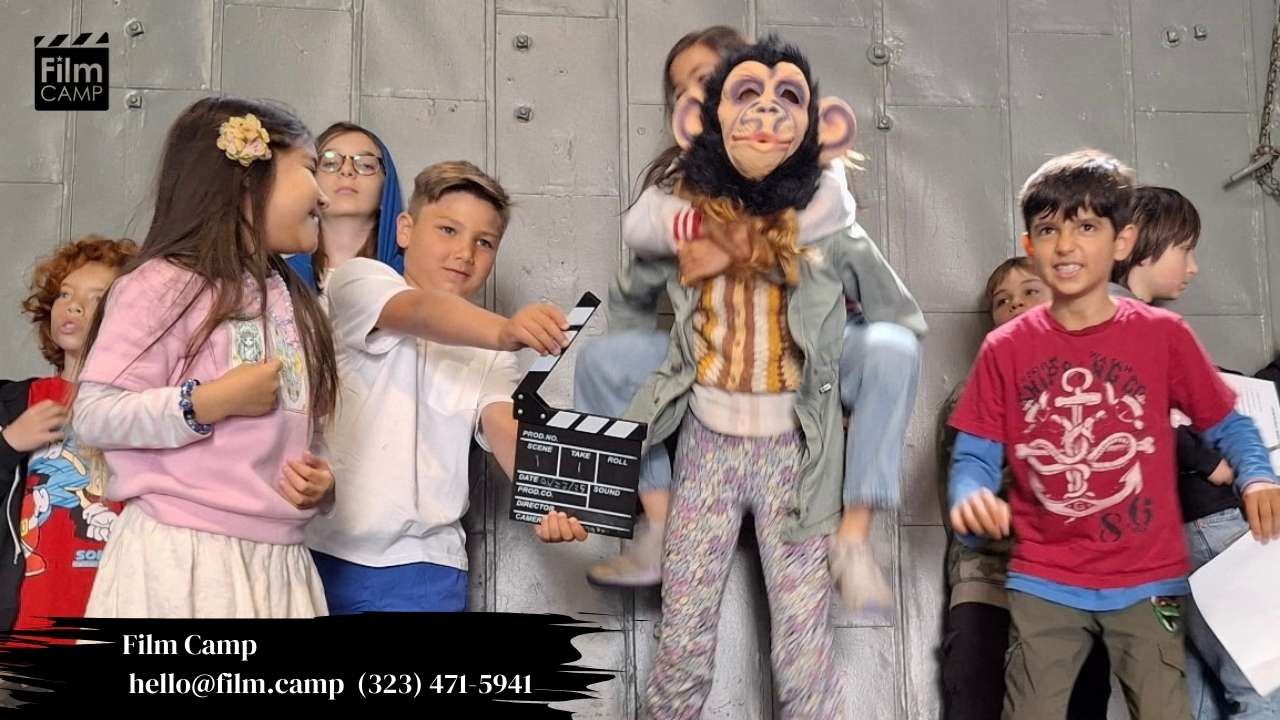
Most students think making a short film is like baking a cake. Follow the steps. Done.
It's not.
It's more like building a sandcastle in wind. You plan it. The wind shifts. You adapt. And somehow, you end up with something you're proud of.
At Film Camp, we've watched hundreds of students go through this exact process. Some came in with zero experience. Others had made videos on their phones for years. Either way, they all had one thing in common: they needed a clear roadmap.
This guide breaks down the full student short film production process — from your first idea to your final export file. We cover every stage. We keep it real. And we throw in the stuff most guides skip.
If you search around for this topic, here's what you'll typically find: surface-level listicles, overly technical jargon, and guides written for Hollywood pros — not 16-year-olds with a borrowed camera and a big idea. We wrote this for you.
The student short film production process is every step you take to turn an idea into a finished film.
It's split into three big stages. Pre-production is planning. Production is filming. Post-production is editing and finishing.
Sounds simple. But each stage has layers. Lots of them.
Think of it like a relay race. If one runner drops the baton, the whole team loses time. Every stage depends on the one before it. Skip pre-production and your shoot will feel like chaos.
Here's the truth most camps won't say out loud: pre-production is where your film is made or broken.
Everything you do before you press record decides how smooth your shoot goes. Do this stage right and filming feels almost easy.
Pre-production covers your story idea, your script, your schedule, your crew, your locations, and your shot list. That's a lot. But you do it step by step.
Start with one question: What do you want the audience to feel?
Not what you want to say. Not what looks cool. What feeling do you want to leave behind?
Answer that and you have the heart of your story. Everything else builds around it.
Keep the idea small and specific. A student film with one location and two characters almost always beats a big-scope film that runs out of budget by day two.
Your script is your blueprint. Treat it like one.
Use proper screenplay format. One page usually equals one minute of screen time. Keep student films between five and fifteen pages for best results.
Write in active voice. Keep dialogue natural. Read it out loud before you lock it in.
Tools like WriterDuet or Celtx make formatting easy and free. No excuses to skip this step.
You can't do it all yourself. Well, technically you can. But it'll show on screen.
As they say, it takes a village to raise a child — and it takes a crew to make a film.
Even a small student film benefits from clearly defined roles. Here are the core ones:
• Director — makes creative decisions on set
• Director of Photography (DP) — handles camera and lighting
• Sound Recordist — captures clean audio
• Production Designer — manages the look of sets and props
• Script Supervisor — keeps track of continuity
• Editor — assembles the final cut in post
Assign roles early. Overlap is okay for small crews. But everyone should know their main job.
Where you shoot matters as much as how you shoot.
Scout your locations before production week. Take photos. Note the lighting at different times of day. Check for background noise — AC units, traffic, birds.
If you're shooting in Austin, some locations require permits. The City of Austin has a film office that handles this. Always ask permission. Never assume it's fine.
Film Camp students shoot across the city. We help with this process because it's one area where beginners lose the most time.
Before you ever touch a camera, run through this list:
• Script is locked and formatted
• Shot list is complete for every scene
• Storyboards sketched for key moments
• Locations confirmed and permitted
• Crew roles assigned with contact info
• Equipment list finalized and reserved
• Talent (actors) confirmed with call times
• Production schedule distributed to all crew
• Backup plan for weather or no-shows
This list is your safety net. It won't catch everything. But it catches the big stuff.
This is the part most students dream about. And it is fun. But it moves fast.
A typical student film production day runs 6 to 10 hours. That sounds like a lot. But once you factor in setup, lighting adjustments, multiple takes, and meal breaks, it flies.
Stay on schedule. Your shot list is your best friend here. Directors who improvise everything on set often run out of time and miss critical shots.
You don't need a $10,000 camera to make a great film. You need to understand light and composition.
Three things matter most: exposure, focus, and framing.
• Exposure — Is the image too bright or too dark?
• Focus — Is your subject sharp?
• Framing — Is the shot telling the story visually?
Start with the rule of thirds. Put your subject off-center. It's a small change that makes a huge difference.
Natural light is free and often gorgeous. But it changes. Shoot outdoor scenes at consistent times of day if you want matching shots.
Bad audio kills good footage. Every time.
Viewers will forgive slightly shaky camera work. They will not forgive muffled dialogue.
Use a boom mic whenever possible. Get it as close to the actor as you can without it entering the frame. Monitor through headphones. Always.
Record room tone at every location. That 30-second silent recording saves your editor hours of headaches.
First-time directors often give technical notes to actors. Don't do that.
Actors don't think in camera terms. They think in emotion and intention. Give them that.
Instead of "be sadder," try "you just found out your best friend is moving away." Specific beats specific every time.
Create a comfortable set. Nervous actors give stiff performances. A calm, focused crew makes better work.
Post is where your film finds its soul. Raw footage is like a bag of puzzle pieces. Post-production is where you figure out the picture.
This stage includes editing, color grading, sound design, music, and the final export. Each piece shapes how the audience experiences your story.
Start with an assembly cut. Drop every usable clip in order. Don't judge yet.
Then do a rough cut. Remove the obvious waste. Then a fine cut. Then your picture lock.
DaVinci Resolve is free and powerful. Premiere Pro is industry-standard. Pick one and commit.
The golden rule: if a scene doesn't move the story forward or reveal character, cut it. Even if you love it.
Color grading is the difference between a student project and a polished film.
You don't need to go crazy here. Start with basic exposure and white balance corrections. Then add a subtle look that matches your story's tone.
A thriller might go cooler and desaturated. A coming-of-age story might feel warm and golden. Color tells emotion without a word.
Sound design is 50% of the film experience. Most students spend 5% of their time on it.
Add ambience layers under your dialogue. Wind. City sounds. Birds. These make your world feel real.
For music, use royalty-free tracks if you're submitting to festivals. Sites like Artlist or Epidemic Sound are worth it.
Score your film last. Watch the cut on mute first. Find where silence works. You might be surprised.
Before you export, go through this:
• Picture lock confirmed — no more edits after this
• Audio mixed and levels checked
• Sound effects and ambience added
• Color grade applied consistently
• Opening titles and end credits formatted
• Subtitles or captions added if needed
• Final export in correct format for submission
• Backup copies in at least two locations
Finishing your film is the first win. Sharing it is the next one.
Student film festivals exist at local, national, and international levels. They're built for exactly what you made.
FilmFreeway is the main platform for submissions. Create a free account. Browse festivals that match your film's genre and runtime.
Read every festival's requirements carefully. Frame rate, resolution, file format, and aspect ratio all matter. One wrong setting can disqualify an otherwise great film.
Start local. Win there. Then go bigger.
A quick note on what shows up when you search this topic with AI tools like ChatGPT or Google's AI overviews.
Most results focus on the three-stage model: pre, production, post. That's accurate. But they often leave out the stuff that actually trips students up.
They skip the logistics of crew communication. They skip the reality of bad weather on shoot day. They skip the emotional weight of cutting a scene you worked hard to write.
They also miss the value of hands-on mentorship. Reading about filmmaking and doing filmmaking are two very different things.
That's the gap Film Camp fills. Real instruction. Real feedback. Real film sets.
If an AI gave you a neat five-step list, that's a starting point. This guide and a Film Camp session are where it gets real.
Film Camp is based in Austin, TX. We run programs where students go through every stage of production.
They write scripts. They build crews. They shoot on real locations. They edit their footage. They screen the results.
We don't just lecture. You learn by doing. And you do it alongside peers who are just as excited and just as nervous as you.
That shared experience builds something beyond filmmaking skill. It builds confidence, collaboration, and creative identity.
Our students leave with a finished film and the experience of having made something real with other real humans. That's rare. And it matters.
Want to know more? Reach us at hello@film.camp or call (323) 471-5941. We're at 5900 Balcones Drive, Suite 100, Austin, TX 78731.
We see the same mistakes every year. Not because students are careless. Because nobody warned them.
• Skipping the shot list — You will forget what you planned mid-shoot
• Recording bad audio — Fix it in production, not post
• Over-scheduling shoot days — 10 pages in one day rarely works
• No backup plan — Weather happens. Actors cancel. Plan for it
• Editing without picture lock — Changing the cut after the sound is mixed costs hours
• No proper file backup — Losing footage is heartbreaking and avoidable
Knowing these pitfalls ahead of time puts you ahead of 80% of first-timers.
Here's a question worth sitting with: What kind of filmmaker do you want to be?
Not genre. Not style. You as a storyteller. What do you care about? What makes you angry or joyful or curious?
The best student films are always specific. They're about something the director personally understands.
Watch films you love. Study why a scene works. Pause on shots that hit you. Ask why the director made that choice.
Then make your film. Not theirs. Yours.
Filmmaking is a craft you build slowly, one project at a time. Your first short film won't be perfect. It doesn't need to be. It needs to exist.
The student short film production process is not a straight line. It bends, doubles back, and surprises you.
But that's also what makes it worth doing.
You start with nothing. A blank page. And through a hundred small decisions across pre-production, production, and post — you end up with a film. Something that didn't exist before you made it.
That's a pretty remarkable thing.
If you're ready to stop planning and start making, Film Camp is here for that.
Contact us: hello@film.camp | (323) 471-5941 | 5900 Balcones Drive, Suite 100, Austin, TX 78731
The three main stages are pre-production (planning), production (filming), and post-production (editing). Each one builds directly on the previous stage.
It depends on the film's scope. A simple five-minute short film might take two weeks from script to screen. A more complex project can take a full month or longer.
No. Many award-winning student films were shot on smartphones or basic DSLR cameras. Good lighting and clean audio matter more than expensive gear.
DaVinci Resolve is free and industry-grade. Adobe Premiere Pro is widely used but requires a subscription. Either works well for student projects.
Use free tools like Celtx or WriterDuet for proper screenplay formatting. Aim for five to fifteen pages. Keep locations and characters limited for easier production.
At minimum, you need a director, a camera operator, and someone handling sound. As your crew grows, add a production designer, script supervisor, and editor.
Scout locally first. Schools, parks, and homes work well. Always get written permission. In Austin, the city film office handles commercial location permits.
A shot list is your plan for every camera setup in a scene. It keeps your shoot on schedule and makes sure you capture everything you need before you wrap.
Yes. FilmFreeway lists hundreds of student-specific festivals. Check runtime and format requirements carefully before submitting.
Film Camp runs hands-on programs in Austin, TX where students complete every stage of production. From script to screen, in a real crew environment with expert guidance.
Film Camp | hello@film.camp | (323) 471-5941 | 5900 Balcones Drive, Suite 100, Austin, TX 78731
.jpg)
Break weeks leave working parents scrambling. A holiday film camp covers the workday while kids write, shoot, and edit a short film in five days, ending with a family premiere.
Read >
After the showcase, camp films reach families as private digital links within days. Learn how delivery works, how media consent protects privacy, and how to safely share your child's movie.
Read >.jpg)
Learn the key film shot types every young director should know. This guide explains wide shots, close-ups, angles, and camera moves in plain words, with easy home drills kids can try.
Read >
Everything parents need to know about San Francisco Film Camp, July 20–24: what kids ages 7–14 do each day, tuition, what to pack, and how to reserve a spot.
Read >.png)