A complete guide to film camp for kids. Learn what kids make, what a week looks like, how to choose, and where to find hands-on filmmaking camps near you.

Picture your kid holding a camera for the first time. Not scrolling. Not watching. Filming. There's a story in their head, and now they have the tools to put it on a screen.
That's what a good film camp for kids does. It turns screen time into screen creation. Kids walk in with an idea and walk out with a real movie they made with their own hands.
This guide covers everything you need to know. What film camp is, what kids actually learn, what a full week looks like, and how to pick the right one. We'll also look at filmmaking camps in Austin, Los Angeles, and San Francisco, so you can find the best fit for your family.
A film camp for kids is a hands-on program where children learn to make movies from start to finish. They write, shoot, act, and edit. Most camps run for a week and end with a finished short film.
Think of it like a working film set, scaled for kids. Everyone gets a role. Everyone helps tell the story. And everyone leaves with something they made as a team.
Here's a quick myth to clear up. Film camp isn't a place where kids sit and watch movies all day. It's the opposite. Kids spend their time creating, not consuming.
A kids film camp is a creative program where children make a real short film from idea to final cut. By the end of the week, your child knows how to plan a story, run a camera, direct a scene, and edit footage into a movie. No film background needed. Just curiosity and the willingness to try.
Traditional camps are great for fresh air and friendships. Film camp gives kids all of that, plus a finished creative project they can be proud of.
Here's the difference at a glance:
Both build social skills. But a film camp channels all that energy into one shared creative win. Kids see exactly what they built together by the end of the week.
Kids learn fastest when they make things. A film camp leans into that.
Instead of listening to a lecture, kids grab a camera and try a shot. Instead of reading about story structure, they pitch their own idea and watch it come to life. The work feels like play because it is play with a purpose.
That hands-on loop keeps them hooked. They try something, see the result, then fix it and try again. Every step gives instant feedback. By the time the credits roll on their short film, they've solved a hundred small problems without even noticing it felt like school.
Film camp fits more kids than parents expect.
It's perfect for:
It works for the loud kid and the shy kid. Some campers want the spotlight. Others want to shape the story from behind the scenes. Both belong here, and both find a role that feels right.
Parents don't enroll their kids in film camp just to make movies. They enroll because of what their kids carry home afterward.
Filmmaking teaches skills that show up everywhere. Confidence. Teamwork. Patience. Creative problem-solving. These are the things kids use in school, in friendships, and far beyond a single summer.
The movie is the fun part. The growth is the real reward. Here's what stands out most for families.
Confidence grows when kids finish something hard.
At camp, a child takes a rough idea and shapes it into a real scene. They make choices. They see those choices play out on screen. That loop builds belief in their own ideas. By the final screening, a kid who showed up unsure is pointing at the screen saying, "I made that." That pride sticks.
A film can't be made alone, and that's the point.
At camp, kids rotate through real production roles. One day a child is the director. Another day they run the camera. The next they're acting or editing. To finish the movie, the director has to listen, the camera operator has to focus, and the editor has to trust the team. Kids learn that the best work happens when everyone pulls together.
Filmmaking lives where three worlds meet.
There's the art of telling a story. The technology of cameras, lighting, and editing software. And the craft of pulling it all into one moving picture. Kids who love drawing find a home in storyboards. Kids who love computers find one in editing. Filmmaking gives every interest a place to plug in, then shows kids how the creative and technical sides feed each other.
Most summer activities end and fade. Film camp ends with a movie.
Your child helps make a real short film, start to finish. At the end of the week, families gather for a screening. Kids watch their work on the big screen with their name in the credits. That moment, sitting next to you while their movie plays, is the kind of win they remember for years.
Worried about how much your kid loves screens? Film camp flips that worry on its head.
Instead of fighting screen time, film camp puts it to work. Your child stops being just a viewer and becomes a maker. They learn what goes into the videos they watch every day. They build real digital creativity and media skills. Same love of screens. Completely different result. One that actually grows their mind.
Film camp teaches the full journey, from blank page to movie screen. Kids don't learn one skill. They learn the whole process of making a movie, in the same order real filmmakers follow.
That structure matters. It shows your child how every job connects to the next. A story leads to a plan. A plan leads to a shoot. A shoot leads to an edit. By the end, they understand how a real movie comes together.
Here's the skill journey kids move through at camp.
Every film starts with a story, so that's where kids start too.
Campers learn to turn a small idea into a scene with a beginning, middle, and end. They write what characters say and decide what happens next. A funny lunchroom moment becomes a short comedy. A simple "what if" becomes an adventure. Kids learn that strong films come from strong stories, and that their own ideas are worth telling.
Before filming, kids plan what each shot will look like.
A storyboard is like a comic book version of the movie. Kids sketch each scene, box by box, so the whole team knows the plan. This step teaches them to think in pictures. It also builds confidence, because walking onto set with a plan feels a lot better than guessing.
Acting on camera is different from acting on a stage, and kids learn the difference.
Campers practice small, natural expressions and how to hit their mark. They learn that the camera catches everything, so less is often more. Acting is always an option, never a requirement. Kids who want the spotlight get to shine. Kids who don't can find their confidence in other roles.
The director guides the team, and kids get a real turn at it.
Campers learn that a good director doesn't boss people around. They listen, share a clear vision, and help everyone do their best work. A child running a scene learns to make decisions, solve problems on the fly, and bring people together. It's leadership that feels real, because the team is counting on them.
This is where filmmaking gets exciting for a lot of kids.
Campers don't just watch a demo. They pick up the camera and shoot. They learn how to frame a shot, when to move the camera, and how camera angles change the feeling of a scene. A shot from below makes a character look powerful. A close-up shows emotion. Kids learn these tools by trying them, take after take.
Good lighting and clean sound separate a home video from a real film.
Kids learn how light shapes a mood and why a dark corner needs a boost. They learn to record clear audio, because a great scene falls apart if you can't hear it. Parents often forget how much sound matters. Kids won't, once they hear the difference good audio makes in their own footage.
Want to fly a kid to the moon? Green screen makes it possible.
Campers explore the tricks behind movie magic. They learn how a green wall can become outer space, a jungle, or a haunted house. They try simple visual effects and see how the pros pull off the impossible. The best part is they learn that effects serve the story. The magic works best when it makes the tale stronger.
Editing is where the movie truly comes together.
Kids learn to take raw clips and shape them into a story that flows. They cut, trim, and arrange shots until the scene feels right. Editing teaches patience and storytelling at the same time. Campers see that a film isn't made on set alone. It's made again in the edit, one careful choice at a time.
The final touches turn a good film into one that moves people.
Kids add music to set the mood and sound effects to bring scenes to life. A door creak. A drumbeat. A swell of music at the perfect moment. They learn how sound shapes emotion and pulls an audience in. Then they watch their finished film and feel that rush of pride that comes from a job done all the way through.
Wondering what your child's days will actually look like? Here's a typical week, start to finish.
Most film camps follow a clear rhythm. Each day builds on the last, moving from ideas to a finished film. That predictable structure helps kids feel settled and helps parents feel confident. You'll always know where the week is headed.
Here's how a classic week unfolds.
Day one is about people first.
Kids meet their team, play a few warm-up games, and start sharing ideas. They pitch story concepts and pick favorites together. The goal isn't a perfect plan yet. It's a group that feels comfortable and excited. By the end of day one, strangers start to feel like a crew.
On day two, ideas turn into a plan.
Kids write the script, sketch the storyboards, and figure out who does what. Some campers will act. Others will run the camera, direct, or handle sound. Every child gets a role that fits them. The story stops being a maybe and becomes a real project the whole team owns.
Day three is when the energy peaks.
Cameras roll. Kids step onto a working set and do their jobs for real. They film scene after scene, learning to reset, try again, and nail the shot. There's movement, focus, and a lot of excitement. For most campers, this is the heart of the whole week. It's the day they feel like real filmmakers.
Day four is where the raw footage starts to shine.
Kids dive into editing. They cut clips, add music, layer in sound effects, and drop in any visual effects. Scattered scenes start to flow into one story. Watching messy footage turn into a real movie is a thrill. Campers see firsthand how much of the magic happens after the camera stops.
The last day is all payoff.
Kids finish their film, then families arrive for the premiere. The lights dim. The movie plays. Names roll in the credits. Kids beam as they watch their work on the big screen, sitting right next to the people who came to cheer them on. A great week deserves a great ending, and this is it. Most parents say the family premiere is the moment that makes the whole camp worth it.
Not every film camp is built the same. The flashy website isn't what matters. The teaching, the safety, and the final result are.
Use this as your checklist. A strong camp should hit each of these marks. When it does, you can feel confident your child is in good hands and will walk away with real skills.
The best camps welcome kids with zero experience.
Worried your child has never touched a camera? That's exactly who these camps are for. A great program starts with the basics and builds from there. No prior skill required. Just bring curiosity. The right camp meets your child where they are and helps them grow from day one.
Look at how much attention each child actually gets.
Small groups mean instructors can coach kids one on one. Your child gets real feedback, not lost in a crowd. They get more turns with the camera and more chances to share ideas. The number to watch isn't just group size. It's how much personal guidance each camper receives.
Great instructors know both filmmaking and kids.
Industry experience matters, but so does the ability to teach. The best film educators have made real projects and know how to break things down for young learners. They turn complex skills into simple, fun steps. Look for instructors who can do the work and explain it clearly to a ten-year-old.
Safety comes before everything else.
A great camp feels welcoming to every kid, no matter their experience or personality. Staff watch out for campers, and the space feels positive and kind. Kids should feel free to try, fail, and try again without fear. For many parents, this matters even more than the curriculum, and it should.
Kids should touch real gear, not just watch.
Learning sticks when kids do the work themselves. The best camps hand campers real cameras and let them practice for real. Your child should run the equipment, not just stand near it. That hands-on time is where skills click and confidence grows fast.
A great camp ends with something to show.
Look for a program that wraps up with a finished short film or a showcase screening. A real outcome gives kids a clear goal all week and a proud moment at the end. See examples of what kids create at the film.camp showcase. Finished projects are what turn a fun week into a lasting win.
How a camp talks to you tells you a lot.
The best camps keep parents in the loop. They share schedules, answer questions, and make drop-off and pickup easy. Clear communication signals an organized, caring team. If a camp is great at keeping you informed, it's usually great at caring for your kid too.
Kids grow fast, and a good film camp meets them where they are. The right experience for a seven-year-old looks different from the right one for a thirteen-year-old.
What matters most isn't the age number. It's the developmental fit. Here's how camps adjust as kids grow.
For younger kids, it's all about imagination and fun.
Campers this age focus on simple stories, creative play, and trying new things. They learn the basics of telling a tale and start building confidence on camera or behind it. The goal isn't technical mastery. It's joy, expression, and the thrill of making something real. Skills come naturally through play.
Older kids are ready for more responsibility.
Campers in this range dig deeper into real skills. They take on bigger production roles, learn more advanced camera and editing work, and step into leadership. A teen might direct a scene or run the edit. The work grows with them, giving them real ownership and a sense of what professional filmmaking feels like.
Sometimes the best learning happens across ages.
When older and younger kids work together, everyone wins. Older campers practice patience and leadership by helping the younger ones. Younger kids learn by watching peers just a few years ahead. It builds a sense of community, like a real film crew where every age has something to offer.
A great camp tailors the work to each child.
Instructors watch how each camper is doing and adjust on the fly. A kid who's ahead gets a bigger challenge. A kid who needs support gets extra coaching. This kind of personalized teaching means no one feels bored or left behind. It's one of the strongest signs of a camp that truly cares.
Where your child makes their movie adds something special. Each city brings its own creative spark to the experience.
The skills and the quality stay consistent across all three locations. What changes is the flavor each city adds. Here's a look at what makes each one shine, plus how to pick the right fit.
Austin runs on creative energy.
The city lives and breathes music, art, and indie film. That spirit makes it a natural home for young storytellers. Kids at an Austin film camp tap into a culture that celebrates making your own thing your own way. It's a place where bold ideas feel welcome and creative kids feel right at home. The vibe is fun, fresh, and full of possibility.
LA is the movie capital, and kids feel it.
For kids who love films and dream of acting, a Los Angeles film camp puts them in the heart of it all. But the focus stays on learning real craft, not chasing fame. Kids discover what actually goes into the movies they love. They build skills in storytelling, acting, and production while soaking up the energy of a true film city. Big dreams meet real work here.
San Francisco blends storytelling with technology.
The Bay Area is built on innovation, and that shows up in filmmaking too. Kids at a San Francisco film camp learn to mix creative ideas with the tools that bring them to life. They explore how tech and story work together, from cameras to editing to effects. For curious, forward-thinking kids, it's the perfect place to see where creativity and technology meet.
The city changes, but the core stays the same.
No matter where your child attends, they get the same hands-on filmmaking experience. The same script-to-screen journey. The same focus on real skills, small groups, and a finished short film. The quality and the curriculum stay consistent across Austin, LA, and San Francisco. You can trust the outcome wherever you enroll.
So which city is right for your family?
Start with what's practical, then think about fit. Ask yourself:
Proximity helps, but fit matters most. The best choice is the one where your child feels excited to show up. Pick the spot that matches your schedule and your kid's spark.
These camps sound similar, but they teach very different things. Knowing the difference helps you pick the right one with confidence.
Here's the quick version:
Camp TypeMain FocusBest ForFilm campWhole production, from script to screenKids who want to make moviesActing campOn-camera performanceKids who love to actTheater campLive stage performanceKids who love the stage
Now let's break down each one.
Film camp covers it all, from idea spark to final screen.
Kids write, direct, film, act, and edit. They learn every part of making a movie, not just one. That script-to-screen journey is what sets film camp apart. Your child doesn't just perform. They build the whole thing. It's the most complete creative experience of the three.
Acting camp zooms in on the craft of performing.
Kids learn to deliver lines, build characters, and act for the camera. The focus stays on what happens in front of the lens. It's a great fit for kids who love being on screen and want to sharpen that one skill. It serves a clear goal. It just covers a narrower slice than film camp does.
Theater camp lives on the stage.
Kids learn stage voice, movement, and how to hold a live audience. There are no cameras and no edits. It's all about performing in the moment, in front of real people. For kids who love the rush of live performance, theater camp is a wonderful fit. It builds a different set of skills than screen work.
Why pick one lane when kids can try the whole road?
Film camp is the best choice for kids who love both creativity and tech. It connects cameras, editing, and storytelling in one place. A child can write a story, shoot it, add effects, and cut it together. It's the perfect blend for curious kids who want to make things and play with the tools that bring ideas to life.
Choosing a summer camp comes down to your child, not a ranking. Each camp type fits a different kind of kid.
Here's a simple comparison:
Camp TypeBuildsGreat ForFilm campCreative arts plus tech skillsStorytellers and makersSTEM campLogic and technical thinkingBuilders and problem-solversArt campVisual expressionDrawers and designersDay campSocial fun and varietyKids who want a bit of everything
Let's look closer at each.
Film camp is where the paintbrush meets the camera.
It mixes art and tech in one project. Kids tell stories like artists and run gear like techies. They write, shoot, and edit, using both sides of their brain. For a child who loves to create and also loves tools and screens, that art-plus-tech combo is hard to beat. It's a true blend of imagination and skill.
STEM camps sharpen how kids think.
They focus on logic, coding, and technical problem-solving. Kids build, test, and figure things out step by step. It's a strong fit for analytical minds. And there's overlap with film. Editing, effects, and media tools all use the same kind of thinking. A STEM-loving kid often thrives in the technical side of filmmaking too.
Art camps celebrate visual creativity.
Kids draw, paint, design, and explore how to express ideas through images. It's perfect for hands-on, visual thinkers. And those skills connect straight to film. Storyboards, shot framing, and set design all come from the same artistic eye. A kid who loves art brings a real gift to the look of a film.
Good old camp fun still matters.
Traditional day camps offer variety, games, and lots of social time. Kids make friends, play outside, and try a little of everything. It's a great pick for kids who want a relaxed, well-rounded summer. Film camp builds friendships too, but through a shared creative project rather than open free play.
The right camp matches your child's spark.
Use these quick filters:
There's no single best camp. There's only the best fit for your kid. Match the camp to who your child already is, and you can't go wrong.
Yes. Film camp is built for beginners. Interest matters way more than experience.
You don't learn to swim by reading about water. The same goes for filmmaking. Kids learn by doing, and a good camp is designed to teach from scratch. Here's why first-timers do great.
No experience? No problem.
Film camp welcomes total beginners. Your child does not need to know a thing about cameras or editing before day one. The whole point is to learn from the ground up. Instructors start with the basics and build from there. Curiosity is the only requirement, and most kids show up with plenty of it.
A big movie can start with one tiny spark.
Kids don't need a brilliant, complex plot. A simple idea works great. A short mystery. A funny fake commercial. A superhero scene. A story about two friends. Campers learn to take a small idea and grow it into a real film. Starting simple makes filmmaking feel doable, even on day one.
Kids are never on their own.
Instructors guide campers through every step. They help with writing the story, acting it out, filming the scenes, and editing the final cut. At each stage, there's a coach nearby to answer questions and offer a hand. That steady support is what lets beginners build real skills fast and feel proud doing it.
A crooked path can still lead to a great scene.
At film camp, mistakes aren't failures. They're part of making things. A shaky shot teaches camera skills. A line that flops gets a laugh and a retake. Kids learn that real filmmakers try, miss, and adjust all the time. That freedom takes the pressure off anxious kids and perfectionists alike. It's how creativity actually works.
If your child is shy, film camp might surprise you in the best way. It's one of the friendliest places for quiet kids to grow.
Here's the key. Filmmaking has tons of roles, and most of them happen away from the spotlight. A shy kid can shine without ever stepping in front of the camera. Let's break down why it works so well.
Performing is always optional.
Lots of kids assume film camp means acting. It doesn't. There are so many ways to contribute. Your child can write, direct, run the camera, design sound, or edit. Quiet kids often love these behind-the-scenes jobs. No child is ever pushed into the spotlight. They find the role that feels right for them.
Quiet kids often lead in surprising ways.
Some of the most important film jobs happen off camera. The editor shapes the whole story. The camera operator decides what the audience sees. The writer dreams up the entire world. A child can be the editor, camera operator, writer, storyboard artist, or sound helper. These roles let quiet kids take charge and feel proud of real, visible work.
Small groups feel safe.
When a child is part of a small team, joining in feels a lot easier. There's no big crowd to get lost in. Kids get to know their crew fast, and trust builds quickly. In a low-pressure space like that, even the shyest camper starts to open up. Small teams turn nervous first days into comfortable, confident ones.
Confidence grows one small win at a time.
A shy kid might start the week barely sharing an idea. By Friday, that same kid is pointing at a finished movie with their name in the credits. Each step builds on the last. A small contribution leads to a bigger one. That gentle, steady growth is the magic of film camp. Kids go from quiet ideas to real, visible pride, all at their own pace.
Before you enroll, run through this checklist. It takes the guesswork out of the decision and helps you choose with confidence.
Most parents focus on the fun activities. But the strongest signals are quieter. Instructor quality, supervision, and real outcomes tell you the most. Here's what to check.
Make sure the camp fits your child's stage.
Check that the program is built for your child's age and skill level. A good camp groups kids in ways that make sense developmentally. The right fit means your child feels challenged but not lost. Remember, developmental fit matters more than the age number alone. Ask how the camp matches activities to each kid.
Safety is the first thing to confirm.
Ask whether staff go through background checks and how kids are supervised throughout the day. A trustworthy camp will answer these questions clearly and proudly. Good supervision means your child is watched over and cared for at every step. For most families, this is the first enrollment filter, and rightly so.
Look at who's teaching, not just what's taught.
Strong instructors have real filmmaking experience and know how to teach kids. Both parts matter. A great filmmaker who can't connect with children won't help your child grow. Ask about instructor backgrounds. Teaching skill is just as important as industry credits when it comes to your kid's experience.
Fewer kids per instructor means more attention.
Ask how many campers each instructor works with. Smaller ratios usually mean more hands-on time, more feedback, and more chances to participate. Your child gets seen and supported instead of lost in a crowd. A low ratio is one of the clearest signs of a quality camp.
Know how the day runs before you commit.
Ask for the daily schedule and the drop-off and pickup details. A clear routine helps your child settle in and helps you plan your day. Parents value predictability, and a good camp provides it. If the schedule is fuzzy or hard to get, that's worth noting.
Find out how gear is handled.
Ask what equipment kids use and how it's supervised. A good camp lets kids work with real cameras while keeping clear safety rules in place. You want hands-on learning that's also well managed. Knowing how gear use is handled gives you peace of mind about both safety and quality.
Confirm there's a real outcome.
Ask whether the camp ends with a finished film or a screening. A clear final project gives your child a goal all week and a proud moment at the end. Final screenings are one of the biggest drivers of parent satisfaction. A camp that delivers a finished movie is a camp that delivers real value.
Listen to other families.
Read reviews and testimonials, and notice how the camp communicates. Look for outcome-focused feedback, like parents describing how their child grew, not just generic praise. Strong communication and honest reviews are great signals. They tell you a camp is organized, caring, and proud of its results.
Packing for film camp is simple. Creativity matters way more than gear. Here's a quick list to get your child ready.
Kids move a lot at film camp.
Send your child in comfy clothes and closed-toe shoes. They'll be up and down, on and off set, and moving between activities all day. Easy, weather-friendly clothing keeps them focused on the fun instead of fussing with what they're wearing.
Filmmaking is hungry work.
Pack a lunch, a couple of snacks, and a refillable water bottle. Kids burn through energy on a busy set, and a good snack keeps them sharp. Check with your camp about any food rules before you pack.
Some scenes get filmed outside.
If there's any chance of outdoor shooting, send sunscreen and maybe a hat. A little protection keeps your child comfortable during longer takes in the sun. It's a small thing that makes a big difference on a warm day.
Great films often start with a quick note.
A small notebook is a fun thing to pack. Your child can jot down story ideas, sketch a scene, or scribble a line of dialogue. Even a few rough notes can spark a great film. Encourage them to bring their imagination along with their pencil.
Keep distractions at home.
Skip the personal gaming devices and anything valuable or fragile. Most camps have rules about phones during activities, so check ahead. The goal is to keep your child focused on creating, not scrolling. A clear, simple packing list sets everyone up for a smooth first day.
The movie is just the start. The real value is what your child carries home long after the camera's off.
Filmmaking builds skills that show up in school, friendships, and life. Parents aren't buying a week of activities. They're investing in growth. Here's what kids take with them.
Kids learn to tell a story that lands.
At camp, children practice shaping ideas with a clear beginning, middle, and end. That skill helps with school essays, presentations, and everyday conversation. Strong storytelling is really strong communication, and it sticks with them for years.
Filmmaking is a team sport, so kids learn to talk and listen.
They share ideas, give feedback, and work things out with their crew. They learn to speak up and to hear others out. Those communication skills build real confidence in how your child connects with people.
No one makes a film alone.
Kids learn to share roles, depend on teammates, and pull together toward one goal. It's like a small crew working as one. That sense of teamwork carries straight into classrooms, sports, and group projects.
Film sets throw curveballs, and kids learn to roll with them.
A prop breaks. A scene won't work. The light shifts. Campers learn to think fast, adjust, and find a fix. That kind of flexible problem-solving is a skill they'll use their whole lives.
Kids learn to trust their own ideas.
When a child sees their idea become a real film, something clicks. They start to believe their voice matters. That creative confidence spills into everything else they try.
Kids learn how the media world really works.
They see what goes into the videos they watch every day. That understanding makes them smarter creators and sharper viewers. In a screen-filled world, that media literacy is a real edge.
Kids step up and own their part.
Whether directing a scene or running the edit, campers learn to take responsibility for real work. They see that their effort affects the whole team. That sense of ownership helps them grow into capable, dependable kids.
Kids today live surrounded by screens. Film camp turns that reality into a strength.
The skills kids build at camp aren't just fun. They're future-ready. Here's why filmmaking matters more than ever right now.
There's a big difference between watching and making.
Most kids spend hours consuming video. Film camp flips that. Your child becomes a creator instead of just a viewer. They learn how content gets made and gain the power to make their own. That shift, from consumer to creator, changes how a kid sees screens forever.
Screen time gets a lot better when it has a purpose.
When kids use screens to create, screen time becomes productive. They're editing, designing, and building, not just scrolling. That gives parents real relief. The same device that worried you becomes a tool for growth. Filmmaking models healthy, intentional screen use.
Video is the language of today and tomorrow.
Kids who understand video have an edge. They can make stronger school projects, share ideas online with care, and build skills that matter for future careers. So much of work and life now runs on video. Learning it young sets your child up well for what's ahead.
These skills keep growing as your child does.
What starts as a fun summer film can become a lifelong creative tool. Editing, storytelling, and visual thinking only get more useful over time. A kid who learns the basics now has a foundation to build on for years. It's a skill set that grows right alongside them.
Film camp pricing varies, and that's normal. The cost reflects what's included. Here's how to think about value, not just price.
Camp prices depend on a few things.
Cost usually reflects the length of the program, the equipment kids use, and the level of instruction. A week-long camp with real gear and small groups costs more than a basic drop-in program. Understanding what goes into the price helps you judge whether it's a fair deal.
Several factors shape the final number.
Location plays a role, since costs differ by city. Experienced instructors, real cameras, and small group sizes all add value, and they affect price too. A higher cost often means more attention and better resources for your child. Look at what each price actually buys before you compare.
The finished film is worth a lot.
A camp that ends with a real short film and a screening gives your child something lasting. That outcome is part of what you're paying for. The pride, the skills, and the finished movie all add up to value that outlasts the week. It's more than a babysitting service. It's a real creative experience.
So how do you know if a camp is worth it?
Don't just compare prices. Compare what each camp delivers. Ask:
The best value isn't the cheapest camp. It's the one that gives your child the most real skills, attention, and pride for the price. Weigh quality against cost, and the right choice gets clear.
Here's the short version. Film camp gives kids real skills, real confidence, and a real movie to be proud of. And with locations in three creative cities, the right fit is closer than you think.
Film camp is built for kids ages 7 to 14.
The program meets each child at their stage, from young storytellers to teen filmmakers. Younger kids focus on creativity and confidence. Older kids take on real production roles. Wherever your child is, there's a place for them to grow and shine.
Kids learn by doing, from the first idea to the final cut.
This isn't passive learning. Campers write, shoot, direct, and edit a real short film. They live the full script-to-screen journey and see their ideas come to life. That hands-on process is what makes the skills stick and the pride real.
Every camper is welcome, no experience needed.
The camp is built to be safe, supportive, and easy for beginners. Kids try, learn, and grow in a space that feels positive and kind. Parents get peace of mind. Kids get the freedom to explore. It's the best of both worlds.
Find a camp in a city near you.
With locations in Austin, Los Angeles, and San Francisco, families have great options. And the experience stays consistent across all three. Same hands-on learning. Same finished film. Same quality. Just pick the city that works best for you.
The week ends with a moment you'll remember.
Families gather for a screening of the kids' finished films. Your child watches their work on the big screen, with their name in the credits and you right beside them. It's a proud, joyful moment that caps off the whole experience. That celebration is what families talk about long after camp ends.
Yes. For the right kid, film camp is absolutely worth it. It blends creativity, real skills, and a finished project into one unforgettable week. Here's the bottom line.
For creative kids, film camp is a perfect match.
It gives their imagination a place to run and a real way to show what they can do. Every story they dream up becomes something they can see and share. That mix of creativity and accomplishment builds confidence that lasts far beyond the summer.
There are so many ways to love filmmaking.
Does your child love acting? Telling stories? Working cameras? Editing video? Film camp has a place for all of it. Kids can lean into what they love and try new things too. With that many entry points, almost any creative kid finds something that clicks.
Film camp delivers on two levels at once.
Kids walk away with real skills, like storytelling, teamwork, and problem-solving. They also walk away with real memories, like the thrill of the shoot and the pride of the premiere. That combo of growth and joy is rare. It's what makes film camp stick with kids for years.
The best camps change how a kid sees themselves.
By the end of the week, your child isn't just a kid who tried filmmaking. They're a young filmmaker who made a real movie. That shift in identity is the real magic. They learned the skills, did the work, and earned the title. And once a kid feels like a filmmaker, there's no telling what they'll create next.
Ready to give your child that experience? Explore enrollment and find the right session for your family.
A film camp for kids is a hands-on program where children learn to make a short film from start to finish. They write, shoot, act, direct, and edit as a team. Most camps run for a week and end with a finished movie and a family screening.
Most film camps welcome kids ages 7 to 14. Younger kids focus on creativity, storytelling, and confidence. Older kids take on more technical roles and leadership. The best age is really about your child's interest and stage, not just a number.
No. Film camp is built for beginners. Your child does not need any filmmaking experience to join. Instructors teach everything from scratch, step by step. All your child needs is curiosity and a willingness to try something new.
Kids learn the full filmmaking process. That includes scriptwriting, storyboarding, acting, directing, camera work, lighting, sound, special effects, and editing. They also build skills like teamwork, communication, and creative confidence that help far beyond the camp itself.
Yes. Film camp is great for shy kids. Acting is always optional, and many key roles happen behind the camera. Quiet kids can write, edit, run the camera, or design sound. Small teams and steady support help shy campers open up at their own pace.
Yes. Kids make a real short film as a team. They take it from idea to script to shoot to final edit. By the end of the week, families gather for a screening to watch the finished movie, with every camper's name in the credits.
Film camp covers the whole production process, including writing, filming, directing, and editing. Acting camp focuses mainly on performance in front of the camera. Film camp is the better fit for kids who want to make movies, not just act in them.
Yes. A good film camp puts safety first. Staff supervise campers throughout the day, and the space is built to feel positive and inclusive. When choosing a camp, ask about supervision, staff background checks, and group sizes to feel fully confident.
Most kids film camps run for one week, with full days that follow a clear daily schedule. The week moves from ideas and scripts to filming, editing, and a final screening. Some camps offer multiple sessions throughout the summer.
Send comfortable clothes, closed-toe shoes, a lunch, snacks, and a water bottle. Sunscreen helps if there's outdoor filming. A small notebook for story ideas is a fun extra. Leave gaming devices and valuables at home so your child can stay focused.
Yes. There are film camps for kids in Austin, a city known for its creative and indie film culture. Kids tap into that energy while learning to make a real short film. See details for the Austin film camp.
Yes. There are film camps for kids in Los Angeles, the heart of the movie world. Kids learn real filmmaking craft while soaking up the energy of a true film city. Explore the Los Angeles film camp.
Yes. There are film camps for kids in San Francisco, where storytelling meets technology. Bay Area kids learn to blend creative ideas with the tools that bring them to life. Check out the San Francisco film camp.
Yes. For creative kids, film camp is well worth it. Kids gain real skills like storytelling, teamwork, and problem-solving. They build confidence, make lasting memories, and finish a movie they're proud of. The value lasts long after the summer ends.
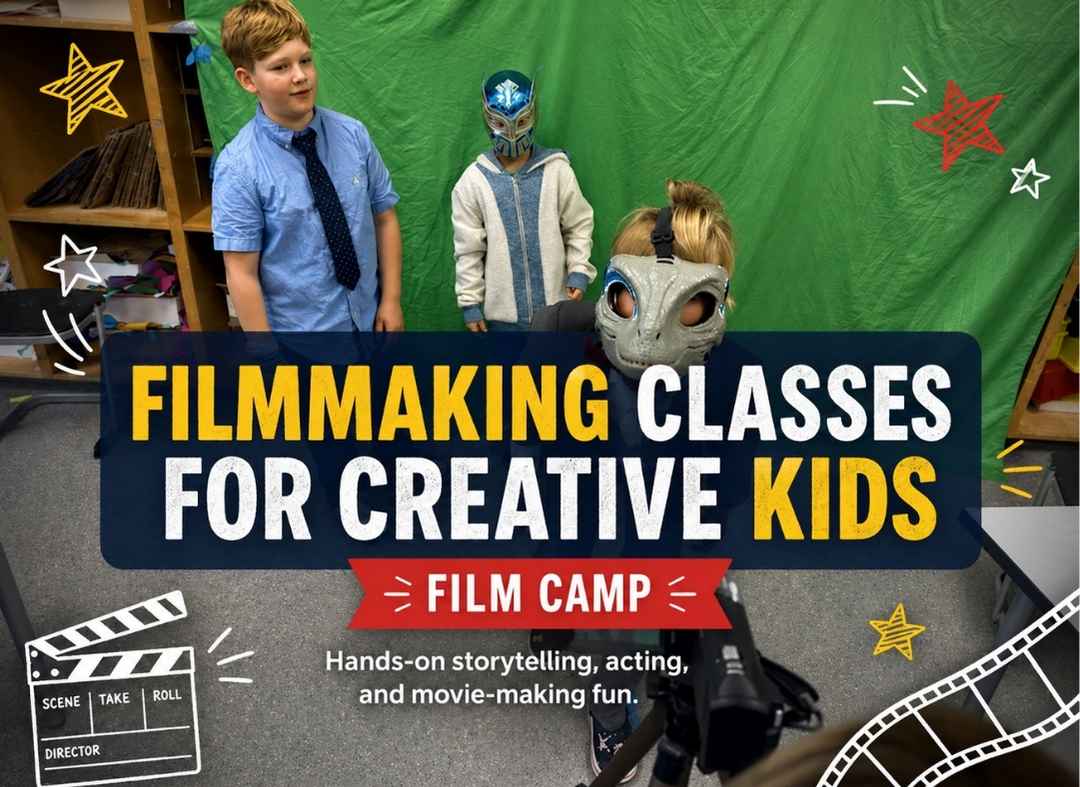
Discover why filmmaking classes help creative kids build confidence, teamwork, and storytelling skills through hands-on movie projects at Film Camp Los Angeles, where beginners learn by creating real short films.
Read >.jpg)
Weekend film classes in Los Angeles teach kids ages 8 to 14 filmmaking every Sunday in Glendale. Compare real costs, curriculum, safety, and what to ask before enrolling your child.
Read >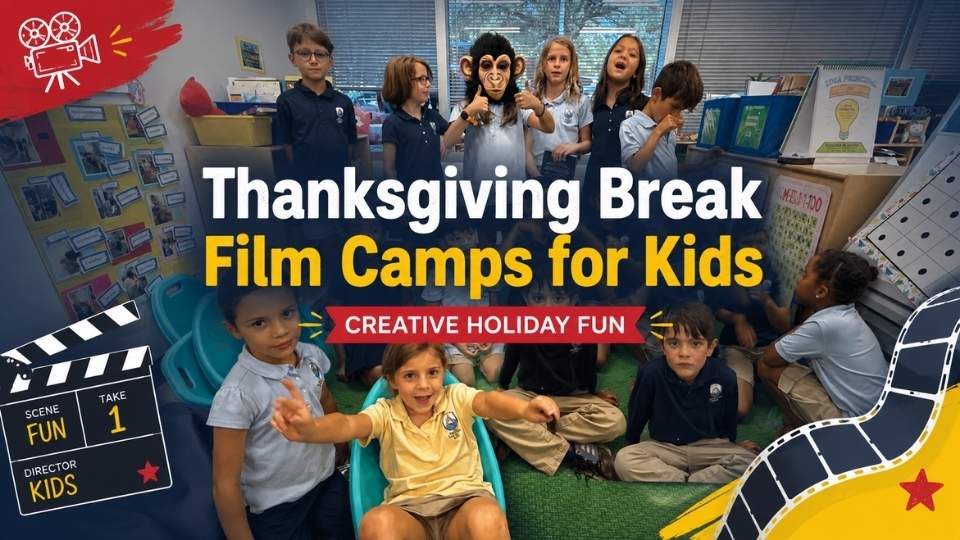
Thanksgiving break film camps fill the three school-free days in Austin, Los Angeles, and San Francisco. Kids ages 7 to 14 write, shoot, edit, and premiere their own short film.
Read >.jpg)
Discover how kids ages 7–14 learn screenwriting, acting, directing, camera work, editing, teamwork, and confidence at Los Angeles Film Camp in Glendale while creating and premiering their own short film.
Read >.png)