A five-day summer film camp for kids ages 7–14, journeying through Austin, Los Angeles, and San Francisco. Campers write, shoot, and edit their own short film across three cinematic cities.

There is a particular kind of magic in watching a child fall in love with storytelling. It usually starts small. A drawing that turns into a comic strip. A make-believe game that develops rules, characters, and plot twists. A phone propped against a stack of books so a younger sibling can be "filmed" delivering a very serious news report about the family dog. Kids are natural storytellers. They don't need permission to imagine — they need tools, encouragement, and a place to point all that creative energy.
That is exactly what our Film Camp is built to provide. From July 13 to July 17, we're inviting young creators between the ages of 7 and 14 on a filmmaking adventure unlike any other: a week-long journey across three of the most cinematic cities in America. We begin in Austin, travel to Los Angeles, and finish in San Francisco — three distinct worlds, three different flavors of moviemaking, and one continuous story that each camper gets to write, shoot, and share.
This isn't a camp where kids sit in a single room staring at a single screen. It's a camp where the city becomes the classroom, the streets become the set, and every young filmmaker discovers that their imagination has a place in the real world. Here's everything you need to know about why this week matters, what your child will experience, and how it could become one of the most formative weeks of their summer.
When we first designed this program, we asked ourselves a simple question: what do the best filmmakers have in common? The answer wasn't expensive equipment or fancy software. It was perspective. Great storytellers are people who have seen the world from more than one angle — who understand that the same scene can feel completely different depending on where you stand, what light you're in, and what mood surrounds you.
So we decided to build that lesson into the very structure of the camp. Instead of keeping campers in one place, we take them across three cities that each represent a different chapter in the story of American filmmaking. By the end of the week, campers haven't just learned how to make a movie. They've learned how to see — and that's a skill that follows them long after the cameras are packed away.
There's also something to be said for the sheer momentum of a journey. Travel creates energy. It builds anticipation. Every morning of this camp, campers wake up knowing that something new is waiting — a new city, a new challenge, a new backdrop for their story. That excitement is contagious, and it's part of what makes the learning stick. Kids remember experiences far more vividly than they remember lectures, and this week is designed to be one unforgettable experience after another.
Our journey opens in Austin, a city that has quietly become one of the most important creative hubs in the country. Austin is known for its independent spirit — a place where artists, musicians, and filmmakers build things from the ground up, often without waiting for anyone's permission. That do-it-yourself energy is the perfect starting point for young storytellers, because the first and most important lesson of filmmaking is this: you already have everything you need to begin.
On our first day, campers don't touch a camera right away. Instead, they start with the thing that matters most — the idea. Through games, brainstorming exercises, and plenty of laughter, our instructors help each camper discover a story worth telling. Maybe it's a mystery. Maybe it's a comedy about a talking sandwich. Maybe it's an adventure across a magical version of the very city they're standing in. Whatever it is, campers learn how to take a spark of imagination and shape it into something with a beginning, a middle, and an end.
From there, we introduce the building blocks of storytelling: character, setting, and conflict. These sound like grown-up words, but we teach them in ways that make instant sense to a seven-year-old and still challenge a fourteen-year-old. Who is your hero? What do they want? What's standing in their way? These questions turn a vague idea into a real story, and watching a child's face light up when their story finally "clicks" is one of the great joys of this camp.
Austin's colorful streets, hand-painted murals, and relaxed atmosphere give campers their first taste of shooting on location. With guidance from our instructors, kids pick up cameras and learn the fundamentals of framing a shot. Where should the subject stand? What do we want the audience to notice? Why does moving the camera just a few inches change everything? These early lessons are hands-on and playful, and by the end of the first day, every camper has captured real footage of their own. They leave Austin holding not just a camera, but a plan — and a growing belief that they are, in fact, a filmmaker.
If Austin is where the story begins, Los Angeles is where the dream gets bigger. There is no city on earth more associated with the movies. For more than a century, stories dreamed up in this sprawling, sun-drenched place have traveled to screens all over the world. Walking through Los Angeles as a young filmmaker is like a young musician visiting the city where their favorite songs were recorded. The history is in the air, and campers feel it immediately.
In Los Angeles, the scale of what campers are learning expands. This is where we dig into how real productions come together — the many moving parts that turn a simple idea into a finished film. Campers learn that filmmaking is a team sport. A movie isn't made by one person; it's made by a director who guides the vision, a camera operator who captures it, a sound person who makes sure we can hear it, an editor who shapes it, and actors who bring it to life. Understanding these roles helps kids appreciate that everyone has something valuable to contribute, and that the best films come from people working together.
We spend time on the craft that separates a home video from a real movie: lighting. Campers discover how light can make a scene feel warm and happy or cold and mysterious, all without changing a single word of dialogue. We explore sound — why what we hear matters just as much as what we see, and how a little music or a well-placed sound effect can completely transform a moment. And we introduce the basics of editing, the almost magical process of taking many small pieces of footage and assembling them into a story that flows.
Beyond the technical lessons, Los Angeles offers something harder to measure but impossible to forget: inspiration. Standing in the city where so many beloved films were made, campers begin to imagine bigger. They start to believe that the stories in their heads could one day matter to other people. That belief — the quiet, powerful sense that "maybe I could really do this" — is one of the most valuable things a child can carry out of a week like this. It doesn't fade when the camp ends. It grows.
Our final stop is San Francisco, and it's difficult to imagine a more beautiful place to bring a week of filmmaking to a close. Few cities are as naturally cinematic. Rolling hills give every street a sense of drama. Fog drifts in over the famous bridge like a special effect that arrives right on schedule. Cable cars climb impossible slopes, colorful houses line the avenues, and around every corner there's a view that looks like it belongs in a movie — because, so often, it has been.
By the time campers arrive in San Francisco, they've come a long way. They started with nothing but an idea in Austin. They learned the craft and caught the inspiration in Los Angeles. Now, in San Francisco, they put it all together. This is where campers shoot the key scenes of their final films, using everything they've absorbed over the week. The city's endless supply of stunning backdrops means that every young filmmaker can find the perfect setting for their story, whether it needs a sweeping vista, a cozy hidden alley, or a bustling stretch of sidewalk.
There's a wonderful confidence that shows up in campers by this point in the week. In Austin they were tentative, learning which end of the camera to point. By San Francisco, they're calling the shots — literally. They know how they want a scene to look. They give direction to their crewmates. They make creative decisions and defend them. Watching a nine-year-old thoughtfully reposition a camera because "the light looks better from over here" is the kind of moment that reminds us why we do this work.
San Francisco is also where the finishing touches come together. Campers review their footage, make final creative choices, and begin shaping their raw material into a complete short film. There's a real sense of accomplishment in the air — the feeling of a project reaching its finish line. And when the final scenes are captured against that unforgettable skyline, campers understand that they haven't just visited three cities. They've made something real in each of them.
We know parents want specifics, so let's talk about what a camper's week actually looks like. Over five days, young filmmakers will:
No prior experience is required. This is one of the things we're proudest of. Our instructors are experts at meeting each camper exactly where they are. A child who has been making videos on a phone for years will be challenged and stretched. A child who has never held a camera will feel supported and capable from the very first minute. We keep our groups thoughtfully sized so that every camper gets real attention, real feedback, and real chances to shine.
If you're wondering whether a film camp is "worth it" beyond the fun, here's the honest truth: the movies your child makes this week are wonderful, but they're not the most important thing they'll walk away with. The most important things are the skills that filmmaking quietly builds along the way.
Confidence. There is nothing quite like the confidence that comes from finishing something hard. Over five days, campers take an idea that existed only in their imagination and turn it into a real, watchable film. That journey — from "what if" to "look what I made" — teaches kids that they are capable of far more than they thought. That confidence spills over into school, friendships, and everything else.
Communication. Filmmaking requires kids to express their ideas clearly, listen to others, and give and receive feedback. Shy campers find their voice. Talkative campers learn to make room for others. By the end of the week, campers are pitching ideas, directing scenes, and speaking up in ways that surprise even their parents.
Collaboration. A film simply cannot be made alone, and that's a lesson that sinks in fast. Campers learn to work as a team, to depend on one another, and to understand that everyone's role matters. The friendships that form on a film set are some of the fastest and most genuine kids will ever make, forged in the shared excitement of building something together.
Problem-solving and resilience. On any film set, things go wrong. The light changes. A prop goes missing. An idea that seemed perfect on paper doesn't work on camera. Campers learn to adapt, to think creatively under pressure, and to keep going when the first plan fails. These are exactly the skills that matter most in life, and filmmaking teaches them in a way that feels like play.
Creativity with structure. Perhaps most valuably, campers learn that creativity isn't just about having wild ideas — it's about shaping those ideas into something others can enjoy. They learn that a great story needs both imagination and discipline, both dreaming and doing. That balance is a gift they'll use for the rest of their lives, no matter what path they choose.
Ask any adult about their favorite childhood summer and you'll almost always hear about an experience — a trip, an adventure, a week that felt different from all the ordinary days. Those are the memories that last. That's what we're building here. A week of three cities, new friends, real cameras, and the thrill of watching your own story come to life is not the kind of thing a child forgets.
We picture it often: the camper who steps off at the start of the week unsure and a little nervous, and the same camper on Friday, grinning as their finished film plays, surrounded by new friends, already asking when they can come back. That transformation — from hesitant to proud, from watcher to maker — is the heart of everything we do.
Parents tell us that the effects last long after the week ends. Kids come home talking about camera angles at the dinner table. They start noticing how their favorite shows are put together. They pick up a phone or a camera and start making things on their own, now armed with real skills and real confidence. Some discover a passion that shapes the rest of their lives. Others simply carry forward the quiet knowledge that they can imagine something and make it real. Either way, the week does its work.
We know that behind every enthusiastic young filmmaker is a parent making the real decision, so here's what you'll want to know at a glance.
The camp runs July 13 through July 17 and is designed for children ages 7 to 14. Campers are grouped thoughtfully so that activities are age-appropriate and every child is both supported and challenged. The week takes campers through Austin, Los Angeles, and San Francisco, with each city offering its own set of lessons and experiences. All filmmaking equipment is provided, and no prior experience is necessary. Our instructors are experienced, caring, and passionate about helping kids grow — both as filmmakers and as people.
Spots are limited, and given the one-of-a-kind nature of this three-city journey, we expect this session to fill quickly. If your child has ever propped up a phone to film a "movie," narrated their toys into an epic adventure, or simply lit up at the idea of making something of their own, this is the week they've been waiting for.
Does my child need to be "artistic" or already interested in film? Not at all. Some of our most enthusiastic campers arrive with no particular interest in movies and leave completely hooked. Others simply enjoy the storytelling, the teamwork, or the travel. The camp is designed to offer something for every kind of kid — the shy one, the outgoing one, the daydreamer, and the builder. Filmmaking is broad enough to have a place for all of them.
What if my child is on the younger end? Our seven- and eight-year-olds thrive here. We adapt every activity to be age-appropriate, and younger campers are grouped and guided in ways that keep them engaged, safe, and having fun. Filmmaking naturally involves play, imagination, and hands-on activity — all things young children love — so the youngest campers often surprise their parents with just how much they accomplish.
Will my child really finish a film? Yes. Every camper completes a short film by the end of the week. It's a genuine finished piece — imperfect, personal, and made entirely by them. That sense of completion is a huge part of the confidence campers take home, and it gives families something wonderful to watch and celebrate together.
What should my child bring? Just curiosity and energy. We provide the filmmaking equipment and the expertise. Your job — and your child's — is simply to show up ready to imagine, experiment, and make new friends.
Every great film starts with a single decision — the decision to begin. This summer, you can give your child a week that turns their imagination into something real, in three cities they'll never forget, alongside new friends and expert guides who believe in what they can do.
The clapboard is ready. The cameras are charged. The cities are waiting. All that's missing is your young storyteller.
Register Here Austin Los Angeles San Francisco · Contact us E-mail: hello@film.camp Phone:(323) 471-5941
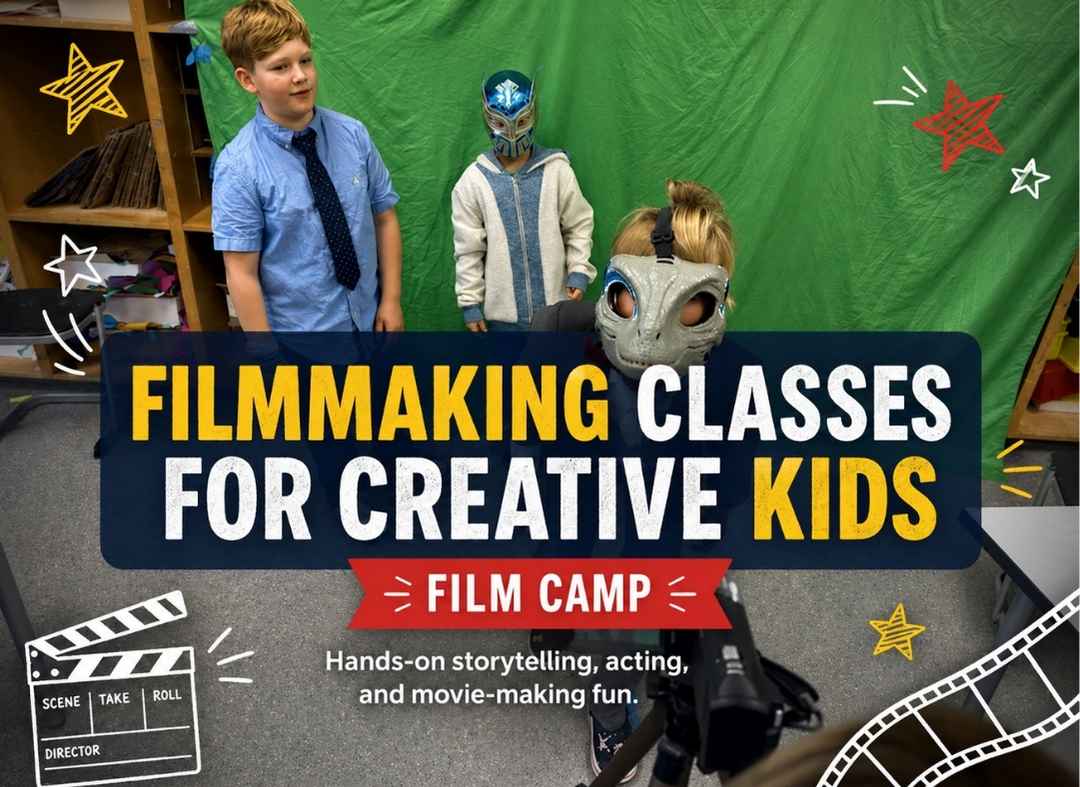
Discover why filmmaking classes help creative kids build confidence, teamwork, and storytelling skills through hands-on movie projects at Film Camp Los Angeles, where beginners learn by creating real short films.
Read >.jpg)
Weekend film classes in Los Angeles teach kids ages 8 to 14 filmmaking every Sunday in Glendale. Compare real costs, curriculum, safety, and what to ask before enrolling your child.
Read >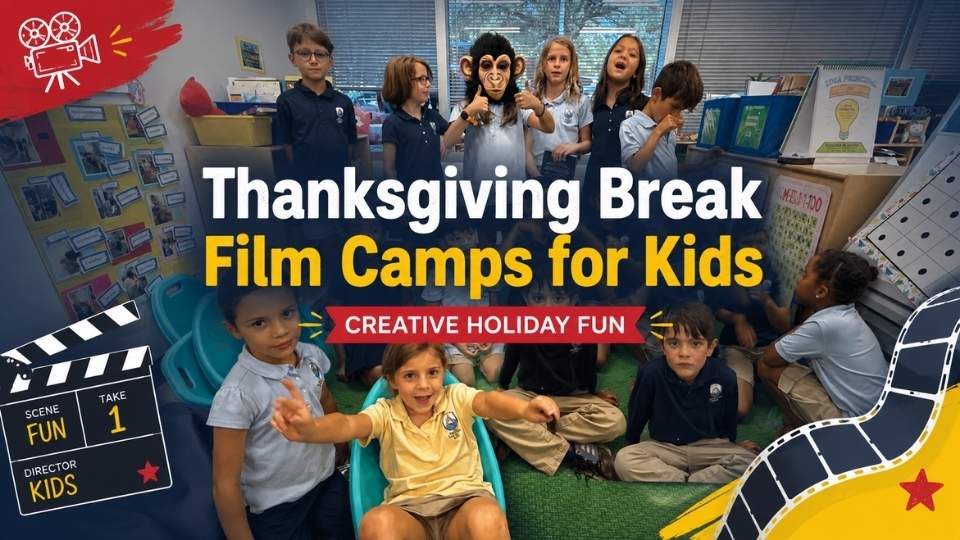
Thanksgiving break film camps fill the three school-free days in Austin, Los Angeles, and San Francisco. Kids ages 7 to 14 write, shoot, edit, and premiere their own short film.
Read >.jpg)
Discover how kids ages 7–14 learn screenwriting, acting, directing, camera work, editing, teamwork, and confidence at Los Angeles Film Camp in Glendale while creating and premiering their own short film.
Read >.png)