Small-group film classes give kids more camera time and feedback. Large groups bring social energy and teamwork. The best class is the one where every child gets a real role.

By the Film Camp team. Updated for the 2026 season. We run youth filmmaking programs in Austin, Los Angeles, and San Francisco.
So which is better for your kid, a small class or a big one? That one question keeps a lot of parents stuck. We get it. You want your child to actually make something, not just watch a screen for two hours. This guide breaks it down in plain terms.
Small-group weekend film classes are usually better for hands-on learning. Kids get more camera time, faster feedback, and a real role on set. Large groups suit social, outgoing kids who love team energy. But the best class is the one where every child gets a real job, not the smallest one.
Here is the honest version. Class size matters. It just matters less than participation. A tiny class with a bored kid in the corner still fails. So we look past the number on the flyer. We look at what each child actually does each week.
Small groups give each kid more turns. Fewer students means more time on the camera, more lines to direct, and more chances to try things. Your child stops waiting and starts doing.
That extra practice is where skills grow. Kids learn filmmaking by touching gear, framing shots, and fixing mistakes. Small classes make room for all of that. Beginner filmmakers especially thrive when they get real reps, not just a quick demo from the front of the room.
Large groups bring more energy and more friends. Some kids light up in a busy room. They love the crew buzz, the teamwork, and the crowd. For them, a bigger class can feel like a real film set.
Big classes work well when they are structured. Look for:
Ask about the instructor ratio before you sign up. One adult for twenty kids is very different from one for six.
Participation beats class size every time. A good class rotates each child through directing, editing, acting, and camera work. That is where confidence and skill come from. Size is just a clue, not the answer.
Here is a simple rule we live by. Every kid should touch every stage of a film. So we rotate roles on purpose. One week your child directs. The next week they run the camera or cut the edit. That ownership sticks with them long after the weekend ends.
A weekend film class for kids is a short, project-based program where children make a real short film. Kids write, shoot, and edit their own stories over a weekend or a few weekends. They learn by doing, not by watching. Most classes end with a finished movie the child can keep.
Filmmaking flips the screen around. Instead of watching movies, your kid makes one. That small shift changes everything. Watching is passive. Making is active, messy, and proud.
Think of it like the difference between hearing a song and playing one. Both are fun. Only one builds a skill. A good film class puts the tools in your child's hands from day one. They point the camera. They call action. They own the story.
Kids pick up the full toolkit of storytelling. Each skill feeds the same goal, which is telling a story people want to watch. Here is what a strong class covers:
None of these skills stand alone. They all serve the story. So we teach them together, on a real project, in the right order.
A beginner class should feel welcoming, not overwhelming. Your child should never need past experience to belong. Look for these signs of a true beginner program:
A low ratio matters most for first-timers. It means someone is right there when your child gets stuck.
Your child should walk away with a finished short film. That final project is the proof. It shows what they learned and what they can do. It also gives them something real to show family and friends.
Finished work does something quiet and powerful. It boosts motivation. A kid who completes a film wants to make the next one. That pride keeps them creating long after class ends. Want to see what our students make? Take a look at our student showcase.
A small-group weekend film class teaches filmmaking to a small number of students, often 6 to 10 kids. The size means more personal attention, more hands-on turns, and faster feedback. Small groups suit beginners and shy kids who need room to try, ask, and grow.
A small-group class keeps the student count low. Usually that means around 6 to 10 kids per instructor. The goal is simple. Give each child real attention and real time on the gear.
Fewer kids means shorter waits and more action. When six kids share a camera, each one gets more turns than in a class of twenty. Less waiting means more practice. More practice means faster growth.
Picture two classes shooting the same scene. In the small one, your child films, then directs, then acts. In the big one, they wait their turn and maybe touch the camera once. Role rotation happens naturally when the team is small. That is the whole point.
Quiet kids find their voice in small rooms. A busy crowd can feel scary. A small team feels safe. Shy children often start behind the camera, then move into bigger roles as their comfort grows.
We let that happen at each child's pace. There is no pressure to perform on day one. A shy kid can run sound this week and act next week. Small groups give them the gentle on-ramp they need.
Small classes let teachers coach in real time. When the group is small, your child gets notes right after they try something. That fast feedback loop helps skills stick. They hear what worked while it is still fresh.
Personalized coaching is hard in a crowd. In a small room, the instructor sees each shot and each edit. So they can guide your child, not just the class as a whole.
Small classes can cost a bit more and offer fewer classmates. That is the honest trade-off. Your child meets fewer new friends and you may pay a premium.
But look at value, not just price. More camera time and closer feedback often mean more learning per dollar. So compare what your child gets, not just what you spend. We break down cost versus value later in this guide.
A large-group weekend film class teaches filmmaking to a bigger set of students at once. The size brings social energy, teamwork, and more classmates. Quality depends on structure and instructor support, not just headcount. Well-run large classes split kids into small production teams so everyone stays busy.
A large-group class has more students per session. That often means bigger crews and more collaborative projects. The exact size varies by program. What matters is how the class is run, not just how many kids attend.
Big classes buzz with energy. More kids means more ideas, more friends, and a real crew vibe. Ever seen a film set? It is loud and full of people. A large class can capture that same thrill.
Structured group projects also build communication. Kids learn to share ideas, listen, and solve problems together. That teamwork is a skill they carry into school and life.
Large groups shine for outgoing, social kids. If your child loves crowds and teamwork, a bigger class can be a great fit. Peer energy pushes them to try more and share more.
The key is clear roles. When every child has a defined job, no one drifts off or checks out. So ask how the program assigns roles. Good large classes keep every kid engaged from start to finish.
Bigger classes can mean less camera time per kid. More students share the same gear and the same teacher. That is the trade-off. Your child may wait longer for a turn.
You can measure this before you enroll. Ask two simple questions:
The answers tell you how much hands-on time your child will really get.
A well-run large class keeps every child active. Size is fine as long as structure is strong. Use this quick checklist to judge quality:
Ask whether every child rotates through directing, acting, filming, editing, and sound. If the answer is yes, size matters far less.
Small groups win on hands-on time, feedback, and personal attention. Large groups win on social energy, teamwork, and more classmates. The best choice depends on your child, not the label. Use the table below to match class size to your kid's needs.
What mattersSmall groupLarge groupHands-on camera timeMore turns per kidShared, fewer turnsInstructor feedbackFast and personalLess one-on-oneConfidence buildingSafe space to tryGrows through peersTeamwork and social skillsClose collaborationBroad social mixRole rotationEasy and frequentNeeds strong structureEditing accessMore individual timeShared stationsFinal project ownershipClear personal roleTeam-based creditParent valueHigh learning per dollarMore friends per dollar
Small groups give more camera time per child. Fewer kids share each camera, so your child films more often. That practice builds real skill. Big classes spread the gear thinner, so turns come slower.
Ask for the student-to-camera ratio before you enroll. It is the clearest sign of how much your child will actually shoot.
Small classes offer faster, closer coaching. Your child hears notes right after they act or edit. That quick feedback helps new skills stick. In a big class, the teacher spreads attention across many kids, so notes come slower.
Class size shapes how kids build confidence. Small groups give a safe space to try and fail. Big groups build confidence through peer energy and applause. Both can work.
We focus on progress, not perfection. A child who improves each week walks away proud. That pride is the real prize.
Filmmaking builds teamwork by design. A film crew is like a sports team. Everyone has a job, and the win depends on all of them. Small groups build deep, close bonds. Large groups build broad social skills.
Either way, your child learns to listen, share, and solve problems with others.
Every child should try many roles, not just one. Role rotation is where the real learning happens. Look for classes where kids rotate through directing, editing, camera, and acting.
Avoid any class where students stay in one role all day. That limits growth and boredom sets in fast.
Editing time matters as much as filming time. Editing is where a story comes together. Small groups give more individual time at the editing station. Big classes often share screens, so ask how much solo editing time each kid gets.
Every child should know their part in the final film. Ownership fuels pride. In a small group, each kid can point to their role. In a large group, credit is shared across the team. Both are fine, as long as your child can name what they did.
Measure value by learning, not just tuition. A good class is worth it when your child participates, gets feedback, and finishes real work. Small groups often deliver more learning per dollar. Large groups offer more friends and social reps. Pick the value that fits your child.
Class size directly affects how much your child actually does. Smaller classes mean more turns on the camera, more editing time, and more roles per kid. Larger classes can mean more waiting. Filmmaking is a skill built through repetition, so active turns matter more than seat time.
Kids learn film the same way they learn an instrument. You cannot play guitar by watching a video. You have to hold it and practice. Filmmaking works the same way. Your child grows by shooting, cutting, and trying again.
So the best classes are heavy on practice and light on lectures. Reps build real skill.
Bigger classes can shrink each child's active time. When twenty kids share one camera, waiting adds up. Attendance is not the same as participation. A child can attend a class and still barely touch the gear.
So look past headcount. Ask what your child will actually do, minute to minute.
The student-to-camera ratio predicts practice time. Fewer kids per camera means more turns for your child. It is one of the most useful questions you can ask. A low ratio usually means more real filmmaking.
Editing access shapes storytelling skill. Editing teaches kids how each choice changes the final story. If ten kids share one screen, solo time shrinks. So ask how many students share each editing station.
Role rotation gives kids the full film experience. Every child should try directing, filming, acting, editing, and sound. Rotation exposes them to every stage of production. Use this quick check:
A truly hands-on class lets kids create most of the time, not watch. To check, ask what your child will personally do each week, how often they use real gear, and what they take home. If the answers are vague, dig deeper before you enroll.
Marketing loves the word "hands-on." But does the classroom match the flyer? Here is how to find out.
A good class can describe weekly outcomes. Ask what your child will make and do each session. Look for detailed answers, not buzzwords. Clear weekly goals show a real plan behind the class.
Kids should use real gear regularly, not just once. Cameras and mics should be in their hands often. If gear only appears during a demo, that is a red flag. Regular use builds real confidence.
Strong classes cover the full filmmaking process. Your child should touch every stage, not just one. Full-process learning builds versatile creators. Ask if the program includes:
Kids should spend most class time creating. Watching a film is not the same as making one. Ask how much time goes to hands-on work versus lectures or screenings. The best classes tilt heavily toward doing.
A finished short film is the best takeaway. A completed movie proves your child learned and created something real. Ask what they leave with. A tangible result shows both skill and ownership.
Role rotation lets kids try every job on a film, so they learn more and find hidden strengths. Instead of repeating one role, children direct, act, film, edit, and design. This variety builds confidence and often reveals a passion no one expected.
Should a kid pick one role and stick to it? We say no. Kids often discover a hidden love after trying a new job. So we rotate everyone through the whole set.
Acting builds confidence and clear communication. Kids learn to speak up, express feelings, and hold attention. Even children who dislike acting grow from trying it once. It stretches them in a good way.
Directing teaches leadership and decision-making. A young director learns to guide a team and make calls. The best directors listen first, then lead. That habit helps kids far beyond the set.
Camera work turns kids into visual storytellers. The camera is a tool for telling stories with pictures. Frequent practice builds an eye for framing and movement. Kids learn to show, not just tell.
Good sound makes a film feel real. Kids learn to capture clear voices and useful audio. Parents often overlook sound. But poor audio can sink an otherwise great film. Attention to detail pays off here.
Writing turns imagination into a plan. Kids shape ideas into scenes and dialogue. A wise plan comes before the first shot. And simple stories often become the strongest short films.
Editing completes the storytelling process. Kids cut clips into a finished story. They learn how each choice changes the feel of the film. Editing is where the movie truly comes alive.
Production design shapes the look of the world on screen. Kids build sets and gather props. They learn to solve creative problems with everyday materials. A little cardboard can become a spaceship. That is the magic of design.
The best class size depends on your child's personality, not their age. Shy kids often thrive in small groups. Outgoing kids often love big, social classes. Beginners need supportive teaching over fancy gear. Match the class to how your child learns and connects.
Personality fit often predicts long-term joy better than age. So let us match class size to your kid.
Shy kids often thrive in small groups. A small room feels safe and welcoming. We suggest starting with behind-the-camera roles. Your child can build comfort first, then step into bigger roles at their own pace.
Outgoing kids often love big, social classes. They feed off crowd energy and teamwork. A larger class gives them plenty of friends and buzz. Even so, encourage role rotation so they grow in every area.
Beginners need supportive teaching most of all. Fancy gear matters less than patient guidance. Look for a beginner-friendly class that teaches fundamentals with care. A first film class should build comfort, not stress.
Video-loving kids often shine in film class. They already enjoy making content, so filmmaking feels natural. But there is a difference. Content creation is quick and casual. Filmmaking teaches deep, cinematic storytelling. A class helps them level up.
Acting-focused kids gain from full filmmaking too. Learning the camera makes them stronger performers. They understand framing, timing, and how a scene is built. So acting improves when kids know how film works.
Behind-the-camera roles are just as valuable as acting. Some kids love directing, editing, or camera work. That is wonderful. Filmmaking needs every role. We celebrate the quiet creators as much as the stars.
Learning needs shift as kids grow, so the right class changes with age. Younger children need structure and simple tasks. Preteens are ready for teamwork and role rotation. Teens want leadership and ownership. Developmental readiness matters more than rushing ahead.
A wise class meets each age where it is. Here is how needs change as kids grow.
Younger kids need structure and lots of encouragement. Keep sessions active with short, fun creative tasks. Their attention is short, so variety helps. Praise effort often. At this age, joy and confidence come first.
Preteens are ready for teamwork and real planning. They can plan stories and rotate through roles. Introduce leadership slowly, one small step at a time. This is a great age to grow independence on a crew.
Teens want real responsibility and creative ownership. Give them leadership roles, not just technical tasks. Let them direct, edit, and make big calls. Meaningful work keeps older kids engaged and proud.
Mixed-age classes should adapt to each child's level. Good instructors adjust tasks so everyone contributes. Flexible role assignments help each kid work at the right level. Look for these signs of strong mixed-age teaching:
Confidence grows fastest when kids contribute to real projects. Small groups build confidence through safe, personal attention. Large groups build it through peers and applause. In both, a finished film gives your child visible proof of what they can do.
Kids grow confident when they have a real job. Responsibility tells a child they matter to the team. That feeling of being needed beats passive watching every time. So we give every kid a role that counts.
A child who films a key scene feels proud. A child who just watches does not. Real jobs build real confidence.
Shy kids often gain confidence behind the camera first. Technical roles feel safe and low-pressure. Your child can run sound or film a shot without the spotlight. Then, at their own pace, they can move into speaking roles.
Outgoing kids often love acting and directing. These roles let them lead and express themselves. That energy fuels their confidence. Still, rotate leadership so every child gets a turn to shine.
A finished film is proof your child can create. They can watch it, share it, and feel proud. That visible win builds lasting confidence. And it sparks the drive to make the next film.
Filmmaking builds teamwork because every role depends on the others. Small groups build deep, close collaboration. Large groups build broad social skills and wider networks. A hybrid class can offer both, with big-group instruction and small production teams.
A film crew works like a team or an orchestra. Everyone plays a part, and the film only works when they sync up. Kids learn to balance their ideas with the group's plan. So they practice listening, sharing, and compromise.
Small teams build closer, deeper collaboration. With fewer kids, each one gets more chances to contribute. They learn each other's strengths fast. That closeness often leads to stronger teamwork and real friendships.
Large groups widen your child's social circle. More classmates means more friends and more perspectives. A well-managed big class encourages networking without losing structure. Your child meets kids they might never have met.
Hybrid classes blend big-group energy with small-team focus. Kids get large-group instruction, then split into small crews to create. It is a balanced option. As the saying goes, why choose one when you can have both? Hybrid models often deliver social buzz and real participation.
Before you enroll, ask about supervision, staff background checks, and emergency plans. A quality film class has written safety procedures, secure pickup and drop-off, and enough adults in the room. Ask about safety first, then curriculum and gear.
Is your child safe and supported? That question comes before all others. Here are the ones worth asking.
A lower instructor-to-student ratio means better supervision. More adults means closer watch and more feedback. Ask how many teachers work each session. The right ratio keeps kids safe and engaged.
Kids should be supervised during every filming activity. Supervision cannot stop at the classroom door. If students shoot outside or in another room, an adult should be there. Ask how the program handles supervision on set.
All staff should pass background checks before working with kids. This is a basic standard for any children's program. Ask whether checks are complete before staff start. Trust begins with verified adults.
Secure sign-in and sign-out protect your child. A clear pickup process prevents mix-ups. Look for documented sign-in and sign-out steps. Ask how the program confirms who picks up your child.
Gear and props should match your child's age and skill. Equipment should fit both size and ability. Heavy or complex tools can frustrate young kids. Ask how the program picks age-appropriate gear.
Good programs support kids who feel anxious or overwhelmed. Every child has hard moments. Ask if instructors have a plan for a short break or a different role. A caring response tells you a lot about the program.
A written emergency plan should exist and be shared. Staff and parents should both know the steps before class starts. Ask to see it. Preparation is a clear sign of a serious, caring program.
Judge a film class by value, not just price. Measure how much real participation, feedback, and finished work your child gets. A small-group class often costs more but delivers more hands-on learning. The cheapest option is not always the best investment.
The cheapest class is not always the best choice. A low price can hide big gaps in gear or teaching. Compare learning outcomes before you compare tuition. What your child gains matters more than what you save.
Value comes from real turns, not just seat time. How much will your child actually create? A class with more camera time can be worth more, even at a higher price. Kids learn more from doing than from watching others.
A finished film is proof of real learning. Ask what your child will complete by the end. Completed projects give you something measurable to point to. That outcome is worth real money.
Teaching skill matters as much as film experience. Working in film is not the same as teaching kids. Great instructors do both. Ask about their experience guiding children, not just their credits.
Regular gear access builds skill faster. Frequent hands-on time beats occasional demos. Ask how often your child uses real cameras and editing tools. Steady access is where confidence grows.
Every child should leave with a finished film. A completed movie reflects participation, teamwork, and new skills. It is the clearest sign the class delivered. Ask to see student films before you decide.
In Austin, San Francisco, and Los Angeles, judge each program by participation, not by prestige or marketing. Look for real hands-on time, clear roles, and finished projects. Use the same questions across every school so you can compare them fairly.
Every city has options. So how do you choose the right local program? Here is our city-by-city take.
Austin parents should seek project-based filmmaking programs. Look past lecture-heavy classes. Choose ones where kids create from day one. Our Austin film camps blend creativity with real, practical filmmaking skills.
Bay Area parents should weigh commute and venue. A long drive can drain your child's energy and attendance over time. Pick a spot that fits your week. See our San Francisco film camps for a creative-tech friendly program.
LA parents should look past celebrity branding. Flashy Hollywood language does not equal hands-on learning. Ask what kids actually create each week. Our Los Angeles film camps focus on real participation, not just star-studded promises.
Use one checklist to compare every program fairly. Ask the same questions at each school. That keeps your comparison honest. Here is your quick local checklist:
Watch for vague equipment access, too many kids per camera, and no clear final project. Other red flags include missing instructor bios, no safety policy, and no student film samples. One warning sign is worth a question. Several together mean you should dig deeper.
One red flag alone may not be a dealbreaker. But a few together? Time to ask harder questions.
Vague gear claims are a warning sign. "Hands-on" should come with details. Ask for a sample schedule that shows real equipment use. If the answer stays fuzzy, be cautious.
High camera-sharing ratios limit real practice. If twenty kids share one camera, turns are rare. Ask for the student-to-camera ratio. A lower ratio means more hands-on filmmaking for your child.
No final project means no clear outcome. Your child should build toward a finished film. Ask to see examples of completed student work. A defined goal shows a real curriculum.
Missing instructor info is a red flag. You deserve to know who teaches your child. Experience working with kids matters as much as film credits. Ask for teacher bios before you enroll.
A missing safety policy is a serious concern. Every program should share written safety and supervision rules. Ask for them before enrollment. No policy means no clear plan.
No sample films can hide weak teaching. A portfolio shows what students actually make. Ask to see recent work from kids your child's age. Real examples build trust.
A class that skips the basics can overwhelm beginners. First-timers need fundamentals first. Strong beginner programs teach the simple stuff before the hard stuff. If the class assumes experience, it may not fit a newcomer.
Older kids need real challenge, not baby steps. Teens get bored without growth. Look for chances to lead projects, direct, and edit. A good class scales up as kids get older.
Before you pay, ask about class size, curriculum, safety, and outcomes. Bring the same questions to every school so you can compare them side by side. The right program will answer clearly and confidently.
Ready to visit a class or open house? Bring this checklist. It keeps your comparison fair and clear.
Ask how many students share each instructor and each camera. These ratios reveal how much attention and practice your child gets. Use these questions:
Ask whether every child writes, films, edits, and collaborates. A strong curriculum covers the full process. Check for project-based, hands-on learning. Ask what your child will create each week.
Ask for written safety and emergency policies. Supervision and background checks protect your child. Request these details before you enroll:
Ask to see recent student films. Finished work shows real results. Request examples that match your child's age group. A clear outcome tells you the class delivers.
Choose small groups for hands-on learning and personal feedback. Choose large groups for social energy and teamwork. A hybrid model gives both. Above all, pick the class where your child will truly participate. Participation predicts learning better than class size alone.
Pick a small group for maximum hands-on practice. Your child gets more turns and closer feedback. This suits beginners and kids who learn by doing. Prioritize classes that rotate every child through many roles.
Pick a large group for social kids who love teamwork. Crowd energy and new friends drive them forward. Just choose a structured class with clear roles and enough instructors. Structure keeps big classes strong.
Pick a hybrid model to get the best of both. Kids get group energy plus small-team focus. It blends social buzz with real participation. When available, a hybrid class is often the sweet spot.
Above all, choose the class where your child will actively take part. A quiet kid with a real role beats a busy classroom with none. Participation quality is the strongest sign of real learning. That is the heart of every great film class.
Ready to see your child make their first real film?
We keep our crews small, our roles rotating, and our projects real. Your kid writes, shoots, and edits a movie they can keep.
Explore Enrollment or Contact Us with questions.
Small-group film classes are often better for hands-on learning. Kids get more camera time and faster feedback. But class size is not everything. The best class is the one where your child gets a real role and takes part fully.
A good class size gives each kid real attention and camera time. Focus on the ratios, not just the number. Ask how many students share each instructor and each camera. Engagement matters more than an exact headcount.
Weekend film classes can be great for shy kids. Small groups feel safe and welcoming. Shy children often start behind the camera. Then they move into bigger roles as their comfort grows.
A large-group film class is not bad when it is well-run. Quality depends on structure, not size. Look for enough instructors, small teams, and clear roles. A well-managed big class keeps every kid busy.
Kids learn to write, direct, film, and edit a real short film. They also learn sound and teamwork. Every skill connects to one goal, which is telling a good story. Most classes end with a movie the child can keep.
No, kids do not need any filmmaking experience to join. Quality beginner classes teach the fundamentals step by step. First-timers are welcome. A good program builds comfort and skill from day one.
Yes, in a good class your child will make a real film. That finished movie is the whole point. Ask about final project requirements before you enroll. A completed film is proof of what your child learned.
A film class teaches more than an acting class. Acting is just one part of filmmaking. A film class also covers directing, camera, editing, and story. It gives your child the full creative toolkit.
Yes, film class is great for kids who love YouTube. They already enjoy making videos. A class helps them go deeper. They learn real cinematic storytelling, not just quick clips.
Yes, even edit-focused kids gain from full film camp. Editing improves when kids understand filming. They cut better when they know how a shot was made. Broader knowledge makes them stronger editors.
Kids can start filmmaking classes around age 7. Readiness and interest matter more than a set age. If your child loves stories and cameras, they are ready. A good program adjusts to each age group.
Check for written safety policies and background-checked staff. Verify supervision, pickup rules, and an emergency plan. Ask about instructor qualifications too. Clear, written policies are the sign of a safe program.
Ask about class size, learning, safety, and final outcomes. Find out how much your child creates each week. Ask to see student films. Compare answers across a few providers before you decide.
Neither format is universally better than the other. Weekend classes fit busy schedules. Summer camps offer deeper, longer projects. Choose based on your child's goals and your family calendar, not on the label.
Filmmaking offers many creative paths beyond acting. Your child can direct, film, edit, or design sets. Many successful filmmakers never appear on camera. There is a perfect role for every kind of kid.
Still deciding? Browse more guides on our blog or check the FAQ for quick answers.
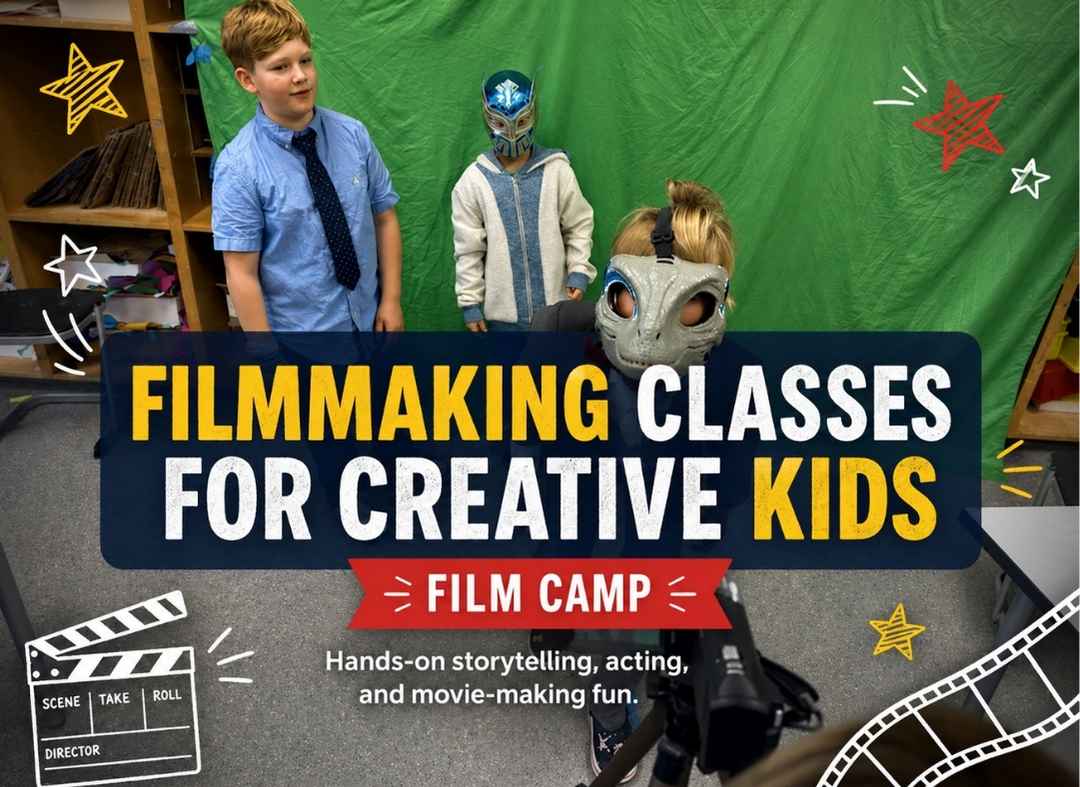
Discover why filmmaking classes help creative kids build confidence, teamwork, and storytelling skills through hands-on movie projects at Film Camp Los Angeles, where beginners learn by creating real short films.
Read >.jpg)
Weekend film classes in Los Angeles teach kids ages 8 to 14 filmmaking every Sunday in Glendale. Compare real costs, curriculum, safety, and what to ask before enrolling your child.
Read >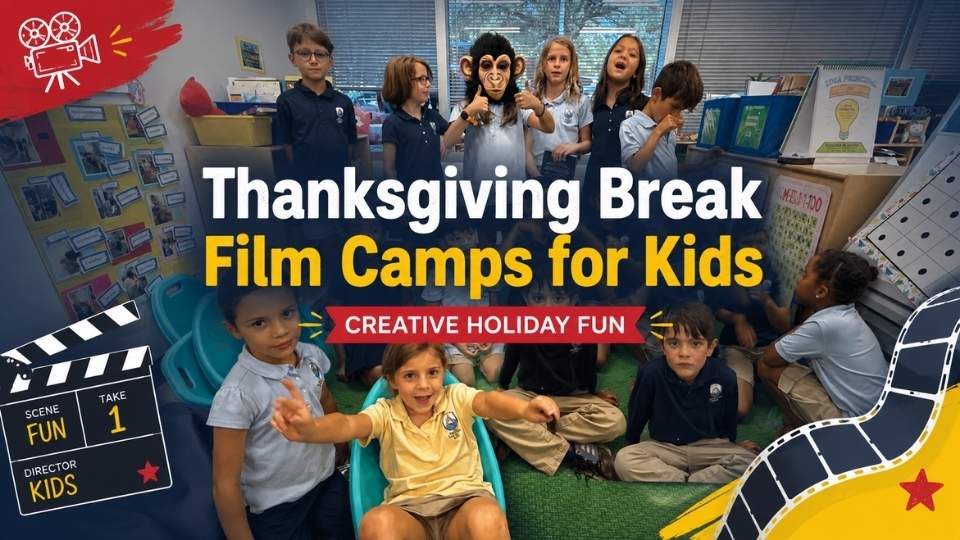
Thanksgiving break film camps fill the three school-free days in Austin, Los Angeles, and San Francisco. Kids ages 7 to 14 write, shoot, edit, and premiere their own short film.
Read >.jpg)
Discover how kids ages 7–14 learn screenwriting, acting, directing, camera work, editing, teamwork, and confidence at Los Angeles Film Camp in Glendale while creating and premiering their own short film.
Read >.png)