Discover how kids ages 7–14 learn screenwriting, acting, directing, camera work, editing, teamwork, and confidence at Los Angeles Film Camp in Glendale while creating and premiering their own short film.
.jpg)
Your child will learn how to turn an idea into a finished short film. That sounds simple. It isn’t. A movie asks kids to write, plan, perform, film, listen, edit, and adapt.
At Film Camp, those skills connect inside one hands-on project. Campers ages 7–14 work in small crews at Solar Studios in Glendale. They learn both creative and technical roles. No previous filmmaking experience is required.
The week covers scriptwriting, acting, directing, camera work, lighting, sound, editing, music, and visual effects. Kids also practice teamwork, confidence, patience, and clear communication. The proof is in the finished film, not a worksheet.
Parents often ask one fair question. Is this real learning, or just more screen time? The answer depends on how the camp uses each screen.
Passive screen time asks a child to sit and watch. Film Camp asks them to create, move, discuss, rehearse, solve problems, and make choices. The screen becomes a tool, not the whole activity.
This guide explains what your child will learn in Glendale. It also shows how a film moves from idea to premiere. You’ll know what to expect before choosing a week.
Kids learn the full filmmaking process from story idea through final screening. Each new skill supports the next one. Nothing sits alone like a random class exercise.
Campers begin with a simple question. What story should our crew tell? They pitch ideas, build characters, and agree on a film their team can finish.
Next, they turn that idea into a script and visual plan. They prepare scenes, roles, props, costumes, shots, and camera positions. Measure twice and cut once works on film sets too.
During production, campers rotate through jobs. They may direct one scene, act in another, and operate a camera later. That rotation helps every child see the whole picture.
Post-production brings another set of choices. Kids review footage, select useful takes, arrange scenes, adjust timing, and add sound. Editing teaches that the first version rarely becomes the final version.
The week ends with a finished short film and family screening. That deadline gives every lesson a purpose. Kids aren’t learning buttons without a reason. They’re making something they can proudly share.
Film Camp offers hands-on filmmaking camps for children who learn best by doing. The Glendale program uses the same project-first idea. Every activity moves a crew closer to its finished movie.
The complete process helps children understand how creative work really happens. A movie doesn’t appear because one person has a brilliant idea. It grows through many small decisions.
That matters for children who love movies, acting, drawing, writing, or online videos. They may arrive focused on one favorite part. Camp lets them explore the other pieces too.
A child who wants to act may discover sound recording. A quiet writer may enjoy directing. A gadget-loving camper may learn that camera choices begin with story.
The process also gives each personality a useful place. Filmmaking needs bold voices and careful listeners. It needs planners, performers, builders, editors, and problem-solvers. There’s more than one way to shine.
This is where the rubber meets the road. Kids move from an idea to a finished team project. That shift builds follow-through, not just excitement.
Professional filmmaking usually moves through pre-production, production, and post-production. Campers meet those same stages in a child-friendly way. The scale changes, but the creative logic stays familiar.
Campers first learn how to shape a loose idea into a clear story. Many children arrive with giant worlds in mind. Those worlds need a beginning, middle, and end.
Instructors help kids find the strongest part of an idea. Who is the main character? What does that person want? What obstacle makes the story interesting?
Children also learn to match an idea with available time and tools. A ten-minute spaceship battle sounds exciting. A clever scene using green screen may tell it better.
That lesson is practical and kind. The goal isn’t to shrink a child’s imagination. The goal is to make the idea shootable during camp.
Kids may develop comedies, adventures, talk shows, dramas, or music videos. Different formats invite different thinking. A comedy needs timing. An adventure needs clear action. A talk show needs strong questions.
Every good story starts somewhere. Campers learn that a first idea is a doorway, not a finished house. They can improve it without losing what made it special.
Pitching teaches kids to explain an idea in a few clear sentences. They name the main character, problem, and ending. Then they listen to questions from their crew.
This can feel scary at first. A child may worry that others won’t choose their idea. Instructors keep the process fair and focused on teamwork.
Campers learn that an idea can join another idea. One child’s character may fit another child’s setting. A funny line may improve a serious scene. Two heads are better than one.
Listening matters as much as speaking. Kids practice asking useful questions instead of dismissing someone’s idea. They learn to disagree without making the moment personal.
That’s a real creative skill. Film crews rarely use one person’s first thought without changes. Strong work grows through clear feedback and shared ownership.
Kids learn that a script is the crew’s blueprint. It shows what happens, who speaks, and where each scene takes place. Without it, filming can quickly become guesswork.
Campers practice writing scenes that can be acted and recorded. They learn to show an action instead of explaining everything. They also hear how dialogue sounds aloud.
Short scripts force useful choices. Every scene needs a job. Every character needs a reason to appear. Extra ideas can wait for another movie.
Children may start with a story outline before writing dialogue. They identify the opening, main problem, turning point, and ending. Then they add character actions and spoken lines.
A table read helps the crew test the script. Campers read each role aloud and notice awkward phrases. If nobody understands a line, the line needs work.
The related guide to scriptwriting classes inside film camps explains this learning process in more detail. At camp, children immediately test those writing choices on camera.
Storyboards help kids turn written scenes into pictures. A simple frame can show camera position, character placement, and key movement. Drawing skill doesn’t decide success.
Some campers use stick figures. Others add detailed backgrounds. Both can work. The storyboard’s job is to guide the crew, not enter an art contest.
Kids also learn basic shot lists. The list may include a wide shot, medium shot, close-up, or special detail. This helps the crew avoid missing important coverage.
A picture is worth a thousand words fits here. One rough sketch can prevent ten minutes of confusion. Campers see how planning saves time during production.
Storyboards also support quieter children. A camper who dislikes long speeches can show an idea visually. Their drawing may clarify the whole scene.
Directing teaches children how to guide a scene while respecting the crew. The director keeps the story clear. They also help actors and camera operators understand each shot.
Campers learn to explain what they want in plain language. “Make it better” isn’t helpful direction. “Pause before that line” gives an actor something useful.
They also practice blocking. Blocking means planning where performers stand and move. Good blocking keeps actions visible and makes the scene easier to film.
A young director must watch several details together. Does the actor know the line? Is the camera ready? Is a prop missing? Is background noise ruining the take?
That challenge builds focus. It also teaches calm problem-solving. When one plan fails, the director helps the group choose another path.
The best directors don’t do every job themselves. They create enough clarity for others to do their jobs well. Many hands make light work, even on a tiny set.
Campers learn basic set language. The crew prepares, the camera rolls, and the director calls action. After the scene, the director calls cut and checks the result.
Another take doesn’t mean someone failed. It may fix sound, timing, framing, focus, or a missed line. Kids learn to separate helpful correction from personal criticism.
They also learn when a take is good enough. Chasing perfection can steal editing time. A director must balance quality with the daily schedule.
That balance supports decision-making. Children see that real projects have limits. They can still create strong work within those limits.
Campers learn that camera work is more than pressing record. Camera height, distance, angle, and movement change how a scene feels. Every frame makes a choice.
A wide shot can introduce a place. A close-up can show a small reaction. A low angle can make a character seem powerful. A high angle may make them seem smaller.
Kids practice holding, placing, and operating cameras safely. Instructors explain controls at an age-appropriate level. The goal is confident use, not a lecture about every setting.
Campers also learn framing. They watch the edges of the picture and check headroom. They notice distracting objects behind an actor.
This develops careful observation. Children stop seeing only the main subject. They begin noticing the whole frame and how each detail affects viewers.
Practice makes progress. Early shots may wobble or miss the action. Later shots usually show better timing, balance, and purpose.
Composition means arranging people and objects inside the frame. Kids learn simple ways to make images clear and interesting. They may explore balance, depth, leading space, and screen direction.
Movement adds another choice. A still camera can feel calm. A slow pan can reveal new information. A handheld shot can feel urgent.
Campers learn that movement should support the story. Moving the camera without a reason can distract viewers. A planned move can pull them into the moment.
They also practice keeping shots steady. Tripods and careful body position help. When movement is planned, the camera operator rehearses before recording.
That rehearsal teaches muscle memory and patience. Kids discover that polished shots often come from quiet preparation.
Lighting teaches children how brightness and shadow affect an image. It helps viewers see faces. It can also make a scene feel cheerful, tense, mysterious, or strange.
Campers may learn simple key, fill, and backlight ideas. They see how light direction changes facial features. They also notice how backgrounds need attention.
Safety comes first around stands, cables, and hot equipment. Instructors guide setup and keep pathways clear. Campers learn that set safety belongs to everyone.
Kids may use available studio light, small fixtures, reflectors, or colored effects. The tools matter less than the reason behind each choice.
Lighting is like painting with brightness. The crew adds, removes, or redirects light until the frame supports the story. That metaphor becomes visible within seconds.
The lesson also builds patience. A few careful adjustments can improve a shot more than a fancy camera. Slow and steady wins the race.
Campers learn that clear sound can make a simple film feel polished. Bad sound can make strong acting hard to follow. Viewers forgive many picture flaws before lost dialogue.
Kids practice listening for noises the brain normally ignores. Air systems, footsteps, traffic, clothing, and nearby voices can enter a recording.
They learn basic microphone placement and safe handling. A microphone should get close enough for clear dialogue. It must also stay outside the frame.
The sound role encourages focus and responsibility. The operator watches levels, listens through headphones, and reports problems before the next take.
This job often fits detail-minded campers. They may catch issues nobody else notices. Their careful work protects every performance.
Hear it straight from the horse’s mouth applies here. If the recording sounds wrong now, editing may not fully rescue it later.
Room tone captures the natural sound of a quiet location. Editors use it to smooth gaps between clips. Campers learn why “quiet” still has a sound.
They may also record simple sound effects. Footsteps, doors, fabric, and small props can add life. Children begin noticing how movies build an invisible sound world.
Music brings another lesson. A song can change how viewers read the same image. It can add energy, worry, humor, or relief.
Campers learn to choose music for a reason. Louder doesn’t always mean better. Music should support dialogue and emotion, not bury them.
Acting for film teaches children how the camera notices small details. A tiny look can carry meaning. Huge stage gestures may feel too strong in a close-up.
Campers practice dialogue, reactions, eye lines, and hitting marks. A mark shows where an actor should stand. It helps lighting, focus, and framing stay consistent.
They also learn continuity. If an actor holds a cup with one hand, the next shot should match. Small mismatches can make editing harder.
Acting exercises help children loosen up without forcing them into a spotlight. Instructors can begin with group games, short lines, or simple reactions.
Every camper gets meaningful experience on both sides of the camera. However, roles can respect comfort levels. A shy child can grow one step at a time.
Read the room is a good rule for acting. Performers notice scene partners, camera distance, and the story’s mood. They adjust instead of pushing one fixed performance.
Confidence at camp doesn’t mean becoming the loudest child. It means trying a new task and surviving an imperfect first attempt.
A camper may speak one line on Monday. By Thursday, that child may pitch an editing choice. Growth can look quiet before it looks dramatic.
Instructors should offer clear challenges without public embarrassment. They can praise effort, preparation, listening, and recovery. Those habits build lasting confidence.
Children also see peers make mistakes. A missed line becomes another take. A shaky shot becomes a lesson. Nobody needs to pretend perfection.
That shared experience creates relief. Kids learn that creative risks feel safer inside a supportive crew. You can’t make an omelet without breaking eggs.
Production design teaches campers how sets, props, costumes, and makeup shape a film’s world. A blank room can become a lab, spaceship, office, or game show.
Kids learn to choose details that serve the story. A detective may need a notebook. A strange visitor may need one unusual costume piece.
They also work within practical limits. Large ideas can become clever small solutions. Cardboard, fabric, signs, and safe household objects can suggest bigger worlds.
This work welcomes campers who enjoy drawing, crafting, fashion, or building. It shows that filmmaking needs more than performers and camera operators.
Campers practice organization too. Props must be ready before a take. Costumes must stay consistent between shots. When the curtain rises, preparation shows.
Green screen lets campers place performers inside imagined locations. They learn that good results begin during filming, not after it.
Lighting should remain even across the background. Clothing should avoid matching the screen. Performers need room between themselves and the green surface.
Kids may act against objects they cannot see. They must imagine size, distance, and direction. That exercise blends performance with visual planning.
Practical effects bring another kind of problem-solving. Camera angles, simple props, forced perspective, and careful cuts can create surprising illusions.
The magic works best when the crew plans the trick. Smoke and mirrors is an old phrase, but filmmaking often turns simple methods into believable moments.
Filmmaking teaches teamwork because no child can complete every role at once. The actor needs the camera operator. The director needs the sound recorder. The editor needs usable footage.
Campers practice sharing equipment, time, and attention. They also learn that every role deserves respect. A missing sound file can matter as much as a missed line.
Small crews make participation easier to see. Film Camp’s Glendale sessions use production teams within a limited camp group. That structure gives each child real responsibility.
Kids learn to ask for help before a problem grows. They also learn to offer help without taking over. Both skills matter in school and group projects.
All hands on deck becomes real during a shoot. One camper checks a prop. Another watches the frame. Someone listens for noise. The director keeps everyone aligned.
The result belongs to the whole crew. That shared ownership builds pride and belonging. Children leave knowing their contribution mattered.
Creative disagreement is normal. Two campers may want different endings. An actor may dislike a line. A camera operator may want another setup.
Instructors help kids name the actual choice. Then the crew can compare options against the story, schedule, and available tools.
Campers learn to give specific feedback. “I don’t like it” stops the conversation. “The ending feels unclear” gives the team something useful.
They also practice receiving feedback. A suggested change doesn’t erase ownership. It may help the original idea reach viewers more clearly.
Sometimes the crew votes. Sometimes the director decides. Sometimes an instructor sets a safety limit. Kids learn that fair teamwork uses several decision methods.
When tempers rise, take a beat. That simple film phrase works for people too. A short pause can protect the project and the friendship.
Film sets create small problems all day. A prop breaks. A line runs too long. A sound interrupts the best take. A shot doesn’t match the storyboard.
Campers learn to name the problem before choosing a fix. That prevents rushed solutions. It also keeps blame away from the child who noticed it.
They may rewrite a line, change an angle, or move the scene. They could record sound again or use a different prop. Each choice has a tradeoff.
This teaches flexible thinking under a real deadline. Kids see that changing the plan isn’t giving up. It’s often how the work gets finished.
Instructors can guide the crew without solving every issue. A useful question may reveal the next step. Children keep ownership while receiving support.
When one door closes, another opens. A lost location might inspire a better studio setup. A missing costume can lead to a funnier character choice.
Campers learn to fit their ideas inside a five-day production schedule. They cannot film every possible scene. They must protect the story’s most important moments.
A crew may shorten dialogue or combine locations. They may choose one strong effect instead of five weak effects. Those choices make the project more focused.
Kids also learn what must happen first. The script comes before the shot list. Filming comes before editing. Credits come after the crew confirms every name.
This order builds planning habits. It also shows why missed deadlines affect other people. A late script leaves less time for everyone.
Time flies when the cameras roll. Campers learn to prepare before that happens. Good preparation creates more room for playful ideas on set.
Editing teaches kids how to arrange footage into a watchable film. The editor selects takes, trims pauses, and builds the scene’s rhythm.
Raw footage may arrive out of story order. The editor creates a timeline and places clips where viewers need them. It feels like solving a moving puzzle.
Campers learn that every recorded moment won’t appear. A funny take may slow the scene. A beautiful shot may confuse the story. Editors make hard choices.
They also check continuity. Does movement match between shots? Does the actor face the correct direction? Does the sound change suddenly?
The editing room makes earlier lessons visible. Good planning gives editors useful choices. Missing coverage forces them to become creative.
The guide to kids video editing training programs explores this skill further. Camp gives editing an immediate purpose because the crew needs a finished film.
Kids learn basic cuts before adding flashy effects. A clean cut can keep attention on the story. Too many transitions can pull attention away.
Pacing controls how quickly information arrives. A longer pause may create tension. A quick series of shots may create energy or humor.
Titles help viewers enter the film. Credits recognize every camper’s contribution. They also teach careful spelling and fair role acknowledgment.
Campers may add simple visual effects or color adjustments. These tools polish the film. They cannot replace unclear writing or missing footage.
The best edit often feels invisible. Viewers follow the story without thinking about each cut. Less is more when every choice has a purpose.
Sound design teaches campers to build the film’s emotional world. Dialogue gives information. Music, atmosphere, and effects help viewers feel the moment.
Children may layer footsteps, doors, room tone, or playful effects. They learn to balance each sound so important dialogue remains clear.
They also practice matching sound with action. A sound placed too early feels strange. A sound placed at the right frame can make an effect believable.
Music choices invite discussion about mood. The crew might compare two tracks against one scene. The same images can suddenly feel funny or serious.
Kids learn that sound shouldn’t become an afterthought. It deserves planning during production and editing. Good things come to those who listen.
Finishing teaches a different skill than starting. Campers must stop adding ideas, check their work, export the film, and prepare for viewers.
The final short film gives the week a clear result. Children can point to something their crew created together. That feels different from completing isolated exercises.
Before screening, campers may review titles, credits, picture, and sound. They learn that final checks protect everyone’s work.
The premiere also invites reflection. Which part was hardest? Which choice improved the film? What would the crew try next time?
A final screening acts like a finish line. It turns five busy days into one shared achievement. The show must go on, but preparation makes it enjoyable.
Presenting helps children stand behind their creative choices. They may introduce the film, name their crew, or describe one part of the process.
Some campers love that moment. Others feel nervous. Both reactions are normal. A supportive audience helps pride replace some of the fear.
Families see more than the final picture. They see their child’s name in the credits. They hear about the role that child played.
The premiere gives parents a concrete answer about value. They can see the collaboration, skills, and persistence inside the finished project.
Applause is icing on the cake. The deeper reward is knowing the child helped carry an idea from blank page to screen.
Film Camp serves ages 7–14, but learning should fit each child’s stage. Younger campers often need more play, movement, repetition, and visual examples.
Older campers may handle longer scenes, technical choices, leadership tasks, and more detailed feedback. They can also manage larger pieces of the workflow.
Age grouping helps instructors set a suitable pace. It prevents younger children from feeling rushed. It also keeps older campers appropriately challenged.
The core process stays familiar. Both groups create stories, perform, film, and edit. The level of independence changes.
No two children develop at exactly the same speed. Instructors should watch confidence and interest, not only age. Different strokes work for different folks.
Younger campers may focus on simple story structure and clear character goals. They can build scenes through games, drawings, props, and guided choices.
Camera lessons often begin with framing, steady handling, and start-stop control. Acting work may use short lines, reactions, and playful movement.
Their crew roles should remain real but manageable. A child can call action, hold a simple prop, or frame a close-up with support.
Frequent role changes help younger campers stay engaged. Short learning blocks also protect energy. Little by little, the pieces start connecting.
Older campers may write more detailed dialogue and shot lists. They can think about motivation, continuity, coverage, pacing, and sound quality.
They may direct longer scenes or lead a small crew task. Editing lessons can include more careful timing, titles, sound layers, and simple color choices.
Older children can also explain why they made a choice. That reflection turns practice into a reusable skill.
Leadership doesn’t mean controlling younger peers. It means helping the crew stay focused and included. With greater freedom comes greater responsibility.
Beginners learn enough shared language to join a crew. They don’t need camera ownership, acting credits, editing experience, or a finished script.
The first lessons should reduce mystery. Campers learn what each role does and how the stages connect. Then they practice with guidance.
New campers may worry about using professional equipment. Clear demonstrations and supervised practice help. The tools become less intimidating after a few turns.
They also learn that questions belong on set. Asking where to stand is responsible. Checking a cable is responsible. Admitting confusion protects the project.
Film Camp’s Los Angeles summer film camp welcomes beginners at Solar Studios in Glendale. Campers work from 9:00 a.m. to 4:00 p.m. during scheduled sessions.
Start on the right foot by telling instructors about your child’s interests. A small detail can help staff offer the first comfortable role.
Shy children can fit because film crews need many kinds of participation. A camper doesn’t need to perform loudly to matter.
Writing, storyboarding, sound, props, camera, and editing can offer lower-pressure starting points. Those roles still place the child inside the creative group.
Instructors can introduce performance gradually. A child might begin in a group scene or record one reaction. Comfort can grow without a forced solo.
Small production teams make it easier for children to learn names. Repeated shared tasks also create natural conversation. Kids talk while solving something together.
Parents should share useful context before camp. Mention recent anxiety, sensory needs, social worries, or successful support strategies. Forewarned is forearmed.
Belonging grows when a child knows the crew needs them. “You’re our sound operator” offers more purpose than “go join the group.”
A real job gives the camper a reason to speak. They can report a noise, confirm a take, or ask the director for another rehearsal.
That task-focused interaction can feel easier than open social time. Friendships may grow around shared jokes, scene problems, and successful takes.
Kids also rotate jobs, so one label never traps them. A quiet sound operator may become a confident director later.
No child should get lost in the shuffle. Small crews and attentive instructors help every camper receive visible responsibility.
Set safety teaches campers to protect people, equipment, and shared space. Creative energy works better when everyone understands clear boundaries.
Kids learn to walk around cables and wait before moving equipment. They ask before touching lights, stands, cameras, or unfamiliar props.
Crews keep paths clear and store items safely. They also use calm voices during setup. A busy studio becomes easier to manage when everyone follows the same rules.
Safety includes emotional respect too. Campers need consent around costumes, makeup, physical movement, and recorded performances. Adults should explain expectations clearly.
At the Glendale location, activities happen indoors at Solar Studios. The controlled environment reduces weather disruptions. It also keeps production tools under one roof.
Better safe than sorry fits every set. A great shot never matters more than a child’s well-being.
Parents should know who supervises their child. Film Camp states that instructors and staff complete background checks before working with campers.
The Los Angeles program also describes age-appropriate groups and limited enrollment. Smaller teams create more chances for direct guidance.
Parents can still ask practical questions. Who handles first aid? How are pickups verified? What happens during a conflict or health concern?
A trustworthy camp should answer without becoming defensive. Safety information should feel clear, current, and easy to confirm.
Trust, but verify is a useful parent rule. Read current policies before enrollment and share any important medical or support information.
Each camp day moves the production forward. The exact schedule may change, but the learning journey follows a practical order.
Monday usually centers on introductions, story ideas, roles, and basic film language. Crews begin shaping a concept and visual plan.
Tuesday moves deeper into scripts, acting, camera practice, shot lists, props, and pre-production. The team prepares to film efficiently.
Wednesday brings principal photography. Campers rehearse, record scenes, rotate roles, and solve new set problems.
Thursday combines remaining filming with post-production. Crews review footage and begin building a clear edit.
Friday focuses on finishing, sound, titles, credits, exports, and celebration. The final screening lets families see the result.
One step at a time keeps the week manageable. Each day depends on yesterday’s work, so campers understand why preparation matters.
A full day gives campers time to learn, practice, eat, reset, and return. Film production needs both focused work and healthy breaks.
The schedule also mirrors a real day-camp routine. Parents handle morning drop-off and afternoon pickup. Children return home each evening.
Day camp can suit first-time campers who aren’t ready for overnight stays. They gain independence without sleeping away from home.
Long creative blocks help teams finish meaningful work. However, instructors should vary sitting, moving, rehearsing, filming, and editing.
All work and no play makes Jack a dull boy. Good pacing protects attention and keeps the week fun.
Solar Studios gives campers a real production setting in Glendale. A studio helps children understand how filmmakers control space, light, sound, and backgrounds.
The location sits near Burbank, Pasadena, Eagle Rock, Atwater Village, and Los Feliz. It can also serve families across greater Los Angeles.
Glendale places the camp close to a major entertainment corridor. Children don’t need industry connections to feel that creative energy.
The studio setting also supports indoor learning. Heat, rain, and outdoor noise are less likely to derail the whole plan.
Location doesn’t teach filmmaking by itself. The program still needs clear instruction, safe supervision, and enough equipment access. The whole is greater than its parts.
A real studio sounds impressive, but access matters more than the label. Children should operate cameras, record sound, rehearse scenes, and make choices.
They shouldn’t spend the week watching adults handle everything. Demonstrations help, but supervised practice creates learning.
Small production teams can increase useful turns. Campers also gain more chances to ask questions and receive feedback.
Parents can ask how often each child uses equipment. They can also ask how crews rotate jobs. Put your money where your mouth is.
The week teaches more than movie production. Campers practice skills that can support school, clubs, friendships, and later creative projects.
Writing strengthens sequence and clear expression. Directing strengthens communication. Acting strengthens empathy and presence. Camera work strengthens observation.
Sound develops careful listening. Editing develops patience and judgment. Crew work develops shared responsibility and conflict repair.
Children also experience a full project cycle. They begin, revise, finish, and present. That pattern can transfer to many future goals.
Parents can review the broader skills kids learn at film camp before choosing a session. The Glendale week gives those skills a local, studio-based setting.
The take-home lesson is simple. Creative confidence grows through repeated action, not empty praise. Actions speak louder than words.
Making a film changes how children watch media. They begin noticing cuts, music, camera angles, performances, and visual tricks.
That awareness can make screen use more thoughtful. A child may ask how a scene was built instead of only consuming it.
Campers also see how editing shapes meaning. Two cuts can create different emotions from similar footage. That lesson supports healthy skepticism.
They learn that polished media requires choices and labor. Online videos stop looking effortless. Seeing behind the curtain can build better judgment.
A trustworthy camp shouldn’t promise mastery in five days. Children can learn foundations, practice roles, and finish a film. Mastery takes continued work.
Not every camper will love every job. One child may prefer acting. Another may avoid it and fall in love with editing.
The final film may include imperfect sound, uneven performances, or a visible continuity slip. Those details don’t erase the learning.
Crews also share decisions. A child’s favorite idea may change or disappear. That can feel disappointing, but collaboration includes compromise.
The goal is meaningful progress, not a flawless Hollywood production. Rome wasn’t built in a day, and young filmmakers need room to grow.
Expect your child to use real creative roles with guidance. Expect teamwork, revision, problem-solving, and a finished group project.
Expect some tiredness after a full day. Creative work asks for attention, movement, and social energy.
Your child may explain one tiny technical detail all evening. They may also say very little until the premiere. Both can signal a full day.
Ask specific questions after camp. Try asking which role your child used. Specific questions often unlock better stories.
Real value comes from active practice, qualified supervision, clear outcomes, and honest policies. A glossy studio photo doesn’t prove those things.
Ask what campers make by the end. Ask whether every child uses equipment. Ask how the camp supports beginners and quieter children.
Check staff screening, group size, pickup rules, refund terms, and included materials. Hidden details can change the true cost.
Parents should also confirm current dates, tuition, and premiere plans directly. Programs can update schedules between seasons.
The devil is in the details. A careful five-minute review can prevent a disappointing week.
Don’t judge a book by its cover. Judge the program by what children actually do, who guides them, and what they complete.
Start with interests, not career plans. A seven-year-old doesn’t need a film-school goal. Curiosity is enough.
Ask which part sounds most exciting. Writing? Acting? Camera work? Costumes? Effects? Editing? Their answer can help instructors offer an early entry point.
Ask how they feel about group projects. If they feel nervous, explain that crews use different roles. They won’t need to lead every moment.
You can also watch a short movie together and discuss one scene. Notice sound, framing, or costume. This makes camp language feel less strange.
Would your child rather create a funny commercial or a tiny adventure? That question may reveal more than a formal interview.
Keep the talk low-pressure. Curiosity killed the cat, but satisfaction brought it back. The goal is excitement, not a test.
Simple preparation helps the first day feel easier. Review the schedule, location, drop-off plan, and expected pickup person.
Pack a lunch, water bottle, and comfortable clothes. Use the current camp instructions as the final source. Special items may change by session.
Your child may bring a small prop or costume idea when allowed. Avoid valuable or unsafe items. Label anything that could get mixed with crew materials.
Discuss basic studio behavior. Walk near cables. Ask before moving equipment. Listen when the crew prepares a take.
Share medical, allergy, sensory, or emotional information with staff beforehand. A stitch in time saves nine.
Tell your child they don’t need a perfect movie idea. They also don’t need to know which role will become their favorite.
Encourage one small goal. Learn one name. Try one unfamiliar role. Ask one question. Small wins reduce first-day pressure.
Remind them that another take is normal. Professionals repeat shots too. Mistakes are part of the process.
Parents can keep drop-off calm and brief. Confidence is contagious. A clear goodbye may help more than a long nervous speech.
The Glendale program welcomes children ages 7–14. Campers are grouped by age for suitable activities, pacing, and crew roles.
Younger campers often receive more guided, playful instruction. Older campers can handle deeper technical choices and leadership tasks. There’s a place for both.
No previous filmmaking experience is required. The program is beginner-friendly and introduces each major role before campers use it.
Experienced children can still deepen their skills. They may explore stronger story choices, cleaner camera work, or more careful editing. Everyone starts somewhere.
Film Camp uses role rotation so campers experience both sides of production. Children can write, direct, act, operate equipment, record sound, and help edit.
Comfort levels still matter. Instructors can support gradual participation while keeping every role meaningful. Variety is the spice of life.
No. The program uses screens for creating, reviewing, and editing. Campers also write, draw, rehearse, perform, build, move, and work with crews.
The difference is active production. Children use technology to make something, not simply watch content. The tools serve the story.
Crews can create short comedies, adventures, dramas, talk shows, music videos, or other age-appropriate projects. The final format depends on each group.
Campers pitch ideas and shape a project they can complete. Necessity is the mother of invention.
The Los Angeles program states that sessions are capped at 12 campers. Children divide into smaller production teams for hands-on work.
Small crews can improve equipment access and feedback. Parents should confirm current group details before booking.
The camp meets at Solar Studios, 3909 San Fernando Road, Glendale, California 91204. Scheduled sessions run Monday through Friday.
The listed camp day is 9:00 a.m. to 4:00 p.m. Always check current session details before planning your drive.
Film Camp states that instructors and staff complete comprehensive background screening. The program describes safety as a core part of its Glendale experience.
Parents can ask for current safety, pickup, and emergency procedures. An ounce of prevention is worth a pound of cure.
Film Camp’s current guidance lists a packed lunch, water bottle, and comfortable clothes. The camp provides production equipment and supplies for scheduled activities.
Children may bring approved costume pieces or small props. Check current instructions first and label personal items.
Yes. Film Camp includes a final screening experience for families. Campers can share the short films they created during the week.
Confirm the current premiere date and arrival details for your selected session. Good things are worth showing up for.
Shy campers can begin with writing, sound, props, camera, or editing. Small crews create natural ways to connect through shared tasks.
Instructors can increase challenges gradually. Quiet confidence still counts, and every dog has its day.
Your child can leave with filmmaking foundations, crew experience, new confidence, and a finished group project. They also gain clearer creative interests.
Some campers leave excited about acting. Others discover editing, writing, sound, directing, or design. The journey is part of the reward.
Los Angeles Film Camp teaches children how movies move from imagination to screen. They write, plan, direct, perform, film, record, edit, and present.
Those technical skills matter. So do the human skills beneath them. Kids practice listening, feedback, patience, leadership, compromise, and finishing.
The Glendale setting gives campers a real studio environment. Small crews help each child hold a meaningful role. Beginner-friendly teaching keeps the first step manageable.
Your child doesn’t need a perfect script or a big personality. They only need curiosity and a willingness to try.
See current Los Angeles summer dates and enroll when the right week fits. Bring your questions, review the details, and choose with confidence.
At the end, the finished film is more than a keepsake. It shows what children can build when ideas meet teamwork. That’s where the magic happens
Discover how kids ages 7–14 learn screenwriting, acting, directing, camera work, editing, teamwork, and confidence at Los Angeles Film Camp in Glendale while creating and premiering their own short film.
Read >
Young filmmakers gain professional movie-making skills through hands-on projects, learning storytelling, directing, camera work, sound, editing, teamwork, safety, feedback, role rotation, and confidence while completing and premiering their own films.
Read >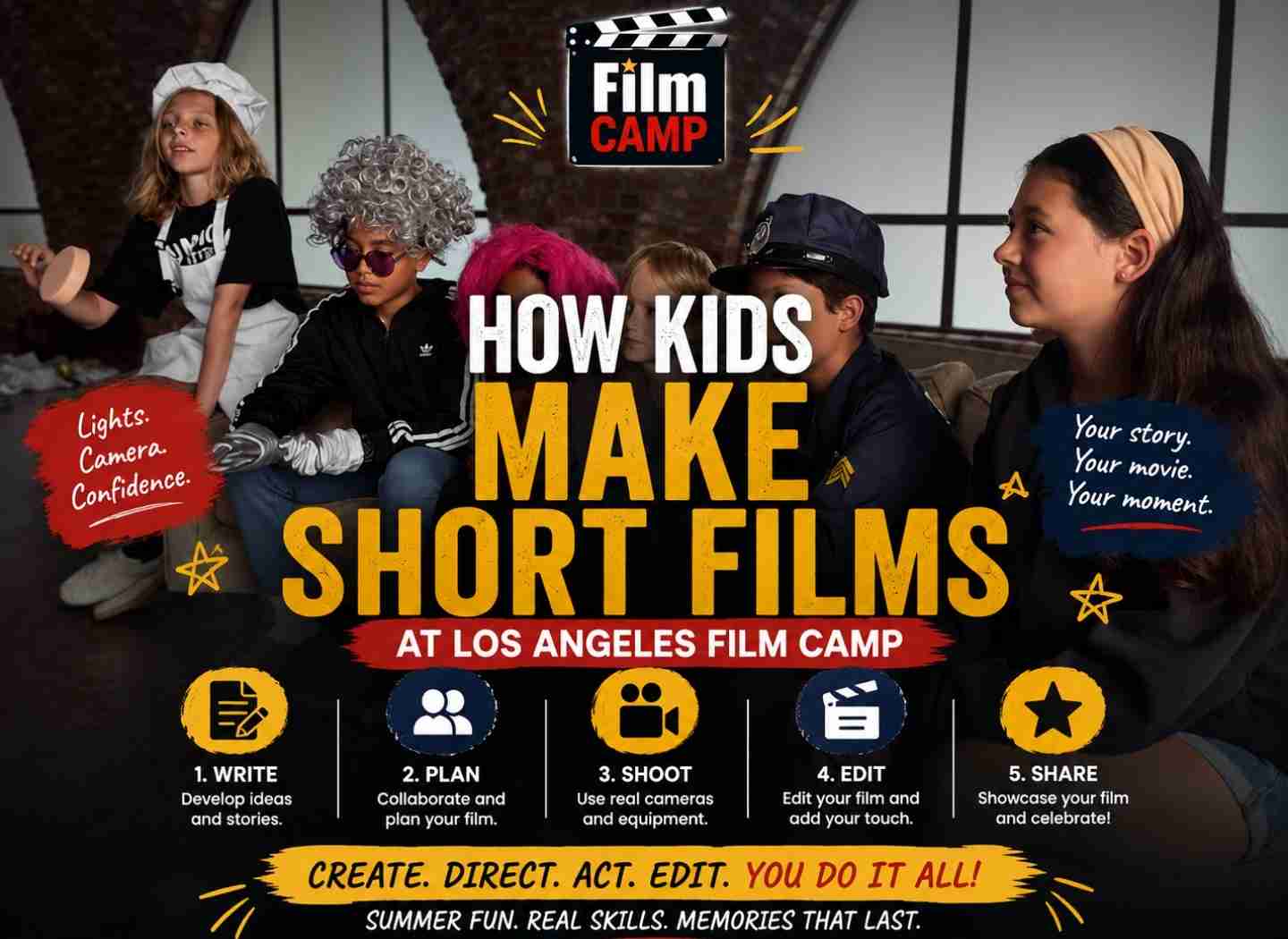
Kids write, shoot, and edit their own short films in one week at Los Angeles Film Camp. Hands-on, safe, and no experience needed. See how it works, from first idea to premiere.
Read >
Kids ages 7 to 14 spend five days in Glendale writing, acting, filming, and editing a real short film, then premiere it for families Friday. No experience needed. Gear included.
Read >.png)