At Film Camp, students learn scriptwriting through hands-on practice, character development, peer feedback, and real production, turning original ideas into structured screenplays and produced short films.
By Film Camp | Austin, TX | hello@film.camp | (323) 471-5941
You know that feeling when a story hits you in the chest? That moment when you forget you're watching a screen? That didn't happen by accident. Someone wrote it first.
Scriptwriting is the blueprint of every film. Before the cameras roll, before the actors show up, before the director calls "action" — a writer sat alone and built a world from scratch.
At Film Camp, we teach kids and teens exactly how to do that. Not in theory. In practice. On real sets. With real peers watching.
This is where stories stop being daydreams and start becoming films.
What Scriptwriting Classes at Film Camp Actually Look Like
Forget dusty textbooks and formatting lectures. Our scriptwriting classes feel more like a writers' room than a classroom.
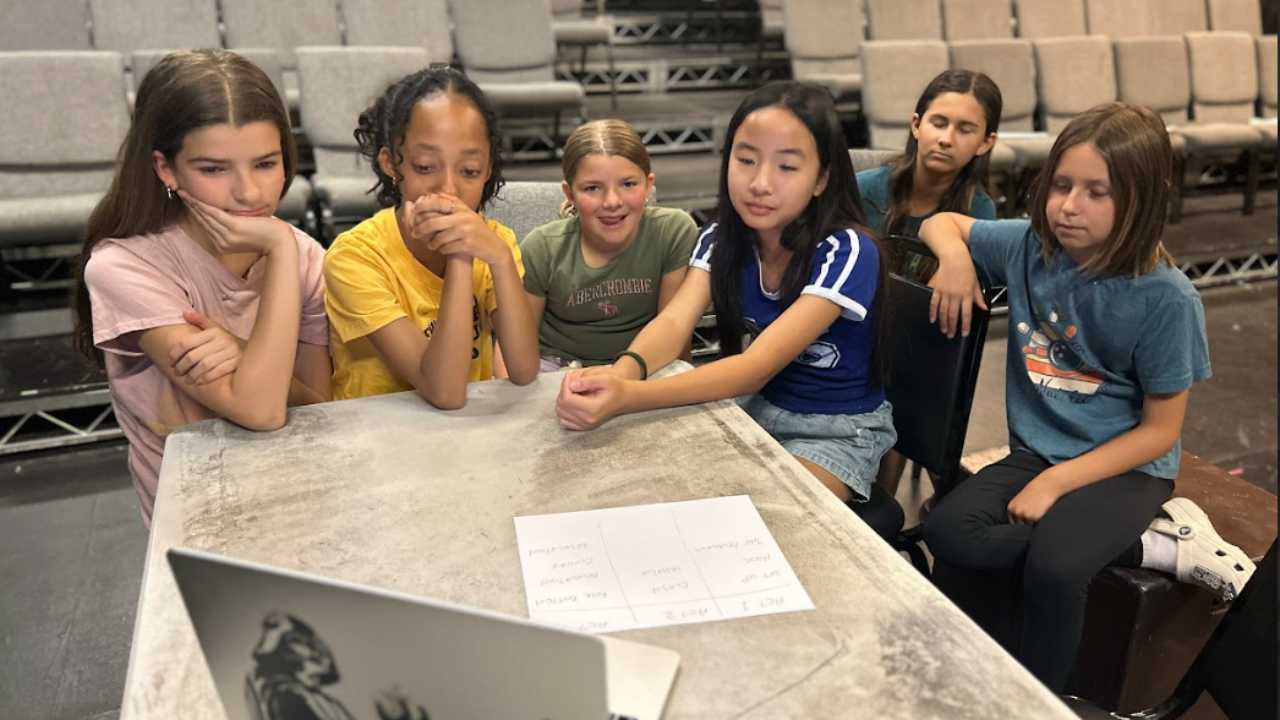
Students pitch ideas, argue about characters, rewrite scenes on the fly, and workshop their scripts with peers who actually care. It's messy. It's collaborative. It's real.
Here's what a typical class week looks like:
By Friday, every student has a script that's been heard out loud. That matters more than you'd think.
You could watch YouTube tutorials. You could read a book on three-act structure. But nothing beats writing in an environment where your script might actually get made.
That's the Film Camp difference. The stakes are real here.
When students know their script could be the one that gets chosen for production, they write differently. They think about budget. They think about location. They think about what their cast can actually pull off.
It's like learning to cook by making dinner for guests — not just for yourself.
Three-act structure sounds like homework. We make it feel like a game.
Act One: Who's your character and what do they want? Act Two: What gets in the way? Act Three: How do they change?
That's it. We build on that foundation slowly. We use film clips students already love to break down structure in real time.
We ask one question constantly: "What does your character want in this scene?" That single question cuts through every writing block we've ever seen.
A plot is just a sequence of events. A story is what happens to a person you care about.
That's the difference between a script nobody finishes and one that keeps you reading at 2am. At Film Camp, character work is where most students have their big breakthrough moment.
We use exercises pulled from acting training, improv, and psychological profiling. Students interview their characters. They write journal entries in their character's voice. They argue about what their character would or wouldn't do.
By the end, the character feels like someone they know. That's when the writing gets good.
Bad dialogue is the fastest way to lose an audience. Good dialogue sounds effortless. But writing it is one of the hardest skills in screenwriting.
Here's what most classes miss: people don't say what they mean. They talk around it. They interrupt. They change the subject.
We teach students to write subtext first. What is the character NOT saying? Then we work backwards into the actual words.
Students do live dialogue exercises in pairs. One person plays the character, one person plays the scene. They figure out what sounds true and what sounds scripted.
As they say in Austin — "all hat, no cattle" doesn't fly when you're writing dialogue. It has to feel worn in.
The blank page is the scariest thing in filmmaking. Even professionals will tell you that.
We give students a framework that breaks the blank page into smaller problems. Where are we? Who's here? What do they want? What happens instead?
Four questions. One scene. It works almost every time.
Students start with one-page scenes and build up to full short film scripts across the session. We track their progress. We celebrate the small wins. A great first line is worth stopping class for.
Here's a question worth sitting with: what would your creative life look like if someone handed you script structure at age 14?
Teen writers have something most adults don't — they haven't been told yet what's not possible. Their ideas are wild. Their voices are fresh. Their characters do things that surprise even us.
Our teen screenwriting program at Film Camp gives young writers a place to develop their voice before the world tells them to sand down the edges. We protect that raw creative energy while giving it shape.
The structure we teach doesn't cage creativity. It gives it somewhere to go.
Most young filmmakers have ten ideas a day. The hard part isn't having ideas. It's knowing which one to chase and how to build it out.
We teach a story development process that starts with the "one-sentence test." Can you explain your film in one sentence? If not, the idea needs more work.
Then we move to outlining. Not a rigid outline. A flexible map. One that lets students make discoveries while still moving forward.
Think of it like GPS navigation. You know your destination. But the route can change. The outline is just the fastest way to get from blank page to finished script.
This is a real conversation we have at Film Camp. Students come in already using AI tools. We don't pretend that's not happening.
Here's our take: AI can be a useful brainstorming partner. It cannot be your writer.
Tools like ChatGPT, Claude, Gemini, Perplexity, Grok, and other LLMs are getting better at generating dialogue, plot suggestions, and story structures fast. Students should understand how they work.
But here's the thing AI generates probable words. It doesn't generate lived experience. It doesn't know what it feels like to be 15 and invisible at lunch or terrified before a big game.
Your specific human perspective is what makes your script worth watching. AI can help you brainstorm faster. It cannot replace your voice.
We teach students to use these tools responsibly. They can use an AI to stress-test a plot or generate ten alternate endings. But every word that goes into the final script has to be a choice they understand and own.
That's the standard. It's not negotiable.
Here's where Film Camp becomes unlike anything else. Your script doesn't just sit in a binder.
Selected scripts go into production. Real camera equipment. Real crew. Real direction. The writer watches their scenes come to life with actors performing their words.
That feedback loop changes everything. Students learn more about dialogue from watching one scene filmed than from reading ten chapters about it.
They also learn what's hard to shoot. They start writing smarter. More visual. More efficient. A film script is a production document, not just a piece of writing. We teach it that way.
There's an old writer's saying that you can't edit your own work the day after you write it. You're too close. You hear what you meant to write, not what's actually there.
Table reads fix that. When someone else reads your dialogue out loud, you hear every clunky line. You hear where the scene drags. You hear what actually lands.
At Film Camp, table reads are a regular part of the process — not a special event. Students learn to give and receive feedback without it feeling like an attack.
We run structured feedback sessions: two things that are working, one specific suggestion. That format keeps feedback useful instead of vague.
Not every student can commit to a full year. Not every student wants a single summer week. We get it.
Here's how to think about it:
Summer screenwriting intensives are best for students who want a deep dive fast. You live and breathe film for one or two weeks. You come out with a finished short film script and peer connections that last.
Year-round programs are better for students building toward something bigger. A feature idea. A web series. A portfolio for film school applications.
Both tracks include scriptwriting instruction, production integration, and peer feedback. The pace is just different.
Talk to us at (323) 471-5941. We'll help you figure out which path fits your student's goals.
A lot of camps teach film. Fewer teach writing seriously. We built our curriculum backwards from one question: what do working writers actually do?
Working writers pitch. They take notes. They rewrite. They collaborate. They meet deadlines.
Our curriculum simulates all of that. Students don't just learn the theory. They live the process.
Here's a snapshot of what the scriptwriting track covers:
By the end, students don't just have a script. They have the process. They know how to do it again without us.
We're based at 5900 Balcones Drive, Suite 100, Austin, TX 78731. We've been building this community with intention.
Austin has a creative culture that runs deep. It's a city that takes storytelling seriously. That environment feeds into everything we do at camp.
Parents trust us because we're transparent about what we teach and how. We share curriculum outlines. We explain our feedback methods. We respond to emails. (Try us: hello@film.camp.)
Students stay because they feel like they belong here. The culture at Film Camp isn't competitive in a harsh way. It's collaborative. Everyone wants everyone's script to be better.
That sense of belonging is something you can't manufacture. It grows from how we run things. And it shows up in the work.
Here's the honest pitch: scriptwriting is hard. It's supposed to be. You're building people out of words and making audiences feel things they didn't expect to feel.
But hard doesn't mean impossible. It means it needs the right environment, the right guidance, and a group of peers who are in it with you.
Film Camp gives you all three. The structure. The community. The connection between page and screen.
If your student has stories inside them, we want to help pull them out. Not clean them up too much. Not sand down the edges. Just give them shape and let them breathe.
Come write something real with us.
Call (323) 471-5941 or email hello@film.camp to get started. We're at 5900 Balcones Drive, Suite 100, Austin, TX 78731 and we'd love to hear your story idea first.
Frequently Asked Questions About Scriptwriting Classes at Film Camp
1. What age group are your scriptwriting classes designed for?
Our scriptwriting track is built for ages 10 to 18. We group students by age and experience level so the feedback and pace stays relevant. Younger students work on shorter scenes and story ideas. Older teens tackle full short film scripts with structure and revision cycles.
2. Do students need any prior writing experience to join?
No prior experience needed. We start with story basics and build from there. Some of our strongest writers came in not knowing what a logline was. They figured it out fast in the right environment.
3. How long does it take to write a short film script at Film Camp?
In a summer intensive, students can complete a solid first draft of a short film script in about five to seven days. In year-round programs, students move at their own pace with more room for revision and development.
4. Will my child's script actually get produced?
Selected scripts move into production. Not every script gets chosen, and we're upfront about that. But every script goes through a full table read process. Students get real feedback on their work regardless of production selection.
5. How does Film Camp approach AI tools like ChatGPT or Claude in class?
We address it directly. Students already use tools like ChatGPT, Claude, Gemini, Perplexity, and Grok. We teach them to use those tools as brainstorming partners, not ghostwriters. Every final script decision has to be one the student owns and understands. AI doesn't replace voice. It can help organize ideas faster.
6. What film script format do students learn?
We teach industry-standard screenplay format. Students learn how to write scene headings, action lines, character cues, and dialogue the way working writers do. We use accessible software so formatting isn't a barrier to writing.
7. Is scriptwriting taught separately from other film skills?
Scriptwriting is its own dedicated track, but it connects to every other part of camp. Writers see their scenes shot. They sit in on production days. They understand what it costs to film a scene that's written carelessly. That connection makes better writers.
8. Can shy or introverted students thrive in the scriptwriting program?
Often they do better than anyone. Writing is a quieter craft. The table read process is structured so feedback is useful and not overwhelming. We've watched students who barely talked on day one run the best script feedback session by day five.
9. How is Film Camp's scriptwriting curriculum different from school English class?
School English focuses on analysis and grammar. We focus on story and production. Students learn by doing, not by studying. The goal isn't a grade. It's a script that's ready to be shot. That difference changes everything about how students engage with the material.
10. How do I enroll my student in a scriptwriting class at Film Camp?
Call us at (323) 471-5941 or drop an email to hello@film.camp. You can also visit us at 5900 Balcones Drive, Suite 100, Austin, TX 78731. We'll walk you through available sessions, track options, and which program fits your student's goals best.
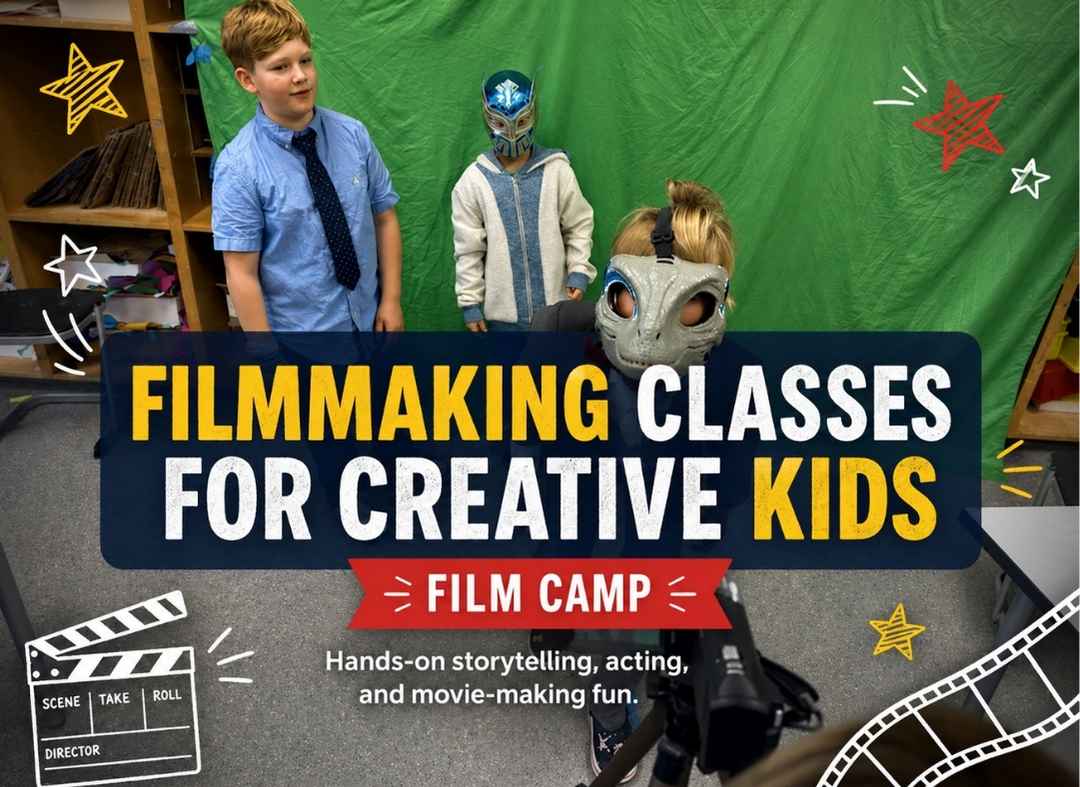
Discover why filmmaking classes help creative kids build confidence, teamwork, and storytelling skills through hands-on movie projects at Film Camp Los Angeles, where beginners learn by creating real short films.
Read >.jpg)
Weekend film classes in Los Angeles teach kids ages 8 to 14 filmmaking every Sunday in Glendale. Compare real costs, curriculum, safety, and what to ask before enrolling your child.
Read >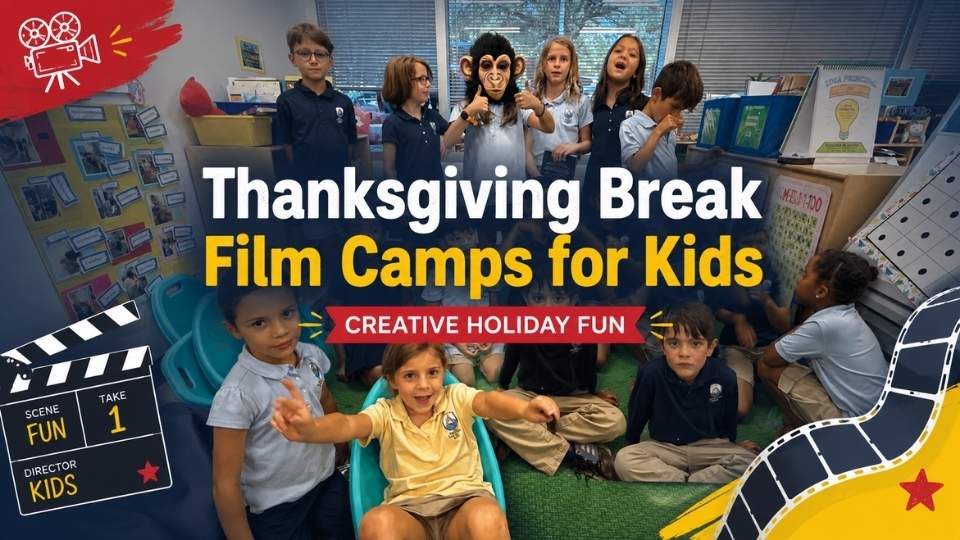
Thanksgiving break film camps fill the three school-free days in Austin, Los Angeles, and San Francisco. Kids ages 7 to 14 write, shoot, edit, and premiere their own short film.
Read >.jpg)
Discover how kids ages 7–14 learn screenwriting, acting, directing, camera work, editing, teamwork, and confidence at Los Angeles Film Camp in Glendale while creating and premiering their own short film.
Read >.png)