Film Camp San Francisco lets kids ages 7–14 write, shoot, and edit a real short film in one week, ending with a red carpet premiere. Sessions cost $595, capped at 12 campers.

Your kid spends Monday writing a story. By Friday, your whole family is sitting in front of a screen watching their movie premiere. That is summer camp at Film Camp San Francisco.
Most parents want one thing from summer. They want their kid to come home with a story to tell. Not "we did crafts." Not "we played dodgeball." A real story. A real thing they made. Something they will still talk about in October.
So if you are searching for San Francisco kids summer camps that turn one week into a memory your child carries for years, keep reading. This is a guide for Bay Area parents who want a creative summer that actually means something.
Here is the thing. San Francisco has a lot of summer camps. Sports camps. Tech camps. Day camps that rotate kids through ten activities a week. They all have a place.
But Film Camp is different. Your child does not just "try" filmmaking. They make a real short film with a small crew. They write it. They act in it. They shoot it. They edit it. They premiere it on a red carpet in front of their family.
That outcome is the difference. Most camps fill the week. Film Camp builds something with the week.
Here is what sets us apart for Bay Area families.
Your kid has never touched a camera? Perfect. That is who this camp is built for.
Almost every camper walks in on Monday morning with zero filmmaking experience. They have never written a script. They have never used editing software. They have never directed anyone.
By Friday, they have done all of it.
Our instructors meet kids exactly where they are. No jargon. No pressure. Just a clear path from "I have never made a video" to "I cannot wait to make another one." If your child is curious, that is the only prerequisite they need.
A lot of camps "introduce" creative skills. We let kids ship a finished product.
Monday is story development. Tuesday is acting and pre-production. Wednesday the cameras roll. Thursday is the final shoot and the start of editing. Friday is the red carpet premiere with family in the audience.
That arc matters. Your child learns that ideas can become real things. They learn that one week of focused work creates something they can show their grandparents. They walk out of camp holding a finished film and a different idea of what they are capable of.
That feeling is the reason parents tell us their kids "did not stop talking about camp for weeks."
We cap every San Francisco session at 12 kids total. Not 12 per instructor. 12 total.
Campers split into smaller production crews of 4 to 6. That means every kid gets real one-on-one time with instructors. Every kid handles the camera. Every kid acts. Every kid edits. Nobody sits on the sidelines.
Every instructor passes a comprehensive background check before camp starts. We do not cut corners on this. You can read more about our team and how we hire.
Camp runs inside two professional theater venues right on Marina Boulevard.
Young Performers Theater sits in Landmark Building D. BATS Improv sits in Landmark Building B. Both are part of the Fort Mason complex in the Marina District, with easy freeway access from US-101 and I-80 and parking right at Fort Mason Center.
Both venues are climate-controlled and fully equipped for production. Karl the Fog can do whatever Karl wants. Your kid is filming indoors with proper gear all week.
San Francisco is one of the most creative cities in the country. It always has been.
This is the city of Pixar, Lucasfilm, Industrial Light and Magic. It is the city that built Silicon Valley, the indie film scene, the maker movement, and the modern arts community. Bay Area kids grow up surrounded by people who make things for a living.
That matters. When a kid here says "I want to make a movie," they are not aiming at something abstract. They are aiming at an industry their neighbors actually work in.
San Francisco also offers something other cities cannot. Walk a few blocks in any direction and you find culture. The Mission has murals. The Marina has the bay. The Presidio has redwoods. North Beach has classic film history. Every neighborhood is a potential set.
And one more thing. San Francisco weather is honestly perfect for an indoor creative camp. Fog rolls in. Wind kicks up. Rain shows up out of nowhere. None of it touches an indoor production schedule. Your kid films all five days. No weather days. No outdoor cancellations.
We do not run "workshops" where kids dabble in everything. We run a real production where everyone has a real job. Here is the curriculum.
Every great movie starts on the page.
Campers brainstorm ideas in teams. They shape characters. They map out scenes. They write a real script with dialogue, action, and a beginning, middle, and end. Our instructors guide them through storyboarding so they can see their film before they shoot it.
This is where shy kids surprise themselves. Writing on the page feels safe. Then those words become a movie. Kids learn that their ideas matter and that their voice belongs on screen.
Campers step into the director's chair and run their own shots.
They learn how angles change a story. They block out scenes. They guide the actors. They handle real camera gear with care and confidence. Our instructors teach the same fundamentals working filmmakers use every day. Shot composition. Camera movement. Coverage. Continuity.
By Wednesday, kids who walked in calling the camera "that thing" are calling it "my camera."
Acting on camera is different from acting on stage. We teach kids the difference.
Through warm-ups, improv games, and scene rehearsals, campers learn how to perform for the lens. Subtle expressions. Hitting marks. Vocal delivery. Eye lines. Reacting in close-ups.
Even the kids who insist "I do not want to act" usually end up loving their scene. Something about being part of a small trusted crew unlocks something. We see it every session.
This is the part kids get the most excited about.
We work with green screens, in-camera effects, and visual tricks that turn a simple scene into something cinematic. Campers learn how their favorite movies create impossible worlds. Then they create their own.
It is one of the highlights of the week. Always.
A film is built one detail at a time. Backdrops. Props. Costumes. Lighting decisions. Color choices.
Campers learn that every visual element on screen is a storytelling decision. They build sets. They choose wardrobe. They make character decisions about hair, makeup, and look. It teaches them to see the world like a designer sees it. Once you learn this, you never watch a movie the same way again.
The film comes alive in the editing room.
Campers learn to cut footage, layer in music, design title cards, and balance sound. They sit at the timeline and make creative choices that shape the final story. Edit a scene one way and it feels tense. Edit it another way and it feels funny. They learn how to control that feeling.
By Friday morning, their film is exported and ready for the screen.
Each day builds on the last. By Friday, your kid has a finished film. Here is exactly how the week unfolds.
Morning (9 AM to 12 PM): Welcome ceremony. Team introductions. Icebreaker activities. Intro to filmmaking roles. Film analysis workshop where campers watch short films and break down what makes them work.
Afternoon (1 PM to 4 PM): The creative process begins. Teams brainstorm dozens of ideas. They pitch their favorites. They vote on the stories they want to make. Script development starts with instructor guidance, and campers learn storyboarding to see their film before they shoot it.
Monday is the spark. Kids walk in nervous. They walk out buzzing.
Morning (9 AM to 12 PM): Script finalization. Table reads. Acting workshop covering on-camera technique, emotional expression, hitting marks, and character work. Even kids who say they will never act find their footing.
Afternoon (1 PM to 4 PM): Camera training with professional gear. Shot lists. Location scouting inside the studio. Costume and prop prep. Teams finish everything they need so they can roll cameras tomorrow.
Morning (9 AM to 12 PM): Lighting workshop covering three-point setups. Set prep. Rehearsals. Then the cameras start rolling. Teams begin filming with full instructor support.
Afternoon (1 PM to 4 PM): Filming continues. Every camper rotates through crew positions. Director. Camera. Sound. Talent. Everyone tries everything.
This is the day kids stop being "campers" and start calling themselves filmmakers.
Morning (9 AM to 12 PM): Final filming. Pick-up shots. Re-shoots for any scenes that need polish. Teams review their footage together and celebrate what they captured.
Afternoon (1 PM to 4 PM): Editing begins. Intro to editing software. Teams start cutting their footage, learning about pacing, transitions, and rhythm.
Morning (9 AM to 12 PM): Final edit. Music. Titles and credits. Sound mix. Basic color correction. Teams finish their films.
Afternoon (1 PM to 4 PM): Final exports. Premiere prep. At 3:00 PM family arrives for the Red Carpet Premiere. Campers walk the carpet, present their finished films, receive certificates, and watch their work on the big screen with everyone who loves them in the audience.
It is the proudest moment of the week. For everyone.
Four sessions. Twelve spots each. Spots fill fast, especially the June weeks.
Tuition includes all equipment, afternoon snacks, and the family premiere event. Sibling discounts are available. Contact us for details before you book.
Heads up. Each session is capped at 12 kids. June weeks usually sell out first.
San Francisco has incredible summer camps. Some focus on sports. Some focus on tech. Some focus on rotating fun activities. Each has its place. Here is how Film Camp fits into that picture.
General day camps rotate kids through different activities all week. Crafts. Games. Field trips. Swimming. The variety is great for kids who want a low-pressure social summer.
Film Camp does the opposite. We commit to one big project. Your child does not bounce around. They go deep into one creative experience. They finish the week with a film to show for it.
If your kid loves variety and play, a general day camp is a great fit. If your kid wants to actually make something, that is us.
STEM camps teach logic, code, and problem-solving. They are wonderful. We respect what they do.
But here is something most parents miss. Filmmaking is STEM. It combines technology, software, sound engineering, lighting science, and structured problem-solving. The difference is that filmmaking wraps all of that inside storytelling. Kids who think they "do not like tech" often discover they love the technical side of filmmaking because it serves a story they care about.
If your kid likes coding, they will love editing. Same wiring. Different output.
There are great teen-focused film programs in the Bay Area. Most of them start at age 14. SFFILM's Youth Filmmakers Camp, for example, is built for ages 14 to 18.
Film Camp fills the gap. We build for ages 7 to 14. Younger kids get age-appropriate creative play with storytelling and acting. Older kids get more technical production work and bigger leadership roles. By the time a graduate ages out of Film Camp, they are ready for those advanced teen programs.
Performing arts camps focus on stage. Theater. Dance. Live performance. They build confidence in front of a live audience.
Film Camp adds another layer. Kids learn how performance translates to camera. They learn how to act for an edited story. They learn how the whole production behind the performance works. It is theater plus everything that happens behind the curtain.
A lot of our campers do both. Theater in the spring. Film Camp in the summer. They feed each other.
When you are planning summer, it helps to know what is out there. Here is a quick map of the San Francisco kids summer camps landscape.
Day camps are the most common format. Kids show up in the morning, do their thing, and come home in the afternoon. Most run 9 AM to 4 PM with optional extended care.
For working parents, day camps solve the summer schedule. They are flexible, local, and easy to plan around. Film Camp falls into this category. Drop off at 9, pick up at 4, no overnight involved.
Specialty camps go deep on one subject. Kids who already have a passion thrive here because the camp matches their interest. Kids who are still figuring out what they love use specialty camps to test the water.
Specialty camps tend to create stronger summer memories because kids leave with a specific identity. "I am a filmmaker." "I am a coder." "I am an artist." That identity stuff is real, and it sticks.
Sports camps build athletic skill, teamwork, and stamina. San Francisco has strong soccer, basketball, baseball, tennis, and multi-sport options. If your kid burns energy and craves competition, a sports camp delivers.
For kids who would rather build a story than chase a ball, a creative camp like Film Camp is the better match. Different brain. Different fuel.
Outdoor camps explore the Presidio, Golden Gate Park, Lands End, and the broader Bay Area. They focus on hiking, ecology, and unstructured play in nature.
These are amazing for screen-tired kids who need fresh air. They are also weather-dependent. San Francisco fog and wind can turn a planned beach day into a cold day. Worth considering when you book.
STEM camps cover coding, robotics, engineering, and digital design. The Bay Area has world-class options here, from neighborhood programs to university-based intensives.
Film Camp shares a lot of DNA with STEM. Editing is software. Lighting is physics. Sound is engineering. If your kid loves logic but also wants to tell stories, filmmaking is the bridge.
Theater camps build stage presence, voice projection, and live performance skills. San Francisco has a deep performing arts community. Many camps lead toward an end-of-week show with parents in the audience.
Film Camp draws from the same well. The difference is the final show. Theater ends with a live performance. Film Camp ends with a premiere of a movie your child made.
Picking a camp can feel overwhelming. There are too many options, and the good ones fill fast. Here is a simple framework Bay Area parents can use.
Start with your kid, not the camp brochure.
Ask yourself a few honest questions. Does your child light up when they tell stories? Do they love being on camera, or do they prefer working behind the scenes? Are they quiet at school but full of ideas at home? Do they love watching movies and breaking down how they were made?
If you nodded yes to any of those, a creative camp is probably the right fit. If your kid would rather kick a ball for six hours straight, you already know your answer.
You usually know what lights your child up. Trust that.
This is one of the biggest quality signals parents miss.
Big camps can have 30, 40, even 60 kids in a single group. Your child can disappear in that crowd. Small camps with low ratios mean every kid gets seen, heard, and coached. Participation goes up. Confidence goes up. Engagement goes up.
Film Camp caps every San Francisco session at 12 kids total, split into crews of 4 to 6. Ask any camp you are considering what their actual ratio is. The answer tells you everything.
A great camp on the wrong side of the city becomes a stressful summer. Factor in your morning routine.
Film Camp is right on Marina Boulevard with parking at Fort Mason Center and quick access to US-101 and I-80. We serve families across the Marina, Cow Hollow, Pacific Heights, Russian Hill, North Beach, and the wider San Francisco area. Easy in, easy out.
A smooth commute changes how the whole week feels.
Do not assume. Ask.
Every camp should be able to tell you three things in clear language. Are instructors background-checked? What is the supervision ratio? What is the policy if something goes wrong?
Every Film Camp instructor clears a comprehensive background check before camp begins. Our crews are small. Our policies are clear. You can read our full FAQ here for details.
This is the question most parents forget to ask. What does your kid actually walk out with on Friday?
Some camps end with a pickup and a goodbye. Others end with a showcase, a performance, or a finished project.
Film Camp ends with a red carpet premiere. Your child walks the carpet. The family takes photos. The film plays on a big screen with your kid in the credits. Then they take their finished film home and show every grandparent, cousin, and neighbor for the next six months.
That outcome shapes whether the week feels meaningful or just busy.
Summer camp in San Francisco runs a wide range. Here is the honest landscape.
City and nonprofit camps through SF Rec and Park, the YMCA, and Boys and Girls Clubs of San Francisco start around $125 to $300 per week. These are budget-friendly and great for working parents. Spots fill fast and registration usually opens in March.
Mid-range specialty camps run between $400 and $600 per week. This is where most quality specialty programs land. The price covers smaller groups, specialized instructors, and dedicated equipment.
Premium specialty camps can climb anywhere from $600 to $1,400 per week, especially for performing arts intensives and high-end private programs.
Film Camp San Francisco is $595 per 5-day session. That tuition includes:
Look at it this way. For one week, your child writes, directs, acts in, films, edits, and premieres a real short film with industry-quality gear and trained instructors. That is the kind of experience that shapes how a kid sees themselves for years after camp ends.
Sibling discounts are available. Contact us before booking and we will help.
Most Bay Area families start booking camps in January and February. Some city camps open registration in March. By April, the popular weeks are usually gone.
If you are reading this and summer 2026 is still a few months away, you are early. Good.
Film Camp opens enrollment as soon as our 2026 sessions go live. Because we only have 12 spots per session, weeks fill fast. June weeks usually sell out first because they line up with the start of summer break. July weeks fill next.
The simple play is this. If you know your kid wants to make a movie this summer, book the week now. Waitlists exist but they are not a guarantee. Reserve your spot here.
Here is the thing about Film Camp that surprises parents the most. The movie is great. But it is not the main thing your kid walks out with.
Some kids barely want to introduce themselves on Monday. By Friday, they are reading their character's lines in front of a camera and presenting their film to a room full of adults.
That shift is real. Performing on camera teaches kids how to manage nerves, hold attention, and trust their voice. It carries over into school presentations, social interactions, and how they show up in the world.
Shy kids often surprise their parents the most. Something about the small trusted group unlocks it.
A movie cannot be made alone. Ever.
Campers learn to pitch ideas, listen to teammates, and figure out solutions together when something goes wrong. The lighting is off. The actor forgot the line. The shot does not work. So they fix it. As a team.
That is how real-world creative work actually happens. Kids learn it inside a week.
Film Camp has a deadline. Friday at 3 PM the lights go down and the premiere starts. That deadline is real and your child can feel it.
Kids learn to plan their day. They learn that lunch break is not negotiable. They learn that if they do not film scene three by Thursday afternoon, scene three does not get to exist. They start treating the project like it matters. Because it does.
This is the kind of accountability that is hard to teach with a worksheet. A finished movie teaches it for you.
Acting and writing both ask kids to think from another person's perspective. Why does this character do that? What are they feeling? What do they want?
That is empathy training. Quiet, sneaky empathy training. Kids spend a week trying on other points of view and asking why people behave the way they do. They walk out a little more thoughtful than they walked in.
Yes, your kid uses screens at camp. They are filming and editing. Of course they do.
But this is not passive screen time. This is creative screen time. They are not consuming content. They are making it. They are deciding what shows up on the screen, why, and how a viewer is supposed to feel about it.
That shift, from consumer to creator, changes how a kid relates to media for the rest of their life. They start watching YouTube and noticing edits. They watch a movie and notice the lighting. They become an active viewer instead of a passive one.
Parents tell us this benefit alone is worth the week.
The best signal of a camp is what other parents say when no one is selling you anything. Here is some of what we hear most.
"My kids loved the camp so, so much. Every day was a new adventure. This was both of their first times acting and being behind the camera. They are already asking to go back. Absolutely worth it, great instructors."
— Pamela S., Bay Area parent
"It was a great experience for my son. He was excited from day one. Kids wrote the script, participated in discussion, played, acted, filmed. They did so much in these 5 days! Highly recommend for any creative kid."
— Tiffany J.
"Thank you for the wonderful opportunity for my boys Maksim and Nikita! It was an incredible experience! My kids were super excited all 5 days!"
— Oxana
A pattern shows up in every review. Kids walk in unsure. Kids walk out energized. Parents talk about it for weeks. You can see more examples on our Showcase page where we feature short films campers have made.
Our Marina District location is one of the most accessible spots in the city. We have campers driving in from all corners of San Francisco and the broader Bay Area.
Close-in Marina and waterfront: Marina District, Cow Hollow, Pacific Heights, Russian Hill, North Beach, Telegraph Hill, Fisherman's Wharf, North Waterfront
Downtown and central SF: Downtown, Financial District, Union Square, Nob Hill, Chinatown, SoMa, Hayes Valley
South and east neighborhoods: Castro, Upper Market, Mission District, Bernal Heights, Potrero Hill, Visitacion Valley
West side: Inner Richmond, Sunset, Ocean Beach
Easy freeway access from US-101 and I-80. Parking is available at Fort Mason Center right next to camp.
A lot of our families come from the Marina, Pacific Heights, and Cow Hollow because we are walking distance. Plenty come from further out because the experience is worth the drive.
The instructors are the heart of this camp. Every one of them is background-checked, experienced with kids, and active in the film industry. Here is who your child will work with.
David built Film Camp because he wanted kids to experience filmmaking as collaboration, not competition. His vision is simple. Every child has a creative voice. Camp should help them find it.
He has shaped the curriculum, the small-group model, and the premiere experience that families look forward to every Friday. David leads with the same energy you want your child surrounded by all week.
Elijah brings real-world filmmaking experience to every session. His specialty is helping first-time campers realize they are more creative than they thought.
He is patient with beginners and pushes returning campers to level up their craft. Kids leave his crew with a stronger sense of what they can do behind and in front of the camera.
Will brings high-energy production experience to the room. He teaches kids the same workflow he uses on real film sets, scaled down for young filmmakers.
He runs an inclusive, collaborative crew. Every kid gets a voice. Every idea gets considered. By Wednesday his teams are running like a real production unit.
Jackie bridges performance and film. She works with campers on acting craft and helps shy kids find their stage presence.
She creates the kind of environment where kids feel safe trying bold creative ideas. Her quiet warmth makes her one of the most-loved instructors on the team.
You can learn more about the full team on our About page.
Quick answers to the questions Bay Area parents ask the most. For anything not covered here, check our full FAQ page or contact us.
Film Camp SF is built for kids ages 7 through 14. We split campers into age-based groups. Younger kids (7 to 10) focus on creative play, teamwork, and storytelling basics. Older kids (11 to 14) take on more technical production work and bigger leadership roles on set.
No. The vast majority of our campers walk in having never used professional camera or editing equipment. Our curriculum is built from the ground up for beginners. Our instructors are experts at helping kids go from "I have never done this" to "I cannot wait to do it again" inside a single week.
We cap every San Francisco session at 12 kids total. Campers work in smaller production crews of 4 to 6. Every child gets real one-on-one time with instructors, plenty of hands-on equipment access, and a meaningful role in their team's film.
A packed lunch, a filled water bottle, and clothes that allow for movement and play. Film Camp supplies all cameras, microphones, lighting gear, editing tools, and afternoon snacks. If your child wants to bring a prop or costume piece for their film, they are welcome to. Just label everything with their name.
Yes. Our rotation system ensures every camper performs on screen, operates camera equipment, contributes to direction, and participates in the editing process. Whether your child loves performing or prefers working behind the scenes, they experience both throughout the week.
Indoors. All San Francisco sessions take place inside Young Performers Theater or BATS Improv in the Marina District. Both venues are climate-controlled and equipped for production work. Fog, wind, rain, none of it affects the schedule.
Absolutely. The premiere begins at 3:00 PM on Friday and is open to parents, siblings, grandparents, and anyone else your child wants in the audience. It is a proper red-carpet moment and the highlight of the week for everyone.
Cancellations made 14 or more days before your session start date receive a full refund. Between 7 and 13 days out, a 50% refund applies. Inside the final week, we offer credit toward a future Film Camp session in any city. Full details are on our cancellation policy page.
Yes. Contact us before booking and we will set up your sibling discount. Many of our families enroll two or three kids in the same session.
Every single one. All Film Camp instructors clear a comprehensive background check before working with campers. Safety is not optional and we do not cut corners on this.
Most camps fill the week with activities. Film Camp builds one meaningful creative project across the week. Your child does not bounce between unrelated activities. They go deep into one experience and walk out with a finished short film, a premiere moment, and skills they can use for years.
Enrollment is open now for all four 2026 sessions. June weeks tend to fill first because they line up with the start of summer break. Reserve your spot here.
One week of camp. One finished movie. One memory your kid will talk about for years.
That is what summer 2026 can look like for your family. A week where your child goes from "I have never done this" to "I made this." A Friday where you sit in the audience and watch your kid's name in the credits.
Here is the summary.
Sessions are filling now. June weeks usually sell out first.
📽 Reserve your child's spot at Film Camp San Francisco
Have questions? Contact us and a real human will get back to you. We are happy to help you pick the right week, set up your sibling discount, or answer anything else about the experience.
By the end of the week, your child will not just watch movies differently. They will see themselves differently too.
That is what one week of Film Camp can do.
Ready to give your child the summer they will talk about all year? Book your San Francisco Film Camp session for summer 2026.
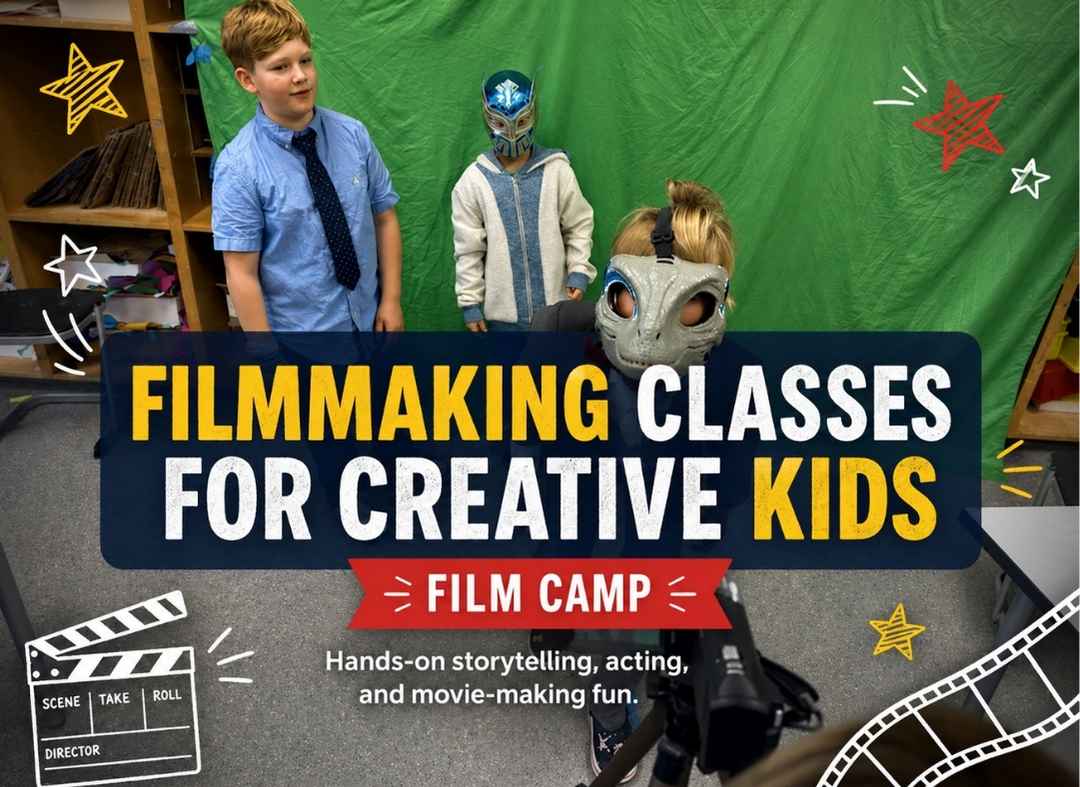
Discover why filmmaking classes help creative kids build confidence, teamwork, and storytelling skills through hands-on movie projects at Film Camp Los Angeles, where beginners learn by creating real short films.
Read >.jpg)
Weekend film classes in Los Angeles teach kids ages 8 to 14 filmmaking every Sunday in Glendale. Compare real costs, curriculum, safety, and what to ask before enrolling your child.
Read >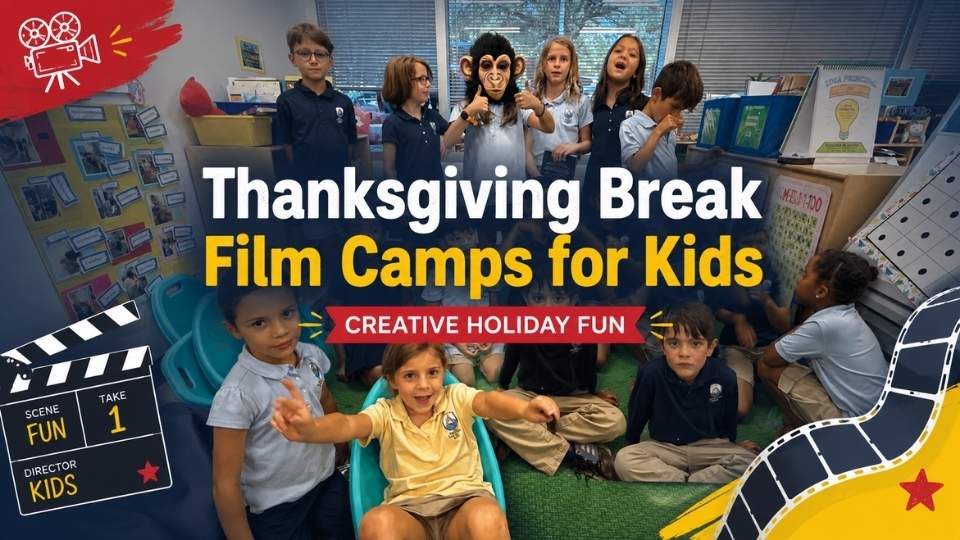
Thanksgiving break film camps fill the three school-free days in Austin, Los Angeles, and San Francisco. Kids ages 7 to 14 write, shoot, edit, and premiere their own short film.
Read >.jpg)
Discover how kids ages 7–14 learn screenwriting, acting, directing, camera work, editing, teamwork, and confidence at Los Angeles Film Camp in Glendale while creating and premiering their own short film.
Read >.png)