Wondering how your child can thrive in one week at film camp? This parent guide covers daily plans, packing, safety, shy-kid support, and simple ways to build lasting confidence.

One week feels short. I get it. You want to know that five days can actually turn into something your child remembers for years. Here's the good news. It can, and it usually does.
The trick is simple. Kids get the most out of film camp when they show up prepared, curious, and free to try things. That's it. Not talent. Not fancy gear. Just a little prep and a lot of permission to play.
Wondering how your child can make the most of just one week? This guide walks you through every part of it, from the first pitch to the final premiere. Let's start with the quick answer.
Well begun is half done. You help most before camp even starts. Prep your child, then step back and let them own it. Kids thrive when they feel ready, supported, and safe to make mistakes.
Here's what moves the needle:
Do those six things and your child walks in relaxed and walks out proud. That's the whole game.
Film camp turns your child into a real filmmaker in one week. They write, shoot, edit, and screen a short movie with a team. Your job is small but mighty. Prepare them, cheer them on, and let them lead. Confidence and teamwork grow fast when kids feel trusted to try.
A calm start makes a big difference. Run through this checklist the evening before Day 1, not the morning of. Your child will arrive relaxed instead of rushed.
Check the list together. It turns nerves into a plan, and a plan feels a lot calmer than a scramble.
Think of the week as building a movie one scene at a time. Each day adds a new piece, and by Friday your child has a finished film to show off. Curious what those five days actually look like? Here's the day-by-day.
Growth stacks up fast. Kids start as strangers with ideas and end as a crew with a movie. The finished film is the trophy, but the real win is everything they learn getting there.
Day 1 is all about belonging. Kids meet their crew, learn names, and start tossing out story ideas. One camper might pitch a space adventure. Another wants a mystery in the school hallway. The room fills with energy fast.
Ask your child who they met today, not just what they made. The friendships often matter as much as the film. That first "we're a team" feeling is where confidence starts.
Now the idea becomes a plan. The crew writes a short script and maps out the shots. They sketch a simple storyboard so everyone knows what to film and when.
Here's a quiet truth. A simple script beats an ambitious one almost every time. A small, clear story gives kids room to learn the craft instead of fighting a plot that's too big. Simple wins.
This is the loud, fun day. Cameras roll, actors act, and the crew works together to capture each scene. Somebody holds the camera steady. Somebody watches for sound. Everybody has a job.
Did the first take go wrong? Good. That's normal. Filmmakers shoot scenes again and again, and every retake teaches patience and grit. Multiple takes aren't failure. They're the craft.
Editing is where the magic clicks. The crew trims clips, orders scenes, and adds music and sound. Suddenly a rough pile of footage feels like a real movie.
This is where kids often gasp. Change the music and a scene feels scary. Change the pace and it feels funny. Editing shows them how much power lives in the small choices. Patience pays off here.
Friday is the payoff. The crew locks the final cut and screens it for family and friends. Lights dim. The movie plays. Your child sees their name on the screen and beams.
Celebrate the effort, the teamwork, and the growth, not the polish. A one-week film won't look like a studio release, and it isn't supposed to. It's proof your child started something hard and finished it. That memory lasts far longer than the movie's runtime. Speaking of runtime, let's tackle the big question next.
Short answer? Yes. One week is plenty for a meaningful film and a big leap in skill. Professional filmmakers spend months on a movie, so kids' camps scale the project to fit the time. Small on purpose, powerful in practice.
You're weighing whether the week is worth it. Fair. So let me set honest expectations. A one-week film is short and simple, and that's exactly why it works. Kids finish something real, learn the full process, and leave with confidence they can point to.
A simple story is a gift. It keeps the focus on learning, not on solving huge production problems. When the plot is small, kids spend their time on camera work, acting, and editing instead of untangling a script that's too big.
Structure does the rest. A good camp maps out each day, so nobody wastes time wondering what's next. Simple story plus clear plan equals a finished film. That's the formula.
Picture a polished school project, not a Hollywood blockbuster. A one-week film runs a few minutes long. It has a clear beginning, middle, and end, real acting, and homemade charm.
The audio might wobble. A shot might shake. And honestly, that's part of the fun. What matters is that your child made it, start to finish, with a team. See what campers create over on our showcase page.
Set your sights on growth, and you'll see it everywhere. Here's what usually shows up by Friday:
Watch for the small changes in how your child talks and connects. That's where the biggest wins hide.
Let's keep it real so nobody feels let down. Here's what a one-week camp won't deliver:
None of that is a weakness. Those limits are built in on purpose. Constraints keep the project fun, finishable, and full of learning.
The film is the souvenir. The skills are the treasure. When your child hits a snag on set and works around it, they're building creative problem-solving. When they lead a scene or back up a teammate, they're building leadership and trust.
Fall seven times, stand up eight. Filmmaking teaches kids to keep going when things go sideways. Collaboration, patience, and confidence stick around long after the credits roll. That's the real return on your week.
Here's a secret. Curiosity matters far more than talent. If your child likes stories, movies, or making things, they're ready. Film camp meets kids where they are and builds up from there.
Not sure if it fits? Let's walk through it together. Most kids are a better match than parents expect, whether they're loud, quiet, brand new, or somewhere in between.
Film camp is a big tent. It fits the kid who loves acting and the kid who'd rather draw sets or write jokes. YouTube fans, comic doodlers, Lego builders, daydreamers. They all find a home here.
Many famous filmmakers started as writers, artists, or photographers, not actors. Whatever your child already loves, there's a filmmaking role that turns it into movie magic.
Zero experience? Perfect. That's who these camps are built for. Instructors teach the fundamentals from the ground up, one clear step at a time.
Your child doesn't need to know a single camera setting on Day 1. They'll learn by doing, surrounded by a crew that's learning right alongside them. Everyone starts as a beginner. That's the point.
Loud kids shine on camera. Quiet kids shine behind it. Beginners shine everywhere because they get to try it all.
Every production needs both on-camera and behind-the-camera talent. The bold camper might direct or act. The thoughtful camper might run the camera or edit. There's a spot for every personality, and each one is important.
Some kids need a gentle on-ramp, and that's okay. Watch for these signs:
If any of these sound familiar, share it with the instructors before camp begins. A quick heads-up helps them create a smooth, welcoming start for your child.
Keep your pep talk light and curious. Try lines like these:
Focus on curiosity, not performance. When kids feel free to explore, they relax, and relaxed kids have the best week.
Want the calmest Day 1 possible? Spread prep over a few days instead of cramming it all into one nervous night. A little each evening beats a big rush. Here's how to set your child up to feel ready and excited.
Kids feel calmer when they know what comes next. Walk through the simple flow of a camp day:
A quick preview turns the unknown into the familiar. That alone melts a lot of first-day jitters.
What part are you most pumped to try? Ask it, then listen. Their answer tells you what lights them up, whether that's acting, filming, or building props.
Listen more than you talk here. The goal is to grow the excitement, not steer it. Let them lead the daydream.
Nerves shrink when we name them. Ask your child what feels a little scary about camp. Maybe it's meeting new kids. Maybe it's being on camera.
Validate the worry before you fix it. A simple "that makes sense, lots of kids feel that way" goes a long way. Then you can plan a small first step together.
One goal beats ten. Help your child pick a single, doable aim for the week. Make it about the process, not the outcome.
Good goals sound like "make one new friend" or "try the camera once," not "make the best movie." Process goals feel reachable, and reaching them builds real confidence.
Resist the urge to upgrade their story. When the idea is truly theirs, they care more and try harder.
Your polished plot might be "better" on paper, but it isn't theirs. Kids become far more invested when the story comes from their own head. Let them own it, wobbles and all.
Progress beats perfection every single time. Kids who feel safe making mistakes are the ones who experiment, collaborate, and actually enjoy the week.
So send them off with one clear message. Trying is winning. When your child knows a mistake won't sink the ship, they take creative risks, and that's where the growth lives.
Nervous kid? Take a breath. Film camp is often perfect for quiet children, because so much of the magic happens off camera. Many shy kids bloom the moment they find a role where creativity matters more than the spotlight.
What if the thing your child worries about, being watched, isn't even required? It usually isn't. Let me show you how to turn nerves into excitement with a few gentle moves.
Acting is optional. Really. Film camp needs writers, directors, camera operators, editors, and more. Your child can make a whole movie without ever stepping in front of the lens.
Plenty of professional filmmakers rarely appear on camera. If being watched feels scary, there's a creative, hands-on job waiting that skips the spotlight entirely.
Behind the camera is where a lot of quiet kids come alive. Directing, filming, and editing are powerful, creative roles that don't ask a child to perform.
These jobs are the engine room of every movie. Many campers discover a hidden talent for framing a shot or shaping a scene, and that discovery is a huge confidence boost.
A tiny bit of practice takes the sting out of Day 1. Help your child rehearse an easy hello. Something like "Hi, I'm Sam, I like scary movies" works great.
Keep it natural. Practice during everyday chats instead of drilling it over and over. One comfy line is all they need to break the ice.
Nobody has to do everything on Day 1. Tell your child it's fine to start small. One new friend. One new task. That's a full, successful day.
Small steps feel safe, and safe kids keep stepping. Give them permission to ease in, and watch them stretch further than you expected by Friday.
A quick word with the instructor works wonders. Share that your child is shy or nervous before camp starts.
That heads-up lets the team plan a warm welcome and a gentle start. A good instructor can turn a nervous Day 1 into a proud one. Not sure how to reach them? Our contact page makes it easy.
Words shape how kids see themselves. Skip labels like "too shy." Try "quiet observer" or "thoughtful learner" instead.
Speak the child you want to encourage, and you often meet them. Positive language gives your child room to grow, instead of a box to live in.
Packing smart means fewer worries and a smoother week. Here's a simple guide so your child arrives ready for anything. Quick tip up front. Label everything with your child's name, because busy camp days eat stray water bottles for breakfast.
Pick clothes made for moving. Film days mean kneeling, carrying light gear, and hustling between scenes. Soft, flexible, everyday outfits win.
Skip anything stiff or fussy. Your child will thank you when they can crouch for the perfect low-angle shot without a second thought.
Closed-toe shoes keep little feet safe. Kids move fast on set, sometimes while carrying tripods, props, or cameras.
Sneakers are ideal. They protect toes, grip the floor, and let your child focus on filming instead of watching their step.
Busy crews run on fuel. Pack a solid lunch, a couple of easy snacks, and a full water bottle.
Choose grab-and-go foods that won't interrupt a filming schedule. Quick bites keep energy high without pulling your child away from the action for long.
Big movie ideas often start as tiny scribbles. A small notebook or sketchbook gives your child a place to catch them.
Storyboards, character doodles, shot lists, random sparks. It all lands better on paper. Creativity loves a place to land.
Weather depends on your city, so pack for it. San Francisco mornings can run cool. Austin afternoons can turn hot. Los Angeles shifts with the filming location.
Toss in sunscreen, a hat, or a light layer to match. A comfortable kid is a focused kid. For city-specific tips, check our pages for Austin, Los Angeles, and San Francisco.
Some things just cause stress. Leave these at home:
Check your camp's policy before packing gadgets. Fewer valuables means fewer worries, and more focus on the film. Peace of mind for you, freedom to create for them.
A movie is a team sport with a job for every player. That's the best part. Your child gets to try different roles and find the one that fits like a glove. Try one job outside your comfort zone. Many kids discover a surprise talent that way.
Every movie starts with a story. The screenwriter dreams up the plot and writes the words the actors say. It's imagination on paper.
Simple stories are the easiest and most fun to film. A screenwriter learns that a small idea, told well, beats a giant idea that never gets finished.
The director is the team's captain. They guide the actors, shape the scenes, and keep the crew moving toward one shared vision.
Here's the surprise. Great directors listen as much as they lead. It's a role that grows confidence and teaches a kid how to bring people together.
Actors bring the story to life. They step into a character, say the lines, and have a blast doing it.
Acting builds communication even for kids who never perform again. Speaking up, showing emotion, reading a room. Those skills follow them everywhere.
The camera operator decides what the audience sees. They frame each shot and keep the picture steady and clear.
One key lesson. A steady, simple shot usually beats a fancy, shaky one. It's technical and creative at once, perfect for a curious, hands-on kid.
Editors put the puzzle together after filming. They pick the best takes, order the scenes, and add sound and music.
This is where the story's rhythm and emotion come alive. An editor learns patience and precision, and gets the thrill of watching scattered clips become a real movie.
These creative support roles make every scene believable. Sound catches clean audio. Props and costumes set the mood. The art team shapes the world on screen.
Think of them as the movie's secret sauce. Thoughtful props, costumes, and sound can make a simple scene feel real, all without making the shoot harder. Teamwork you can see and hear.
Production assistants keep the whole set humming. They help wherever the team needs a hand, from setup to cleanup.
Here's the hidden perk. PAs often learn every stage of filmmaking, because they pitch in on all of it. It's a role built on teamwork, and it turns helpers into leaders.
You want to help. Of course you do. But the biggest gift you can give is room to lead. Kids get more invested when the project feels like theirs. So cheer the progress and resist the urge to fix every choice.
Ready to be the perfect film-camp parent? It's easier than it sounds. Support the effort, protect their ownership, and let the movie belong to the kids.
The right question opens your child up. Skip "Did you have fun?" and try these:
Open questions spark real stories. You'll learn far more than a quick yes or no, and your child will feel truly heard.
Praise the work, not the "gift." When you cheer effort, teamwork, and persistence, you build a growth mindset that lasts.
Try "I love how you kept trying that scene" instead of "You're so talented." Effort is something your child controls, and praising it teaches them that hard work pays off.
This film is theirs. Resist the urge to rewrite the story or suggest a better ending. I know the temptation is real.
Kids learn the most when the project reflects their own ideas. A wobbly plot they own beats a polished plot you handed them. Ownership is where pride grows.
Go easy on the notes. Harsh feedback can shrink a young filmmaker fast. Lead with what worked.
Say what you loved first. Then, if you offer one idea, keep it kind and small. Warm feedback keeps your child confident and eager to make the next one.
Frustration will happen. It's part of the process. When it does, point your child back toward the team.
Remind them that every film runs on teamwork, and creative disagreements are normal. Working through a tricky moment together teaches resilience and cooperation, two skills worth far more than a smooth shoot.
Small daily check-ins beat one big Friday recap. A few minutes each day keeps your child feeling supported all week. Want a simple daily game plan? Here's what to do Monday through Friday.
Day 1 sets the tone. Keep the morning routine simple so nerves stay low. A calm start beats a rushed one every time.
Send them in curious, not pressured. A quick "go meet some cool people and try something new" is the perfect launch.
By Tuesday, the story is taking shape. Ask what it's about and who the characters are.
Ask what inspired the idea instead of pitching your own. Your curiosity fuels their creativity, and they'll love telling you about the world they're building.
Filming day is busy and full of retakes. Remind your child that patience is part of the craft.
Even pro productions shoot scenes many times before they nail the shot. When your child knows that, a tenth take feels normal instead of frustrating.
Editing is slow, careful work, and that's a good thing. It's where the story finally becomes clear.
Remind your child that patience here pays off big. Trimming, arranging, and adding sound turns raw clips into a movie worth watching.
Friday is the finish line, so celebrate loud. Your child wrote, filmed, edited, and premiered a movie in five days. That's huge.
Great things take courage to start and grit to finish. Cheer the whole journey, not just the final cut. This is a memory your child will carry for years, and your pride makes it shine even brighter.
Great question, and the answer is a clear no. There's a world of difference between watching a screen and creating with one. Screens at film camp are tools for building, not channels for zoning out.
Worried about screen time? I hear that a lot. At camp, technology means creation, teamwork, and problem-solving, not passive scrolling. Let me break down the difference.
Passive screen time is watching. Creative screen use is making. One fills time. The other builds skills.
Think of filmmaking like writing or drawing, where the screen becomes a paintbrush. Your child isn't consuming content at camp. They're crafting it, choice by choice.
Ever wonder how your kid's favorite videos get made? At camp, they find out. They learn the tricks behind cuts, angles, and sound.
That knowledge changes how they watch everything. Kids who understand how videos are built become sharper, more thoughtful viewers, and far more confident creators.
Filmmaking is a skills workout in disguise. Kids plan projects, tell stories, and work as a team to bring it all together.
Give a kid a plan and a team, and you've given them a head start. The same skills power school projects, presentations, and future careers. This is screen time that builds a brain, not one that numbs it.
The creativity doesn't have to stop at camp. Keep it rolling with simple projects at home:
Skip the pricey gear. A phone and a fun idea are plenty. Small, regular projects turn a great week into a lifelong love of making things.
Here's the part parents love. Film camp builds skills that reach way past filmmaking. Every job on set maps to a real-world skill you'll recognize from school, sports, and future careers. Ready to see the return on one short week?
Confidence grows from finishing hard things, not from dodging mistakes. When your child completes a real movie with a team, they prove to themselves that they can do tough stuff.
That proof sticks. It shows up the next time they face a challenge, at camp or anywhere else.
On a film set, clear communication isn't optional. Everyone depends on it, so kids naturally practice speaking up and listening well.
Give an idea, take direction, share a plan. Those little exchanges build a skill your child will use for life.
Every scene is a team effort. No one makes a movie alone, so collaboration becomes a daily habit instead of a classroom lecture.
Kids learn to rely on each other and pull their own weight. That's teamwork you can't teach from a worksheet.
Limited time and gear force smart choices. When a plan falls apart on set, kids invent a workaround on the spot.
Fewer resources, sharper thinking. Those creative fixes build a problem-solving muscle that helps in school and beyond.
Leadership shows up in small, real ways. A director guides a scene. A crew helper backs up a teammate.
At camp, leadership often means helping others succeed, not just giving orders. That's the kind of leader people actually want to follow.
Kids who make media understand media. They start to see the choices behind every video they watch.
That awareness makes them smarter, more thoughtful consumers of online content, a skill that matters more every year.
Plans change on set, and kids learn to roll with it. A surprise problem becomes a learning moment instead of a meltdown.
Smooth seas never made a skilled sailor. Patience and flexibility grow every time a scene needs one more take, and those calm-under-pressure skills last a lifetime.
Social skills grow best through shared experiences, not lectures. Film camp is packed with them. Kids spend all week talking, listening, and building something together. Want to know how a movie turns strangers into friends? Here's how.
It starts with a simple hello. On Day 1, kids introduce themselves to the crew, and that small brave step opens the door.
Those first introductions often grow into strong teamwork later in the week. One "hi" can spark a whole friendship.
Filmmaking runs on ideas, so kids get lots of practice sharing them. They pitch plots, suggest shots, and speak up in the group.
Every suggestion counts, even the ones that don't make the final cut. Sharing ideas builds confidence and creativity at the same time.
Good crews listen as much as they talk. Kids learn to hear their teammates and build on each other's ideas.
Funny thing about teamwork. Listening often helps more than talking. That skill makes every group project smoother, for years to come.
Not everyone will agree on the ending, and that's fine. Kids learn to work through creative disagreements with respect.
Handled well, a disagreement makes the idea better. Kids discover that different opinions can strengthen a story instead of breaking a team.
Nothing bonds kids like chasing a goal together. Making a movie as a team creates real, lasting friendships.
A shared project beats unstructured free time for building connection. By Friday, your child hasn't just made a film. They've made friends.
So many camps, one summer. How do you choose? The best way isn't to rank camps as better or worse. It's to match the skills each one builds to the kid you know. Let's compare film camp with the popular options so you can decide with confidence.
Both love a good story, but they tell it differently. Theater camp centers on live performance and acting on stage.
Film camp includes acting too, then adds directing, camera work, and editing. If your child likes the whole movie-making process, not just the stage, film camp gives them more to explore.
Art camp is all about visual creativity, like drawing, painting, and design. It's wonderful for hands-on artists.
Film camp blends drawing, design, storytelling, and technology into one project. Your child's art skills come alive as sets, storyboards, and scenes. It's visual art that moves.
Both teach real problem-solving, just with different tools. Coding camp leans into logic, tech, and building programs.
Film camp puts storytelling and collaboration front and center. If your child loves ideas, characters, and teamwork as much as tech, film camp is the sweet spot.
General day camps offer lots of variety, a bit of this and a bit of that. That's great for kids who like to sample.
Film camp goes deep instead of wide. Your child builds one meaningful project from start to finish, and walks away with a real film and real skills to show for it.
Film camp fits a wide range of kids. It's a strong match if your child:
Curiosity beats experience here every time. If your child is willing to jump in and try, they'll fit right in. Ready to sign up? Head to our enrollment page.
Where you film changes how you prep. Weather, traffic, and clothing all shift by city. Here are quick, practical tips for each of our locations so your child shows up comfortable and ready.
Austin gets warm fast, especially for outdoor scenes. Pack lightweight clothes, sunscreen, and extra water to keep your child cool and comfortable.
A hat helps too. Beat the heat and your child can focus on filming instead of fanning themselves. See details on our Austin summer camps page.
Los Angeles traffic is famous for a reason. Give yourself extra travel time so drop-off and pickup stay stress-free.
A calm commute means a calm start to the day. Plan the route ahead and build in a buffer. More on our Los Angeles summer camps page.
San Francisco weather loves to surprise you. A cool, foggy morning can turn into a bright afternoon within hours.
Dress your child in layers so they stay comfy no matter what the day does, especially during outdoor filming. Check our San Francisco summer camps page for details.
Peace of mind starts with good questions. Before you register, it's smart to ask a camp how they keep kids safe. Isn't that worth a quick email? A great camp will answer clearly and gladly. Here are the questions worth asking, and comparing across camps.
This one comes first. Ask whether every staff member passes a background check before working with kids.
Make sure those checks happen before staff start, not after. A camp that screens its team carefully is a camp that takes your child's safety seriously.
Filming can move around, so supervision matters. Ask how instructors keep an eye on kids during indoor and outdoor shoots.
A good answer includes instructors staying with students during every activity, including location changes. You want your child watched over from drop-off to pickup, no gaps.
Group size shapes both learning and safety. Ask how many campers each instructor is responsible for.
Smaller groups usually mean more personal attention and closer supervision. It's a simple number that tells you a lot about the experience.
Health prep matters. Ask how the camp documents allergies, medication, and emergency contacts, and who can access that info during the day.
You want clear answers here. A camp that handles medical details carefully gives you real peace of mind while your child is in their care.
Daily routines are safety routines. Ask how pickup and drop-off work, step by step.
Make sure the camp verifies authorized adults before releasing any child. Knowing exactly who can collect your kid, and how it's checked, is a must.
Creativity should still be kid-friendly. Ask how instructors guide students toward age-appropriate themes.
A good camp encourages big imagination while keeping stories, props, and scenes suitable for the age group. You want creative freedom with sensible guardrails.
You'll want a name and a number. Ask who to reach if a question or concern comes up while camp is running.
Save that contact in your phone before Day 1. Knowing exactly who to call, and how fast they respond, is one more layer of confidence. Our FAQ page covers many of these details too.
The premiere is the big moment, so make it feel like one. Treat it as the celebration of a creative journey, not a professional screening. Your reaction shapes how your child remembers the whole week. Here's how to make it shine.
Because it is one. Your child wrote, filmed, and finished a movie with a team in just five days. That deserves real applause.
Celebrate the effort, courage, and teamwork as much as the final cut. When you treat the premiere as a big deal, your child feels the pride they earned.
Look past the screen for a second. Ask about the making, not only the movie.
Questions about favorite moments often reveal more learning than questions about the film itself. "What was the best part of shooting this?" opens a door to everything they discovered.
Hand them the mic. Ask why they picked that ending, that music, or that shot.
When kids explain their creative choices, they strengthen critical thinking and feel real ownership. You'll hear the thought behind the work, and they'll feel proud sharing it.
Keep the notes gentle. This is a kid's first film, not a studio project up for review.
Lead with encouragement. If you offer an idea, frame it as "what would you enjoy trying next time?" That keeps confidence high and curiosity alive.
The film is your child's, so let them have a say. Ask before you post it anywhere public.
Respect their comfort level and follow the camp's media-sharing rules first. A quick "is it okay if I share this?" builds trust and models good digital habits.
The week ends, but the spark doesn't have to. A little momentum at home turns one great camp into a lasting love of making things. Want the creativity to stick? Short, regular projects beat waiting months to create again. Here's how to keep it rolling.
Start with a rewatch. Grab some popcorn and enjoy your child's movie one more time.
Focus on favorite moments and how far they've come, not on any flaws. A little reflection turns the film into a proud milestone they'll want to build on.
Keep the momentum alive with one question. What would you make next? Then watch the ideas pour out.
Future-focused questions keep creative energy flowing. Your child moves from "I made a movie" to "I'm a filmmaker," and that shift is powerful.
Put those new skills to work. Help your child shoot a short film right at home.
Use simple stories and everyday spots, like the backyard or the kitchen. A phone is all the gear you need. Small, fun projects keep skills sharp without any pressure or expense.
Let them mix it up. Encourage your child to try a different role this time, like editing, writing, acting, or directing.
Trying different jobs helps kids find their strongest interests over time. Each new role adds a new skill, and repeated practice builds real, lasting confidence.
Loved this week? There's more where it came from. Another camp week or class is a natural next step when your child is excited to keep going.
Once is fun, twice is a passion. Pick a fresh project or a new role so each future camp brings something new to learn. Explore your options anytime on our home page or browse ideas on the blog.
Still have questions? You're not alone. Here are the answers parents ask us most, all in one quick, skimmable spot. Read the ones you need, and you'll walk into registration feeling confident and clear.
Focus on preparation, participation, teamwork, and curiosity, not perfection. Help your child arrive rested and ready, cheer their effort each day, and let the movie be theirs. Kids who feel prepared and free to try tend to dive in, make friends, and finish the week proud. That's the real recipe for a great camp experience.
Your child makes a real short film in one week. They meet a crew, pitch ideas, write a script, film the scenes, edit the footage, and premiere the finished movie on the last day. Each day builds on the one before, so a simple idea grows into a complete film your child helped create from start to finish.
Yes. One week is plenty of time for a short, simple film and a big jump in skills. Simple stories make the strongest one-week movies, because they keep the focus on learning the craft. Kids won't produce a studio blockbuster, and they're not meant to. They'll finish something real, and that's the win.
No experience needed. Film camps teach the fundamentals from the very beginning, one clear step at a time. Your child doesn't need to know a single camera setting on Day 1. Beginners are exactly who these camps are built for, and everyone learns by doing, together.
Absolutely. Film camp is often perfect for quiet kids, because acting is optional. Many shy campers love technical and creative roles like camera work, editing, and set design. These behind-the-scenes jobs let a child create and contribute without ever stepping into the spotlight, and that often builds real confidence.
Pack comfortable clothes, closed-toe shoes, lunch, snacks, and a full water bottle. Add a notebook for ideas, plus sunscreen, a hat, or layers depending on your city's weather. Label everything with your child's name. See the full packing checklist earlier in this guide for the complete rundown.
Usually not. Most camps provide the cameras, computers, and editing software your child will use. Policies vary, though, so check with your specific camp before Day 1. That way you'll know exactly what to bring and what the camp supplies.
No problem at all. Every successful film depends on many off-camera roles. Your child can write, direct, run the camera, edit, or design sets and sound. Acting is just one part of camp, so a kid who prefers the background still gets to make a whole movie.
No. There's a big difference between passively watching a screen and actively creating with one. At film camp, screens are tools for storytelling, planning, and teamwork. Your child learns how movies are made and builds real skills, which is a world apart from mindless scrolling.
Yes, when the camp follows strong safety practices. Before you enroll, review supervision policies, emergency procedures, and instructor qualifications. Ask about background checks and camper-to-instructor ratios. A well-run camp will answer these questions clearly and make your child's safety its top priority.
Ask what they learned, who they worked with, and what challenged them, instead of only asking whether they had fun. Try "What surprised you today?" or "What was the trickiest part?" Open questions like these spark real conversations and help you follow your child's growth all week long.
Celebrate the finished film, then keep the creativity going. Talk about what your child enjoyed most, and encourage another creative project while the excitement is fresh. A short film at home or another camp week are both great next steps. Ready when you are? Reach out through our contact page to plan the next adventure.
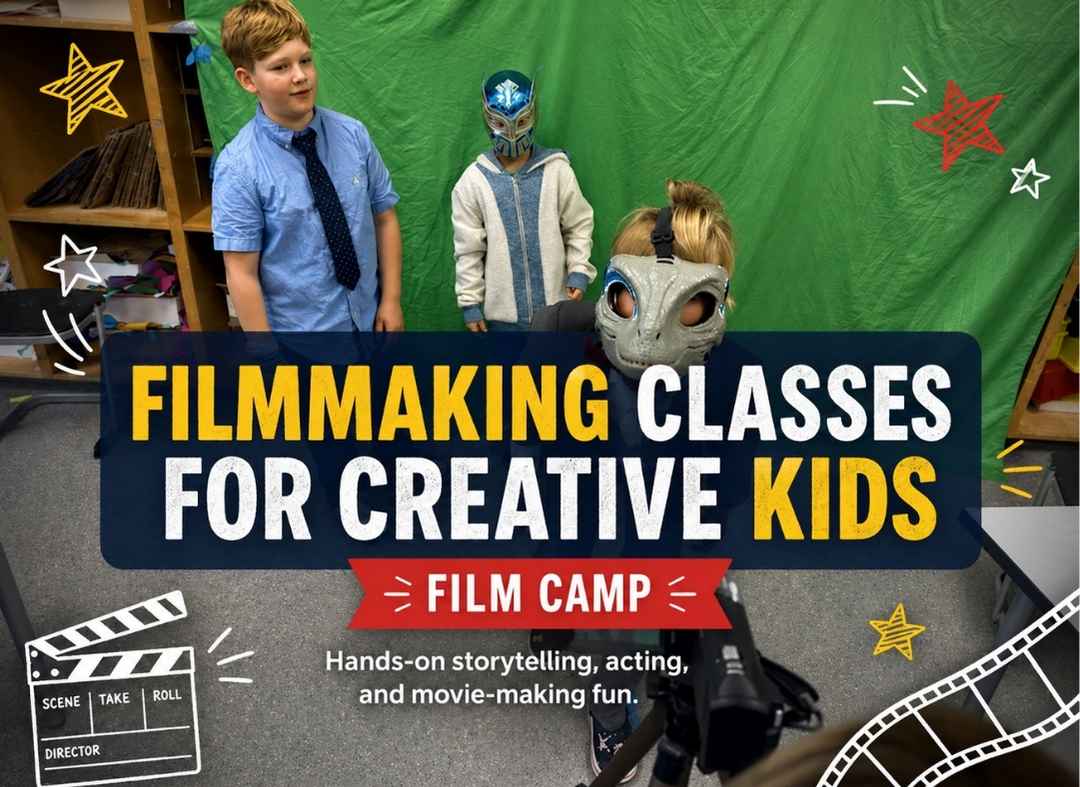
Discover why filmmaking classes help creative kids build confidence, teamwork, and storytelling skills through hands-on movie projects at Film Camp Los Angeles, where beginners learn by creating real short films.
Read >.jpg)
Weekend film classes in Los Angeles teach kids ages 8 to 14 filmmaking every Sunday in Glendale. Compare real costs, curriculum, safety, and what to ask before enrolling your child.
Read >
Thanksgiving break film camps fill the three school-free days in Austin, Los Angeles, and San Francisco. Kids ages 7 to 14 write, shoot, edit, and premiere their own short film.
Read >.jpg)
Discover how kids ages 7–14 learn screenwriting, acting, directing, camera work, editing, teamwork, and confidence at Los Angeles Film Camp in Glendale while creating and premiering their own short film.
Read >.png)