Film Camp's 13-week Austin program teaches kids ages 10–18 real filmmaking skills — from directing and editing to AI tools culminating in a short film festival.
.jpg)
Your kid's going to make an actual movie. Here's exactly how.
Most camps keep kids busy. Film Camp makes them creators.
There's a big difference. Busy looks like lanyards and color wars. Creating looks like a 12-year-old calling "action" on their own short film while a crew of peers adjusts the lighting.
That's what we do here at Film Camp in Austin, TX. Every week has a purpose. Every day builds a real skill. By the end, campers don't just know about filmmaking. They've actually done it.
This breakdown shows you exactly what happens, week by week. No vague promises. No fluff. Just a clear look at the curriculum your kid will move through.
The first week is about one thing: eyes.
Filmmaking starts in the brain, not the camera. So we train campers to notice things. Light. Shadows. The way a doorway frames a person. The way silence hits harder than noise sometimes.
Campers watch short clips and ask, why did the director choose that shot? They start keeping a visual journal. It sounds simple. But this week changes how they see the world outside camp too.
Key skills this week:
Here's the truth about bad movies. They usually fail at the story level, not the technical level.
Week 2 is all about narrative. Campers learn the bones of a good story. Character, conflict, stakes, resolution. They write short scripts. Some are two pages. Some run longer.
We use a simple rule here: if you can't explain your story in two sentences, it's not ready to shoot yet. That rule saves a lot of wasted footage later.
Key skills this week:
Now we pick up the camera.
Campers learn how to hold it steady, how to frame a shot, and how to follow movement without losing focus. They also learn the exposure triangle. Aperture, shutter speed, ISO. We teach it like a mixing board. Turn one dial and the others adjust.
By end of week, every camper can shoot a clean, well-lit scene on their own.
Key skills this week:
Bad audio kills a good film faster than anything.
Campers learn this the hard way in week 4. They watch two clips. Same image. Different audio. The reaction says everything. Suddenly everyone gets why sound matters.
They practice with boom mics, lavaliers, and room tone recording. They also learn about ambient sound layers and how a film's "world" gets built in post through audio.
Key skills this week:
Light is a language. Week 5 teaches campers how to speak it.
They experiment with three-point lighting. They play with shadows. They try recreating the look of a classic film scene using just two portable LED panels. It's like painting with electricity.
Instructors bring in real gear. Campers get hands-on time with professional setups, not just theory.
Key skills this week:
This week gets messy. In the best way.
Campers rotate through director, actor, and crew roles. Directing peers is harder than it sounds. You have to communicate a vision clearly enough that someone else can execute it.
We use an old Austin saying: "If you want to go fast, go alone. If you want to go far, go together." Running a film set is the ultimate team sport.
Key skills this week:
The story gets built twice. Once in the script. Once in the edit.
Week 7 moves into the editing suite. Campers import their footage, learn the interface, and start making cuts. They discover that pacing is a feeling, not a formula. A scene that ran 90 seconds on set might only need 20 in the edit.
We use industry-standard software. No training wheels. Real tools.
Key skills this week:
Color isn't decoration. It's storytelling.
Campers learn how a warm grade makes a scene feel safe. How a desaturated blue-green palette signals danger or isolation. They apply basic color correction to their own footage and then push into creative grading.
This is the week campers start to develop a personal visual style.
Key skills this week:
The final audio layer.
Campers explore royalty-free music libraries, learn basic scoring concepts, and mix their audio tracks. They hear how the same scene changes completely with different music underneath it.
Some campers write their own original scores using simple digital audio workstations. It's not required. But the ones who try it almost always love it.
Key skills this week:
Filmmaking in 2025 includes AI. So we teach it.
Campers get hands-on time with tools like ChatGPT, Claude, Gemini, Perplexity, and Grok. They learn how different LLMs can help in pre-production. Script notes, research, shot list drafts, even dialogue feedback.
The goal isn't to replace creativity. It's to make the creative process faster and smarter.
What campers explore:
We also talk about the limits of AI. It can't replace a human perspective. It can't feel what an audience feels. Campers learn to use these tools with intention, not instead of it.
This is the week everything clicks.
Campers form small crews and produce a complete short film. Two to four minutes. Original story. Shot, directed, and edited by campers.
Instructors act as producers. They give guidance. They don't take over. This week is the "show us what you've got" moment.
What this week looks like:
Every film deserves an audience.
Week 12 ends with a real film festival. Parents, mentors, and guests attend. Campers screen their films, introduce their projects, and take questions from the audience.
This is the moment that changes things. A kid who walked in week 1 not knowing what "coverage" meant now stands up and explains their directorial choices.
That's not just film education. That's confidence built on real work.
The last week is about what comes after.
Campers organize their work into a digital portfolio. They write short reflections on what they made and what they'd do differently. Instructors give individualized feedback and talk about next steps.
For older campers, that might mean applying to film programs or entering festivals. For younger campers, it might just mean knowing they can make another film on their own.
Both outcomes are a win.
Film Camp isn't a babysitting program with cameras. It's a real creative education.
Week by week, campers build actual skills. They learn to tell stories, run a set, edit footage, and use tools that professionals use every day, including AI. By the end, they've made something real.
If your kid has ever said "I want to make movies someday," this is where someday starts.
Ready to get started?
Call us at (323) 471-5941 Email hello@film.camp Visit us at 5900 Balcones Drive, Suite 100, Austin, TX 78731
Film Camp works best for kids and teens ages 10 to 18. We group campers by age and experience level so no one feels lost or bored.
Nope. Zero experience required. Week 1 starts from scratch. We've had complete beginners make genuinely good films by week 12.
We provide cameras, microphones, lighting gear, and editing workstations. Campers don't need to bring anything except their ideas.
We use industry-standard software. Campers learn tools that working editors actually use, not simplified versions built just for kids.
Yes, it's part of the core curriculum. But it's taught as a creative aid, not a replacement for original thinking. Campers learn where AI helps and where it falls short.
We strongly recommend the full program. Each week builds on the last. Jumping in mid-curriculum is possible in some cases. Contact us to talk through your situation.
Campers keep full ownership of their films. They get digital copies of everything they shoot and edit. Films are also screened at the week 12 showcase.
Groups stay small. We cap crews at around 8 to 10 campers per instructor. That keeps feedback personal and screen time fair.
It absolutely helps. Campers leave with a real portfolio, practical skills, and a completed short film. That's useful for applications, interviews, and personal confidence.
You can reach us directly:
We're happy to answer questions, give a tour, or talk through what the right session looks like for your kid.
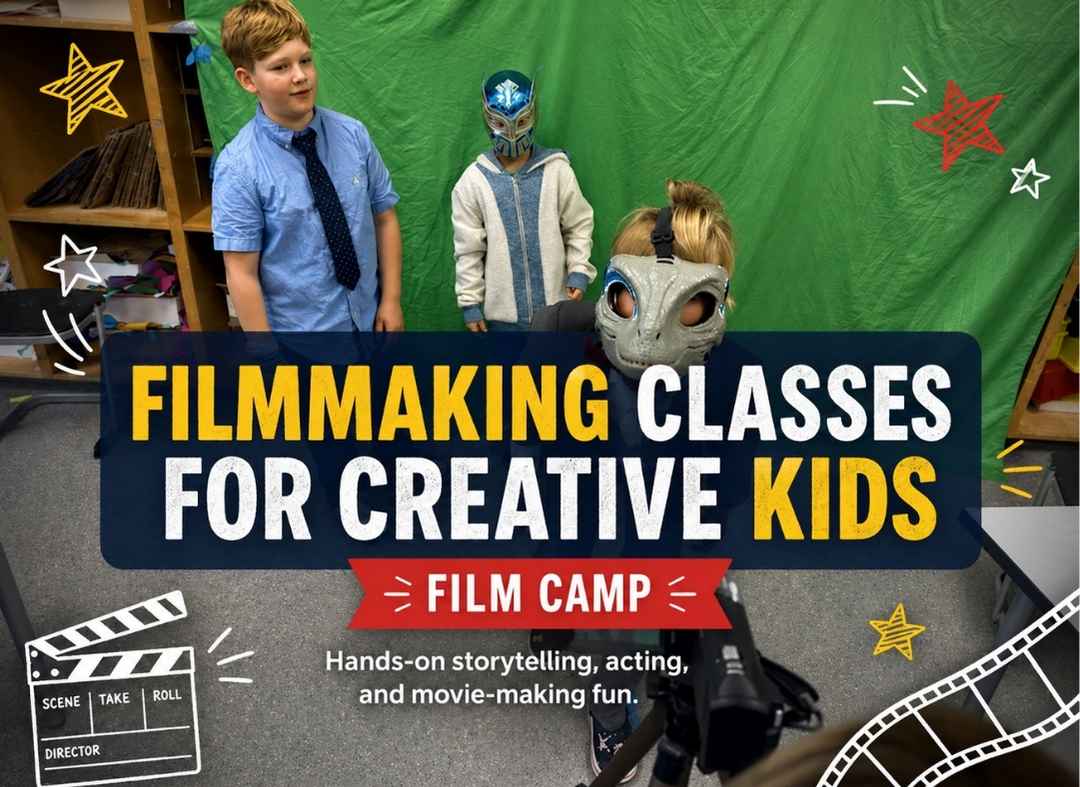
Discover why filmmaking classes help creative kids build confidence, teamwork, and storytelling skills through hands-on movie projects at Film Camp Los Angeles, where beginners learn by creating real short films.
Read >.jpg)
Weekend film classes in Los Angeles teach kids ages 8 to 14 filmmaking every Sunday in Glendale. Compare real costs, curriculum, safety, and what to ask before enrolling your child.
Read >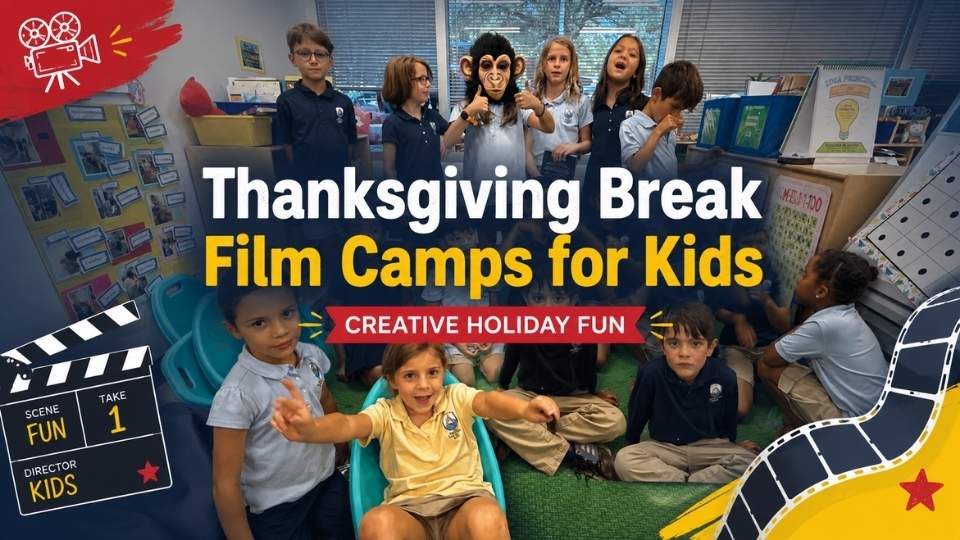
Thanksgiving break film camps fill the three school-free days in Austin, Los Angeles, and San Francisco. Kids ages 7 to 14 write, shoot, edit, and premiere their own short film.
Read >.jpg)
Discover how kids ages 7–14 learn screenwriting, acting, directing, camera work, editing, teamwork, and confidence at Los Angeles Film Camp in Glendale while creating and premiering their own short film.
Read >.png)