Film camp is the ultimate creative arts summer experience for kids. They write, direct, film, and edit their own short movies building real skills in storytelling, teamwork, and confidence. Film Camp Austin turns big ideas into finished films in just days.
.jpg)
School ends fast. One Friday there's a backpack by the door. The next Monday there's nine empty weeks staring at you.
If your kid draws on everything, acts out movie scenes, or films the dog in slow motion, a generic camp feels like a waste. Creative arts summer camps for kids fix that. They hand your child a craft, a crew, and something real to show off at the end.
But how do you tell a great one from a glorified babysitting room with a craft bin? And what should you actually be paying?
This guide walks you through the whole thing. Types, real costs, safety, red flags, and what a good camp day actually looks like.
A creative arts summer camp is a program where kids make things, not just watch or listen.
Kids write, build, act, shoot, edit, paint, or record. Then they share the finished piece with an audience. That last part matters more than most brochures admit.
Think of it as a workshop, not a classroom. The instructor hands over real tools and then steps back.
The umbrella is wide. It covers film, theater, music, visual art, dance, and creative writing. Some camps stack a few together. Others go deep on one craft, which usually produces better work.
Most run as day camps, roughly 9am to 3pm, Monday through Friday. Sessions run one to three weeks. This kind of hands-on arts education has been around for decades, and the good programs still follow the same simple rule. Kids learn by doing.
In Austin they like to say keep it weird. Creative camps do that on purpose, and kids love them for it.
Parents pick arts camps because the payoff lasts past August.
Sports camps build a skill. Arts camps build a skill plus a voice. Your child has to decide what to say, then figure out how to say it so other people get it.
That's a big deal for a 10 year old.
Here's what parents actually report after a good session:
Shy kids often bloom here. A camera or a script gives them a job to hide behind at first. By day three the hiding stops.
There's no free lunch, though. A camp only delivers this if the staff know their craft and the group stays small.
There are six common types, and each one suits a different kid.
Film and video camps. Kids write, shoot, act, and edit a short film. Best for storytellers and kids glued to YouTube.
Theater and acting camps. Rehearsals, blocking, and a live show at the end. Best for kids who love an audience.
Music camps. Instruments, songwriting, or recording. Best for kids who already noodle around at home.
Visual art camps. Drawing, painting, ceramics, printmaking. Best for the quiet builder.
Dance camps. Choreography and performance. High energy all day.
Multimedia and digital camps. Animation, photography, podcasts, video editing. Good for the tinkerer.
Not sure which one? Ask your kid what they'd make if nobody graded it. Their answer usually picks the camp for you.
Film camps tend to win with mixed interests. A film set needs writers, actors, designers, and editors all at once. One kid can try four jobs in one week.
A good creative arts day is short bursts of teaching and long stretches of making.
Here's a typical film camp day, and most arts camps follow a similar shape.
Notice how little of that is sitting still. If a camp's schedule reads like a school timetable, that's a flag.
Ask any camp for their sample daily schedule before you pay. If they can't produce one, the wheels aren't on the bus yet.
Most day camps for creative arts run about $400 to $900 per week in major cities.
That range is wide for a reason. Price moves with instructor quality, group size, gear, and the city you're in. San Francisco and Los Angeles sit at the higher end. Austin usually sits a notch below.
What pushes the price up:
What pulls the price down:
Cheap can be fine. Cheap and vague is not. If you want a fuller breakdown, our guide to the average summer camp cost in 2026 lays out the numbers by camp type.
Here's the honest version. You're not buying childcare hours. You're buying who stands in front of your kid all week.
Yes, financial help exists, and most families never ask for it.
Plenty of camps offer scholarships, sliding scale rates, or sibling discounts. Some run payment plans that split tuition across a few months. Nonprofit and community programs often have dedicated camp funds.
Ask these five questions before you pay:
That last one catches people. Hidden extras can add a couple hundred dollars to a week you thought was locked in.
A camp that answers all five in plain English is telling you something good about how they run everything else.
Safety comes down to three things. Who's hired, how kids are supervised, and what happens to the footage.
Staff vetting. Every adult should pass a background check. Ask directly. A good camp answers in one sentence and offers proof.
Ratios. Look for roughly one adult per eight to ten kids in day camps. Smaller for younger groups.
Media consent. Arts camps film and photograph kids. That's normal. What's not normal is fuzzy language about where those images go.
You should get a written media consent form. It should say whether footage can be used for marketing, and it should let you opt out without losing the camp experience.
The American Camp Association publishes standards on staffing, supervision, and health that are worth skimming before you compare programs.
Ask about the emergency plan too. Who calls you, and how fast? A camp that shrugs at that question hasn't thought it through.
For most kids aged 7 to 14 doing arts programs, day camp wins.
Creative work needs focus, and focus needs sleep. Day camps also let kids decompress at home and show you what they made. That nightly download is half the fun.
Sleepaway makes sense for older teens, intensive programs, or families who want the full independence experience. If you're torn, our breakdown of day camp vs sleepaway camp walks through the trade-offs by age.
One week is a good first dose. Two weeks suits a kid who already knows they love the craft.
No. Good beginner camps assume zero experience and build from there.
The best programs mix skill levels on purpose. Beginners learn fast when they work beside a kid who's done it before. Experienced kids get better by explaining what they know.
What actually matters is interest, not skill. A kid who wants to be there will learn the camera in an afternoon.
If a camp says advanced only, that's fine, but it should say so up front and place kids by conversation, not by guesswork.
Shy kids often do better in arts camps than anywhere else.
Here's why. There's always a job. Not everyone has to stand in the spotlight on day one. A quiet kid can run sound, hold the boom, sketch the storyboard, or edit.
Roles give shy kids a door in. Most walk through it by midweek.
Ask the camp how they handle a kid who won't talk on day one. If the answer is warm and specific, you've found people who've actually done this.
Watch for this green flag: the camp names the shy kid role first, not last.
Judge a camp by what it shows you, not what it claims.
Green flags:
Red flags:
The proof is in the pudding. Ask to see three student projects from last summer. A confident camp sends them within a day.
Before you compare programs, run through a summer camp planning checklist for parents so you're asking every camp the same questions.
These three cities are packed with arts camps, and the logistics matter as much as the program.
Austin. Camps cluster around central and north Austin. Traffic on Mopac decides your morning, so check drop-off windows before you book.
Los Angeles. Programs run from Glendale to the Westside. A camp ten miles away can still be a 45 minute drive at 8:30am. Pick by commute, not just by name.
San Francisco. Fort Mason, the Marina, and the Mission host strong arts programs. Mornings run cold and foggy, so pack a hoodie even in July. Our summer camps in San Francisco page lists venue details and dates.
In all three cities, the good sessions fill by early spring. Popular weeks go first, especially the last two weeks of July.
Film Camp was built for the kid who wants to make something real, not just fill a week.
Kids ages 7 to 14 join a small crew on Monday. They write a story, cast it, shoot it, and edit it. On Friday, families come watch the premiere. Your child sees their name on screen.
What you get, plainly:
No mystery add-ons. No screen-time babysitting. Just a week where your kid builds something and walks out taller.
Ready to lock in a week? See summer dates and enroll while spots are open.
How long is summer camp usually? Most day camps run one week, Monday to Friday, about six hours a day. Many families book two weeks.
What age is best for a first arts camp? Seven to nine works well for a first day camp. By 10 or 11, most kids can handle a full production week.
Is it just screen time? It shouldn't be. Good film camps spend most of the day on their feet, planning, acting, and shooting. Editing is a slice, not the meal.
What should we pack? Water bottle, packed lunch, closed-toe shoes, a light jacket, and a notebook. Skip the expensive gear.
What if my kid gets homesick at a day camp? Rare, but it happens. Good camps pair the kid with a buddy and call you if it doesn't settle.
Can we still enroll late? Often yes. Call and ask. Cancellations open spots more than people expect.
A creative arts summer camp is one of the few things you can buy your kid that they get to keep making after.
The skill sticks. The confidence sticks. The friends usually stick too.
So don't shop on price alone. Shop on who's teaching, how small the group is, and whether you can watch what last summer's kids made.
Then book early, because good weeks disappear faster than parents expect.
Want a summer your kid actually talks about in October? See summer dates and enroll at Film Camp.
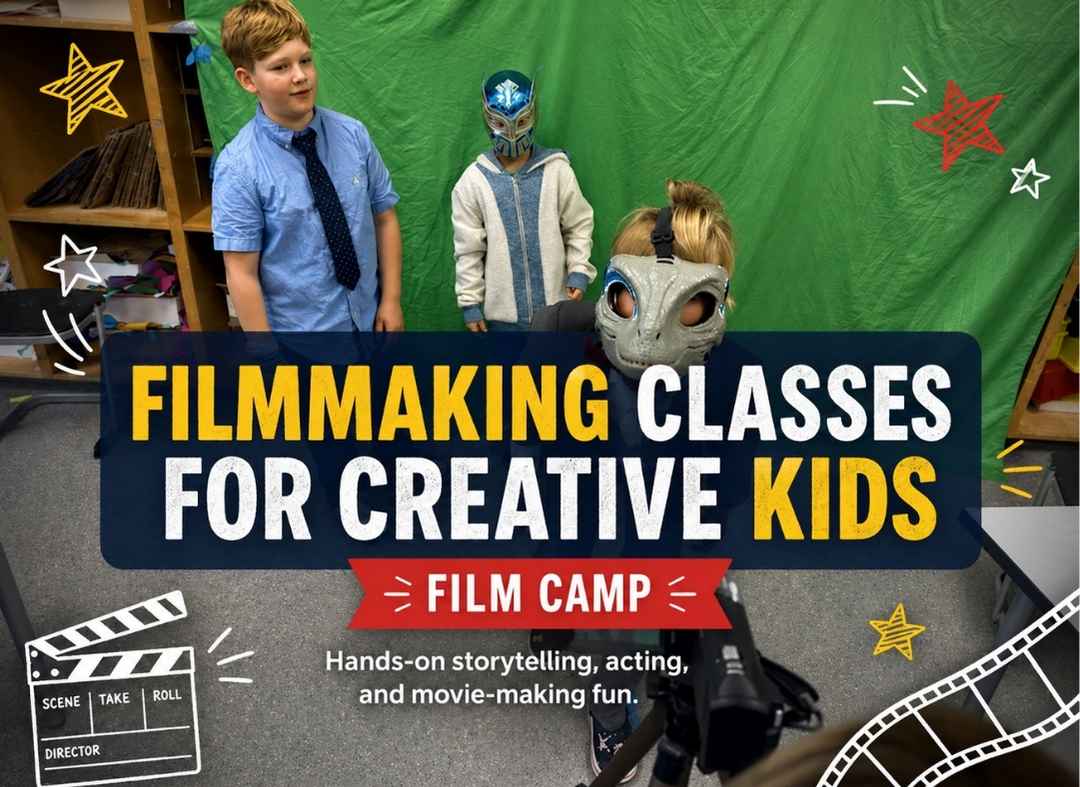
Discover why filmmaking classes help creative kids build confidence, teamwork, and storytelling skills through hands-on movie projects at Film Camp Los Angeles, where beginners learn by creating real short films.
Read >.jpg)
Weekend film classes in Los Angeles teach kids ages 8 to 14 filmmaking every Sunday in Glendale. Compare real costs, curriculum, safety, and what to ask before enrolling your child.
Read >
Thanksgiving break film camps fill the three school-free days in Austin, Los Angeles, and San Francisco. Kids ages 7 to 14 write, shoot, edit, and premiere their own short film.
Read >.jpg)
Discover how kids ages 7–14 learn screenwriting, acting, directing, camera work, editing, teamwork, and confidence at Los Angeles Film Camp in Glendale while creating and premiering their own short film.
Read >.png)