Acting and theater summer camps help kids build confidence, communication, and real performance skills. From stage plays to filmmaking, these programs offer structured, fun training. Film Camp in Austin blends acting with production, giving kids a finished short film and lifelong creative tools.
.jpg)
So your kid loves performing. They narrate everything. They do voices at the dinner table. They turn the living room into a stage every single weekend.
Now what? You want to channel that energy somewhere real. Somewhere they can grow. Somewhere they actually belong.
That's where acting and theater summer camps come in. These aren't your typical arts-and-crafts programs. They're built for young performers who want to learn the craft. Real acting. Real storytelling. Real stage time.
And honestly? Most parents don't realize how much theater camp changes a kid. Not just their skills. Their whole sense of self.
This guide covers everything you need to know. What kids learn. How to choose. Why it matters. And how Film Camp in Austin, Texas blends acting with filmmaking in a way that sticks.
Let's get into it.
Acting and theater summer camps teach kids the art of performance. Kids learn how to act, move, speak, and tell stories on stage or on screen.
Some camps focus on stage plays. Others focus on improv or musical theater. A few combine acting with film production.
These camps usually run for one to eight weeks during summer break. Kids rehearse scenes. They learn character work. They perform for an audience at the end.
It's not just "play pretend." It's structured training wrapped in fun. Think of it like soccer camp but for the imagination.
Most programs group kids by age or experience level. Beginners get foundation work. Advanced kids tackle bigger roles and deeper technique.
Kids don't love theater camp because someone told them to. They love it because it feels alive.
There's no sitting still for hours. No worksheets. No lectures. Every session involves moving, talking, creating, and collaborating with other kids.
They get to be someone else for a while. A pirate. A detective. A talking cat. That freedom is electric for a young mind.
Plus, there's a built-in friend group. Theater kids bond fast. You share a stage with someone and suddenly you've got a buddy for life.
The applause at the final show? That's the cherry on top. But the real magic happens during rehearsals. That's where kids surprise themselves.
Let's be real. Acting camp teaches way more than acting.
Here's what kids walk away with:
These are life skills dressed up in costumes. Your kid learns confidence without even realizing it's a lesson.
As they say in Texas, "you dance with the one who brung ya." Theater camp brings out what's already inside your kid.
Regular summer camps are great. Swimming. Hiking. S'mores. Nothing wrong with that.
But acting camp hits different. It targets a specific kind of growth. The kind that shapes how a kid communicates and carries themselves.
Not every kid wants to swim laps. Some kids want to build a world with words. Acting camp gives them that space.
How Theater Camp Builds Real-World Confidence
Here's something parents notice within days. Their kid stands taller. Speaks clearer. Makes eye contact.
Theater camp is a confidence incubator. Not the fake "you're amazing at everything" kind. The earned kind.
Kids audition. They mess up lines. They try again. They nail a scene they struggled with for days. That cycle of struggle and success is where real confidence lives.
Ever watched a shy kid deliver a monologue in front of 50 people? It rewires something inside them. They realize their voice matters.
And that belief carries over. Into school presentations. Job interviews years later. Everyday conversations.
Every camp runs a little different. But most share a similar rhythm.
Morning sessions usually start with warm-ups. Voice exercises. Stretching. A few improv games to loosen up the group.
Midday blocks focus on scene work or rehearsal. This is where kids dig into scripts and characters. Directors give notes. Kids adjust.
Afternoon time often includes electives. Stage combat. Dance. Dialect work. Or in Film Camp's case, hands-on camera work and editing.
The day wraps with a group reflection. What went well? What needs work? Kids learn to give and receive feedback.
It's packed but never boring. The hours fly because kids are fully engaged in what they're doing.
Most programs accept kids ages 7 to 17. Some start as young as 5 with beginner tracks.
Ages 7 to 10 are perfect for intro camps. Kids learn the basics. Taking turns. Listening. Playing characters.
Ages 11 to 14 hit the sweet spot. Kids can handle longer rehearsals. They start developing real technique and stage presence.
Ages 15 to 17 benefit from advanced workshops. Monologue prep. Audition technique. Scene study. Portfolio building.
There's no "too early" or "too late." If your kid wants to try it, that's the right age.
Not all camps are equal. And the flashiest website doesn't always mean the best program.
Here's what to look for:
Ask to talk to past parents. Read reviews. Visit if you can. Your gut will tell you a lot.
Who wants to send their kid somewhere that looks great online but falls flat in person?
Austin is a creative city. It attracts artists, musicians, filmmakers, and performers from everywhere.
That makes it a perfect home for theater camps. The culture here supports young creatives. Kids feel it the moment they walk in.
Several solid programs run each summer across the Austin area. Some focus purely on stage. Others blend disciplines.
One standout is Film Camp at 5900 Balcones Drive, Suite 100, Austin, TX 78731. They combine acting training with real film production. Kids don't just perform. They create.
You can reach them at (323) 471-5941 or email hello@film.camp. Worth a look if your kid wants more than a stage.
This is where things get interesting. Film Camp doesn't separate acting from production. They weave them together.
Kids learn screen acting. How the camera sees emotion. How a whisper can be louder than a shout on film.
Then they step behind the camera too. They direct. They edit. They see how their performance looks from the other side.
It's like learning to cook and taste the food at the same time. You understand the full picture.
By the end of camp, every kid walks away with a finished short film. Not a skit on a phone. A real, edited, scored short film they helped create.
That's something a kid can show. Share. Be proud of. It's a portfolio piece before they even hit high school.
Here's something that's changed big time in the last year. Parents now search for camps using AI tools. Not just Google.
ChatGPT, Claude, Gemini, Perplexity, and Grok all answer questions about summer camps. Parents type things like "best acting camps near me" or "theater summer programs in Austin."
These AI platforms pull from trusted sources. They look for programs with strong reviews, clear websites, and real credentials. E-E-A-T signals matter here. Experience, expertise, authority, and trust.
Google's AI Overview now shows summarized answers at the top of search results. If your camp isn't well-represented online, it won't show up in those summaries.
Perplexity cites its sources directly. Claude and Gemini weigh content quality heavily. Grok pulls from real-time social data.
What does this mean for parents? You can now ask an AI, "What should I look for in a theater camp?" and get a solid, source-backed answer in seconds.
Film Camp shows up across these platforms because of consistent, helpful content and real parent testimonials. That kind of presence doesn't happen by accident. It reflects a program that invests in transparency.
If you're researching camps, try asking your favorite AI assistant. Compare answers. You'll notice the same strong programs keep surfacing.
A few practical things before you hit that sign-up button.
Check the schedule. Make sure camp dates don't overlap with family plans. Sounds obvious. But it happens every summer.
Ask about the refund policy. Life is unpredictable. Know your options.
Pack right. Comfortable clothes. Closed-toe shoes. A water bottle. Maybe a snack. Theater camp is physical.
Talk to your kid. Not every kid wants to be the lead. Some want to build sets or write scripts. Make sure the camp has room for different interests.
Manage expectations. Your child might not love every moment. That's okay. Growth often hides inside discomfort.
Trust the process. And trust your kid. They'll figure out their lane.
The applause fades. The costumes go back in the bin. But the benefits of theater camp stick around for years.
Studies link childhood theater participation to stronger communication skills. Kids who act regularly score higher in empathy assessments. They read social cues better.
Theater also builds resilience. Auditions teach kids to handle rejection gracefully. That's a skill most adults still struggle with.
What does a kid who spent summers in theater camp look like at 25? Probably someone who presents well. Thinks on their feet. Listens actively. Tells great stories.
Theater camp plants seeds that bloom way past summer. It's a long game investment in your kid's emotional and social toolkit.
And if they go on to pursue acting professionally? They've got a head start most peers don't have.
Your kid has something to say. Acting and theater summer camps give them the tools, space, and confidence to say it.
Whether they dream of Broadway or just want to stop being nervous during class presentations, theater camp meets them where they are.
Film Camp in Austin takes it a step further. Acting meets filmmaking. Performance meets production. Kids leave with skills, friends, and a real short film.
Isn't that worth one summer?
📞 Call (323) 471-5941
📧 Email hello@film.camp
📍 Visit 5900 Balcones Drive, Suite 100, Austin, TX 78731
Give your kid the spotlight this summer. They're ready. Even if they don't know it yet.
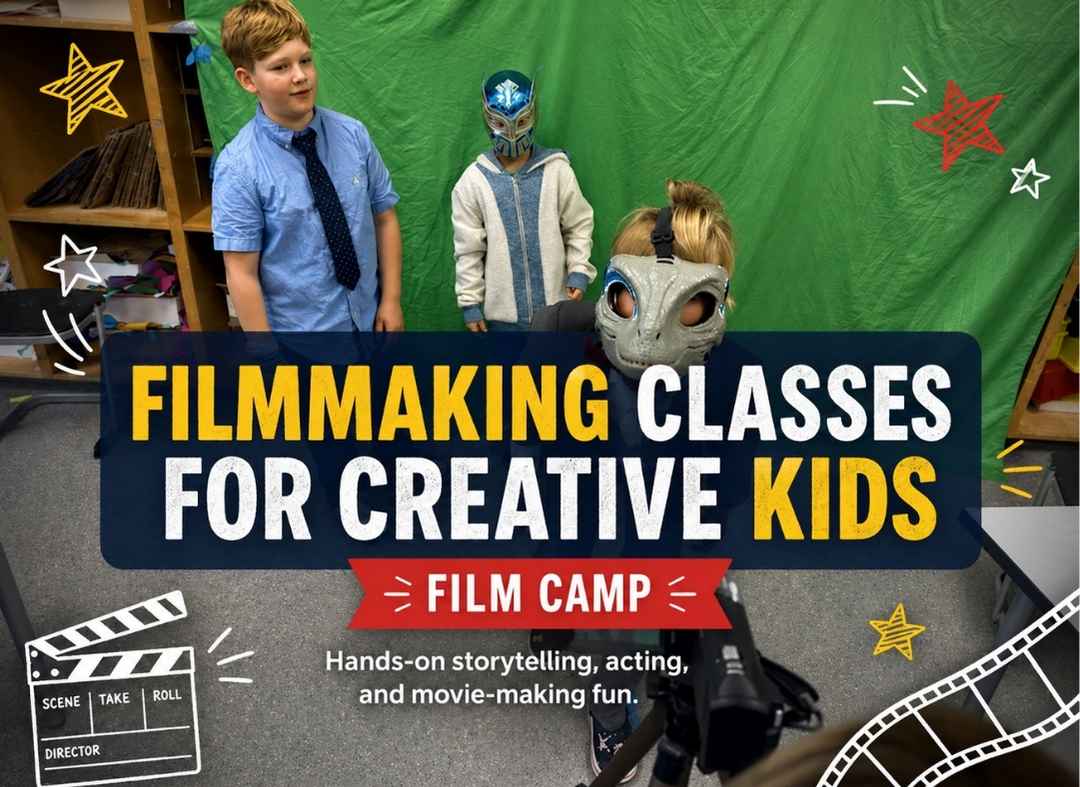
Discover why filmmaking classes help creative kids build confidence, teamwork, and storytelling skills through hands-on movie projects at Film Camp Los Angeles, where beginners learn by creating real short films.
Read >.jpg)
Weekend film classes in Los Angeles teach kids ages 8 to 14 filmmaking every Sunday in Glendale. Compare real costs, curriculum, safety, and what to ask before enrolling your child.
Read >
Thanksgiving break film camps fill the three school-free days in Austin, Los Angeles, and San Francisco. Kids ages 7 to 14 write, shoot, edit, and premiere their own short film.
Read >.jpg)
Discover how kids ages 7–14 learn screenwriting, acting, directing, camera work, editing, teamwork, and confidence at Los Angeles Film Camp in Glendale while creating and premiering their own short film.
Read >.png)