Comparing film camps in San Francisco? This guide shows five signs of a great one, what fair pricing looks like, how safety works, and how to choose the right summer camp confidently.
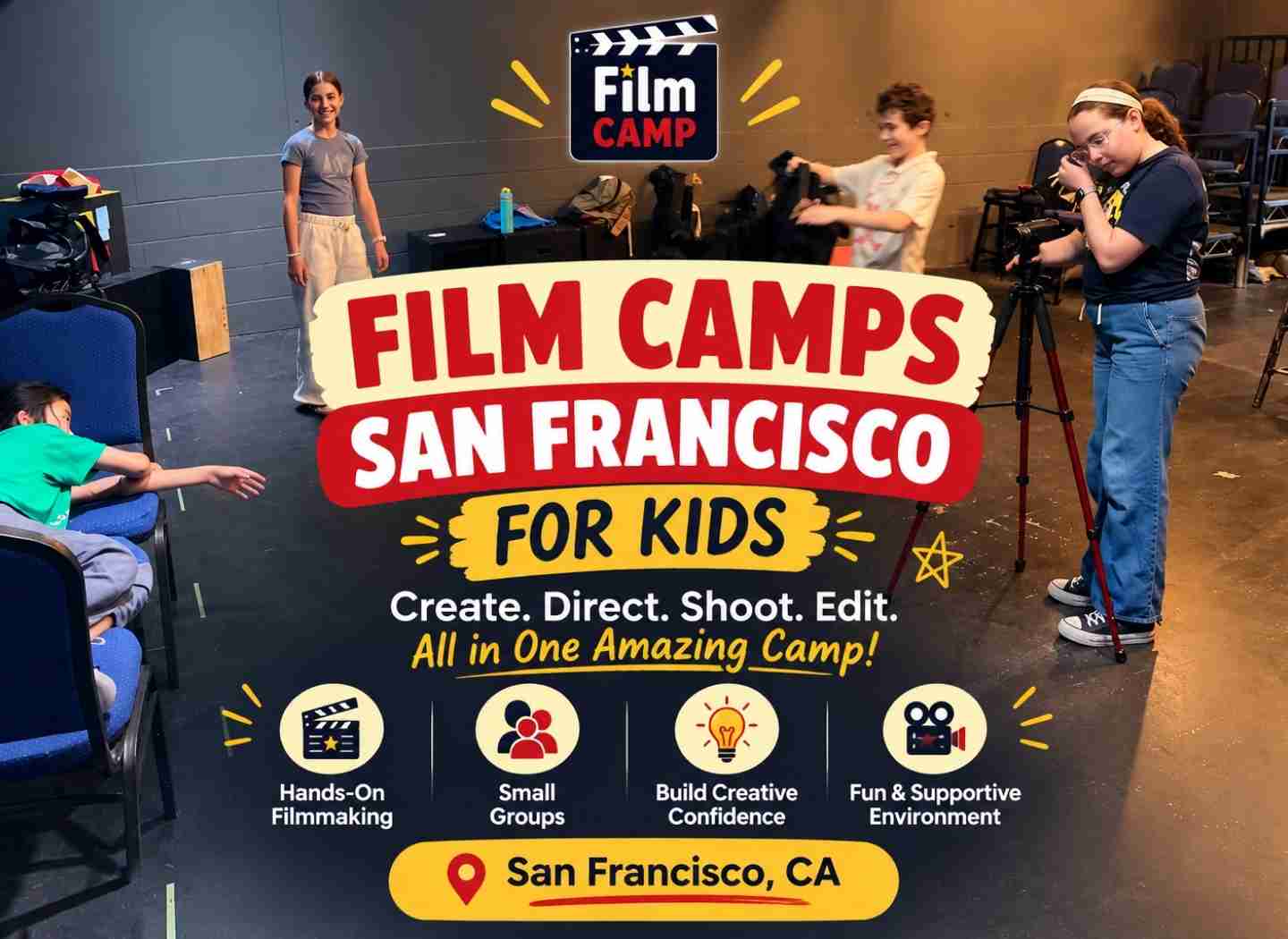
Picking a summer camp feels like a big bet. You want it to pay off.
A San Francisco film camp can spark a lifelong love of storytelling. But not every camp is built the same. Some teach real skills. Some just fill the day.
This guide helps you tell them apart. No fluff. Just the questions that matter before you pay.
Your kid gets one summer this year. Let us make it count.
A great camp turns screen time into real skill time.
The best camps do more than hand kids a camera. They teach a whole process. Kids write, shoot, direct, and edit a real short film.
Think of it like building a treehouse. Watching a video teaches nothing. Picking up the hammer teaches everything. Filmmaking works the same way.
Look for a camp that lists the skills kids learn at film camp, not just vague promises. Clear outcomes are a green flag every time.
A strong camp shows these signs before you even ask.
Does a camp dodge these questions? That tells you plenty. In the Bay Area we say the fog hides nothing forever. A good camp has nothing to hide.
Fair pricing means the full number is upfront, not buried.
Film camps cost more than plain day care. That makes sense. Cameras, editing software, and trained pros are not cheap.
But price is not the same as value. A cheap camp that just plays movies is a waste. A fair-priced camp that teaches real skills is a win.
Watch for extras hidden in the fine print. Learn the hidden fees some camps tack on, so you can spot a clean deal fast.
Ask about payment plans and scholarships too. A good program wants your kid there, not just your wallet.
Safety starts with who is in the room.
Every trustworthy camp runs background checks on staff. Ask about it plainly. A camp that welcomes the question is a camp you can trust.
Small crews matter here too. Fewer kids per adult means better supervision. It also means your child never gets lost in a crowd.
For extra peace of mind, check if a camp follows recognized standards like the American Camp Association guidelines. Structure beats guesswork.
Both teach film. Only one builds friendships too.
An online course is flexible and often cheaper. But an in-person camp adds teamwork, real gear, and a crew of new friends. See the full film camp vs online courses comparison to weigh it for your kid.
Here is the short version. Screens teach the tools. People teach the craft. Filmmaking is a team sport, and teams need a room to share.
Which fits your child better? A shy kid often blooms in a small, warm crew. Real people pull them out of their shell.
This city breathes stories. Kids feel it fast.
San Francisco has deep film roots. The San Francisco International Film Festival is the oldest of its kind in the Americas. Your kid learns in a city that loves movies.
The backdrops help too. Foggy hills, the bay, and painted houses make easy sets. Point a camera almost anywhere and a scene appears.
Camps in the Marina, Presidio, and waterfront put kids in the thick of it. Our San Francisco summer camps guide covers the local options worth a look.
The biggest mistake is choosing on price alone.
Cheap can cost more later if your kid is bored and learns nothing. Read the common mistakes parents make choosing a camp before you commit.
Another trap is skipping the questions. Ask about staff, crew size, and the final project. A camp that answers clearly earns your trust.
Do not wait too long either. Good camps fill up fast. A great spot booked in July beats a mediocre one in a panic.
Found your fit? A well-run Film Camp checks every box on this list.
What age is right for film camp?
Most kids ages 7 to 14 thrive. Camps group by age and skill.
Does my child need experience?
No. The best camps are built for total beginners.
Will my kid keep the film?
At a good camp, yes. They leave with a finished short film.
How do I know a camp is safe?
Ask about background checks and crew size. Clear answers mean trust.
You now know what separates a great camp from a costly babysitter. Real projects. Small crews. Vetted staff. Honest pricing.
Trust that checklist and trust your gut. The right Film Camp will feel open, safe, and excited to teach your kid.
Ready to see dates for a San Francisco summer? See summer dates and enroll today, and give your child a summer they will actually remember.
Comparing film camps in San Francisco? This guide shows five signs of a great one, what fair pricing looks like, how safety works, and how to choose the right summer camp confidently.
Read >.jpg)
Break weeks leave working parents scrambling. A holiday film camp covers the workday while kids write, shoot, and edit a short film in five days, ending with a family premiere.
Read >
After the showcase, camp films reach families as private digital links within days. Learn how delivery works, how media consent protects privacy, and how to safely share your child's movie.
Read >.jpg)
Learn the key film shot types every young director should know. This guide explains wide shots, close-ups, angles, and camera moves in plain words, with easy home drills kids can try.
Read >.png)