Film camp offers hands-on experience, teamwork, fast feedback, and real film creation, making skills stick. Online courses are flexible and cheaper but lack engagement, often leading to low completion and weaker learning outcomes.

Your kid watched a YouTube tutorial on shot composition last Tuesday. By Friday, they forgot it.
Sound familiar?
That's the thing about learning filmmaking online. It looks easy from the outside. Press play. Take notes. Build a career. But real filmmaking skills don't stick that way. Not for kids. Not for teens. Not even for most adults.
So here's the big question every parent asks us at Film Camp in Austin, TX. Is in-person film camp really better than an online filmmaking course? Or is it just more expensive for the same stuff?
Short answer? They're not the same thing at all. Not even close.
This guide breaks down the real differences. No fluff. No sales pitch dressed up as advice. Just the honest stuff you need to pick the right path for your kid.
Kids today have more tools than any generation before. A phone can shoot 4K. Free editing apps run on tablets. TikTok taught half of Gen Alpha how to cut a jump scare.
But here's the catch. Tools aren't teachers. And watching isn't doing.
A child can binge 200 filmmaking tutorials and still freeze when someone hands them a real camera. Why? Because filmmaking is a team sport pretending to be an art form. You can't learn it alone in your bedroom.
The stakes are simple:
That's why this comparison matters. It's not about which is "better." It's about which actually sticks.
Ever heard the old saying, "a child who plays with the rain learns the sky"? In Texas we say you gotta get your boots muddy to know the land. Filmmaking is the same. You gotta get on set.
Let's clear this up first. A film camp isn't just a summer daycare with cameras.
At Film Camp, kids ages 7 to 14 walk in as beginners on Monday morning. By Friday, they've written, directed, shot, and edited their own short film. Then they premiere it on a real screen with real popcorn and real nerves.
Here's what that actually looks like day-to-day:
Our camps run in Austin, Los Angeles, and San Francisco. The main campus is in Austin. Five days. Nine to four. No screens at home. All hands, all craft, all week.
Think of it like learning to swim. You can read about it. You can watch it. But you don't actually know how till you're in the water.
Online courses come in a bunch of flavors. Some are serious. Some are just YouTube playlists with a price tag.
The main types out there:
The pitch is always the same. Learn at your own pace. Any time. Anywhere. Affordable.
And that pitch isn't wrong, exactly. For adults with discipline, it can work. For a 10-year-old? It's a different story.
Because here's what those course pages don't tell you. Most kids who sign up for online filmmaking courses never finish them. The completion rates are brutal. Something like 90% drop off before the final project.
Why? Because learning alone is hard. Especially when the couch is right there.
Let me break this down the way I wish someone had broken it down for me.
Film Camp: Kids touch real cameras, real boom mics, real lighting rigs. They block scenes. They yell "action." They mess up and try again with a human next to them fixing it in real time.
Online Courses: Kids watch someone else touch real gear through a screen. Best case, they practice with their phone at home. Worst case, they never pick up a camera at all.
Which one builds real muscle memory? No contest.
Filmmaking is collaboration wrapped in chaos. You can't shoot a scene alone.
At camp, kids rotate roles. Director today. Actor tomorrow. Sound person the day after. They argue. They compromise. They learn that a good crew is like a good band — everybody's gotta hit their part or the whole song falls apart.
Online? It's mostly solo. A discussion forum isn't a crew. A chat room isn't a set.
Here's where online courses really stumble.
When a camper frames a shot wrong at Film Camp, an instructor fixes it in 30 seconds. Hands on the camera. Eye to the viewfinder. Done. The lesson lands forever.
Online, that same kid posts their shot to a forum and maybe gets a comment three days later. Maybe. The moment's gone. The lesson didn't stick.
Fast feedback is like sunlight for young learners. Without it, skills wilt.
Shy kids bloom at Film Camp. We've seen it a hundred times.
A 9-year-old who wouldn't speak in class shows up Monday quiet. By Friday? They're calling action on their own set. They've led a crew. They've seen their idea on a screen with their name in the credits.
Can an online course give that? In a small way, maybe. But there's no red-carpet premiere. No applause from grandma. No real moment where your kid realizes, "oh wait, I actually did this."
Let's be real. Online courses are cheaper upfront.
But cost-per-skill-gained? That flips the math. An online course your kid abandons after two lessons costs you way more than camp. It costs you the skill itself.
Online courses promise flexibility. Learn on your schedule.
In practice, that flexibility is the trap. Kids don't have "schedules." They have impulses. And Minecraft wins every time.
Camp is immersion. Five days, locked in. No "I'll finish the module tomorrow." Just show up, do the work, wrap with a finished film in hand.
Our instructors at Film Camp are working industry pros. They've got credits on Netflix shows, Disney projects, Amazon originals. They've been on real sets with real deadlines.
Kids ask them what it's actually like. What does a cinematographer do all day? How do you break into the business? What happens when the director is mad?
No pre-recorded online course can answer a kid's weird follow-up question in real time. That's the kind of exposure you can't fake.
This is the one that closes the deal for most parents.
At camp, every single camper walks away with a finished short film. Not a draft. Not an assignment. An actual movie they made. With a crew. Under pressure. On time.
Most online courses end with "congrats, here's your certificate." Camp ends with "here's the film your kid made. It's 4 minutes long. Everyone's about to watch it."
Which one do you think they'll remember at 25?
Okay, I'm not gonna trash online learning entirely. That'd be unfair.
Online courses genuinely work for:
And honestly, some online platforms put out great content. MasterClass has legit directors teaching legit lessons. YouTube has free gold buried in it.
But "great content" isn't the same as "great learning." Content is ingredients. Learning is the meal. You still need someone in the kitchen.
Now the flip side. Here's where camp blows online learning out of the water.
Camp wins on:
Want proof? Ask any Film Camp alum what they learned. They'll tell you about the day their scene fell apart and they had to rewrite it on the fly. They'll tell you about the kid who couldn't act on Monday but nailed a scene on Thursday. They'll tell you about the snack break when they figured out their whole plot twist.
That's the stuff online courses can't touch. Not because the content's worse. Because the context is missing.
Here's my actual take after years in this space.
You don't have to pick one or the other. The smartest parents mix both.
Try this combo:
Think of camp as the big meal. Online learning is the snacks between. Neither alone is a diet. Together? Your kid grows.
We've had families do this for years. Their kids come back to camp each summer sharper, more confident, more ambitious. Because they kept the skill alive in small doses all year long.
Here are the top questions we get from parents thinking through this same decision.
If they're between 7 and 14, they're the right age. We've had shy 7-year-olds become lead directors by Friday. No experience needed.
Perfect. Most of our campers start with zero. Our whole curriculum is built for first-timers. That's the point.
Honestly? No. They'll get pieces of the same. But they won't get the red-carpet moment. They won't get the crew. They won't get the working pro next to them saying "try it this way."
Even better. The skills travel everywhere. Storytelling. Teamwork. Problem-solving. Public speaking. Creative confidence. These things don't just help future filmmakers. They help future anyones.
Yes. Contact us and we'll work it out. We don't want cost to be the reason your kid misses this.
Let's make this practical.
Pick Film Camp if:
Pick online courses if:
Do both if:
There's no wrong answer. There's just the right match for your kid, right now.
Look, every camp claims to be "the best." We get it. Marketing is marketing.
So instead of bragging, here's what we actually do differently at Film Camp.
Small crews, real pros: Maximum 12 campers per session. Split into production teams of 4 to 6. Every kid gets real screen time with real gear.
Industry instructors: Our teachers have worked on Netflix, Disney, Amazon projects. Not hobbyists. Working pros who still shoot.
Real equipment: Same cameras, boom mics, and editing software the pros use. No toy versions. No dumbed-down apps.
Red-carpet premiere: Every session ends with families watching finished films on a real screen. It's the moment parents always remember.
13-week extended program: For kids who want to go deeper, our Austin campus runs a full 13-week curriculum ending in a short film festival.
We believe kids deserve the real thing. Not a watered-down version because they're young. Real gear. Real craft. Real finished film.
Film camp vs online filmmaking courses isn't really a fair fight. They're different tools for different jobs.
Online courses are great for supplemental learning and adult self-study. They teach concepts. They share inspiration. They're cheap and flexible.
But for kids who actually want to make films? Nothing beats standing on a real set, touching real gear, making real mistakes with a real crew around them.
That's what Film Camp does. It's what we've been doing in Austin, LA, and San Francisco. And it's why parents keep bringing their kids back.
Your kid's gonna remember one of these experiences at 25. Probably not the Zoom course. Definitely the week they made a movie.
Ready to see it for yourself? Give us a call at (323) 471-5941 or shoot an email to hello@film.camp. Or better yet, just pick a session and book it. The spots fill up fast.
Because the best filmmakers in the world all started somewhere. Most of them started on a real set with a real crew. Just like the one waiting for your kid.

Kids ages 7 to 14 can register for Los Angeles Film Camp at Solar Studios in Glendale. This guide covers simple steps, session dates, pricing, safety, and premiere day.
Read >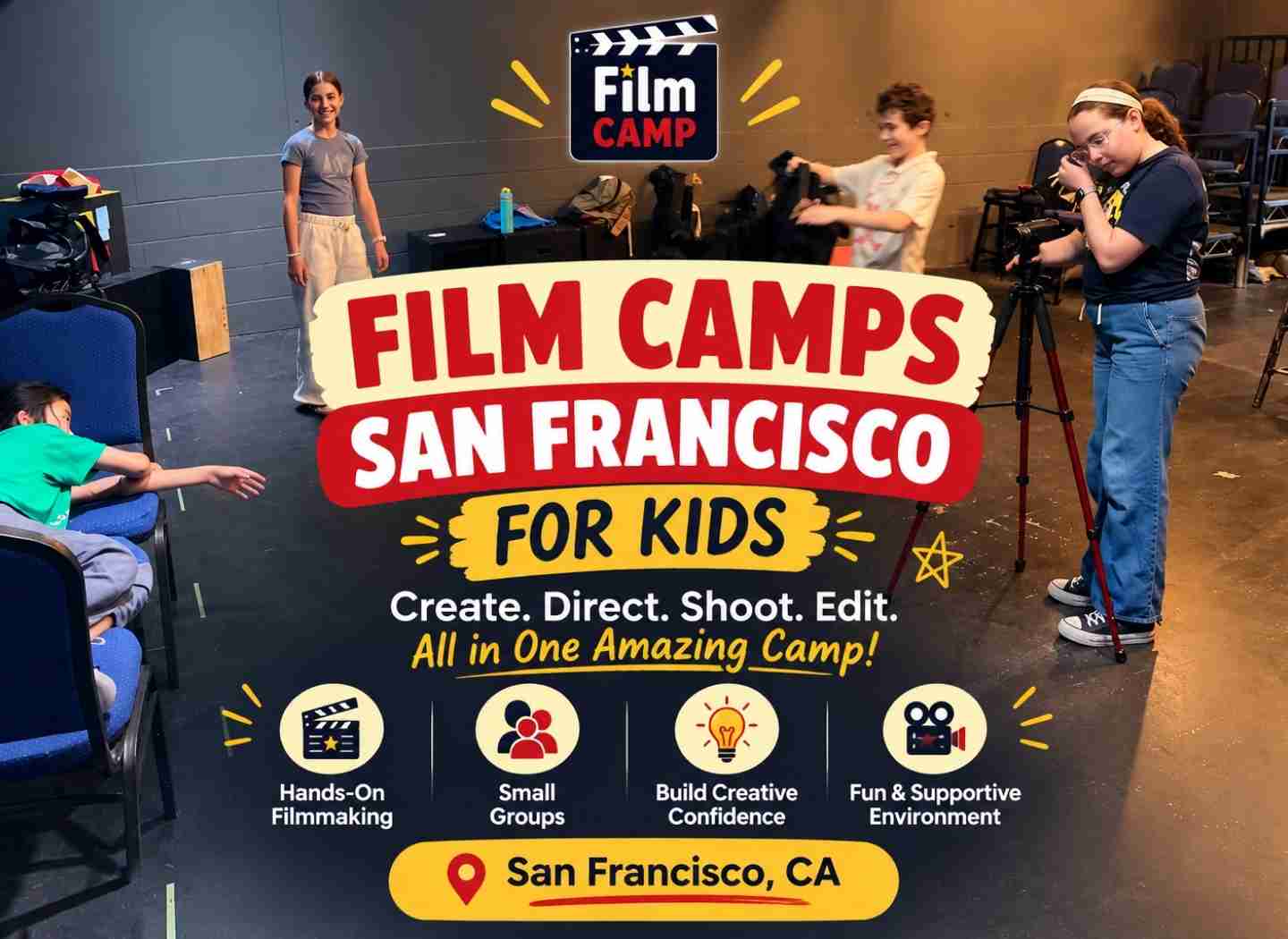
Comparing film camps in San Francisco? This guide shows five signs of a great one, what fair pricing looks like, how safety works, and how to choose the right summer camp confidently.
Read >.jpg)
Break weeks leave working parents scrambling. A holiday film camp covers the workday while kids write, shoot, and edit a short film in five days, ending with a family premiere.
Read >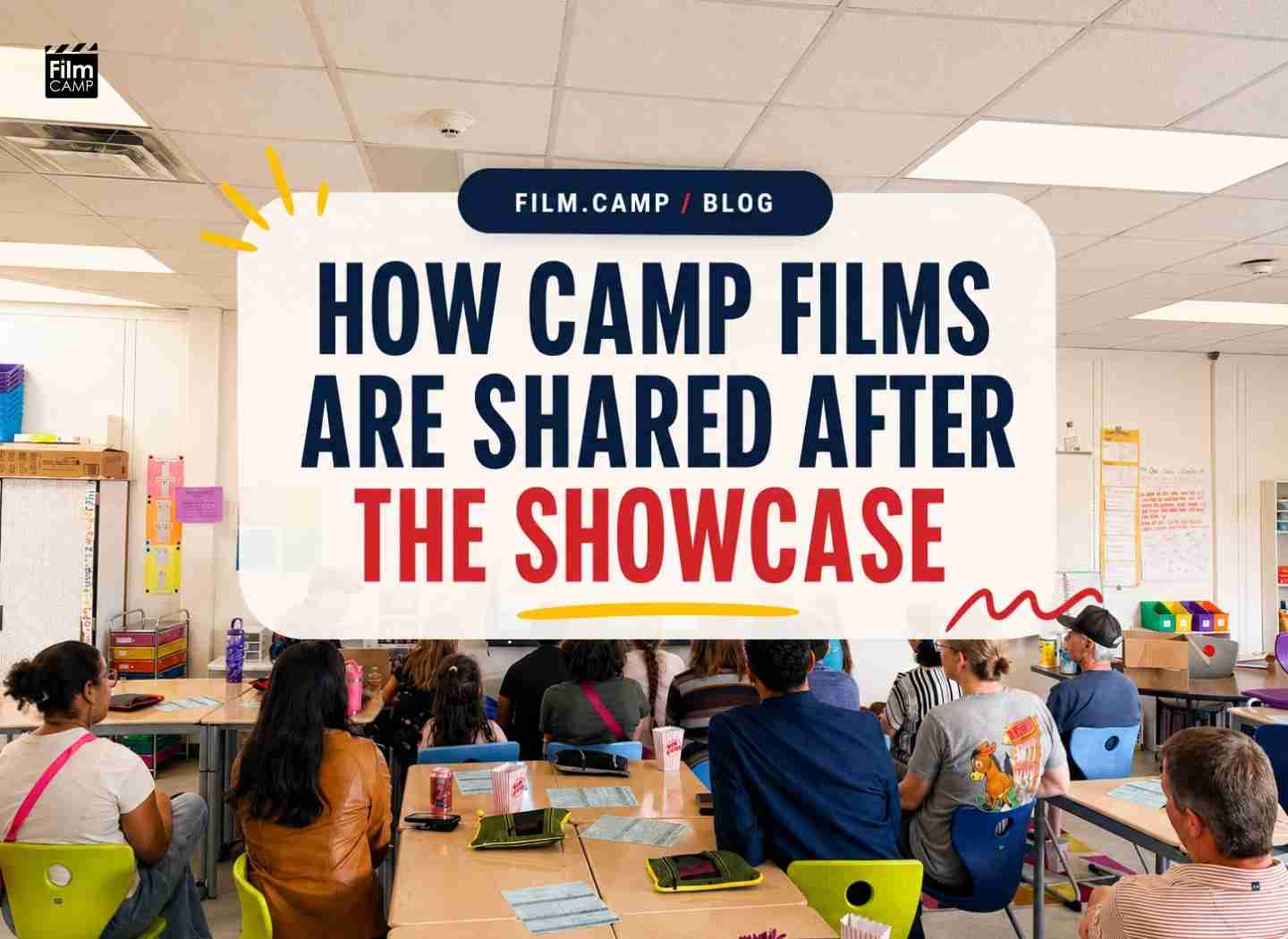
After the showcase, camp films reach families as private digital links within days. Learn how delivery works, how media consent protects privacy, and how to safely share your child's movie.
Read >.png)