Curious what happens in a week at summer film camp for kids? Kids write, shoot, act, edit, and screen a real short film in five days.
.jpg)
Can kids really make a movie in just five days? Yes. And it's one of the best weeks of their whole summer.
Here's the short version. On Monday, your child walks in with a spark of an idea. By Friday, they walk out with a finished short film and their name in the credits. In between, they write, plan, act, shoot, and edit a real movie with a real team.
Every big movie starts with a single idea. A week at summer film camp for kids takes that idea and turns it into something they can watch, share, and feel proud of.
This guide walks you through the whole journey. Day by day. Skill by skill. Role by role. By the end, you'll know exactly what your child will do, learn, and bring home from a one-week film camp experience.
Most parents don't ask about cameras first. They ask, "Will my child fit in? Will they be safe? Will they actually enjoy it?"
That's fair. A kids film camp experience is different from a soccer week or an art class. Parents often compare it to traditional camps and wonder what filmmaking camp activities really look like all day.
The honest answer is simple. It looks like fun with a purpose. Kids stay busy, stay supported, and stay creative from morning to wrap-up.
We hear it all the time. Parents want less passive screen time and more real creativity.
A filmmaking summer camp flips the screen around. Instead of watching stories, kids create stories. They learn how movies work by making one themselves.
The phone becomes a tool, not a time-sink. Cameras become brushes. Editing becomes storytelling. Digital storytelling stops being something they consume and starts being something they build.
By Friday, most campers finish a complete short film. It's their story, shot by their crew, with their own ending.
Here's what that final showcase usually includes:
Picture the lights dimming and your child watching their movie on the big screen. That moment of proud accomplishment is what the whole week builds toward.
In a week at summer film camp for kids, campers write a script, plan their shots, film their scenes, edit the footage, and screen a finished short film. Each day moves the project one step closer to done.
Kids don't just learn about filmmaking. They practice filmmaking. Here's the quick map of the week.
It's a real script-to-screen learning journey. And no prior experience is needed to start.
Campers don't sit and watch. They do every job a real film crew does. They brainstorm story ideas. They write lines. They aim cameras. They act out scenes. They direct their teammates.
Then they cut it all together. One child might try three film crew roles in a single week. That's how they discover what they love about movie production for kids.
Nothing feels random. Every activity feeds the next. Writing leads to planning. Planning leads to filming. Filming leads to editing.
This is project-based filmmaking at its best. Kids always know why today matters, because today moves the film closer to the finish. And the film production workflow gives the week a clear, satisfying shape.
The week ends with a premiere. Families come in, the lights go down, and the short films play.
This final film showcase is the heart of it all. Kids cheer for each other. Parents film the screen with their phones. It's a small premiere with big feelings, and it turns a week of work into a memory that lasts.
Worried your child has never touched a camera? Good news. Most don't.
Film camp is built for first-time filmmakers. Instructors teach each step from scratch. Beginners and movie lovers start on the same page and grow together all week.
Want to see how the week unfolds? Here's the day-by-day flow. The summer film camp schedule moves with purpose, so each day adds a new piece to the puzzle.
Day one is all about people and ideas. Kids meet their crew, learn names, and play quick warm-up games to shake off the nerves.
Then the fun begins. Campers pitch story ideas out loud. A monster under the bed. A lost dog. A time machine in the garage. The wilder the better.
Monday plants the seed for the movie that grows all week. By the end of the day, each team has a story they're excited to make together.
Now the planning starts. Teams turn their idea into a real script. They write the scenes, the lines, and the action.
Next come storyboards. Kids sketch each shot so everyone can see the movie before they shoot it. Then they pick their roles. Director. Camera operator. Actor. Editor.
Here's a trade secret from real sets: planning today saves hours tomorrow. When kids plan their shots first, filming runs faster and feels way less stressful. Good scriptwriting for kids and clear storyboarding make Wednesday smooth.
This is the day kids wait for. Cameras come out. Lights go up. Action.
Campers stop planning and start producing. Directors call the shots. Camera operators frame each scene. Actors hit their marks and bring the story to life.
It feels like a real film set, because it is one. Kids learn camera operation, directing skills, and acting for camera all at once. Mistakes happen, and that's fine. They just reset and shoot again. By the end of the day, the footage starts piling up and the movie starts feeling real.
Filming is done. Now the magic moves to the screen. Thursday is post-production day.
Kids load their footage and start editing. They cut scenes, fix the order, and trim the boring bits. Then they add sound effects, music, and simple visual effects.
Here's something the pros know: editing is where the story really comes together. A few smart cuts can turn rough clips into a real movie. Kids see it happen with their own eyes, and it clicks. Editing footage shapes the whole feel of the film.
Friday is the finish line. Teams lock the final cut. They add titles at the top and credits at the end, with every camper's name.
Then it's premiere time. Families arrive. The lights drop. The popcorn comes out. And the cheering starts before the first film even plays.
The best time to plant a tree was years ago. The second-best time is today. The same goes for creativity. This is the week your child planted their first film, and now everyone gets to watch it grow on screen.
Watching your child light up as their movie plays is a feeling that sticks. Want to see what these screenings look like? Take a peek at the student film showcase.
Film camp teaches way more than camera tricks. Kids learn how to tell stories, but they also learn how to work with people. That mix is what makes filmmaking such a powerful way to grow.
Here are the core filmmaking skills your child picks up in one week, and the life skills that come with them.
Every film starts with words. Kids learn how to build a story with a clear start, middle, and end. They write scenes, dialogue, and action.
A script acts like the blueprint for the movie. It tells everyone what happens and when. Here's a tip we share early: simple stories make stronger beginner films. A clear idea beats a complicated one every time. That's the heart of good screenplay writing for young creators.
Next, kids learn to think in pictures. Storyboarding turns the script into a set of simple sketches, one for each shot.
Before cameras start rolling, kids map out their scenes. This visual planning helps them see the movie in their heads first.
And it cuts down on filming mistakes. When kids know the next shot, the set runs calm and clear. Shot planning gives them confidence before they ever press record.
Acting for the camera is its own skill. It's smaller and quieter than stage acting. Kids learn to show feelings with their face, voice, and body.
And here's the bonus. On-camera performance builds real communication and public speaking skills. We've watched shy kids find their voice in a single week. Standing in front of a lens turns into standing tall in real life.
Directing teaches leadership in the best way. Kids learn to share a vision and guide a team toward it.
Great directors don't do every job themselves. They help everyone do their job well. Young directors learn to listen, make decisions, and keep the team moving. That's creative leadership and decision making rolled into one fun role.
This is where tech meets art. Kids learn to hold the camera steady, frame a shot, and choose what the audience sees.
Think of the camera frame like a window. Move it, and you change the whole story. A close-up feels tense. A wide shot feels lonely.
Kids discover that how you film changes how it feels. Cinematography basics turn into one of the most exciting parts of the week.
A real film set needs a real crew. Kids learn the production basics that make scenes look and sound good. Lighting setup. Sound recording. Working together on set.
Here's a secret from the industry: audiences notice bad sound faster than bad video. A blurry shot can slide by. Muddy audio can't. So kids learn to respect the whole production crew, not just the camera.
And they learn teamwork. Lighting, sound, and set work only happen when everyone pulls together.
Editing is where it all comes home. Kids learn to cut clips, add music, drop in sound effects, and export the final film.
Editing is where all the puzzle pieces finally connect. A scene that felt flat suddenly pops. A quiet moment gets the right music. This is post-production, and it's pure storytelling. Many of the biggest creative choices happen right here in video editing.
What if your child loves movies but doesn't want to act? No problem at all. A film crew has room for every kind of kid.
That's the beauty of it. There's a spot for the leader, the techie, the artist, and the quiet planner. Most kids try a few filmmaking jobs in one week and find the one that feels like home.
The director holds the vision. They guide the story and help the team bring it to life.
It's a role full of pride. Directors learn creative leadership by making choices and lifting up their crew. Kids who love big ideas often shine here.
The camera operator decides what the audience sees. They frame each shot and capture the action.
Think of them as the eyes of the movie. Through cinematography, they shape every moment. Kids who love tech and detail tend to love this job.
Actors bring the story to life. They play the characters and say the lines.
Nervous about performing? That's totally normal. Most kids feel shy at first. Then they practice, laugh at the bloopers, and grow more confident with every take. By Friday, that acting experience feels like a win.
The screenwriter is the storyteller. They turn a loose idea into real scenes and dialogue.
It's like being the architect of the movie. Every line they write becomes a moment on screen. Kids who love writing and imagining worlds thrive in this role.
The editor assembles the puzzle. They take all the clips and build the finished film.
It's quiet work with a loud payoff. Through video editing, the editor shapes pace, mood, and timing. Kids feel a huge sense of accomplishment when the final cut clicks into place.
Not every job is in front of the camera. Some kids love the spotlight. Others love creating what happens behind it.
The production crew handles sound, lighting, props, and set design. These art department roles shape how the whole film looks and feels.
And they matter just as much as the lead actor. Kids who love building, designing, or solving problems find a real home in these roles. There truly is a place for everyone.
So what does a single day feel like? Balanced. Kids learn, create, play, and rest, all in one well-paced day. Here's the typical day at film camp from drop-off to pickup.
Mornings start easy. Kids check in, see their crew, and jump into team building activities and creative warm-ups.
Yes, there are silly games involved. Maybe a one-word story chain. Maybe a goofy acting dare. It loosens everyone up and sets a fun, friendly tone for the day.
Lessons stay short on purpose. An instructor shows a skill, then kids try it right away.
Kids spend less time listening and more time creating. A quick lesson on framing leads straight to filming. A short editing demo leads straight to cutting. That's how practical learning sticks.
This is the busy, buzzing core of the day. Production time is when the film really moves.
Cameras roll. Directors call action. Actors perform. Crew members help set up each shot. The energy is high and the focus is real. These film production activities are where the week comes alive.
Filmmaking is hungry work. Kids break for lunch, snacks, games, and plain old hangout time.
This is where friendships form. Kids bond over shared jokes, shared snacks, and a shared project. These camp social activities matter as much as the filming.
Afternoons wind toward progress. Teams edit, review their footage, and see how far they've come.
Instructors give friendly feedback. Kids spot what's working and what to fix. Then comes the best part of the wrap-up. Everyone leaves a little more excited about tomorrow, because tomorrow the film gets even better.
Let's talk to the parents now. You care about the experience as much as the equipment. So here's what you can really expect from a kids filmmaking program. Safety, support, structure, and a film to be proud of.
Many parents worry their child will fall behind if they've never touched a camera before. Take a breath. They won't.
Most campers arrive with little or no experience. A beginner film camp starts everyone at the same place. First-time filmmakers learn the basics step by step and grow fast. Enthusiasm matters way more than experience.
Safety comes first, always. Kids work in a structured, supervised space with caring instructors close by.
Our instructors act like mentors, not bosses. They guide, encourage, and cheer kids on. That mix of structure and warmth gives parents real peace of mind. You can learn more about our approach on the about us page.
This isn't a classroom with rows of desks. Kids work in small teams on a shared project.
Kids spend less time watching and more time creating. Filmmaking needs teamwork by nature, so collaborative learning happens on its own. Small group instruction keeps every child involved and seen.
The whole week points to one thing. A finished film.
Because kids know what they're working toward, every activity feels meaningful. The filmmaking project gives the week a clear shape and keeps motivation high from Monday to Friday.
The payoff is the premiere. Friday ends with a family screening where the short films play for everyone.
This is the moment parents remember. You watch your child's completed project on screen and see the pride on their face. It's the kind of memory that lasts long after summer ends.
Film camp teaches filmmaking. But it gives kids so much more. There's an old line worth keeping in mind here.
"Tell me and I forget. Teach me and I remember. Involve me and I learn." That's the whole idea. Kids learn by doing, and the lessons reach far past the camera.
There's a special kind of confidence that comes from finishing something real. Not a worksheet. A movie.
Confidence grows fastest when kids finish meaningful projects. When a child completes their own short film, they think, "I made that." That belief sticks with them and spills into everything else they try.
You can't make a movie alone. Kids learn to share ideas, but they also learn to listen to ideas.
Film production teaches accountability the natural way. Each kid has a job the team depends on. So they show up, speak up, and back each other up. That's real communication and a real sense of belonging.
What happens when a scene doesn't go as planned? Kids learn to adapt.
Maybe the light changes. Maybe a prop breaks. Maybe an idea just doesn't work. Most production challenges become learning moments. Kids learn creative thinking and resilience by solving problems on their feet. That flexibility is a skill for life.
Got a quieter child? Film camp has them covered. Not every kid wants the spotlight, and that's perfectly fine.
Many future filmmakers start in technical roles. Camera, editing, sound, and writing all let shy kids shine without performing. They contribute, grow, and gain confidence at their own pace.
The screening is the emotional peak. Kids watch their work with their families cheering them on.
The screening becomes a finish line and a starting line at the same time. It celebrates what they made and sparks the urge to make the next one. That proud memory often lasts for years.
So what comes home at the end of the week? More than a tote bag. Kids leave with real things they keep and real growth they carry. Here are the film camp outcomes that stick.
First, the obvious win. A finished movie.
Kids don't leave with worksheets. They leave with a movie. It's a completed short film they can watch, share with grandparents, and feel proud of for years. That's a tangible accomplishment.
Then there's the small detail that feels huge. Their name on screen.
Seeing your own name roll in the film credits is a real moment. It says, "You helped make this." Kids often remember that little thrill for years.
Kids also leave with new friends. A week of shared creating builds fast, real bonds.
Making a movie together is a built-in friendship machine. They problem-solve, laugh, and celebrate as a team. That teamwork experience and sense of belonging come home with them too.
The skills stick around. Kids leave knowing more about story, camera, and editing than when they arrived.
As kids practice filmmaking, they strengthen several creative skills at once. Those storytelling and editing skills open doors to future projects, school work, and creative hobbies.
The biggest takeaway is the quietest one. Belief.
"A journey of a thousand miles begins with a single step." One finished film is that first step. Kids leave with more confidence in their own ideas and the courage to share them. That creative self-belief is the gift that keeps growing.
Kids grow a lot between ages seven and fourteen. So the week meets each age where they are. Younger campers focus on exploration. Older campers focus on execution. Here's how the experience shifts by age group.
For the youngest crew, it's all about play and discovery. They explore simple roles, tell short stories, and have a blast doing it.
The focus is participation, not perfection. A seven-year-old who points the camera and giggles is winning. These age-appropriate filmmaking activities build confidence through creative play, and that's exactly the goal.
This middle group takes on more. They plan stories with more detail, handle real camera work, and own bigger team responsibilities.
As kids become more confident, they often take on larger creative roles. This age tends to grow the fastest, because creativity and responsibility start to merge. That blend leads to a real sense of accomplishment and project ownership.
The oldest campers step into leadership. They sharpen editing, take on production roles, and guide their teams.
They start moving from passengers to drivers in the filmmaking process. Many begin thinking like producers, not just participants. They plan further ahead, solve bigger problems, and work with real independence. It's advanced youth filmmaking that feels grown-up in the best way.
Many parents wonder whether their child will feel out of place. Age grouping solves that.
Kids learn more when they feel socially comfortable. Grouping by age means campers work with peers at a similar level. That comfort builds belonging, and belonging is where the real learning starts.
Can a group of kids really create a movie in five days? It's the question every parent asks. And the answer is a confident yes.
One week is plenty of time for a short beginner film. The whole camp is built around that goal.
The goal isn't perfection. The goal is completion. Beginner films succeed because expectations stay realistic. Kids aim for a finished short, not a blockbuster. And finishing it feels amazing.
The trick is keeping the story simple. A clear, focused idea beats a big, messy one every time.
Here's the insider tip: short, simple stories create stronger finished films. One character. One problem. One ending. That's all it takes for kids to make something they're proud of in five days. Tight script development keeps the week on track.
One week is a great start. And it's just the beginning if your child wants more.
Many young filmmakers come back to build advanced skills. Each repeat session adds new techniques and bigger challenges. Filmmakers improve through repetition, so the next week always reaches higher than the last.
Let's reset the scoreboard. Success here isn't measured in awards. It's measured in growth.
"Success is the sum of small efforts repeated day after day." By Friday, kids have learned real skills, worked as a team, and finished a creative project. That's the win that matters, and they earn it.
Want to set your child up for a great week? A little prep goes a long way. Here's a simple film camp checklist to pack the night before.
Pack comfy clothes your child can move and create in. Film days mean standing, walking, and setting up scenes.
Closed-toe shoes are a must. They keep little feet safe around gear and on set. Think play clothes, not party clothes.
Send a packed lunch, a couple of snacks, and a refillable water bottle. Filmmaking burns energy and focus.
Hydration keeps kids sharp. A water bottle and good snacks help your child stay energized through busy production days.
Toss in a small notebook and a pen. Great ideas pop up at random moments.
A notebook becomes a small home for big ideas. Kids can jot down scenes, lines, and sketches as inspiration strikes. It's a simple tool that fuels real creativity.
Some scenes shoot outside. Pack sunscreen so your child stays protected during outdoor filming.
A quick layer in the morning keeps the focus on fun, not sunburn. It's a small thing that makes a big difference on bright days.
Leave the valuables, gaming devices, and extra gadgets at home. They pull focus and can get lost on a busy set.
The goal is to create movies, not scroll screens. Fewer distractions mean stronger teamwork and a better film. A focused camper is a happy, creative camper.
What if your child loves movies but has never made one? Then film camp is perfect for them. This is the biggest worry parents have, so let's clear it up. Beginners are not just welcome. They're the whole point.
Many parents worry their child will be the only beginner in the room. They won't be. Most campers start with zero film experience.
Enthusiasm beats experience every time. A kid who loves stories has everything they need to start. The camp teaches the rest. No prior knowledge required.
Instructors build skills from the ground up. They start with the basics and add one step at a time.
Kids don't just hear instructions. They apply instructions. A short demo leads straight to hands-on practice. That's how beginners learn fast and feel capable by day two.
There's a role for every kind of kid. Bold or shy. Techie or artist. Talker or planner.
Many kids discover strengths in unexpected roles. A quiet child might fall in love with editing. A bossy one might become a brilliant director. Everyone finds their place in the crew and a real sense of belonging.
Here's the truth about filmmaking. Mistakes are normal and useful.
"The master has failed more times than the beginner has even tried." A blown take or a forgotten line isn't a problem. It's part of learning. Kids reset, try again, and grow stronger every time. That growth mindset is half the magic.
Worried your quiet child will feel lost? Don't be. Many kids who dislike performing still love creating. Film camp gives shy kids plenty of ways to shine without the spotlight.
Acting gets the attention, but it's just one piece. Some kids enjoy being on camera. Others enjoy making the camera work.
Most film productions rely on many non-acting roles. Writing, filming, editing, and sound all matter just as much. Your child can make a huge contribution without ever stepping in front of the lens.
Not every child wants to perform in front of a crowd, and that's completely okay. Behind the camera is where many quiet kids thrive.
Technical roles often become favorites for quieter students. Camera operation, framing, and shot setup let them focus and create. They get all the fun with none of the pressure.
There are so many ways to contribute. Editing. Writing. Sound. Props. Each one is a real path to success.
A movie works like an orchestra, and every role contributes to the final performance. Many professional filmmakers began in these support roles. A shy child can find real achievement and pride in any of them.
Small teams make a big difference for shy kids. There's no big crowd to face, just a few friendly teammates.
As kids get comfortable with their team, participation often grows on its own. Confidence builds through small, repeated wins. By Friday, many quiet kids surprise their parents with how much they've opened up.
Ready to find the right week for your child? Here's why families pick Film.camp for a week of summer filmmaking. We blend real skills, real teamwork, and a real finished film into one unforgettable week.
We teach the whole journey, from blank page to final cut. Kids don't just learn how movies are made. They make movies.
It's true script-to-screen learning for ages 7 to 14. Campers write, shoot, and edit a real short film with hands-on guidance every step of the way. That project-based approach is where real accomplishment lives.
Our program is built for kids, not adults in tiny chairs. It's creative, playful, and welcoming to total beginners.
Age-appropriate instruction keeps every camper comfortable. First-timers feel at home from minute one. We meet kids where they are and help them grow with confidence.
This is the real deal. Real roles. Real teamwork. Real results.
Kids step into actual film crew roles and work together like a true production team. Then they finish a real short film they can keep. It's collaborative filmmaking that ends in genuine pride.
We run summer camps in three great cities, so there's likely a session near you.
Each location offers the same hands-on, beginner-friendly experience. Pick the city that works for your family and grab a spot before it fills up.
The week ends with something special. A family screening of every camper's film.
Picture the lights down, the room full, and your child's movie on the big screen. Families cheer, kids beam, and the whole week pays off in one proud moment. Ready to give your child that experience? Explore enrollment and find the perfect week.
Still have questions? Here are quick answers to the things parents ask most. For even more details, visit our full FAQ page.
On the first day, kids meet their crew, play warm-up games, and pitch story ideas. It's a friendly, low-pressure start built around comfort and creativity. By the end of day one, each team has a story they're excited to make. Think of Monday as the spark that lights the whole week.
Yes, kids make a real, completed short film at film camp. They write it, shoot it, and edit it as a team, then screen it for families on the last day. Kids don't just practice filmmaking. They complete filmmaking. The finished project is theirs to keep and share.
No, kids do not need any acting experience to join film camp. Acting is just one of many roles, and plenty of campers never step in front of the camera. Your child can direct, film, write, or edit instead. There's a perfect spot for every personality.
Kids can try director, camera operator, actor, screenwriter, editor, and crew roles like sound and props. Some kids lead scenes. Others lead cameras. Most campers try a few roles in one week. That variety helps every child find the job they love most.
A typical kids film camp day runs through the morning and afternoon, with a healthy mix of lessons, production time, and breaks. Kids learn, create, eat lunch, play, and edit, all at a comfortable pace. The day stays busy but never rushed. Balance is the whole idea.
Yes, kids learn editing at film camp. They cut footage, add music and sound effects, and export a finished film. Editing is where the story finds its final shape. It's one of the most exciting and creative parts of the whole week.
Yes, film camp is safe for kids. Campers work in a structured, supervised space with caring instructors guiding every activity. Safety, support, and clear routines come first. Parents can relax knowing their child is in good hands all day.
Your child should bring comfy clothes, closed-toe shoes, lunch, snacks, a water bottle, sunscreen, and a small notebook. Leave valuables and gaming devices at home. Keep it simple and practical. A well-packed bag means a smooth, focused day.
Yes, one week is enough to learn the foundations of filmmaking and finish a short film. "Great things are done by a series of small things brought together." Kids learn the core skills and complete a real project in five focused days. It's a strong start they can build on.
Yes, shy kids can absolutely enjoy film camp. Behind-the-camera roles like editing, writing, sound, and camera work let quiet kids shine without performing. Small teams help them build confidence gradually. Many shy campers leave more outgoing than their parents expected.
One week. That's all it takes to turn a movie lover into a young filmmaker. Your child arrives with an idea and leaves with a finished film, new friends, and a confidence boost that lasts.
A small idea grows into a finished film. Monday's spark becomes Friday's movie. Kids live the whole filmmaking journey and end with a completed project they can call their own.
The skills go deeper than camera tricks. Kids learn filmmaking skills, but they also learn life skills. Confidence, creativity, and teamwork come home with them and stick around long after summer.
The premiere seals it all. Families gather, the film plays, and the room fills with pride. That final screening turns a week of work into a memory your child will treasure.
Ready to give your child a week they'll never forget? Film.camp runs hands-on summer film camps in Austin, Los Angeles, and San Francisco. Explore upcoming sessions, find the right week, and watch your young filmmaker shine. Find your camp week and enroll today.
.jpg)
Discover how kids ages 7–14 learn screenwriting, acting, directing, camera work, editing, teamwork, and confidence at Los Angeles Film Camp in Glendale while creating and premiering their own short film.
Read >
Young filmmakers gain professional movie-making skills through hands-on projects, learning storytelling, directing, camera work, sound, editing, teamwork, safety, feedback, role rotation, and confidence while completing and premiering their own films.
Read >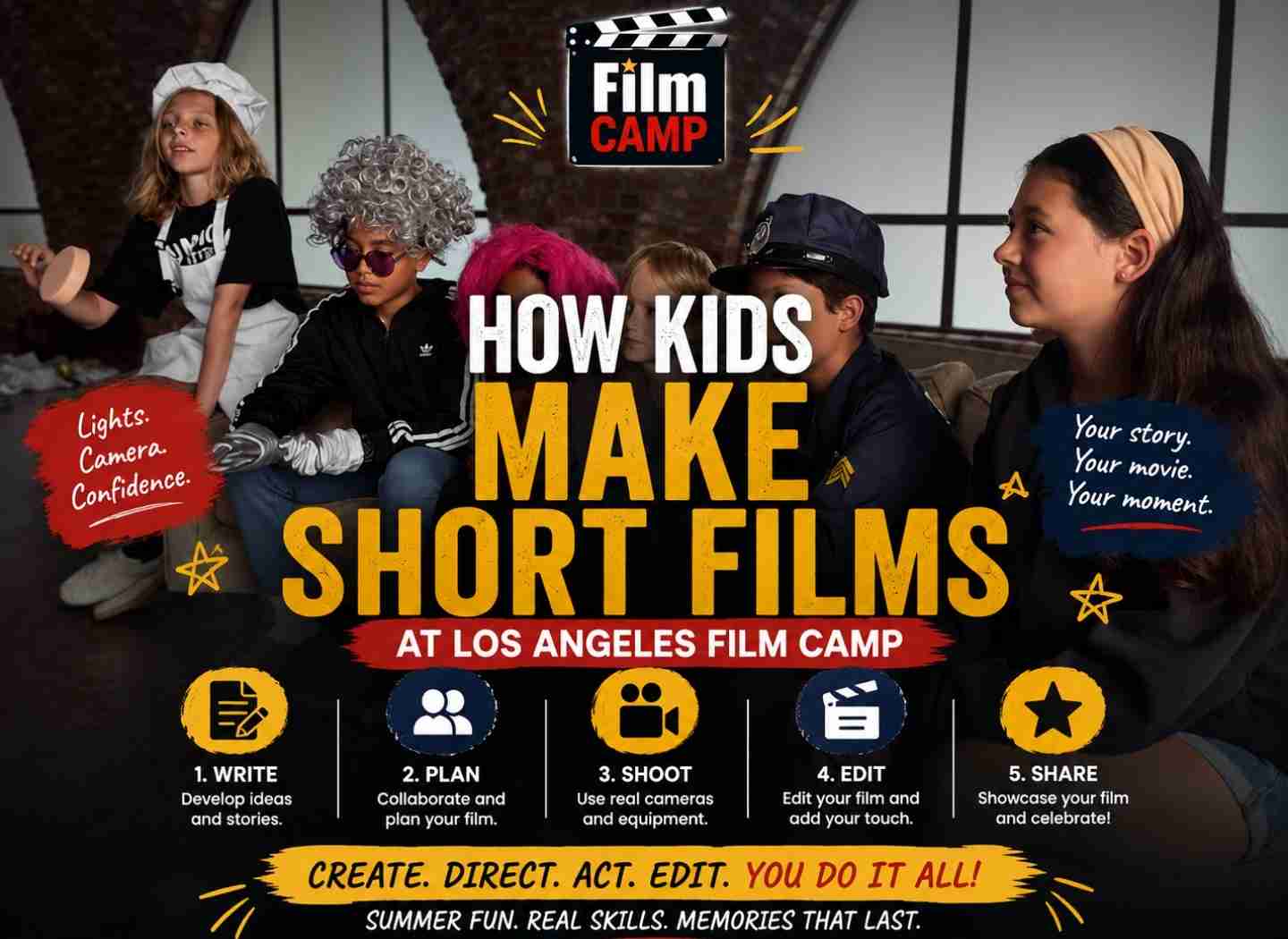
Kids write, shoot, and edit their own short films in one week at Los Angeles Film Camp. Hands-on, safe, and no experience needed. See how it works, from first idea to premiere.
Read >
Kids ages 7 to 14 spend five days in Glendale writing, acting, filming, and editing a real short film, then premiere it for families Friday. No experience needed. Gear included.
Read >.png)