This guide explains how Film.camp groups ages 7–14 by readiness, confidence and experience, welcoming beginners through advanced campers into age-appropriate creative, technical and leadership roles that build skill, confidence, teamwork.

Picking a film camp shouldn't feel like a gamble. You want your child to fit in, feel safe, and walk away proud. The good news? A great kids summer film camp makes room for every kind of camper. Shy or loud. First-timer or repeat camper. Age 7 or age 14. The right program matches your child to the right group, the right role, and the right level of challenge. This guide shows you how that works, so you can enroll with confidence.
Quick answer: Most kids' summer film camps welcome ages 7 to 14, and the best ones accept all skill levels, including total beginners. Campers get grouped by age, confidence, and experience, not by talent alone. Every child writes, films, acts, and edits a real short film by the end of the week.
Does your child need filmmaking experience before joining a film camp? Many parents worry their child may feel too young, too shy, or too inexperienced. The answer may surprise you. A film set works like a puzzle where every child contributes a piece, and there's always a piece that fits.
Expert tip: Parents often focus on age first. The best camps also look at confidence, maturity, and how willing a child is to jump in.
Kids' summer film camps are built for ages 7 to 14. That range covers early elementary through middle school, when imagination and independence grow fast. Within that span, camps split kids into smaller age bands so the work always feels right. Younger campers get more play and guidance. Older campers get more responsibility and technical depth.
What age is too young to make a movie? Honestly, younger than you'd think. A seven-year-old can pitch a story, act in a scene, and press record. The camp just shapes the work around what each age does best.
Here's how most camps break it down:
Every expert was once a beginner. Age range matters less than how a camp structures its activities and support around it.
Expert tip: Age range matters less than how the camp builds its activities and support around each group.
The sweet spot for kids' film camp lands between ages 7 and 14. That's when creativity and independence start growing together. Younger kids bring wild imagination. Older kids bring focus and follow-through. Put them in the right group and both thrive.
Not too young to imagine, not too old to learn. Kids in this range still chase big ideas, and they're ready to turn those ideas into real scenes. A good camp meets them right where they are. It pushes them just enough to grow without ever making the work feel like homework.
Kids this age are builders of stories. They love making things, testing ideas, and seeing results fast. Filmmaking gives them all three. They write a scene in the morning and watch it come to life by afternoon. That quick payoff keeps them hooked.
This age range pairs imagination with growing responsibility. Younger kids dive into pretend and play. Older kids start owning real jobs on set. Both build skills they carry far beyond camp.
Here's what makes 7 to 14 such a strong fit:
Parents often worry their child will land with kids far above their skill level. We get it. That's why Film.camp forms groups using three things, not one: age, confidence, and experience.
Here's the simple version of how it works:
The result is carefully matched groups where kids feel challenged but never lost. Top camps combine age, confidence, and experience when forming teams. That blend keeps every camper engaged.
Would you rather place a confident 8-year-old in the right group or force placement by age alone? Most parents pick the right group every time. And that's the point. Confidence often predicts success better than a birthday.
Picture two kids, both age nine. One has made silly videos at home for years. The other has never touched a camera but loves telling stories at dinner. They need different starting points. A camp that reads readiness, not just age, sets both up to shine.
Fit over age. Readiness over numbers. That's how strong placement works.
Younger and older campers both win at film camp. They just win in different ways. Younger kids gain confidence and a love of stories. Older kids gain real skills and leadership reps. Neither group is "better." They're at different stages of the same journey.
The biggest difference isn't what most parents expect. It's not skill. It's the kind of growth each age is ready for. Here's a quick side-by-side:
Younger Campers (7 to 10)Older Campers (11 to 14)Story play and imaginationTechnical skill and craftOn-camera confidenceLeadership and crew rolesGuided, step-by-step supportMore independence and ownershipSimple crew jobsDirecting, editing, camera lead
Expert tip: Parents often discover both groups benefit equally, just in different ways.
For our youngest campers, filmmaking feels like the best kind of play. They invent characters. They act out scenes. They watch their ideas appear on screen. And they grin the whole time.
Their imagination becomes the fuel for the entire production. A seven-year-old's wild idea often turns into the most memorable moment in the film. Camps lean into that. They keep instructions simple and the energy high.
At this age, kids gain so much without it ever feeling like school:
Early filmmaking builds communication skills without feeling academic. Kids think they're just having fun. They're actually learning a ton.
Older campers are ready for the real thing. They take on bigger jobs and tougher creative problems. And they love the challenge. This is where film camp starts to feel less like play and more like making movies.
Leadership grows fastest when older campers own real responsibilities. Give a 12-year-old the director's chair and watch what happens. They plan shots. They guide actors. They solve problems on the fly. Many future filmmakers first discover directing at this stage.
Here's how skills climb for this age group:
The payoff is huge. Pride and accomplishment show up on their faces at the premiere.
Parents often wonder whether older campers might overwhelm younger ones. Fair question. Mixed-age teams work best when instructors assign age-appropriate jobs.
On a real film set, a kid director leads while a younger camper handles props. Each child owns a job that fits their level. Instructors stay close and keep the team balanced. Here's what keeps it safe and fun:
Done right, mixed-age teams teach kids how real productions run. Everyone contributes. Everyone matters.
Sometimes keeping siblings or friends together is the right call. A nervous first-timer might settle faster with a familiar face nearby. Comfort can help a shy child take that first creative risk.
Pairing works best when both kids benefit socially and creatively. Think about whether they lift each other up or hold each other back. If they cheer each other on, grouping them adds comfort and belonging. That can make day one feel a whole lot easier.
Other times, a little space helps kids grow. When friends or siblings lean on each other too much, they stop stretching. Splitting them gently can unlock real independence.
Comfort can help learning, but independence can accelerate growth. A child who builds new friendships and owns their own role often surprises everyone. The result is more confidence and more self-discovery. Growth often happens when kids step away from familiar social circles and find their own footing.
Kids' film camps accept every skill level, from total beginner to advanced young creator. Your child does not need to have made a movie, acted in a play, or edited a single clip. The whole point is to learn by doing. Beginners are welcome. Returning campers level up. Advanced kids get bigger challenges.
Many parents assume film camp is only for future filmmakers. Not true. The campers who grow the most are often the ones who start with zero experience.
Here's the range of campers strong programs welcome:
Does a child need filmmaking experience before joining? No. The strongest youth film programs rarely sort kids strictly by skill. They match challenges to each camper's comfort level.
Expert tip: The best programs match the challenge to the camper, instead of forcing every kid into the same box.
Your child doesn't need to know how to edit, act, or direct before arriving. Beginners start with zero experience, and that's completely fine. Camp teaches the skills from scratch, one fun step at a time.
Many kids arrive believing everyone else knows more. They don't. Most campers are new too. By the end of day one, that worry usually disappears. Every master was once a beginner, and film camp is built for exactly that first step.
Beginners jump in through simple, low-pressure roles. They might act in one scene, hold the boom mic, or help design a prop. Each small win builds real confidence.
Some kids already create at home. Maybe they film skits on a phone. Maybe they edit clips for fun. Maybe they act in school plays. These campers sit right in the middle. More experience than a beginner, more room to grow than an expert.
Home video creators often adapt fast to a real production environment. They already know the basics. Now they learn how a full crew works together. Camp gives their skills structure and a finished film to show for it. That mix of comfort and challenge keeps them motivated all week.
Returning campers walk in with a head start. They already know how a set runs. So they move faster and aim higher. Second-year campers often advance quicker because the workflow already feels familiar.
Last summer they might have acted in one scene. This summer they direct it. Last year they held the camera. This year they plan the shots. That jump feels huge to a kid, and it's earned.
Many future directors discover their leadership style during their second camp experience. The first film builds skills. The second film builds vision.
Some kids are ready for more. They've made films. They know the tools. They want a real stretch. Advanced campers thrive when they get ownership, not extra lectures.
At this stage, campers stop learning the instrument and start composing the music. They take on lead roles like director or editor. They make tough creative calls. They handle the harder technical work. That responsibility is exactly what they crave.
The best move for an advanced kid is a bigger job, not a longer lesson. Hand them the reins and they soar.
Parents often worry their child will end up in the wrong role. Good instructors make sure that doesn't happen. They look beyond skill and spot each camper's personality strengths.
Here's how that matching usually works:
Great instructors identify both skill and spark. That's how every camper finds a role that feels right.
Not sure where your child fits? This quick chart helps. Most parents spot their child's level faster through behaviors than technical skills. Read the rows below and ask yourself: which category sounds most like your child?
Skill LevelExperienceConfidenceBest RolesBeginnerNoneGrowingActor, Prop Designer, Story ContributorIntermediateSome Home PracticeModerateCamera, Sound, Script AssistantAdvancedPrior ProjectsHighDirector, Editor, Camera Lead
Still unsure? Our team can help. Reach out for a quick placement chat and we'll point your child to the right fit.
Most beginners worry they won't know enough. They don't need to. Your child is likely a beginner if these sound familiar:
That curiosity is all they need to start strong.
Past the basics, still building expertise. Your child might be intermediate if they:
They're ready for hands-on crew roles and a bigger challenge.
These campers are often ready for leadership roles. Your child may be advanced if they:
Hand them real responsibility and they'll run with it.
A film crew is like an orchestra. Every role matters. Here's how roles often line up with skill levels:
Skill LevelGreat Starting RolesBeginnerActor, prop designer, story helperIntermediateCamera operator, sound, script assistantAdvancedDirector, editor, camera lead
No matter the role, every camper helps make the movie.
Can your child describe a story they want to tell? Run through this quick checklist:
Still on the fence? Pick the level where your child feels excited, not stressed. That's almost always the right one.
Film camp teaches way more than how to point a camera. Kids learn storytelling, teamwork, and how to finish what they start. They write, act, shoot, and edit a real film. Along the way, they pick up skills that help them everywhere.
The most important lesson may not be the one parents expect. Sure, kids learn filmmaking. But they also learn to speak up, listen, and lead. Here's a tour of what each skill area covers.
Every movie starts as a blank page. Kids learn to turn a spark of an idea into a real story. They build characters. They map out beginning, middle, and end. They write scenes other kids will act out.
This is where creative writing meets the screen. Kids learn that a strong story drives everything else. It's the foundation the whole film stands on.
Many kids feel nervous before their first scene. That's normal. Acting for camera teaches them to relax, speak clearly, and own the moment. The camera stops being scary and starts being fun.
This skill builds real self-esteem. A kid who nails a line on camera carries that confidence into class, sports, and life. On-screen practice makes off-screen courage.
Some campers discover leadership talents they never knew they had. Directing puts a kid in charge of a scene. They plan shots. They guide actors. They make decisions and live with them.
That's powerful for a young person. Directing builds empowerment and clear thinking. Kids learn to lead a team toward a shared goal, one scene at a time.
The camera becomes a storyteller. Kids learn how a shot makes you feel something. They try wide shots, close-ups, and simple movement. They see how framing changes the whole mood.
This sparks real curiosity. Suddenly the kid who loves tech has a creative outlet. They learn that pointing a camera is a craft, not just a button press.
Great images capture attention. Great sound keeps attention. Kids learn that a film needs clean audio and smart lighting to work. They run the boom mic. They set up simple lights. They see how each piece fits.
Best of all, they learn collaboration. Sound and lighting only work when the team works together. These roles teach kids that every job on set counts.
Some kids are artists at heart. Design roles give them the spotlight. They build sets, create props, pick costumes, and try simple makeup effects. Their work shapes how the whole film looks.
This is pure artistic expression. A single handmade prop can define a scene. Kids learn that visual design tells story before anyone says a word.
This is where separate pieces finally become a finished movie. Kids learn to cut scenes together, add music, and drop in titles. They watch raw clips turn into something real.
Editing brings huge accomplishment. The first time a camper sees their full film play start to finish, the pride is real. That moment makes all the work worth it.
First-time campers often arrive a little unsure. That's expected, and camp is built for it. Beginners get support from the very first hour. Instructors give clear roles, simple steps, and steady encouragement. By the end of day one, most kids feel like they belong.
Many parents worry their child will be the only beginner. They won't be. Most campers are new too. What if your child has never touched a camera before? No problem. Most beginners surprise themselves by the end of the week.
The first 24 hours of camp often set the tone for the whole week. A warm start changes everything.
Expert tip: A welcoming day one builds confidence that lasts the entire week.
Many kids arrive believing everyone else knows more. The truth is simpler. The goal is to teach filmmaking, not test it. No experience required, ever.
You don't learn to swim by standing on the shore. Kids learn film by making film. Camp hands them the tools and walks them through each step. They learn by doing, not by passing a quiz. That myth about needing experience? It melts away fast.
Beginners never get thrown in the deep end. Camp breaks filmmaking into small, clear steps. Each step builds on the last. Kids always know what comes next, so they feel secure.
Here's the simple path most first-timers follow:
Kids learn faster when every lesson becomes part of a real project. The most important lesson often happens before filming even begins.
Here's a secret. Curious kids often outperform technically skilled kids, because they experiment more. A child who asks "what if we try this?" grows fast.
Questions create growth. Answers create comfort. Curiosity is the fuel behind every great story. Camp rewards trying, testing, and exploring. Kids who lean into their curiosity discover talents they didn't know they had. Technical skill catches up later. The spark to explore comes first.
Not every child wants to stand in front of a camera on day one. That's totally okay. Shy kids can start behind the scenes, where the pressure is low and the work is fun.
Plenty of confident performers begin as editors, camera assistants, or prop designers. A shy camper might run sound on Monday and act in a scene by Friday. Comfort comes first. Confidence follows. Behind-the-scenes roles give quiet kids a safe, meaningful way in.
Every movie needs many hands behind the camera. That means every camper gets a real job that matters. No one sits on the sidelines. No one feels left out.
Owning even one production responsibility boosts engagement in a big way. A kid in charge of props takes that job seriously. A kid running the camera feels trusted. Meaningful participation turns a nervous beginner into a proud filmmaker.
Older and returning campers are hungry for more. They've got the basics. Now they want depth, ownership, and real responsibility. Advanced campers grow most through responsibility, not extra instruction. Camp gives them bigger roles and harder creative problems.
The biggest growth often happens after a child's first completed film. That first movie unlocks something. The second time around, kids aim higher and reach further. The result is pride and real accomplishment.
Directors become the captains of the creative ship. Returning campers often step into lead roles like director, editor, or camera lead. These jobs come with real weight, and kids rise to meet it.
Leadership works best when students guide rather than control teammates. A good young director listens, plans, and brings the team together. That mix of responsibility and pride pushes kids to do their best work yet.
A simple camera angle can completely change how an audience feels. Advanced campers learn that. They study shot composition and editing choices that shape emotion. They start thinking like real filmmakers.
Great filmmaking decisions often happen before the camera records. Older kids learn to plan shots on purpose. They pick angles, pacing, and cuts that serve the story. This technical depth feeds their creative mastery and keeps them curious for more.
Guide the team, don't control the team. Older campers learn to mentor younger ones the right way. They share ideas, offer help, and let younger kids own their jobs.
Teaching others strengthens learning more than repeating skills alone. When a 13-year-old helps a 9-year-old frame a shot, both grow. The older kid builds leadership and patience. The younger kid gains a role model. That's teamwork at its best.
Finished projects often matter more than classroom exercises. Returning campers start building a real portfolio. Each completed film becomes proof of what they can do.
That portfolio carries weight. It shows growth, range, and follow-through. Kids feel real pride seeing their work stack up. And a strong body of finished films builds future readiness for bigger creative goals down the road.
Many future creative careers begin with a single summer experience. Film camp gives kids an early taste of acting, media, and filmmaking. That early exposure helps them discover what they love.
It also helps before any big investment. A kid who tries directing at camp learns whether they want more. Early exposure helps students find their interests before committing to specialized training. Camp becomes the launchpad for whatever comes next.
Parents often wonder what actually happens during a week of film camp. Here's the simple truth. A one-week film camp moves from idea to finished film in five days. Each day builds on the last. By Day 5, most campers can hardly believe what they've created.
The week follows a clear arc. Kids start with a blank page on Monday and screen a real movie on Friday. Clear daily milestones help beginners gain confidence fast. Here's the day-by-day flow.
Day one buzzes with first-day anticipation. Campers meet their team, share story ideas, and pick roles. Instructors break the ice and set the tone. By the end of the day, every kid knows their job and feels part of the crew. The film already has a spark.
The blueprint for the movie begins to take shape. Campers write the script, sketch storyboards, and rehearse scenes. They figure out who says what and where the camera goes. This is the planning day, and it's pure creativity. The story moves from ideas to a real plan.
This is often the day confidence starts to appear. Cameras roll. Actors perform. Crew members rotate through jobs so everyone tries something new. The set gets busy and exciting. Kids see their script come alive on camera, and the energy is contagious.
Filming creates the footage. Editing creates the story. On day four, campers cut their scenes together, add sound, and drop in music. They watch raw clips turn into a real movie. Every small detail gets polished. The film finally feels complete.
Day five is the big payoff. Campers screen their finished film for family and friends. The lights dim. The movie plays. The room erupts. Parents often see a different level of confidence by the final screening.
The fruit tastes sweetest after the work is done. Public screenings dramatically increase a kid's ownership and pride. Walking out, every camper carries a memorable summer experience and a creative achievement that's truly theirs.
Not every child dreams of acting, and that's completely okay. A film set is like a city where every job matters. There's a perfect role for every personality. Outgoing kids, quiet kids, techy kids, artsy kids. All of them belong.
Many campers discover their favorite role after trying something unexpected. The best role is rarely the one parents predict. Kids often find strengths they never knew they had. Here's how personality often points to the right role.
Does your child naturally become the star of family videos? Acting for camera might be their thing. Performers love the spotlight, and on-screen work gives them a stage. They learn to express emotion and own a scene.
Acting improves communication skills even outside filmmaking. The result is confidence growth that follows them everywhere. For expressive kids, this role feels like home.
Some kids just love being in charge. Directing fits them perfectly. They plan scenes, guide the crew, and make creative calls. They learn to lead a team toward one shared goal.
Great directors lead the team, not dominate the team. Strong young directors often listen more than they speak. This role builds real leadership and decision-making. For natural organizers, the director's chair is a dream.
The camera becomes the camper's creative voice. Tech-curious kids light up around gear. They love running the camera, mixing sound, or cutting footage. These roles reward focus and problem-solving.
Many future filmmakers first fall in love with the technical side of production. Kids gain real-world skills they can use on any project. For the kid who loves how things work, this is the perfect fit.
A single prop can sometimes tell more story than a page of dialogue. Artistic kids thrive in design roles. They build sets, make props, pick costumes, and try makeup effects. Their work shapes the whole look of the film.
Visual design often shapes audience emotion before dialogue begins. For creative, hands-on kids, design offers pure artistic expression and a ton of pride.
Writers build the blueprint before the movie exists. Story-loving kids shine here. They dream up characters, write scenes, and shape the plot. Their words become the heart of the film.
Strong stories usually begin with interesting characters rather than plots. Kids who love to imagine get to express that imagination fully. For the dreamers and storytellers, writing is where the magic starts.
Not every child wants attention, but every child wants to contribute. Shy kids find safe, meaningful roles behind the scenes. Editing, design, and sound let them shine without the spotlight. Small speaking roles ease them in gently.
Some of the most confident campers by Friday began quietly behind the scenes on Monday. These roles build self-esteem at a comfortable pace. Every quiet kid finds a way to belong.
Parents care just as much about safety as creativity. We do too. Strong film camps run structured, supervised, age-appropriate programs. Small groups, trained instructors, and clear rules keep every camper safe. That structure gives parents real peace of mind.
Safety isn't an afterthought. It shapes how groups form, how instructors lead, and how equipment gets used. Parents often check curriculum first. Supervision quality matters just as much. Here's how strong camps handle it.
Less crowding, more coaching. Small groups give every camper real attention. Instructors can guide each kid, answer questions, and keep the team on track. No child gets lost in a crowd.
Smaller groups improve participation and feedback. A kid in a small team speaks up more and learns faster. That personal support helps both shy beginners and eager advanced campers. Small groups make camp feel safe and personal.
The teaching approach changes as campers grow. Younger kids need structure and clear steps. Older kids need responsibility and room to lead. Good instructors adjust their style to fit the age.
That balance builds trust. A seven-year-old gets gentle, hands-on guidance. A thirteen-year-old gets real ownership with support nearby. Younger campers need structure while older campers need responsibility. Matching the approach to the age keeps every camper engaged and safe.
Instructor quality directly affects camper experience. Strong camps use background-checked instructors and safe, controlled environments. Parents deserve to know who works with their kids. Good camps make that easy to verify.
A safe environment isn't just rules. It's trained adults who care, clear boundaries, and steady supervision. That combination gives parents real reassurance from drop-off to pickup.
How do kids safely use real filmmaking equipment? With clear rules and close guidance. Cameras, lights, and props all come with simple safety steps. Instructors teach those steps before any hands-on work.
Hands-on learning works best with clear safety expectations. Kids learn to handle gear carefully and respect studio rules. That structure keeps the set safe and the work fun. Real equipment, real responsibility, real safety.
The quality of a camp's answers often reveals the quality of the camp. Before you enroll, ask these questions:
A great camp answers clearly and confidently. See our full FAQ or contact our team with any question.
Parents want a camp where their child can succeed regardless of experience. That's exactly what we built. Film.camp welcomes ages 7 to 14 and every skill level. We group kids by age, confidence, and experience. And every single camper writes, acts, directs, films, and edits a real short film.
The reason many campers return starts with how they're supported from day one. We don't leave anyone behind. We meet each kid where they are and help them grow. Here's how that plays out across our program.
We design every session for ages 7 to 14. That range gets the full youth filmmaking experience, shaped to fit each age. Younger campers get guided play. Older campers get real responsibility. Every kid finds their place and a real sense of belonging.
Every filmmaker starts somewhere. First-time campers are always welcome at Film.camp. No experience required. We teach the skills from scratch and walk beginners through each step. Your child shows up curious. We handle the rest.
Not just age, but readiness. We form groups using three things: age, confidence, and experience. That blend puts kids with the right teammates and the right level of challenge. The result is a comfortable fit that builds real trust.
Every camper experiences the full filmmaking journey. At Film.camp, no one watches from the sidelines. Each kid writes, acts, directs, films, and edits. They try every part of making a movie. That hands-on approach makes camp exciting and unforgettable.
Every week wraps with a real premiere. Campers screen their finished short film for family and friends. The pride in that room is real. Kids walk away with a finished movie and a huge sense of achievement.
Film.camp runs sessions in three great cities. Local relevance improves both search visibility and parent confidence, and it makes camp easy to reach. Find your nearest location below:
Explore your nearest location and find the right week for your child. Convenience and quality, all in one place.
Most parents wonder what changes by the end of the week. After years of running camps, we've spotted clear patterns. The biggest transformation usually isn't filmmaking skill. It's confidence. Kids walk in unsure and walk out proud.
Will your child actually benefit? Here's what we see again and again, week after week. These notes come straight from our sets, our instructors, and our final screenings.
Many beginners arrive quietly and cautiously. Day one often feels like stepping onto an unfamiliar stage. New faces. New tools. A little nervous energy. That's completely normal.
Most nervous campers settle in once they get a clear role. The moment a kid knows their job, the worry fades. By lunch, the quiet camper is laughing with teammates. Day one nerves rarely last long.
The role a child chooses on Monday is often different from the role they love by Wednesday. By midweek, kids discover what truly excites them. A shy actor finds joy in editing. A quiet kid falls for the camera.
Many campers switch roles after discovering a new interest. That's a feature, not a problem. We encourage exploration. Watching a kid find their thing is one of the best parts of the week.
The child who arrived uncertain often leaves feeling capable. By the final premiere, the change is clear. Kids stand taller. They talk about their work with pride. They own what they made.
Public presentations often build confidence faster than private practice. Screening a finished film in front of family does something powerful. That moment of accomplishment sticks with kids long after camp ends.
Many parents expect a movie. They often leave talking about confidence. After camp, the changes show up at home too. Here's what parents tell us most:
Parents frequently notice communication gains before any technical filmmaking gains. The film is the prize. The growth is the gift.
What started as a simple idea became a finished film. That story repeats every week. Want proof? Our campers create real movies across every age and skill level.
Visit our student film showcase to watch real projects from real campers. You'll see beginners and advanced creators, young actors and young directors, all sharing finished work they're proud of. Nothing builds confidence quite like a completed film with your name on it.
Should your child be challenged or simply kept busy? Big difference. The best camp level pushes a child without overwhelming them. Pick a level that matches your child's experience and energy. That choice shapes their whole week.
The right level often decides whether a camper returns next summer. Get it right and your child leaves excited for more. Here's how to choose with confidence.
You learn to walk before you run. If your child has never made a film, start with a beginner-friendly program. A strong beginner camp teaches skills without piling on pressure. Your child learns the basics in a supportive, low-stress setting. That's the right launchpad for a first-timer.
Many campers discover a favorite role they never expected. If your child wants to try a bit of everything, pick a full production camp. They'll write, act, shoot, and edit. Trying multiple roles helps kids find unexpected strengths. It's the best way to explore the whole craft.
Growth slows when the training wheels stay on too long. If your child already films or edits, look for a more advanced program. Advanced students need ownership, not repetition. Give them lead roles and harder challenges. They'll stay engaged and keep climbing toward real mastery.
Too easy creates boredom. Too hard creates discouragement. The ideal level sits right in the middle. It creates progress without frustration. Watch for camps that match the challenge to the child. The right fit keeps kids excited, focused, and confident all week.
The best camps clearly explain their placement process. Before you commit, ask about:
Clear answers signal a strong camp. Check our enrollment details or ask our team anything.
Parents often focus on the wrong factors first. It happens to almost everyone. Most camp disappointments come from mismatched expectations. The good news? These mistakes are easy to avoid once you know them.
One mistake causes more camp frustration than any other. Let's walk through the big ones, so your child gets the experience they deserve.
Convenient isn't always effective. Picking a camp purely on price or location is a common trap. The cheapest or closest option may not fit your child. Curriculum quality often matters more than convenience. Look at what kids actually do and learn. Value beats convenience every time.
A great curriculum can still fail if the age fit is wrong. Always check the camp's age range first. A program built for teens may overwhelm a young child. One built for little kids may bore a tween. Age grouping shapes both learning and social comfort. Match it carefully.
Don't throw someone into the deep end before they learn to swim. Placing a beginner in an advanced program backfires. The child feels lost and discouraged. Confidence matters more than technical ability at the start. Pick a level that builds your beginner up, not one that leaves them behind.
Tangible outcomes increase motivation and retention. Some camps teach bits and pieces but never finish a film. That's a missed opportunity. A finished movie gives kids real pride and a sense of completion. Choose a camp where your child walks away with a film they made. That outcome matters.
How many campers does each instructor supervise? Always ask. Supervision and group size affect safety and learning. A crowded group means less attention and less support. Safety standards should be easy for any good camp to explain. Ask before you enroll, and trust clear answers.
Almost ready to enroll? These quick answers clear up the last few questions parents ask most.
The best age for film camp is usually 7 to 14. But readiness and curiosity matter more than the exact number. If your child loves stories, enjoys teamwork, and wants to try something hands-on, they're ready. A good camp adjusts the work to fit each age.
Yes. Film camp works great for 7-year-olds. Parents often wonder if seven is too young. It isn't. At this age, kids focus on creativity, teamwork, and guided learning. They act, share story ideas, and help make a real film, all with plenty of support.
Absolutely. Tweens thrive at film camp. This is often when creative leadership begins to emerge. Kids ages 11 to 14 take on bigger roles like director and editor. They build technical skills, lead small teams, and own real responsibility on set.
No experience needed. Every expert starts somewhere. Many successful campers begin with zero acting or filmmaking background. Camp teaches every skill from scratch. Your child just needs curiosity and a willingness to try. The rest gets taught, step by step.
Yes, shy kids love film camp. Not every child wants to be in front of the camera, and that's fine. Shy campers can start with editing, design, or sound. These behind-the-scenes roles build confidence at a comfortable pace, often leading to bigger roles by week's end.
Both. The best camps consider age and experience together. Kids get grouped by age, confidence, and skill level. That blend puts each camper with the right teammates and the right challenge. The goal is a comfortable, encouraging fit for every child.
Often, yes. Different experience levels, shared creative goals. Beginners and experienced kids frequently team up on a film. Instructors assign age- and skill-appropriate roles so everyone contributes. This supervised collaboration teaches teamwork and helps kids learn from each other.
Kids learn a lot. The skills cover storytelling, acting, directing, camera work, sound, editing, and design. Beyond filmmaking, they build communication, teamwork, and confidence. Campers leave with both creative skills and real-life skills they use everywhere.
Yes. Every camper helps make a real short film. By the end of the week, kids screen their finished movie for family and friends. That hands-on, finish-the-project approach builds genuine pride and a real sense of accomplishment.
Will your child feel challenged or discouraged? That's the key question. A good camp challenges without overwhelming. If a program assumes prior experience your child lacks, it may be too advanced. Ask how they support beginners. The right camp meets your child at their level.
We build this guide on real camp experience and trusted youth education principles. Here's how it came together and who stands behind it.
This guide comes from the Film.camp curriculum and program team. Our leads design youth filmmaking programs and work with campers every summer across all three locations.
A practicing film instructor and youth arts educator reviewed this guide. They confirmed the age, skill, and placement guidance reflects real classroom and on-set experience with kids.
We built this guide from direct camp observation, instructor feedback, and established youth development principles. We combined what we see on set each week with proven practices in arts education and age-appropriate learning.
Our guidance draws on widely accepted standards in camp safety, child development, and media literacy education. These fields shape how we group campers, supervise sets, and teach filmmaking to kids ages 7 to 14.
We update this guide regularly to keep it accurate and useful for parents planning a summer film camp.
Still have questions about age or placement? Contact our team and we'll help you find the right fit for your child.
Choosing a film camp doesn't have to be stressful. The right one fits your child's age, skill, confidence, and creativity. It welcomes beginners, challenges advanced kids, and gives every camper a real role. Most of all, it sends your child home with a finished film and a big dose of confidence.
Here's what to remember as you decide.
Every child develops at their own pace. Kids ages 7 to 14 all thrive at film camp when the support fits their stage. Younger campers get guided play. Older campers get real responsibility. The right camp meets each child exactly where they are.
Every expert begins as a beginner. Your child needs no prior experience to join and shine. Camp teaches every skill from scratch in a warm, supportive setting. Curiosity is the only requirement. The rest gets learned, one fun step at a time.
Today's camper may become tomorrow's creator. Older and returning campers build real technical and leadership skills. They direct, edit, run cameras, and mentor younger kids. That growth builds a real sense of achievement and prepares them for whatever comes next.
The best film camps don't create spectators. They create filmmakers. Pick a program where every child writes, acts, films, and edits a real movie. That hands-on approach builds belonging and pride that lasts long after the credits roll.
Ready to find the right fit? Explore our Austin camps, Los Angeles camps, or San Francisco camps. Or head to enrollment and find the right camp level for your child today.
.jpg)
Discover how kids ages 7–14 learn screenwriting, acting, directing, camera work, editing, teamwork, and confidence at Los Angeles Film Camp in Glendale while creating and premiering their own short film.
Read >
Young filmmakers gain professional movie-making skills through hands-on projects, learning storytelling, directing, camera work, sound, editing, teamwork, safety, feedback, role rotation, and confidence while completing and premiering their own films.
Read >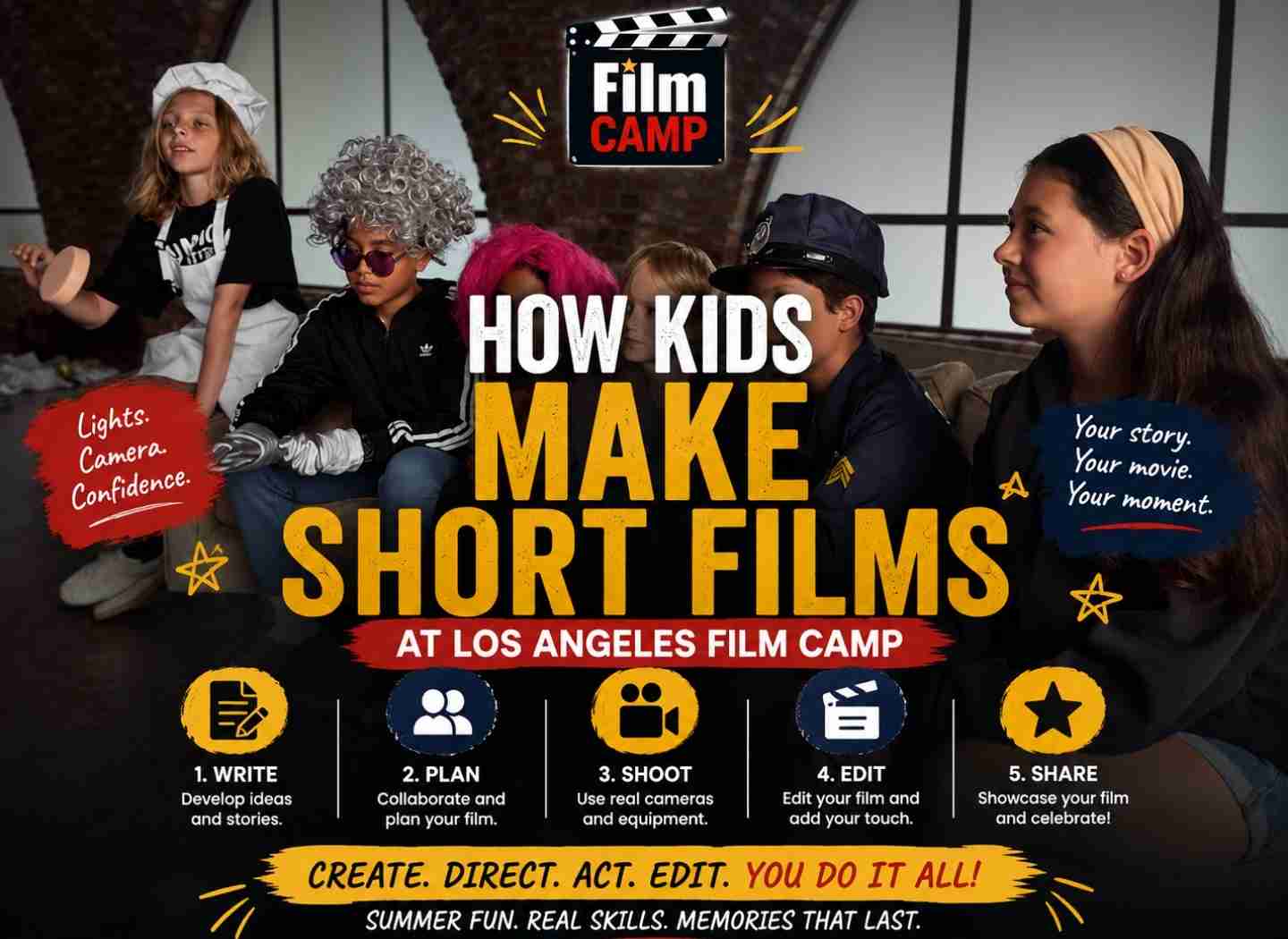
Kids write, shoot, and edit their own short films in one week at Los Angeles Film Camp. Hands-on, safe, and no experience needed. See how it works, from first idea to premiere.
Read >
Kids ages 7 to 14 spend five days in Glendale writing, acting, filming, and editing a real short film, then premiere it for families Friday. No experience needed. Gear included.
Read >.png)