Film Camp Austin uses crew-based filmmaking projects to teach kids real teamwork skills—communication, accountability, conflict resolution, and leadership—through hands-on collaboration where every role matters and results are shared.
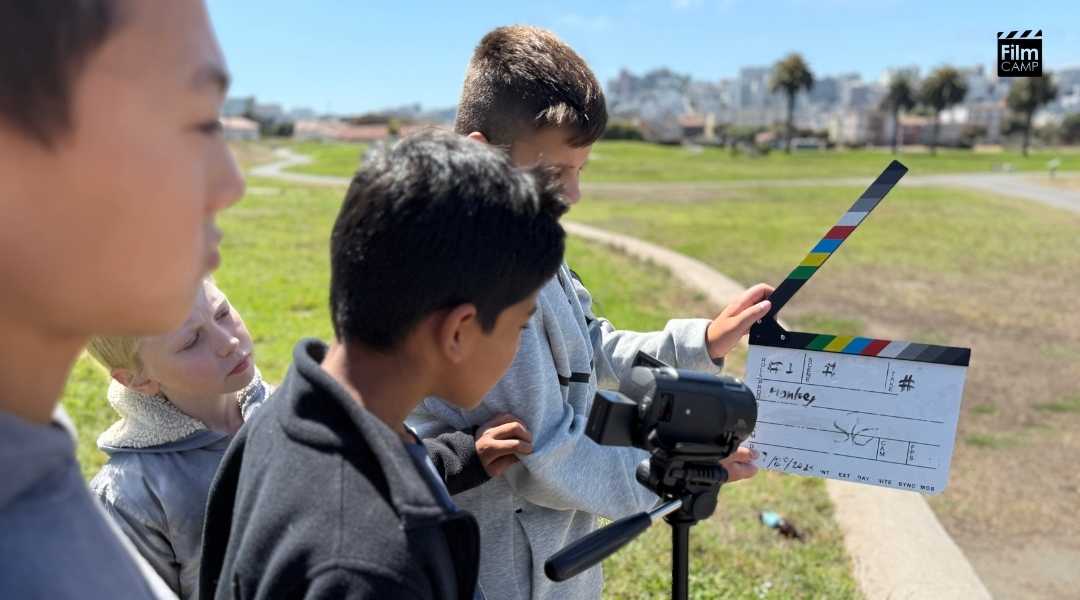
Here's a truth every filmmaker learns fast.
The lone genius in a dark room is a myth. Great films are made by teams. Every time.
Even the smallest student film needs a director, a camera operator, a sound person, and someone making sure the whole thing stays on track.
That's a team. And building one that actually works? That's a skill most adults are still figuring out.
Summer camp is one of the few places where kids get to practice real teamwork. Not hypothetical teamwork. Not "work with your table partner for five minutes" teamwork.
Real shared stakes. Real creative pressure. Real results that everyone owns together.
At Film Camp, every project is a team project. And in that setup, kids learn things about working with others that no classroom can teach.
As they say in Texas: "One story holds the roof up. Many stories make a house." One kid alone makes a video. A team makes something worth watching. The difference is everything.
Search "teamwork training through camp projects" and you'll find a decent amount of content.
General articles about camp. Studies on cooperative learning. Lists of team-building activities involving blindfolds and trust falls.
What almost nobody covers is how film-specific project work creates teamwork dynamics that are deeper, faster, and more lasting than most team exercises.
On a film crew, every role depends on every other role. That interdependence isn't manufactured. It's real. And real interdependence produces real teamwork.
That's the story Film Camp Austin tells. We're at 5900 Balcones Drive, Suite 100, Austin, TX 78731. Reach us at (323) 471-5941 or hello@film.camp anytime.
School group projects often have a free rider problem. One kid does the work. Others coast.
Camp projects are different. On a film set, coasting is visible. Immediately.
If the sound person checks out, the whole scene sounds bad. If the camera operator loses focus, the director has nothing to work with. Every gap shows up on screen.
That visibility creates natural accountability. Kids can't hide in a film crew. They have to show up. And showing up together is where teamwork begins.
Every film crew role requires something specific. And all of them require talking to each other.
The director has a vision. The cinematographer has a technical perspective. The producer is watching the clock. The editor is already thinking about how scenes will cut together.
Those different viewpoints create creative friction. And working through that friction is exactly what collaborative problem-solving looks like in practice.
Kids at Film Camp don't just learn their own role. They learn to understand every other role around them. That cross-functional awareness is one of the most valuable teamwork skills in any field.
Trust isn't built through exercises. It's built through shared experience.
When two kids work through a frustrating scene together and finally crack it, they trust each other more. Not because someone told them to. Because they earned it.
Film Camp creates dozens of those moments across a single session. Shared struggles. Shared wins. Shared ownership of a finished product.
Think of it like baking bread together from scratch. You're both covered in flour, you've both made mistakes, and when it comes out right, that loaf belongs to both of you.
Shared effort creates shared trust. And that trust becomes the foundation of how kids learn to work with others for the rest of their lives.
Nothing derails a team faster than confusion about who does what.
Film production has a built-in solution for this. Clear roles. Clear responsibilities. Clear lines of communication.
The director directs. The producer produces. The sound person manages sound. Everyone knows their lane.
But they also know when to step outside their lane to help. When to flag a problem to the right person. When to speak up and when to listen.
Kids at Film Camp learn this communication structure naturally. Through repetition. Through real production pressure.
Role clarity combined with open communication is the backbone of every high-performing team. Camp teaches both without making it feel like a lesson.
Here's a teamwork skill that doesn't get enough attention.
Listening. Real listening. Not waiting for your turn to talk.
On a film set, you have to hear your director's note and apply it immediately. You have to track conversations across a whole production day. You have to notice when a teammate is flagging something important.
Kids at Film Camp practice this constantly. And because the stakes are visible, they get better fast.
Teams that listen well move faster and make fewer mistakes. Camp builds that habit when kids are young enough to carry it a long time.
Creative teams disagree. Always.
"This scene should be funnier." "The ending doesn't work." "I think you're doing that wrong."
These conversations happen at Film Camp. And they're not smoothed over or avoided.
They're worked through. With structure. With respect. With a shared goal in mind: make the best film possible.
Kids learn the difference between productive disagreement and destructive conflict. They learn that pushing back on an idea is not the same as attacking a person.
That distinction is one of the most mature teamwork skills there is. And film camp builds it in kids as young as eight.
Good teamwork requires both. Leading and following.
Knowing when to step up. Knowing when to step back and support someone else's decision.
At Film Camp, every kid rotates through leadership roles. Director one day. Crew member the next. That rotation is intentional.
It builds empathy for both positions. Kids who've directed understand why clear direction matters when they're on the crew. Kids who've been on the crew understand what support feels like when they step into a leadership role.
The best team players aren't just good at one mode. They're fluent in both. Camp teaches that fluency through direct experience.
When a film gets screened, everyone who made it feels it.
Pride if it lands well. Sting if something falls flat. Relief when the audience laughs at the right moment.
That shared emotional investment is powerful. It's what separates Film Camp teamwork from classroom group projects.
Kids don't just contribute to a project. They own a piece of it. And ownership changes how people show up.
You work harder for something that has your name on it. Camp makes sure every kid's name is on something real.
Every film crew is different. Different strengths. Different perspectives. Different ways of seeing a problem.
That diversity is an asset. Not a complication to manage.
Kids at Film Camp learn this through direct experience. The quiet kid in the corner has the best idea for the ending. The technically-minded kid spots a lighting solution nobody else noticed.
Working in diverse teams teaches kids to look around before assuming they have the best answer. That habit makes them better collaborators for life.
Film has hard deadlines. The screening is at 4pm. Full stop.
That pressure changes how teams work. It forces prioritization. It creates urgency. It separates what matters from what doesn't.
Kids at Film Camp learn to manage time as a team. Not just individually. They learn to check in with each other. Redistribute tasks when someone is overloaded. Make calls about what to cut when time runs short.
Time management as a team skill is completely different from personal time management. And it's far more valuable in the real world.
Teams aren't just task machines. They're human systems.
When one team member is frustrated, the whole crew feels it. When someone has a breakthrough, everyone's energy lifts.
Kids at Film Camp learn to notice each other. To check in. To offer encouragement when a teammate is struggling.
That emotional awareness within a team context is rare in young people. Camp builds it because the environment demands it.
A team that takes care of each other makes better work. That's not soft. That's strategy.
Say you'll do something on a film crew. People are counting on you.
Forget to charge the battery? The whole morning shoot is dead. Miss your scene blocking rehearsal? The director scrambles.
Kids learn fast that their follow-through directly affects their teammates. And that lesson is immediate. Not abstract.
Accountability learned through real consequences sticks forever. It doesn't need a lecture. The crew teaches it just by existing.
The teamwork skills built at Film Camp don't evaporate in September.
Parents notice it. Teachers notice it. Kids notice it themselves.
They speak up more in group settings. They listen before jumping in. They think about how their choices affect others before acting.
These aren't small changes. They're foundational shifts in how a kid engages with every team they'll ever be part of.
School teams. Sports teams. Work teams. Friend groups. Every future collaboration they walk into will be shaped by what they learned here.
Film Camp is where kids discover what it actually means to be a good teammate. Not in theory. In the best possible way: by doing it for real.
At Film Camp, 5900 Balcones Drive, Suite 100, Austin, TX 78731. Call (323) 471-5941 or email hello@film.camp to find out how your child can be part of it this summer.
You don't get a great team by putting good people in the same room.
You get one by giving them something hard to do together. Something that matters. Something where every person's contribution is visible.
Film Camp does that every day. Every project. Every summer.
Kids come in as individuals. They leave as teammates. And they carry that shift into every group they join from that point forward.
So what would your child's team make this summer? That's worth finding out.
Call us at (323) 471-5941. Email hello@film.camp. Come visit at 5900 Balcones Drive, Suite 100, Austin, TX 78731.
We'll make sure they're never just a name on a group project again.
How do camp projects build teamwork skills in children?
Camp projects create real shared stakes. Every team member's role directly affects the outcome. That genuine interdependence builds communication, accountability, and collaboration faster than any simulated exercise.
What makes film camp teamwork different from school group projects?
In school, gaps are easy to hide. On a film crew, every gap shows up on screen. That visibility creates natural accountability and teaches kids what real teamwork actually requires.
How does Film Camp Austin structure team projects?
Every film project is crew-based. Kids rotate through roles including director, producer, cinematographer, and sound operator. Each role has clear responsibilities and depends directly on the others.
Can shy or introverted kids thrive in team-based camp projects?
Absolutely. Film crews need every personality type. Quieter kids often excel in behind-the-scenes roles and become the most observant and reliable team members on set.
What teamwork skills transfer from film camp to school and beyond?
Active listening, role clarity, conflict resolution, accountability, emotional support, time management, and collaborative problem-solving. All of these show up in classroom settings, sports, and eventually in professional environments.
How does Film Camp handle conflict within project teams?
Conflict is treated as part of the creative process. Counselors and instructors guide kids through structured resolution. The shared goal of completing a great film gives teams a natural reason to work through disagreements.
What age groups benefit most from teamwork training at film camp?
Most kids between 8 and 16 see strong teamwork development. Contact Film Camp directly at (323) 471-5941 for specific details on age groups and session structures.
Does Film Camp require prior filmmaking experience to join a crew?
No prior experience needed. Crew roles are taught from the ground up. The teamwork skills develop through the process of learning together, which often accelerates bonding between campers.
How does shared creative ownership affect how kids work as a team?
When kids own a piece of the final product, they bring more care and commitment to their role. Shared ownership creates shared investment, which is the foundation of any high-performing team.
How do I enroll my child in Film Camp Austin?
Easy. Call (323) 471-5941, email hello@film.camp, or visit us at 5900 Balcones Drive, Suite 100, Austin, TX 78731. We'll walk you through programs, session dates, and everything your child needs to get started.
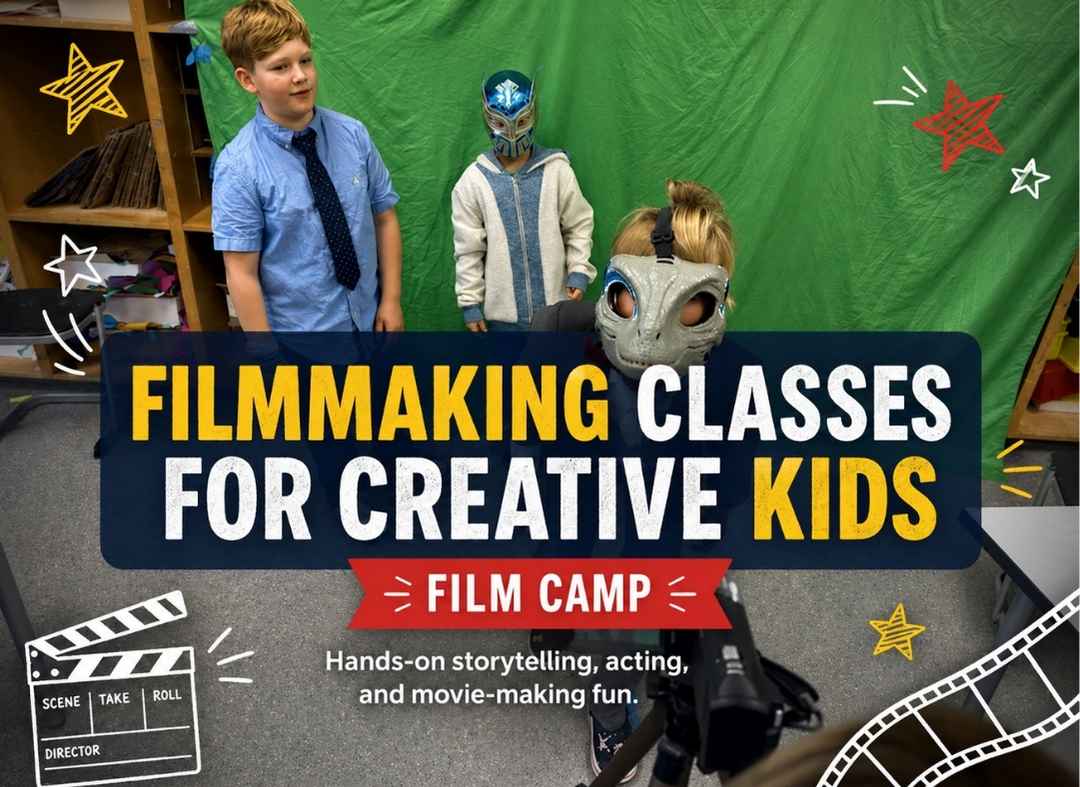
Discover why filmmaking classes help creative kids build confidence, teamwork, and storytelling skills through hands-on movie projects at Film Camp Los Angeles, where beginners learn by creating real short films.
Read >.jpg)
Weekend film classes in Los Angeles teach kids ages 8 to 14 filmmaking every Sunday in Glendale. Compare real costs, curriculum, safety, and what to ask before enrolling your child.
Read >
Thanksgiving break film camps fill the three school-free days in Austin, Los Angeles, and San Francisco. Kids ages 7 to 14 write, shoot, edit, and premiere their own short film.
Read >.jpg)
Discover how kids ages 7–14 learn screenwriting, acting, directing, camera work, editing, teamwork, and confidence at Los Angeles Film Camp in Glendale while creating and premiering their own short film.
Read >.png)