Picking the right film camp means looking past glossy brochures. Check instructors, equipment, class size, safety, communication, refund terms, and whether teens leave with a finished film.
Picking a film camp feels weirdly stressful. You're handing over a kid, a credit card, and a chunk of summer.
And the brochure looks great. Glossy photos. Smiling teens with cameras. Words like "Hollywood" and "premiere."
But brochures don't make movies. Bored kids holding broken tripods don't either.
So how do you tell which film camp is the real deal? And which one will leave your kid scrolling all summer?
Honestly, most warning signs are right there. You just gotta know where to look.
This guide walks through every red flag we've seen at a sketchy summer film camp. Stuff parents miss. Stuff teens never report. Stuff that quietly wastes the whole season.
Let's get into it.
Here's the thing. A film camp is not a logo. It's people, gear, time, and creative energy.
You can have a fancy website with zero soul behind it. There's an old Texas saying that goes "all hat, no cattle." That fits a lot of camps.
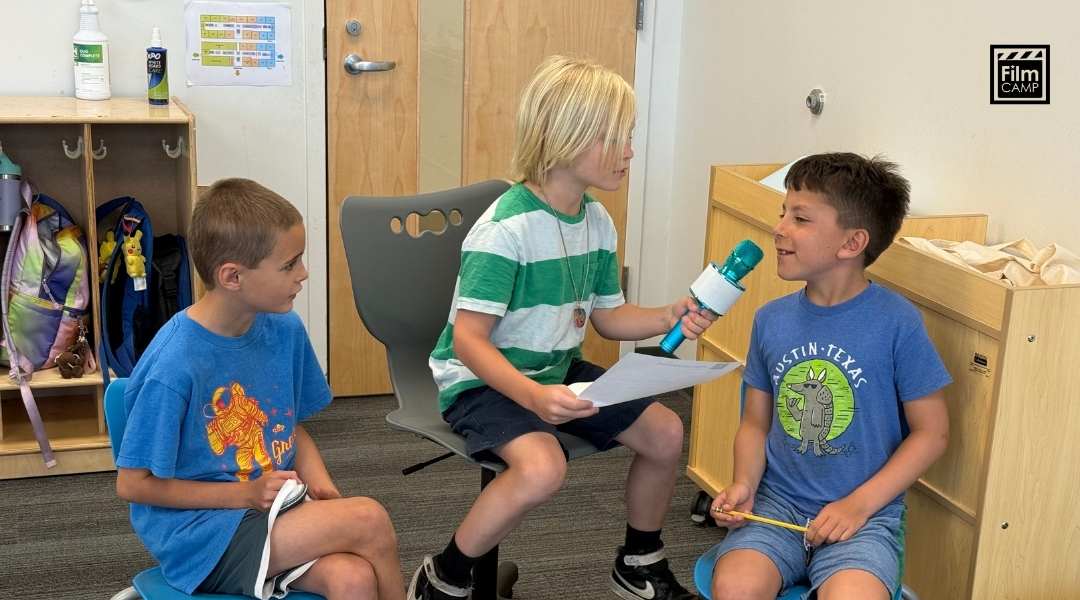
When you tour a film camp Austin parents recommend, you should feel something. Buzzy. Curious teens. Stuff actually getting made on tables.
If the place feels quiet and museum-like in mid-June, that's weird. Where are the kids? Where's the noise?
A real film camp for teens in Austin sounds like organized chaos. Cameras clacking. Someone arguing about a script. A tired-looking instructor laughing anyway.
Trust your gut on the tour. If the room feels dead, the program probably is too.
Ask for a daily schedule before you pay. If they hand you "creative exploration block" three times in a row, run.
A serious summer film camp has a real flow. Story morning. Camera afternoon. Edit before pickup. Not vibes only.
Same goes for instructors. Who's actually teaching your kid?
If the website hides instructor names behind vague phrases like "industry mentors," ask harder. Real working filmmakers have public credits. Even small ones.
A good film camp Austin offers will name names. They'll show short bios, IMDb links, or past student work.
If they dodge the question, that's your answer. The cheaper their answer, the cheaper the staff.
This applies in every market too. A film summer camp Los Angeles parents trust still has named teachers. Same with a film camp Glendale program. The location doesn't change the rule.
Look. Phones can shoot beautiful movies. We know.
But if you're paying real money for a video production camp RRISD kids brag about, your teen should touch real gear. DSLRs. Mirrorless cameras. Decent mics. Lights with stands.
Some camps charge premium prices and hand kids the same iPad they have at home. That's not training. That's babysitting with a screen.
Ask the camp this exact question. "What gear will my kid actually operate by week's end?"
A solid film kids Austin program will rattle off a list. Specific brands. Specific tasks. Specific outcomes.
If the answer is fuzzy, picture your kid bored on day three. Because that's what happens when there's nothing new to learn.
Good gear isn't about flexing. It's about teaching real movies. Real focus pulls. Real audio cleanup.
Group size tells you everything. Seriously.
A film set is a team sport. But it's a small team. Five to eight kids per crew works. Twenty-five does not.
Ask the camp the staff-to-student ratio. Out loud. Watch their face.
A trustworthy film camp keeps small crews. Why? Because everyone needs hands on something. Camera. Sound. Slate. Direction.
If thirty teens share two cameras, your kid will hold a clipboard for nine days. Maybe a boom pole if they're lucky.
Some places stack their California film summer camp programs with so many kids it stops being a camp. It becomes a daycare with a director's chair as decoration.
Smaller crews equal more shots, more lines learned, more confidence built. That's the math.
Don't accept "we have lots of staff." Get the actual number. Then divide.
Wait, what? You went to a film camp and didn't make a film?
It happens way more than you'd think. Kids show up, learn a few skills, do warm-up exercises, and leave with nothing.
A good summer film camp finishes something. A short. A trailer. A music video. Anything with a beginning, middle, and end.
If the program can't promise a deliverable, that's a giant warning sign. Your teen should leave with a credit. A reel piece. Something to show.
Ask to see last summer's student films. If they hesitate, the work probably isn't there.
A real film camp Austin teens love wraps with a screening night. Parents come. Snacks happen. Movies play.
That moment matters. It's the proof. It's the memory. It's the spark that turns a hobby into a lifelong thing.
No screening, no finish line. No finish line, why bother?
You shouldn't feel pressured to book a film camp in 12 hours. Run from countdown timers and "spots disappearing fast" texts.
A confident program has a clear price, a clear policy, and a clear plan. They don't need to scare you into a credit card.
Read the refund terms before you pay. Not after. Like, really read them.
Some camps make refunds nearly impossible. Strict deadlines. Gift card credits only. Tons of fine print.
A trustworthy film summer camp Los Angeles families recommend will have a fair window. Usually two to four weeks before start date.
Same for any teen summer camps Austin film programs. The refund language should be human and short. Not fourteen paragraphs of legalese.
Bonus red flag? When the staff can't explain their own refund policy without checking notes. That tells you a lot about how organized the rest of camp will be.
Your kid will be running around with cables, tripods, and sometimes hot lights. Safety isn't a vibe. It's a binder.
Ask for the safety plan. In writing. Don't take "we've got it covered" as an answer.
Things to confirm before you sign up. CPR-certified staff. Allergy protocols. Pickup procedures. Emergency contacts.
A real film camp Austin parents pick has answers ready. They'll email you the plan that day.
If they take three days to find it, imagine how fast they'll respond when something actually goes wrong.
Indoor or outdoor shoots can both have risks. Water bottles. Sunscreen. Power cord placement. Crowd control.
You don't need a perfect plan. You need a plan that exists. And a team that knows it cold.
Trust me. The camp directors who care about safety also care about story. It comes from the same place.
Have you ever sent your teen to a camp and gotten one email all week? Just one?
It's the worst feeling. You wonder if your kid is okay, hating it, loving it, eating, sleeping, or alive.
A real film camp keeps parents in the loop. Daily photos. Quick updates. Maybe a Friday email with a behind-the-scenes clip.
This isn't about hovering. It's about transparency. You paid for a service. You deserve light proof of life.
When a film kids Austin program treats parents like a nuisance, that's a culture issue. The camp views adults as ATMs, not partners.
Compare that to a camp that posts a parent portal. Daily reels. Pickup updates. Schedule changes flagged in real time.
That's how you know they care. Communication isn't extra. It's the bare minimum.
If you ask three times for an update and get ghosted, picture the same response when something matters.
Here's a quiet warning sign that takes a while to spot. The camp uses the same script every summer.
You'll see it in their Instagram. Same skit. Same lines. Same cheesy plot. Just different kids each year.
That's a paint-by-numbers program, not a film camp. Real movies require real choices.
A great teen summer camps Austin film experience pushes kids to write their own stuff. Even messy stuff. Especially messy stuff.
Sure, beginners need a little structure. Templates. Genre prompts. That's fine.
But by day three, your teen should be making real creative calls. Camera angles. Music choices. Edit pacing.
If everyone walks out with the same film, the camp didn't teach filmmaking. It taught how to follow a recipe.
What's the point of summer if you can't make weird, surprising things? Movies are supposed to be a little personal. A little chaotic.
A film camp Glendale or Austin or anywhere worth its salt embraces that. It doesn't sand it down.
You read about reels and think "okay, my kid's not chasing Hollywood." Fair.
But a reel is more than a career thing. It's a memory. A trophy. Something your teen can text their grandma.
If a film camp doesn't help kids leave with a polished cut, why does it exist? You shouldn't have to edit at home for two weeks after.
A real summer film camp delivers final exports. Color graded. Sound mixed. Watchable.
Even a 90-second short is fine. It just needs to be done. Done means watchable on a phone, on a TV, on YouTube.
A solid film camp for teens in Austin will hand you a USB. Or a Google Drive link. Or both.
That's the proof. That's the keepsake. That's also the start of something bigger if your teen wants it.
When you compare options, think long term. Will my kid have something to point at in three months?
If not, you're paying for a memory. Not bad. But also not what was advertised.
This one's sneaky. The camp brochure says "filmmaking." The schedule says "card games and movie watching."
Watching movies is good. We love watching movies. But that's homework. Not camp.
A real film camp Austin parents back has a clear curriculum. Pre-production. Production. Post-production. All three.
If a camp skips one of those, you're getting a sliver of the craft. Probably the easiest sliver.
Pre-production means scripts, storyboards, shot lists, casting calls. Yeah, even with teens.
Production means real shoots. Real call sheets. Real scenes built from start to finish.
Post-production means editing, sound, music, color. Maybe even a poster design or trailer cut.
When all three happen, kids leave changed. They've felt a movie come together. Not just the fun shooting day.
Same standard for a video production camp RRISD or anywhere else. Three stages. No shortcuts.
Okay, enough red flags. What does a great program look like?
Imagine walking in and hearing five teens argue about a story beat. That's a sign.
Or a small crew running a hallway with a steadicam rig. That's a sign.
A wall covered in printed storyboards. A whiteboard tracking three short films. A teacher with coffee and a shot list.
That's the place. That's the energy. That's where something real is happening.
You'll also notice it in the questions kids ask each other. Not "when's snack." But "what if we shoot it from below?"
A great summer film camp builds that culture on purpose. Through small classes. Real gear. Strong instructors.
You should see a mix of ages working together. Quieter kids running sound. Outgoing kids directing. Tech kids editing.
Everyone gets a job that matches their style. Everyone learns the other jobs too.
That's filmmaking. That's the magic. That's what you're paying for.
Print this out. Or screenshot it. Or text it to your partner. Whatever works.
Ask the camp these questions before you commit.
If they answer all ten clearly, you're golden. If they dodge two or more, keep shopping.
This works for any market. A film camp Glendale program, film summer camp Los Angeles option, California film summer camp, or even a tiny local one. Same questions. Same logic.
The good ones will love these questions. The shady ones will get nervous.
Let's talk money for a sec. Cheap doesn't always mean bad. Expensive doesn't always mean good.
A high price tag on a film camp can mean fancy gear. Or it can mean fancy marketing. Big difference.
Look past the price. Look at the value.
A summer that builds a portfolio reel? Maybe worth it.
Eight hundred bucks for two weeks of iPad clips and pizza Fridays? Probably not.
Ask what's included. Gear rental. Software. Lunches. Field trips. Final edits.
Some film summer camp Los Angeles programs include everything. Others charge extra for editing software, late pickup, even printed scripts.
Read the fine print. Ask for a sample receipt. Compare apples to apples.
A trustworthy film camp Austin offers will be upfront. Total cost. Total time. Total deliverable. No surprises.
When the math feels foggy, that's your gut talking. Listen to it.
A film camp in your zip code beats a famous one across the country. Why? Because logistics shape outcomes.
Driving 45 minutes daily might burn your teen out fast. So might flights, hotels, and homesickness.
Local film camp programs win on stamina. Kids come fresh, do real work, sleep at home, repeat.
That said. If your teen has fire in their belly and wants the big-name shot, distance can be worth it.
A California film summer camp like film camp Glendale or film summer camp Los Angeles can be amazing. Industry contacts. Real sets. Famous alumni.
But check the trade-offs. Travel costs. Housing rules. Time zones. Parent communication delays.
For most families, a strong film camp Austin program covers everything. Quality teachers. Real gear. Real shorts. Less stress.
Don't let brand chase you into a bad fit. The best film camp is the one your teen finishes excited.
A great film camp doesn't end on the last Friday. It ends months later.
Look for camps with alumni groups. Slack channels. Discord servers. Zoom meetups. Newsletters.
Why? Because filmmaking is collaborative forever. The kids your teen meets at camp become collaborators for years.
A film camp Austin teens stay loyal to keeps that community alive. Not just in summer. All year.
This matters more than people realize. One project leads to another. One friend leads to a crew.
If the camp doesn't have a community plan, that's a sign of a transactional vibe. Pay, attend, leave, forget.
Compare it to a camp that hosts a fall premiere. Or invites alumni back to teach next summer. That's a real ecosystem.
You'll know it when you see it. The kids look excited about each other. Not just the project.
This last one is simple. Bring your teen on the tour.
Watch their face. Don't filter what they say. Don't argue them out of it.
If your kid walks out saying "it felt boring," they're right. Even if they can't explain why.
Teens read rooms fast. Faster than us sometimes. Their gut catches what our spreadsheet misses.
Of course, also push them past first nerves. Ask better questions. Walk through the schedule together.
But that initial flicker matters. A film camp for teens in Austin should make your kid lean in. Not zone out.
If they get curious, ask follow-ups, want to know who's teaching, that's gold. Sign up.
If they shrug and ask when lunch is, that's data too.
Listen to it.
A real film camp doesn't feel like school. It feels like a small, exciting movie set.
The schedule is loose enough to chase a good idea. Tight enough to finish on time. The energy is the energy of people making something.
Every red flag in this guide circles back to one question. Is this camp built for movies, or built for marketing?
Built for movies means real gear, real teachers, real deliverables, real fun. Built for marketing means slick photos and empty days.
You can spot the difference in 20 minutes if you know what to ask.
We made Film Camp because Austin teens deserve the real thing. Not just a checkbox summer. A real, loud, messy, finished movie experience.
If you're checking out a summer film camp this season, run our checklist. Ask the hard questions. Trust your gut.
And if a place feels off, it is. Move on. Your teen's summer is too short to waste.
Got questions? We'd love to chat. Call us at (323) 471-5941 or send a note to hello@film.camp. We're at 5900 Balcones Drive, Suite 100, Austin, TX 78731.
Come visit. Hear the noise. Feel the buzz. That's how you know.

Discover why filmmaking classes help creative kids build confidence, teamwork, and storytelling skills through hands-on movie projects at Film Camp Los Angeles, where beginners learn by creating real short films.
Read >.jpg)
Weekend film classes in Los Angeles teach kids ages 8 to 14 filmmaking every Sunday in Glendale. Compare real costs, curriculum, safety, and what to ask before enrolling your child.
Read >
Thanksgiving break film camps fill the three school-free days in Austin, Los Angeles, and San Francisco. Kids ages 7 to 14 write, shoot, edit, and premiere their own short film.
Read >.jpg)
Discover how kids ages 7–14 learn screenwriting, acting, directing, camera work, editing, teamwork, and confidence at Los Angeles Film Camp in Glendale while creating and premiering their own short film.
Read >.png)