Film Camp Austin develops real problem-solving skills through hands-on filmmaking challenges—technical, creative, and interpersonal—teaching kids adaptive thinking, resourcefulness, failure recovery, and decision-making under pressure with genuine stakes.
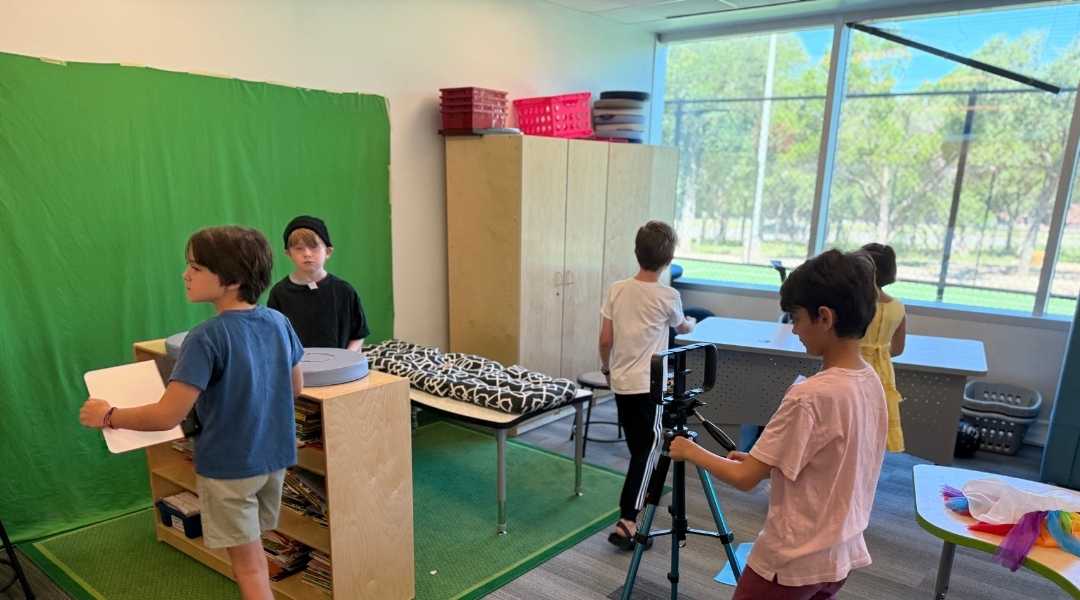
Not a script. Not a camera. A problem.
How do we tell this story? How do we make this scene work? How do we shoot this with what we have?
Filmmaking is one long chain of problems. And that's exactly what makes it the perfect training ground for real-world thinking.
Most kids learn problem-solving in the abstract. Word problems. Worksheets. Hypotheticals with no real stakes.
Camp flips that. At Film Camp, every problem is real. Every solution matters. Every fix affects someone on the crew.
That's not busywork. That's training.
As they say in Texas: "Don't wait for the storm to pass. Learn to shoot in the rain." Problems don't always clear up. The best problem-solvers learn to work right through them.
This post covers everything people find when they search this topic. The research. The real skills. And why film-based camp builds problem-solvers in a way no classroom project ever quite manages.
Search "problem-solving skills developed at camp" and you'll get a predictable mix of results.
Articles about outdoor camps. Ropes courses. Team obstacle challenges. General lists of cognitive benefits tied to summer programs.
What almost nobody covers is how creative production environments develop problem-solving in a uniquely layered way. Where kids face technical problems, interpersonal problems, creative problems, and logistical problems all at once.
That multi-layered problem environment is exactly what Film Camp creates. And it's exactly where the deepest skill-building happens.
We're at 5900 Balcones Drive, Suite 100, Austin, TX 78731. Call (323) 471-5941 or email hello@film.camp to learn more.
School problems usually have a known answer. The teacher has it. The textbook has it.
Camp problems don't work like that.
The lighting rig falls over. The script doesn't land in rehearsal. Two crew members disagree on an approach and both have valid points.
There's no answer key. No right page to turn to. Just the team, the tools, and the time they have left.
That open-ended problem environment is where genuine problem-solving skill grows. And it only works because the stakes are real.
Every film production is a creative puzzle. And the pieces keep changing shape.
The shot you planned looks wrong once you're actually on location. The scene that read well on paper plays flat in person. The actor you cast can't quite hit the emotional note you needed.
Kids at Film Camp face all of these. And they learn to respond without panicking.
They ask better questions. They look at problems from multiple angles. They try something. Evaluate it. Try again.
That iterative creative process is one of the most powerful problem-solving frameworks there is. And film camp builds it through repetition, not theory.
Before cameras roll, kids at Film Camp analyze their own scripts.
Does this scene make sense? Does the character's motivation hold up? Is there a better way to say this?
That analysis requires genuine critical thinking. Not memorization. Not following a formula.
It requires asking hard questions about your own work. And being willing to change something you liked when a better option shows up.
Critical thinking trained through self-evaluation is especially sticky. Because the work being critiqued belongs to the kid. That personal investment makes the thinking sharper.
Plans fall apart on film sets. That's not an exception. It's the rule.
Weather changes. Equipment fails. A location falls through an hour before the shoot.
The question is never "did something go wrong?" It's always "what do we do now?"
Kids at Film Camp practice adaptive thinking every single time something breaks down. They learn to assess what they have, figure out what's possible, and make a call fast.
Think of it like navigating with a broken compass. You can't wait for it to get fixed. You look for landmarks. You use what you know. You keep moving.
Adaptive thinking under pressure is one of the most valuable skills a person can have. Film camp builds it through unavoidable real-world situations.
Cameras. Lighting rigs. Sound equipment. Editing software.
Film production is full of technical systems. And technical systems break, misbehave, and surprise you constantly.
Kids at Film Camp don't just learn to use equipment. They learn to troubleshoot it. They learn what to check when the audio sounds off. They learn how to fix an exposure problem mid-shot. They learn what to do when the edit doesn't cut cleanly.
Technical problem-solving builds logical thinking and patience simultaneously. Both are rare skills in young people. Both are enormously valuable.
Some problems are too big for one brain.
On a film crew, the best solutions often come from unexpected places. The grip who suggests a camera angle. The sound person who spots a pacing issue. The quietest kid on the team who has the best idea for the ending.
Kids at Film Camp learn to pull on the collective intelligence of their crew. They learn to ask for input. To weigh different solutions. To combine two imperfect ideas into one good one.
Collaborative problem-solving produces better answers than solo thinking almost every time. Camp teaches this not by telling kids. By showing them.
Screenings happen at a fixed time. The clock doesn't move for anyone.
That time pressure forces kids to make decisions they might otherwise delay. They can't keep reshooting until it's perfect. At some point they have to commit and move forward.
Learning to make a decision with incomplete information, under pressure, and own the outcome is a skill most adults find genuinely difficult.
Film Camp gives kids hundreds of reps at this across a single summer. Small decisions. Medium decisions. The occasional big one.
Each rep builds a little more decision-making muscle. By the end of the session, kids choose faster and second-guess themselves less.
Big Hollywood films have unlimited budgets. Student films have almost nothing.
That constraint is a gift.
Kids at Film Camp learn to be resourceful. They find creative solutions within tight limits. They use what's available rather than waiting for what's ideal.
That resourcefulness is one of the most underrated problem-solving traits there is. The ability to look at limited resources and make something remarkable anyway.
Constraints don't block creativity. They focus it. Film camp proves this to kids directly.
Here's something most parents don't expect from camp.
Kids come home more self-aware. More able to reflect on how they approach problems. More conscious of when they're stuck and what they need to get unstuck.
That's metacognition. Thinking about thinking.
At Film Camp, reflection is built into every project cycle. What worked? What didn't? What would you do differently?
Those questions sound simple. But asking them consistently builds a habit of self-evaluation that improves problem-solving in every area of life.
First attempts rarely nail it. In film or in life.
The first cut is usually too long. The first draft needs work. The first take almost never makes the final film.
That's not failure. That's process.
Kids at Film Camp internalize this through direct experience. They learn that a bad result isn't a dead end. It's data. Information about what to try differently next.
Resilient thinking isn't about bouncing back from failure. It's about not treating failure as the end. Camp builds that mindset one imperfect take at a time.
Here's a problem type that matters more than most people teach.
Interpersonal problems. Two crew members with conflicting ideas. A disagreement about creative direction. A miscommunication that's slowing the whole project down.
These aren't creative problems or technical problems. They're human problems. And they're everywhere in real life.
Film Camp gives kids a framework for working through them. Focus on the shared goal. Separate the idea from the person. Look for a path that moves the project forward.
Learning to solve people problems is the highest-leverage problem-solving skill there is. And it's almost never explicitly taught before camp.
Parents notice this one pretty quickly after camp ends.
Their child approaches obstacles differently. They don't freeze as fast. They generate options instead of shutting down. They try things before asking for help.
Teachers notice it too. Better approach to hard assignments. More willingness to attempt problems without knowing the answer upfront. More comfort with the discomfort of not knowing yet.
These are not small shifts. They're foundational changes in how a child approaches every challenge they meet.
Problem-solving habits formed at camp show up everywhere. In school. In sports. In friendships. In every hard moment ahead.
Most camps build one type of problem-solving. Physical challenges. Or social ones. Or creative ones.
Film Camp builds all three simultaneously. Every project is a physical, creative, social, and technical problem wrapped into one.
That multi-domain challenge creates a more complete problem-solver. A kid who can handle complexity. Who doesn't get rattled when a problem doesn't fit neatly into one category.
Austin is the right city for this kind of thinking. A city that runs on innovation, creative courage, and the belief that hard problems are worth tackling.
Film Camp is where Austin kids learn that they're the kind of people who figure things out.
Come see us at 5900 Balcones Drive, Suite 100, Austin, TX 78731. Call (323) 471-5941 or email hello@film.camp to ask us anything.
You can't teach problem-solving with worksheets. Not really.
You can teach the vocabulary of it. But the actual skill lives somewhere else. In real moments. With real pressure. With real people counting on you to figure it out.
Film Camp is full of those moments. Every day. Every project. Every summer.
Kids leave not just knowing how to make films. They leave knowing how to handle hard things. How to think clearly when the plan breaks. How to stay in the game when it gets uncomfortable.
Is there a better skill you could give your child for the road ahead? We don't think so.
Call (323) 471-5941. Email hello@film.camp. Or come see us at 5900 Balcones Drive, Suite 100, Austin, TX 78731.
Let's get your kid on a crew this summer.
How does summer camp help develop problem-solving skills in children?
Camp creates real challenges with real stakes. Kids face technical, creative, and interpersonal problems with no answer key. Working through those builds genuine problem-solving skills faster than any classroom exercise.
What kind of problem-solving do kids practice at film camp?
All types. Creative problems like story and scene development. Technical problems with equipment and editing. Logistical problems under time pressure. And interpersonal problems within their crew.
How does filmmaking specifically build critical thinking in children?
Filmmaking requires constant evaluation of choices. Does this scene work? Is this the best angle? Does the story hold up? That ongoing self-assessment builds critical thinking through real application.
Can film camp help kids who tend to give up when things get hard?
Yes. Film camp normalizes difficulty. Kids see that everyone struggles, everyone iterates, and the best results come from pushing through. That environment reshapes how kids relate to hard things.
What is adaptive thinking and how does camp build it?
Adaptive thinking is the ability to adjust plans when things change unexpectedly. Film camp builds it because production problems are constant and unavoidable. Kids learn to pivot without panicking.
How does Film Camp Austin handle technical problems on set?
Instructors guide kids through troubleshooting processes without just giving them the answer. The goal is to build diagnostic thinking, not dependency. Kids learn to solve equipment and software issues themselves.
Is problem-solving at film camp more effective than school projects?
For most kids, yes. Film camp problems are real, immediate, and affect their teammates. That level of stakes creates sharper focus and faster learning than most classroom scenarios can replicate.
What age is best for problem-solving development at summer camp?
Most kids show strong development between ages 8 and 16. Contact Film Camp at (323) 471-5941 for specific session details and age-group information.
How does Film Camp teach kids to handle failure?
By treating failure as information rather than an endpoint. Every imperfect take, flat scene, or failed edit is reviewed as a learning moment. Kids iterate rather than quit.
How do I enroll my child at Film Camp Austin?
Just reach out. Call (323) 471-5941, email hello@film.camp, or visit 5900 Balcones Drive, Suite 100, Austin, TX 78731. We'll walk you through everything and make enrollment simple.
Discover why filmmaking classes help creative kids build confidence, teamwork, and storytelling skills through hands-on movie projects at Film Camp Los Angeles, where beginners learn by creating real short films.
Read >.jpg)
Weekend film classes in Los Angeles teach kids ages 8 to 14 filmmaking every Sunday in Glendale. Compare real costs, curriculum, safety, and what to ask before enrolling your child.
Read >
Thanksgiving break film camps fill the three school-free days in Austin, Los Angeles, and San Francisco. Kids ages 7 to 14 write, shoot, edit, and premiere their own short film.
Read >.jpg)
Discover how kids ages 7–14 learn screenwriting, acting, directing, camera work, editing, teamwork, and confidence at Los Angeles Film Camp in Glendale while creating and premiering their own short film.
Read >.png)