Explore the best summer camps in Austin for kids, from traditional day camps to sports, STEM, art, and filmmaking programs. Get expert tips on choosing the right camp, registration timing, safety, and costs.

The best summer camps in Austin for kids are programs that match your child's age, interests, and personality while offering safe supervision, qualified staff, and engaging activities. Austin parents can choose from traditional day camps, outdoor adventure programs, sports camps, STEM and technology camps, art and theater workshops, and creative options like filmmaking summer camps in Austin. The right camp gives your child structure, social connection, and a memorable summer experience that goes beyond simple childcare.
Austin has become one of the strongest summer camp cities in Texas because of its mix of nature, technology, arts, and family-focused community. Greenbelts, lakes, and parks support outdoor camps, while the city's creative industries fuel music, film, and design programs for kids. Tech companies and universities also drive a strong STEM camp scene. Families moving to Austin often find more camp variety here than in many other Texas cities of similar size.
Before comparing camps, decide what you actually want your child to gain from the summer. Some parents want full-day supervision while they work. Others want their child to learn a new skill, make friends, or build confidence. Strong camps usually share three things: trained staff, a clear daily schedule, and a focused outcome at the end of the program, whether that is a performance, a sports tournament, or a finished creative project.
Traditional day camps offer a mix of crafts, games, swimming, field trips, and group activities. They run Monday through Friday during regular work hours and work well for younger kids who want variety rather than one focused subject. Most traditional camps serve ages 5 to 12 and group children by age.
Austin's outdoor camps use the city's parks, greenbelts, and lakes for hiking, kayaking, paddleboarding, rock climbing, and nature study. These camps suit active kids who do well outside and enjoy physical challenges. Parents should check sun protection policies, hydration rules, and weather backup plans before signing up.
Sports camps in Austin cover soccer, basketball, tennis, baseball, swimming, gymnastics, volleyball, and martial arts. Some focus on a single sport while others rotate through several. Sports camps are a strong fit for kids who already enjoy a sport or who need a structured way to stay active during the summer.
STEM camps teach coding, robotics, video game design, 3D printing, engineering, and science experiments. Austin's tech industry supports a wide range of these camps, including ones run by universities, museums, and private learning centers. STEM camps work well for kids who like puzzles, building things, or computers.
Creative camps include visual art, music, theater, dance, animation, and creative writing. Kids work on projects, perform for parents, and learn from working artists and teachers. These camps suit kids who prefer self-expression over competition and who enjoy making something they can take home.
Filmmaking camps teach kids how to write, direct, act, shoot, and edit a real short film during the week. Film.Camp's Austin summer program is one example, where campers leave with a finished film they can share with family and friends. Media camps may also include photography, podcasting, YouTube content creation, and animation.
Overnight camps outside Austin let kids stay for one week or longer in the Hill Country, near lakes, or on ranch properties. These camps focus on independence, friendship, and outdoor skills. They suit kids who are emotionally ready to spend nights away from home, usually starting around age 8 or 9.
Free and low-cost camps in Austin are offered through the City of Austin Parks and Recreation Department, public libraries, YMCA scholarships, Boys & Girls Clubs, and some local nonprofits. Spots fill quickly and often require early registration, proof of income, or residency. Many of these programs combine recreation, reading, and basic enrichment activities.
Most camps publish age ranges, but the right fit depends on more than birthday. A 7-year-old in a camp full of 10-year-olds may feel left out, while a mature 11-year-old in a camp aimed at 8-year-olds may get bored. Ask how groups are organized and whether siblings or friends can be placed together.
Active kids often thrive in sports and outdoor camps. Quiet, creative kids tend to do better in art, writing, or filmmaking programs. Tech-focused kids enjoy STEM camps. Some kids need structure; others need freedom to explore. The best camp is the one that fits your child, not the one that sounds most impressive.
Look at start and end times, drop-off and pick-up windows, extended care options, and total weeks of programming. A camp on the other side of Austin may not be worth the daily commute. Many parents combine two or three different camps across the summer to balance cost, interests, and family schedules.
Ask about staff-to-camper ratios, background checks, first aid certifications, and how the camp handles emergencies. A small camp with trained, attentive staff is often safer and more rewarding than a large camp with high counselor turnover.
Camp prices in Austin range from free community programs to over $1,000 per week for specialty camps. Check what the price covers, including lunch, snacks, materials, T-shirts, and field trips. Read the refund and cancellation policy carefully before paying a deposit.
Strong camps usually end with something tangible, like a performance, game, art show, science demo, or finished project. Asking "What will my child have at the end of the week?" is one of the most useful questions a parent can ask.
Austin parents increasingly want summer programs that teach a skill, not just fill the day. A growing number of families look for camps where kids leave with new abilities, finished work, or stronger confidence, rather than only memories of playing games.
Research on learning consistently shows that kids retain more when they actively make things instead of passively watching or listening. Creative camps lean on this directly. Kids plan, build, test, and revise their work, which strengthens both academic and social skills.
Creative camps teach communication, teamwork, planning, time management, and problem-solving. These skills apply to school, future jobs, and everyday life. A child who learns to pitch a story idea, lead a team, or solve a production problem is building lifelong abilities.
Filmmaking combines writing, acting, design, music, technology, and teamwork in one project. Few activities pull together so many skills at once. For creative kids, a film camp in Austin often feels less like school and more like building something they care about.
A kids filmmaking camp is a structured program where children write, plan, shoot, act in, and edit a short film over the course of the camp. Most run one week, with campers working in small teams under the guidance of filmmakers and teachers. By the end of the week, each camper has a finished film to share.
Campers learn the basics of storytelling, scriptwriting, camera work, lighting, sound, acting, directing, and editing. Beyond technical skills, they also learn how to take turns, listen to other people's ideas, give and receive feedback, and finish a creative project under a deadline.
Film camp suits kids who love stories, movies, YouTube videos, drawing, acting, or making things on their phone or tablet. It also works well for shy kids who prefer to work behind the camera and for outgoing kids who enjoy performing. No prior experience or equipment is needed.
Standing in front of a group, sharing an idea, and seeing it become a finished film is a powerful experience for a child. Many parents report that kids come home from film camp more willing to speak up at school, try new activities, and finish projects they start.
Regular day camps focus on activities that change every hour. Film camp focuses on one shared project that grows across the week. The structure is more like real creative work, with planning, problem-solving, collaboration, and a final result everyone contributed to.
Ask how many campers are on each film team, who teaches the camp, what equipment is provided, whether each child gets a finished film, how the films are shared, and what the screening event looks like. Programs like the Film.Camp Austin summer program and the Austin weekend film classes can answer most of these questions on their websites.
Creative kids do well in art studios, theater workshops, music programs, and filmmaking camps. Hands-on production camps like Film.Camp in Austin are popular because kids leave with a complete film instead of only crafts or sketches.
Active kids enjoy sports camps, outdoor adventure camps, swim camps, and martial arts programs. Camps that include water activities are especially popular during Austin's hot summer months.
Tech-loving kids gravitate to coding, robotics, game design, 3D printing, and AI camps. Some film and media programs also blend technology with creativity through editing software, animation tools, and digital cameras.
Shy kids often thrive in small-group camps where they can build relationships slowly. Art, writing, and filmmaking camps work well because kids contribute through making things rather than competing or performing on demand. Behind-the-camera roles in film camp give shy kids a meaningful way to take part.
Teen-focused camps include filmmaking, photography, leadership programs, coding bootcamps, advanced sports training, and counselor-in-training (CIT) programs. Teens often want camps that feel grown-up and produce real results rather than basic recreation.
Budget-friendly options include City of Austin Parks and Recreation camps, YMCA programs with financial aid, library reading camps, and church or community center programs. Many specialty camps also offer early-bird discounts and sibling rates.
Most popular Austin summer camps open registration between November and February. Specialty camps with limited spots, including small filmmaking programs, often fill by early spring. Signing up early also gives access to early-bird pricing and your preferred week.
Have your child's full name, birthday, school, allergies, medical conditions, emergency contacts, pickup authorizations, and insurance information ready. Some camps also ask for a doctor's permission form or immunization records.
Make a simple comparison sheet listing cost, dates, hours, location, what is included, staff ratio, and final outcome for each camp. Looking at five or six options side by side makes the right choice much clearer than trying to remember details from each website.
Most day camps ask for a backpack, refillable water bottle, sunscreen, hat, closed-toe shoes, swim gear if needed, lunch and snacks, and a change of clothes. Specialty camps may have their own packing list; for example, film camps usually provide all equipment and only ask for basics.
Talk through the schedule, drop-off and pick-up plan, and what kinds of activities to expect. For kids attending camp for the first time, visit the location ahead of time if possible. Let them help pack their bag so they feel ownership of the experience.
Lower ratios mean closer supervision and more individual attention. Typical safe ratios are around 1 staff member for every 6 to 8 young children, and 1 for every 10 to 12 older kids. Specialty camps with hands-on projects often keep ratios even smaller.
Ask whether staff have first aid and CPR training, background checks, and prior experience with kids. For specialty camps, ask about the instructors' professional experience in their field, whether that is sports coaching, teaching, or filmmaking.
Strong camps verify identity at pickup, require written permission for anyone other than parents to collect a child, and have a clear sign-in and sign-out system. Ask what happens if a parent is late and how the camp communicates schedule changes.
Austin summers are hot. Ask how often kids get water breaks, whether outdoor activities are limited during peak heat, what shade and cooling options exist, and how the camp handles weather alerts.
Ask about emergency contact procedures, evacuation plans, nearest medical facilities, and how the camp communicates with parents during an emergency. A clear, confident answer is a good sign of strong leadership.
Film camp gives kids ownership of a real project. Instead of finishing the week with a stack of worksheets or random crafts, they leave with a film they helped create from the first idea to the final cut.
In one week, a camper might write part of a script, act in a scene, hold the camera, set up lights, run sound, and help edit. This variety helps kids discover strengths they didn't know they had.
Working on a film teaches kids how to express ideas, listen to others, solve problems together, and present their work. These are some of the most useful real-world skills a child can develop.
The end-of-week screening at programs like Film.Camp Austin gives families a clear, memorable result. Kids often watch their film many times after camp ends and use it as proof of what they can do.
Good film camps are designed for beginners. Kids do not need their own camera, software, or prior experience. Programs like Film.Camp weekend classes in Austin and the summer camp start from the basics and build skills step by step.
Most Austin day camps start accepting kids at age 4 or 5, although some preschool programs run camp-style weeks for younger children. Specialty camps like filmmaking, coding, and sports typically begin around age 7 or 8, with separate groups for teens.
Austin summer camp costs range from free city and library programs to over $1,000 per week for specialty camps. Most traditional day camps cost between $200 and $500 per week. Specialty camps including STEM, theater, and filmmaking typically cost more because of equipment, smaller groups, and expert instructors.
Yes. The City of Austin Parks and Recreation Department, public libraries, YMCA scholarship programs, and various nonprofits offer free or low-cost summer programs. Spots fill quickly, so apply as early as possible.
The most popular Austin camp types include traditional day camps, sports camps, STEM and coding camps, art and theater camps, outdoor adventure programs, and filmmaking camps. Creative camps that produce a finished project have grown quickly in recent years.
Yes. Filmmaking camps are designed for kids with no prior experience. Programs like Film.Camp in Austin teach the basics of storytelling, camera use, and editing step by step. Campers do not need to bring any equipment or know anything about film before they arrive.
Most camps ask for a backpack, water bottle, sunscreen, hat, closed-toe shoes, lunch and snacks if not provided, and a change of clothes. Specialty camps such as film, art, or coding usually provide equipment and materials and only ask for basics. Always check the specific packing list from your camp.
Register as early as possible, ideally between November and February for the following summer. Popular and specialty camps often sell out weeks in advance. Early registration also helps you secure preferred dates and early-bird pricing.
Explore Film.Camp Programs in Austin and Beyond
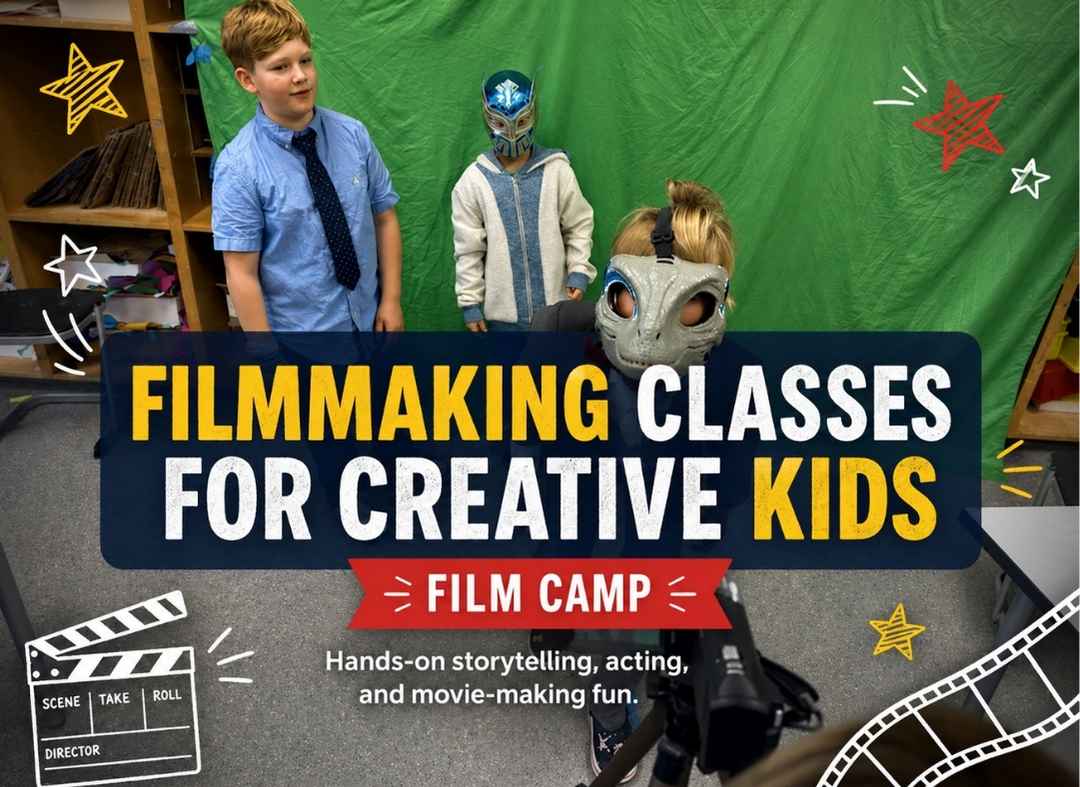
Discover why filmmaking classes help creative kids build confidence, teamwork, and storytelling skills through hands-on movie projects at Film Camp Los Angeles, where beginners learn by creating real short films.
Read >.jpg)
Weekend film classes in Los Angeles teach kids ages 8 to 14 filmmaking every Sunday in Glendale. Compare real costs, curriculum, safety, and what to ask before enrolling your child.
Read >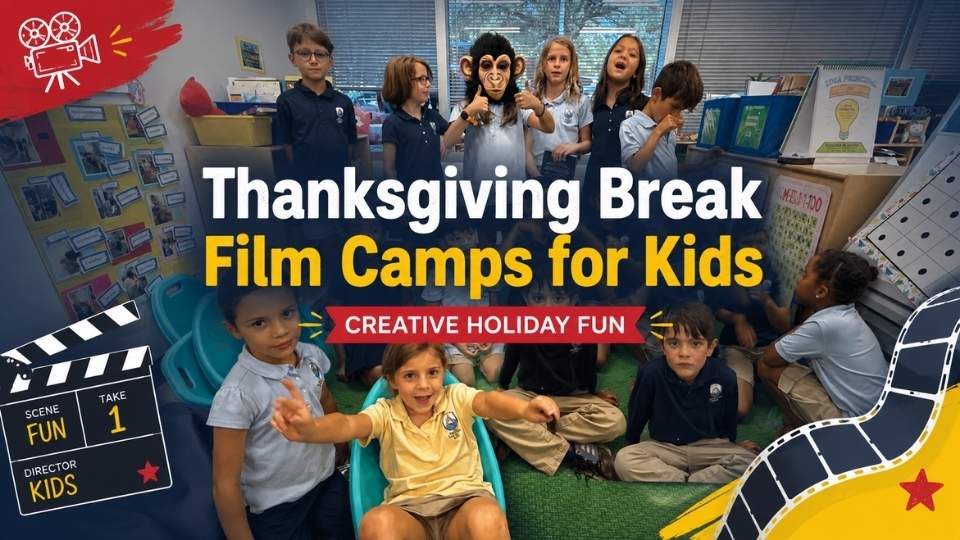
Thanksgiving break film camps fill the three school-free days in Austin, Los Angeles, and San Francisco. Kids ages 7 to 14 write, shoot, edit, and premiere their own short film.
Read >.jpg)
Discover how kids ages 7–14 learn screenwriting, acting, directing, camera work, editing, teamwork, and confidence at Los Angeles Film Camp in Glendale while creating and premiering their own short film.
Read >.png)