Spring break and summer camps offer different experiences: short, low-cost introductions versus longer, deeper skill-building and friendships. Choose based on your child’s readiness, interests, budget, and desired level of growth.

So here's the thing. Every parent hits this fork in the road.
Your kid comes home buzzing about camp. Maybe a friend went. Maybe they saw a TikTok. Now you're staring at two options and a calendar full of question marks.
Spring break camp or summer camp? Both sound fun. Both cost money. Both eat up time you could be using for other stuff.
But they are not the same thing. Not even close.
I've been around youth programs for years. I've watched kids walk into week-long spring sessions and walk out different people. I've also seen eight-week summer campers grow in ways that shock their own parents.
The trick is knowing which one fits your kid, your wallet, and your season of life. Let's get into it.
Spring break camps are short. Usually one week. Sometimes less.
They run during that weird March or April window when school shuts down. Kids are bouncing off walls. Parents still have to work. Camp fills the gap.
Think of it like a sample platter. You get a taste. You don't commit to the full meal.
Here's what spring break camps usually look like:
The vibe is light. Fast. Punchy. There's a Bengali saying, "ek diner atithi, shara bochorer golpo." One day's guest, a whole year's story. Spring break camps work like that. Short visit. Long memory.
Summer camps are the main event. The big show.
They run anywhere from one week to eight weeks. Some are day camps. Some are sleepaway. Some mix both.
Kids get deep into something. They build skills. They make real friends. They have time to mess up and try again.
Summer camps typically offer:
Summer is the season when camp stretches out. Kids can breathe. They can go from shy to loud. From unsure to confident.
One week versus eight weeks is not a small gap. It shapes the whole experience.
Spring break is a sprint. Summer is a marathon.
In five days, a kid can try something new. Pick up a basic skill. Meet a few faces. That's a real win, don't get me wrong.
But in six weeks? A kid can write, shoot, and edit a short film. They can learn to swim. They can build a robot from scratch.
Short camps spark interest. Long camps build mastery.
Which one does your kid need right now?
Let's talk money. Because nobody books anything without checking the price.
Spring break camp pricing usually lands between $200 and $600 for the week. Specialty camps like film or coding sit on the higher end.
Summer camp pricing is a wider spread. Day camps run $300 to $800 per week. Overnight camps can hit $1,500 to $2,500 per week. Multi-week summer programs stack up fast.
Quick math:
Many camps offer early bird discounts. Sibling discounts. Scholarships. Ask. Always ask.
Would you rather pay once in April or spread it across June, July, and August? That answer alone tells you which camp lane to pick.
This is where the two camp types really split.
Spring break camps teach the basics. Kids learn what a thing is. They try it. They decide if they like it.
Summer camps teach the craft. Kids go past the basics. They build stuff. They finish stuff. They walk away with actual proof.
At a film camp during spring break, your kid might learn how a camera works. They might shoot a quick scene.
At a summer film camp, they write a script, cast actors, direct, edit, and screen the final cut. That's a different animal.
Short camps = taste test. Long camps = full recipe.
Kids make friends at both. But the friendships hit different.
Spring break is quick. Five days. You meet cool people. You swap numbers maybe. You move on.
Summer stretches long enough for real bonds. Kids see each other every day. They fight. They make up. They inside-joke their way into something lasting.
I've seen summer camp friendships that outlast middle school. High school. Sometimes college.
Is that something your kid needs right now? Some kids crave that. Others are just fine with short hangs.
Most spring break camps are day camps. You drop off. You pick up. Kid sleeps at home.
Summer is where sleepaway camps really live. Kids go off for a week or more. They live in cabins. They eat in dining halls. They come back smelling like bug spray and campfire.
If your kid has never slept away from home, summer is the time to try it.
Spring break is too short for a real sleepaway arc. By the time they settle in, it's time to pack up.
Spring break hits in that in-between season. It could be chilly. Could be warm. Could rain for three days straight.
Most spring camps lean indoors. Art studios. Film sets. Gyms. Coding labs.
Summer is full sun. Pools. Hikes. Outdoor stages. Lakeside mornings.
Does your kid love being outside? Summer is the move. Does your kid light up in a studio or behind a camera? Spring break specialty camps work great too.
Parents ask this a lot. "Will camp help with school?"
Short answer: yes, but in different ways.
Spring break camps keep kids engaged during a break. They stop the slide. They keep the brain warm.
Summer camps do more. They build skills that show up on college apps. Film. Writing. Leadership. Problem-solving. Real portfolio pieces.
A kid who spends six weeks making films has something to show. Something to talk about. Something that sets them apart later.
Think of spring break as maintenance. Think of summer as upgrade.
Here's the honest part. Camp can be too much.
Some kids thrive on back-to-back weeks. Others need downtime. You know your kid.
Spring break camp is rarely a burnout risk. It's short. It ends fast.
Summer camp can go either way. Eight weeks straight of camp is a lot. Even for kids who love it.
A good plan:
Boredom is where creativity grows. Don't book every single week.
Let's make this simple.
Pick spring break camp if your kid:
Pick summer camp if your kid:
Some families do both. Spring break to sample. Summer to commit. That combo works beautifully for a lot of kids.
Quick detour worth taking.
Not every camp is a capture-the-flag situation. Creative camps, especially film camps, build something that lasts beyond the week.
Your kid walks out with a movie. A real one. Something they wrote, shot, and edited.
That's different from a craft project. That's a portfolio piece. A confidence boost. A thing they can show at dinner for years.
Spring break film camps work great as a first try. Kids learn the basics of camera work, storytelling, and editing in a few days.
Summer film camps let kids finish a full short film. Sometimes two. They work with other young filmmakers. They screen their work at the end. They leave with credits to their name.
At Film Camp in Austin, kids do exactly this. Both spring and summer sessions. Real equipment. Real mentors. Real films.
Not every kid is ready for the big summer plunge. Here's how you know they are.
If most of those are yes, summer is a green light.
If not, start with spring break. Build the muscle. Then try summer next year.
Sometimes spring break is just the right fit. Here's when.
There's no shame in starting small. In fact, it's often smarter.
A short win builds confidence. Confidence builds curiosity. Curiosity builds the kid who says yes to summer next year.
Quick checklist. Use it for both spring and summer.
If the camp can't answer those clearly, walk away. There are plenty of good ones out there.
Spring break camp packing:
Summer camp packing (day):
Summer sleepaway camp packing is its own beast. Camps usually send a full list. Follow it. Label everything.
I've seen these play out a hundred times.
Mistake 1: Picking by price alone. Cheapest isn't always best. Look at what's actually included.
Mistake 2: Overbooking the summer. Eight straight weeks of camp breaks kids. Leave space.
Mistake 3: Ignoring the kid's input. If they hate the theme, they won't engage. Involve them.
Mistake 4: Booking too late. Good camps fill up fast. Early bird rates are real savings.
Mistake 5: Not asking about refund policies. Life happens. Know the terms before you pay.
You knew this was coming.
There's no universal winner in spring break camps vs summer camps. There's only the right fit for your kid, your family, and your year.
Some kids need the short spark of a spring week. Others need the long burn of a summer arc.
The good news? You don't have to pick just one. Many families run both and stack the wins.
Start where your kid is. Not where the internet says they should be.
Look, camp is one of those things kids remember forever. Ask any adult about their favorite summer and watch what happens. Their face changes.
Spring break camps and summer camps both deliver that kind of memory. Just at different speeds and depths.
If you're stuck between the two, here's my honest take. Try spring break first if you're new to camp. Go summer if your kid is ready for more. Do both if you can swing it.
Either way, you're giving your kid a shot at something real. A skill. A friend. A story.
That's worth more than the price tag.
Ready to explore a camp that actually builds something? Film Camp runs both spring break and summer sessions in Austin, TX. Kids walk out with real films, real friends, and real confidence.
Call us at (323) 471-5941. Email hello@film.camp. Or stop by 5900 Balcones Drive, Suite 100, Austin, TX 78731.
Your kid's next favorite memory might be one phone call away.
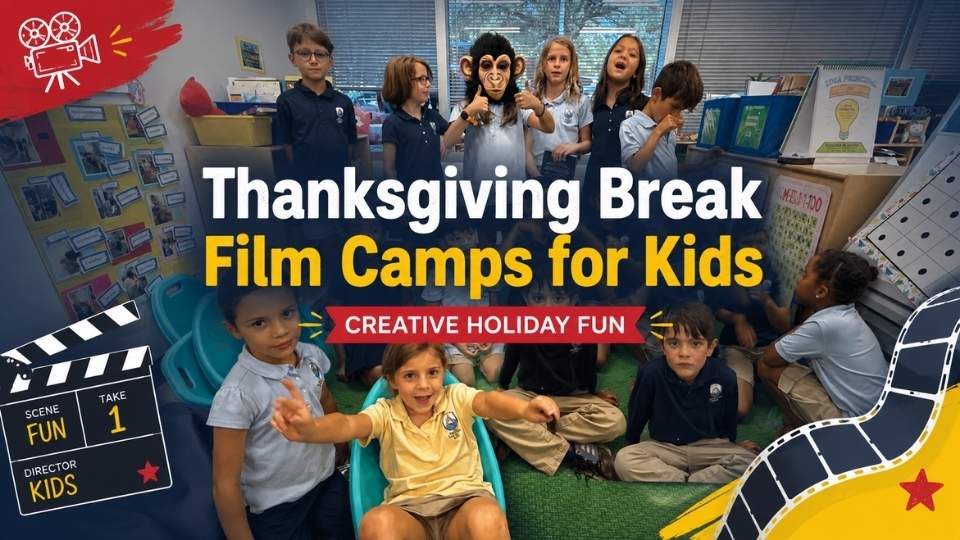
Thanksgiving break film camps fill the three school-free days in Austin, Los Angeles, and San Francisco. Kids ages 7 to 14 write, shoot, edit, and premiere their own short film.
Read >.jpg)
Discover how kids ages 7–14 learn screenwriting, acting, directing, camera work, editing, teamwork, and confidence at Los Angeles Film Camp in Glendale while creating and premiering their own short film.
Read >
Young filmmakers gain professional movie-making skills through hands-on projects, learning storytelling, directing, camera work, sound, editing, teamwork, safety, feedback, role rotation, and confidence while completing and premiering their own films.
Read >
Kids write, shoot, and edit their own short films in one week at Los Angeles Film Camp. Hands-on, safe, and no experience needed. See how it works, from first idea to premiere.
Read >.png)