This article explains how film camps accelerate social skill growth through teamwork, storytelling, and crew collaboration, helping kids develop communication, empathy, confidence, and lasting friendships in a supportive environment.

School has 30 kids, one teacher, and not much breathing space.
Sports have tryouts, rankings, and pressure to perform.
Home has comfort but not many chances to stretch.
So where does a kid actually learn how to connect with people? How to listen, collaborate, disagree kindly, and belong somewhere new?
Camp. The right kind of camp.
At Film Camp, social growth isn't a side effect. It's baked into everything. Every crew. Every project. Every conversation between takes.
As they say in Texas: "You can't warm yourself by a fire you haven't helped build." Community doesn't just happen. Kids learn to build it here. One scene at a time.
This post covers what people actually find when they search this topic. The research. The real outcomes. And why film-based camp builds social skills in a way most environments simply can't replicate.
Search "social skill growth in camp environments" and you'll find decent general content.
Studies on outdoor camps. Lists of communication tips. Articles about shy kids making friends.
What you almost never find is how a creative production environment specifically accelerates social development. How being on a film crew teaches kids to listen, lead, negotiate, and connect in ways a ropes course never quite does.
That's the gap this post fills. And it's exactly what Film Camp Austin does every summer.
Find us at 5900 Balcones Drive, Suite 100, Austin, TX 78731. Call (323) 471-5941 or email hello@film.camp anytime.
Camp strips away the usual social hierarchy.
No one cares who you sat with at lunch last year. No one knows your GPA. No one has a prebuilt opinion of you.
Kids get a clean slate. And clean slates are powerful.
In that fresh environment, kids form new patterns. They try out new versions of themselves. They connect with people they'd never have met in their regular life.
That social reset is one of the most underrated benefits of summer camp. It gives kids room to grow in ways their normal environment simply won't allow.
Communication on a film set is not optional. It's operational.
If the director doesn't explain the shot clearly, the camera operator gets the wrong angle. If the sound person doesn't flag a noise problem, the whole scene gets ruined in post.
Every link in the chain depends on the one before it.
Kids at Film Camp learn this fast. They learn to speak clearly. To ask when something's unclear. To update their team without being asked.
Think of a film crew like a relay race. Drop the baton once and everyone behind you pays for it. That shared stakes environment builds communication skills faster than almost anything else.
Most kids hear. Fewer actually listen.
Active listening means paying full attention. Noticing tone. Remembering what was said. Responding to what someone actually meant, not just what they said.
Film Camp builds this naturally. Kids have to listen to their director's vision. They have to hear feedback and apply it. They have to track conversations across a whole production day.
That kind of practice rewires listening habits. And kids who listen well? They connect better. They collaborate better. They lead better.
Listening is the social skill nobody talks about enough. Camp fixes that gap quietly and consistently.
To write a believable character, you have to understand them.
Even characters who don't think like you. Who come from different backgrounds. Who want different things.
That's perspective-taking. And it's one of the deepest social skills there is.
Kids at Film Camp practice it every time they develop a character. They ask: what does this person want? What are they afraid of? What would they say in this moment?
Those questions build empathy. Slowly. Quietly. Through creative work, not through a lesson about kindness.
Empathy built through storytelling tends to stick. It doesn't feel like homework.
Disagreements on set are guaranteed. Creative people have opinions.
"I think we should shoot it this way." "No, that angle doesn't work." "Can we try something different?"
These conversations happen constantly at Film Camp. And that's intentional.
Kids learn to voice disagreement without shutting people down. They learn to compromise without losing their creative vision. They learn that conflict, handled well, usually produces a better outcome than silence.
Conflict resolution is a social superpower. Kids who learn it early carry it into friendships, classrooms, and eventually careers.
Here's how most friendships form at Film Camp.
Two kids are trying to solve the same problem. How do we make this scene work? Where should we put the camera? Who's going to play this character?
They figure it out together. And in that shared effort, something clicks.
It's not forced. It's not organized. It just happens because they're working toward the same goal.
Shared purpose is the fastest friendship accelerator there is. Camp creates that shared purpose every single day.
Shy kids often need a side door into social situations.
They don't want to walk into a room and introduce themselves to strangers. That's too much, too fast.
But give them a camera? Give them a task? Give them a role on a crew?
Now they have a reason to interact. A job that requires talking. A contribution that matters.
Film Camp is full of side doors. Behind-the-scenes roles. Technical jobs. Creative positions that let quiet kids show up in ways that feel safe and natural.
By the end of the session, those same quiet kids are often the most engaged people on set.
Social confidence doesn't need a grand entrance. Sometimes it just needs the right task.
Belonging is not a small thing. It's foundational.
Kids who feel like they belong somewhere show up differently. They take more risks. They speak up more. They contribute without fear.
Film Camp works hard to build that culture from day one. Every kid is welcomed as a real creative contributor. Every voice matters to the project.
That experience of belonging changes how kids see themselves in social situations outside of camp too. They carry that feeling home. Into school. Into friendships.
A kid who knows they belong somewhere becomes a kid who can belong anywhere.
Most kids are never taught how to give honest, kind feedback.
And most are never taught how to receive it without falling apart.
Film Camp builds both skills through structured peer review. After every project, kids watch each other's work and respond to it. Not vaguely. Specifically.
"The opening scene was confusing." "I loved that camera angle in the third shot." "I think the ending could be stronger."
Learning to say hard things kindly. Learning to hear hard things calmly. That's one of the most important social skills in adult life. Camp starts building it early.
A lot of communication doesn't use words at all.
Body language. Eye contact. Tone. Energy in the room.
Kids on a film set learn to read all of these. They notice when a crew member is frustrated. They sense when energy is low and someone needs encouragement. They pick up on tension before it becomes a problem.
This is social intelligence. The ability to read a room and respond to what you find there.
Most schools never teach this. Film camp develops it through real-world crew dynamics every single day.
Every film crew at Film Camp is different. Different backgrounds. Different ideas. Different ways of seeing the world.
That diversity isn't a challenge to manage. It's a creative asset.
Kids learn to work with people who don't think like them. They learn that different perspectives make the final product stronger. They learn that their way isn't the only way.
That lesson in social awareness and respect is one they'll use forever. In college. In workplaces. In every relationship they ever have.
Camp isn't a bubble. The growth doesn't stay there.
Parents report it almost immediately. Their child comes home and listens better at dinner. They resolve sibling conflicts differently. They speak up more clearly when something bothers them.
Teachers see it too. Better group project behavior. More confident presentations. Stronger classroom communication.
This transfer happens because the skills built at camp are real. They were practiced in genuine situations. With genuine stakes.
Real practice creates real change. Film Camp gives kids hundreds of genuine social reps across a single summer.
There's something specific about the film camp environment that most other camps can't replicate.
Every kid on a crew depends on every other kid. That interdependence creates authentic social bonds fast.
It's not forced friendship-building exercises. It's not a trust fall. It's two kids staying late to fix the sound on a scene they both care about. That shared investment builds something real.
Add Austin's creative, collaborative culture and you've got a social environment unlike anything else. A city and a camp that both believe people do their best work together.
Come experience it at 5900 Balcones Drive, Suite 100, Austin, TX 78731. Call us at (323) 471-5941 or email hello@film.camp and let's talk.
Social skills don't grow in isolation.
They grow through friction. Through shared work. Through moments of discomfort followed by moments of connection.
Camp is one of the few places that creates all of those conditions at once. In a safe space. With good people. Around a shared purpose.
At Film Camp, that purpose is making something real. And in the process of making it, kids make something else too.
They make friendships. They make confidence. They make a version of themselves that's a little more ready for the world.
So here's the question worth asking: where is your child going to practice being human this summer?
We'd love for the answer to be Film Camp. Call (323) 471-5941, email hello@film.camp, or visit us at 5900 Balcones Drive, Suite 100, Austin, TX 78731. Let's talk about your kid.
Q1: How does summer camp help kids develop social skills? Camp puts kids in new environments with new people and shared goals. That combination creates natural pressure to communicate, collaborate, and connect. Social skills grow fast when the stakes are real.
Q2: What specific social skills do kids build at film camp? Communication, active listening, empathy, conflict resolution, feedback skills, nonverbal awareness, and inclusion. Film camp builds all of these through real production work, not theory.
Q3: Is film camp good for kids who struggle socially? It's especially good for them. Film roles give kids a structured reason to interact. That removes the pressure of pure social situations and lets quieter kids connect through shared work instead.
Q4: How does working on a film crew teach teamwork? Every crew member's role depends on every other role. When kids see their work directly affecting others, they naturally become more attentive, communicative, and cooperative.
Q5: Can summer camp help a child who has difficulty making friends? Yes. Camp creates shared goals that accelerate bonding. Kids who struggle with cold introductions often thrive when they have a task to bond over. Film camp is built around that model.
Q6: How does Film Camp Austin handle conflict between campers? Conflict is treated as a learning opportunity. Counselors guide kids through resolution conversations. The film crew structure also gives conflict a natural context: what's best for the project?
Q7: Do the social benefits of camp last after summer ends? They do. Because the skills are practiced in real situations, they transfer naturally. Parents and teachers consistently notice improved communication and social confidence in the school year that follows.
Q8: What age is best for social development at film camp? Most kids benefit strongly between ages 8 and 16. Contact Film Camp directly at (323) 471-5941 for specific information about age groups and session structures.
Q9: How does film camp build empathy in children? Through character development work. Kids write and portray characters who think and feel differently from themselves. That creative exercise builds genuine perspective-taking and empathy over time.
Q10: How do I enroll my child in Film Camp Austin? Reach out anytime. Call (323) 471-5941, email hello@film.camp, or visit us at 5900 Balcones Drive, Suite 100, Austin, TX 78731. We'll walk you through everything and make it simple.
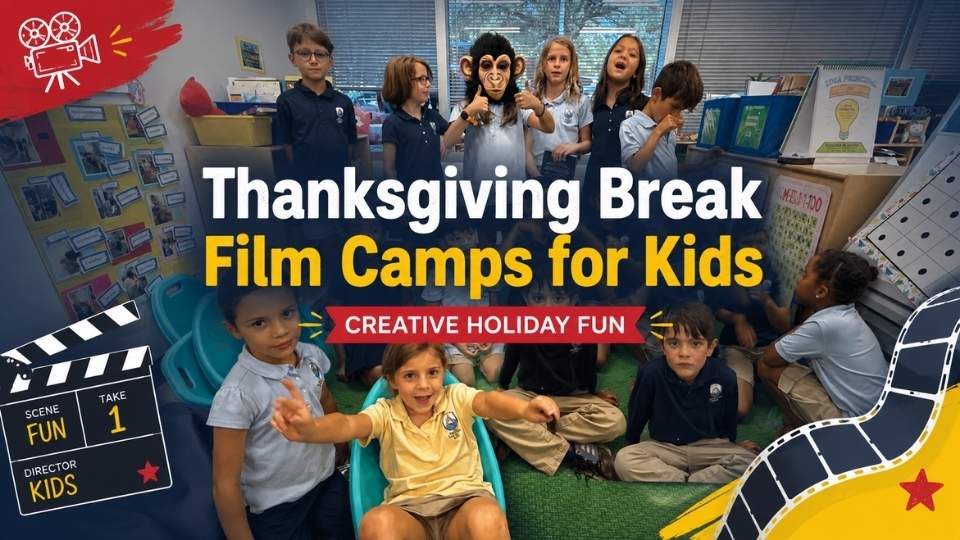
Thanksgiving break film camps fill the three school-free days in Austin, Los Angeles, and San Francisco. Kids ages 7 to 14 write, shoot, edit, and premiere their own short film.
Read >.jpg)
Discover how kids ages 7–14 learn screenwriting, acting, directing, camera work, editing, teamwork, and confidence at Los Angeles Film Camp in Glendale while creating and premiering their own short film.
Read >
Young filmmakers gain professional movie-making skills through hands-on projects, learning storytelling, directing, camera work, sound, editing, teamwork, safety, feedback, role rotation, and confidence while completing and premiering their own films.
Read >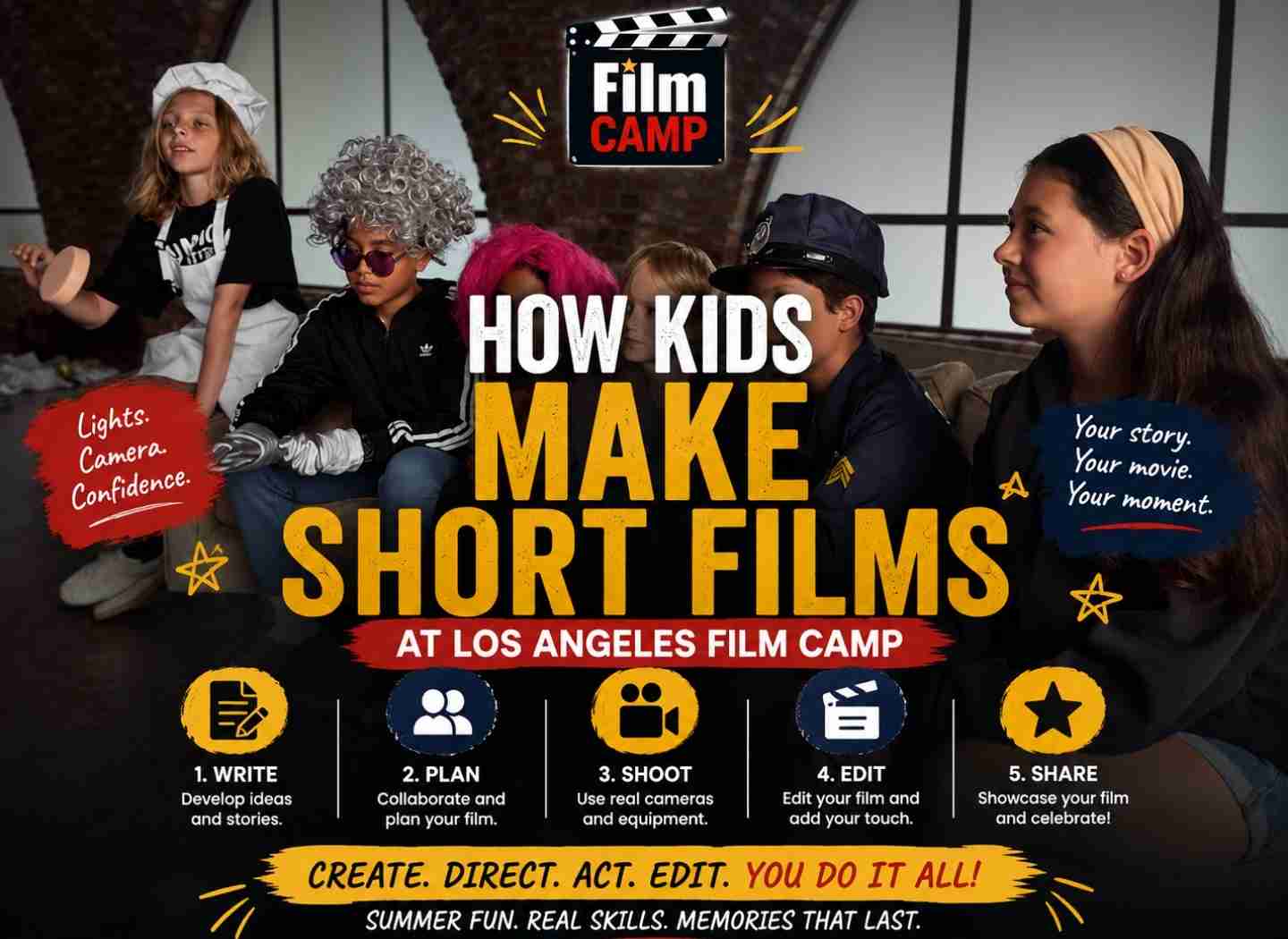
Kids write, shoot, and edit their own short films in one week at Los Angeles Film Camp. Hands-on, safe, and no experience needed. See how it works, from first idea to premiere.
Read >.png)