Film Camp Austin helps kids grow creativity through filmmaking, storytelling, collaboration, and hands-on projects that build confidence, imagination, and problem-solving skills in a fun summer camp environment.
Most parents think creativity is something you either have or you don't.
That's not how it works.
Creativity is more like a garden. It needs the right soil. Regular water. Room to grow wild. And someone willing to leave it alone long enough to see what comes up.
Summer camp is that soil. Specifically, the right kind of camp. One that doesn't just hand kids a coloring sheet and call it "art time."
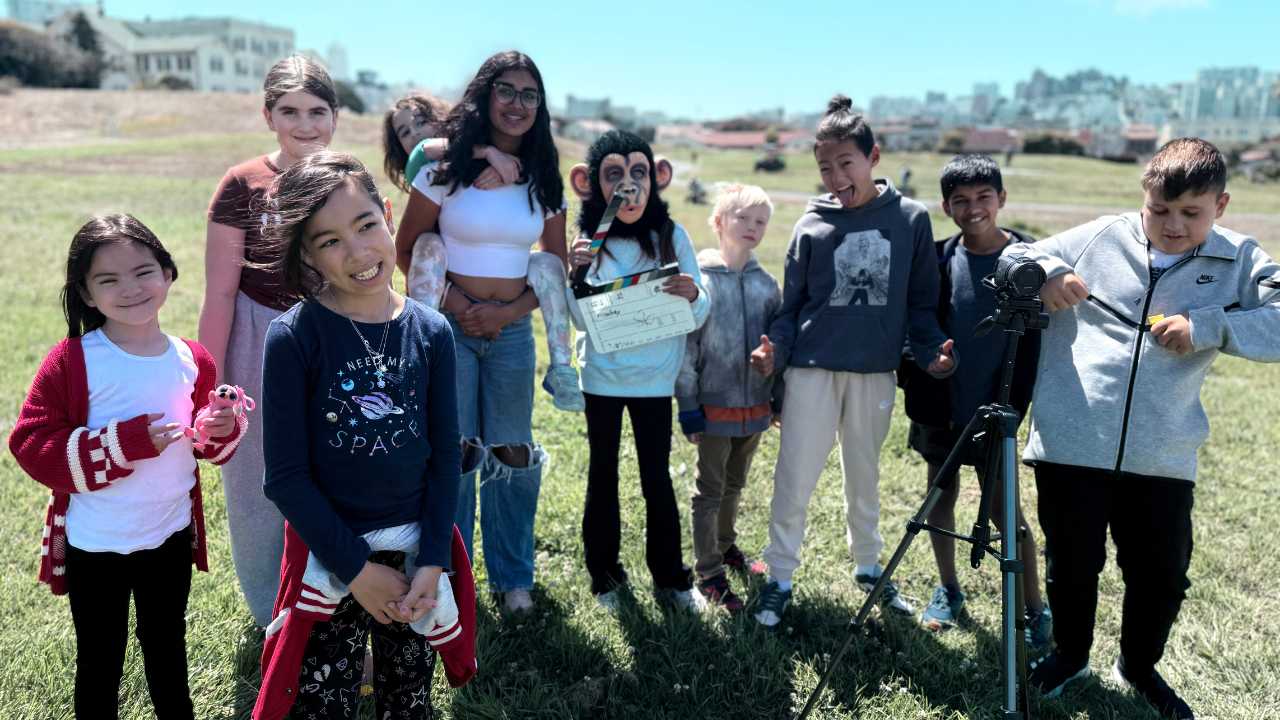
At Film Camp, creativity isn't an add-on. It's the whole point. Every activity, every challenge, every project is designed to stretch how kids think. Not just what they make.
As they say in Texas: "Don't dig up in doubt what you planted in faith." We plant creative seeds here. Then we watch kids tend them all summer long.
This post covers everything you'd find when searching this topic. The research, the methods, the real outcomes. And why film-based camp might be the most powerful creativity-builder your child hasn't experienced yet.
When someone searches "creativity development through camp activities," they usually find a few types of content.
General lists of camp activities. Academic pieces on child development. Articles about arts and crafts programs.
What they rarely find is a deep look at film-specific creativity. How making movies builds imagination differently than painting rocks or building a birdhouse.
That gap is exactly where Film Camp Austin lives. We're at 5900 Balcones Drive, Suite 100, Austin, TX 78731. Reach us at (323) 471-5941 or email hello@film.camp anytime.
A ropes course is great. Swimming is healthy. Campfire songs are fun.
But none of those things teach a kid to think differently.
Creativity development requires more than activity. It requires open-ended problems. Real choices. The freedom to fail and try again.
Most traditional camps are structured for safety and fun. That's not a bad thing. But it leaves a gap. Kids come home tired and happy. Not necessarily changed.
Film camp closes that gap. Every day.
Film is the most complete creative medium there is.
It combines story, image, sound, performance, and design. All at once. All working together.
When a kid makes a film, they're not using one part of their brain. They're using all of it. Story brain. Visual brain. Problem-solving brain. Emotional brain.
Think of filmmaking like a full-body workout for creativity. You can't get that same stretch from any single art form alone.
That's what makes film-based summer camp so uniquely powerful.
Every film starts the same way. A blank page. A question. "What do I want to say?"
That's not a small thing. That's the hardest creative question there is.
Kids at Film Camp practice answering it every single day. They build story ideas from scratch. They develop characters with real motivations. They shape scenes with beginnings, middles, and ends.
Storytelling isn't just a film skill. It's how humans make sense of the world. Kids who learn to tell stories learn to organize their thinking. That skill follows them everywhere.
Point a camera at something and suddenly you're making choices.
Where do I stand? What do I include in the frame? What do I leave out? How does the light fall?
These are creative decisions. Real ones. With real impact on the final product.
Kids at Film Camp learn to see the world differently through a lens. They start noticing light in parking lots. They frame their bedroom like a shot. The camera rewires how they look at everything.
That visual creativity bleeds into art, design, architecture, fashion, and more. It starts here.
Creativity is often pictured as a solo thing. One person alone with a notebook and a big idea.
Real creativity is messier. And usually better when it's shared.
Film crew work is collaborative by nature. Kids pitch ideas to each other. They argue about storylines. They combine two bad ideas into one great one.
That back-and-forth is where creative magic actually lives. It's not one spark. It's friction between sparks.
Learning to create with others is a skill most schools never teach. Film camp does it every day.
Plans fall apart on film sets. Always. Even on Hollywood productions.
The actor forgets lines. The lighting doesn't cooperate. The script doesn't work once you're actually shooting it.
What happens next is the real lesson. Do you freeze? Or do you adapt?
Kids at Film Camp learn to treat problems as creative prompts. Not roadblocks. Something went wrong? Great. Now make something better.
That problem-solving creativity is one of the most valuable things a child can build. And camp is the perfect place to practice it safely.
Not every moment at Film Camp is guided. That's intentional.
Unstructured time lets kids drift. Explore. Wonder. Follow random threads without knowing where they lead.
Research backs this up. Kids need boredom to generate original ideas. When every minute is scheduled, imagination has no room to move.
Unstructured time is not wasted time. It's where originality is born. Camp understands this in a way that the school year rarely can.
There's a difference between doing creative things and calling yourself a creative person.
Most kids don't make that leap on their own. They need proof.
A finished film is proof. Something they wrote. Shot. Edited. Screened.
When a kid watches their own work on a real screen with people watching, something shifts. They stop saying "I'm not creative." They stop waiting for permission to make things.
That creative identity is one of the best long-term gifts camp can give a child. It doesn't fade when summer ends.
Some of the best films come from made-up worlds. New rules. New characters. New logic.
World-building is one of the richest creative exercises there is. Kids love it because there's no ceiling on it.
At Film Camp, kids create fictional settings, invent characters with full backstories, and build rules for worlds that don't exist yet.
This kind of imagination work strengthens abstract thinking. It builds cognitive flexibility. It teaches kids to hold complex ideas in their heads and play with them.
That's not just creativity. That's advanced thinking dressed up as fun.
The best films make you feel something. That's the whole job.
Teaching kids to create emotional experiences for an audience is a profound skill. It requires empathy. Observation. The ability to translate a feeling into an image or a line of dialogue.
Emotional creativity is different from technical creativity. It asks: how do I move someone? How do I make them care?
Kids who practice this become better communicators. Better listeners. Better friends.
Empathy and creativity aren't separate things at Film Camp. They grow together.
Here's a truth most camps don't want to say out loud.
Safe creativity is boring creativity. The most memorable films, books, and art come from someone willing to try something weird. Something risky. Something that might not work.
At Film Camp, we encourage creative risk. We celebrate the strange idea. We give space for the unexpected.
Not every risk pays off. Some projects crash and burn. That's fine. What matters is that kids learn that taking creative risks is worth it more often than not.
You can't play it safe and make something great. Not really.
Creating in a vacuum feels good. Sharing your work is scary.
But sharing is where growth happens. Every time.
Film Camp builds structured feedback into every project. Peers watch each other's work. They give specific, kind, and honest responses.
Kids learn to hear criticism without taking it personally. They learn to separate their worth from their work. That distinction is huge for long-term creative development.
Feedback loops turn good creators into great ones. And they turn fragile creators into resilient ones.
Parents sometimes wonder if camp effects last. Fair question.
The creative habits built at Film Camp don't just live in summer. They travel.
Kids come home and keep making things. Short videos on their phones. Scripts in their notebooks. Storyboards on sticky notes. They don't need a prompt anymore. They've become people who make things.
That shift from consumer to creator is one of the most lasting outcomes of film-based camp. And it compounds over time.
Austin runs on creativity. Music. Film. Tech. Art. It's baked into the culture here.
The city doesn't treat creativity like a hobby. It treats it like a way of life.
Film Camp sits right in the middle of that energy at 5900 Balcones Drive, Suite 100, Austin, TX 78731.
Kids here aren't in a bubble. They're in a city that celebrates makers, thinkers, and storytellers. That environment matters. Creativity is contagious. And Austin has it in the water.
Here's the thing most parents don't realize. Their child isn't lacking creativity.
They're lacking the right environment to let it out.
Film Camp is that environment. It's not about turning every kid into a filmmaker. It's about showing every kid that they have something original to say. And that the world is better when they say it.
So what story does your child want to tell? That's not a throwaway question. It might be the most important question they answer all summer.
Reach out to Film Camp today. Call (323) 471-5941. Email hello@film.camp. Or come see us at 5900 Balcones Drive, Suite 100, Austin, TX 78731. We'd love to meet them.
Q1: How does summer camp help develop creativity in children?
Camp creates space for open-ended challenges, real choices, and safe failure. Those three things together are the fastest path to creative growth in kids.
Q2: What camp activities are best for developing creative thinking?
Filmmaking, storytelling, scriptwriting, and collaborative projects are among the strongest creativity builders. They combine imagination, problem-solving, and expression all at once.
Q3: Is film camp good for kids who don't think of themselves as creative?
It's especially good for those kids. Film camp shows them that creativity isn't a personality trait. It's something you practice. Most "non-creative" kids surprise themselves completely.
Q4: How does filmmaking specifically develop creativity in young people?
Film combines story, visuals, sound, and performance. Working across all those areas at once forces creative thinking in ways that single-discipline activities simply can't match.
Q5: At what age should kids start creative development camps?
Many programs work well starting around age 8. Film Camp Austin serves a range of ages. Contact us at (323) 471-5941 for specific age group information.
Q6: What is the difference between creative camps and regular summer camps?
Regular camps often focus on physical activity and social skills. Creative camps build original thinking, expression, and imagination. The best camps do both, but film camp leans heavily into creative output.
Q7: Can creative summer camp activities improve school performance?
Yes. Creative thinking, storytelling, and visual communication skills transfer directly to writing, presentations, and problem-solving in academic settings.
Q8: How does peer collaboration at camp boost creative development?
Working with others forces kids to articulate their ideas, consider different perspectives, and combine concepts. That process almost always produces stronger creative work than solo efforts.
Q9: Does Film Camp Austin provide materials and equipment for kids?
Yes. Kids don't need to bring any gear or prior experience. Film Camp provides everything needed to make real, finished films from day one.
Q10: How do I enroll my child in Film Camp Austin?
It's easy. Call us at (323) 471-5941, email hello@film.camp, or visit us at 5900 Balcones Drive, Suite 100, Austin, TX 78731. We'll walk you through the enrollment process step by step.
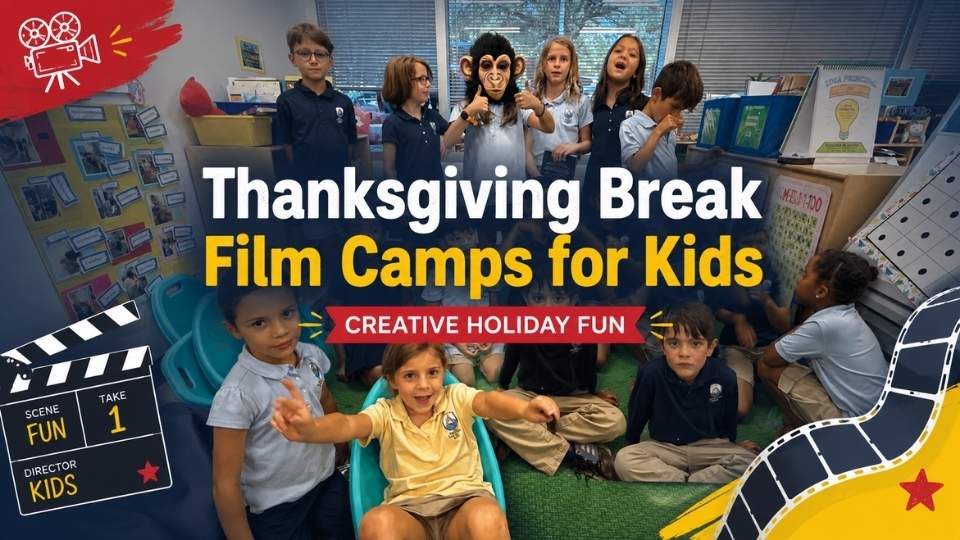
Thanksgiving break film camps fill the three school-free days in Austin, Los Angeles, and San Francisco. Kids ages 7 to 14 write, shoot, edit, and premiere their own short film.
Read >.jpg)
Discover how kids ages 7–14 learn screenwriting, acting, directing, camera work, editing, teamwork, and confidence at Los Angeles Film Camp in Glendale while creating and premiering their own short film.
Read >
Young filmmakers gain professional movie-making skills through hands-on projects, learning storytelling, directing, camera work, sound, editing, teamwork, safety, feedback, role rotation, and confidence while completing and premiering their own films.
Read >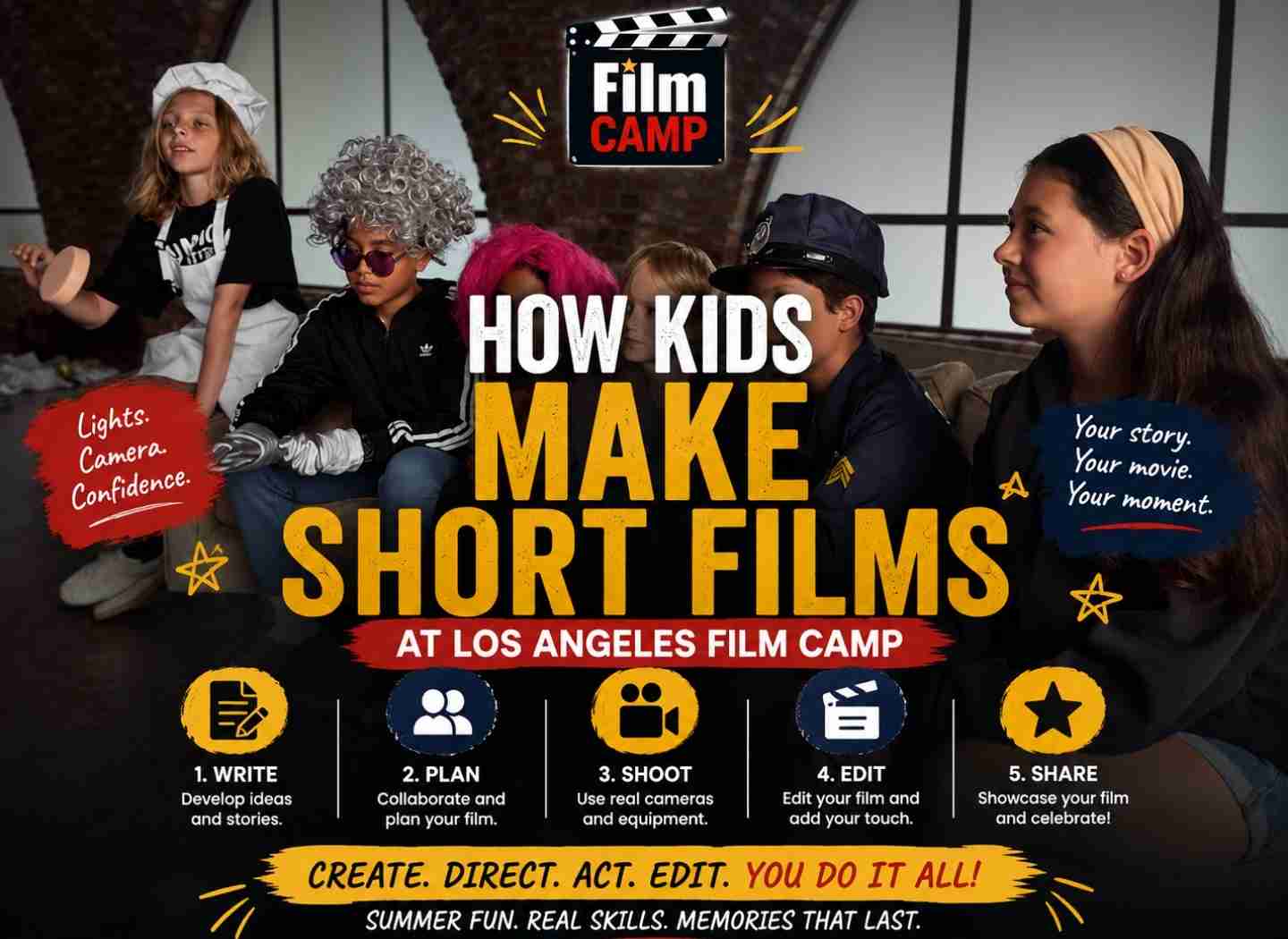
Kids write, shoot, and edit their own short films in one week at Los Angeles Film Camp. Hands-on, safe, and no experience needed. See how it works, from first idea to premiere.
Read >.png)