Affordable summer camps don't have to break the bank. From YMCA programs to creative arts camps, smart strategies like early registration, sibling discounts, and financial aid can make quality camp accessible for every family.

Summer's coming. Your kids are buzzing. And your wallet? It's nervously hiding in the back pocket.
Finding an affordable summer camp shouldn't feel like a part-time job. But for budget-conscious parents, the search for cheap summer camps often turns into a frustrating loop of sticker shock and dead ends.
Here's what nobody tells you. The best summer camp experiences don't always cost the most. Some of the most enriching, skill-building, memory-making programs out there are more budget-friendly than you'd think. You just need to know where to look and what to ask.
This guide breaks it all down. Real savings tips. Real options. Real talk about summer camp costs and what you actually get for your money.
Let's get into it.
Summer camp tuition has gone up. A lot. Between rising facility costs, staffing, insurance, and materials, the price tag on summer programs keeps growing every year.
The average cost of a day camp in the US lands somewhere between $200 and $600 per week. Overnight camps? That jumps to $900 or more. Specialty camps can cost even more than that.
But here's the thing. Camp is not a luxury. It's a developmental investment.
Kids who attend summer camps build confidence, social skills, and independence. They try new things in a safe environment. They come home different. Better.
So the question isn't whether camp is worth it. The question is how do you afford a camp that actually delivers?
That's where smart parents get creative. And no, it doesn't mean settling for the cheapest option in town.
Let's clear something up. "Affordable" doesn't mean "cheap." An affordable summer camp is one where the value matches the price. Where every dollar goes toward your kid's growth, not toward flashy marketing.
Here's what to look for when evaluating summer camp value:
Small group sizes. Fewer kids per instructor means more attention. More attention means more learning. That's your money working harder.
Hands-on activities. Camps that keep kids engaged with real projects and creative work give them skills they carry home. Not just a sunburn and a lanyard.
Experienced staff. Industry professionals teaching your kids? That's a bargain at almost any price. Look for camps where instructors bring real-world experience to the table.
Tangible outcomes. Your child should come home with something to show. A project. A film. A performance. Something real.
At Film Camp in Austin, TX, kids ages 7 to 14 spend five full days writing, directing, filming, and editing their own short movies. Sessions start at $350 for a four-day week, with most five-day sessions at $450 to $500. That's a full production experience for the price of a basic day camp.
That's value. That's affordable summer camp done right.
Not every family needs the same kind of camp. And not every camp fits every budget. Here's a look at the most budget-friendly summer camp categories worth exploring.
Community Recreation Camps
Local parks and rec departments run some of the most affordable summer programs around. Costs are usually low because they're subsidized by your city or county taxes. Activities range from sports to crafts to field trips.
These work great for younger kids who just need a fun, safe place during summer break.
Church and Faith-Based Camps
Religious organizations often run summer day camps and overnight camps at reduced rates. Many include scholarships and sliding-scale tuition. Even if you're not a member, some programs welcome community families.
YMCA and Boys & Girls Club Camps
The YMCA runs affordable summer day camp programs in cities across the country. Financial assistance and payment plans are almost always available. These are some of the best low-cost summer camps with strong reputations for quality.
Specialty and Creative Arts Camps
Here's where people assume the cost jumps way up. But that's not always true.
Specialty camps like filmmaking camps, coding camps, art camps, and music camps often offer more focused value per dollar. Your kid walks away with a real skill. Not just a week of generic activities.
Film Camp, based in Austin with locations in Los Angeles and San Francisco, is a creative filmmaking camp for kids. No experience needed. Kids learn screenwriting, directing, camera operation, acting, set design, and editing. All in five days.
The cost? Starting at $350 per session. Payment plans are available too.
As the old saying goes, "A penny saved is a penny earned." But a penny spent on something your kid actually loves? That's an investment you'll never regret.
Academic and STEM Camps
Universities and science centers run summer STEM programs at various price points. Some are free. Others charge a fee but include financial aid. These camps teach coding, robotics, engineering, and more.
Sports Camps
Local sports leagues and recreation centers offer skill-based camps at lower prices than private sports academies. Check with your school district too. Many run sports camps during summer months.
Finding affordable summer camps near me is one of the most searched phrases every spring. And for good reason. Camp options vary wildly by location, so the hunt is personal.
Here's how to narrow it down fast.
Start local. Check your city's parks and recreation website. Almost every municipality publishes a summer camp guide. These programs are usually the cheapest options available.
Search school district resources. Many public school systems offer summer enrichment programs. Some are free. Others charge a small fee. They're often well-run and conveniently located.
Use camp directories. Sites like the American Camp Association directory let you filter by price, type, and location. It's a great starting point for comparing options side by side.
Ask other parents. Seriously. The best camp recommendations still come from word of mouth. Ask in local parent groups, on social media, or at school pickup. Parents love sharing camp wins.
Check nonprofit organizations. Groups like the Salvation Army, local arts councils, and cultural centers run summer programs that fly under the radar. Many are funded by grants, which keeps tuition low.
Look at churches and temples. Even if you're not a member, many faith-based camps welcome families from the broader community.
Don't overlook specialty camps. You might assume a filmmaking camp or coding camp is expensive. But many creative camps offer competitive pricing because they focus on delivering value, not frills.
Film Camp's Austin location runs multiple summer sessions at various schools across the city. Spots fill fast, but reserving a spot with just a $50 deposit locks in the price. That kind of flexibility helps parents who need to budget ahead.
You've found a camp your kid loves. Now let's talk about making it fit the family budget.
Early bird discounts. Many summer camps offer reduced rates for families who register early. Some camps knock off $50 to $100 for early sign-ups. Set a calendar reminder in January.
Sibling discounts. Sending more than one kid? Ask about multi-child pricing. Lots of camps give 10% to 20% off for siblings.
Payment plans. Not every family can pay camp tuition in one shot. Look for camps that offer installment payments. Film Camp, for example, lets parents reserve a spot with just $50 and spread the rest over time.
Dependent care FSA. If your employer offers a Flexible Spending Account for dependent care, summer camp may qualify. That's pre-tax dollars going toward camp tuition. It's like a built-in discount.
Tax credits. The Child and Dependent Care Tax Credit can help offset summer camp costs. Day camps typically qualify. Keep your receipts and check with a tax pro.
Scholarships and camperships. Many camps offer financial aid. You just have to ask. Some call them "camperships." Others have quiet funds set aside for families that need help. Don't be embarrassed to ask. Camp directors want kids there. Period.
Negotiate. This sounds wild, but some smaller camps will work with you on pricing. Especially if you're enrolling multiple kids or signing up for multiple weeks. It never hurts to ask.
Employer benefits. Some companies offer summer camp subsidies or childcare support as an employee benefit. Check with your HR department.
Why do so many parents skip these steps? Usually because nobody told them these options exist. Now you know.
Before you hand over your credit card, ask these questions. They'll save you money and headaches.
What's included in the tuition? Some camps charge extra for materials, snacks, field trips, or extended care. Get the full picture before you commit.
What's the refund policy? Life happens. Make sure you understand the cancellation and refund terms before paying.
What's the staff-to-camper ratio? A lower ratio usually means better quality. A ratio of 1 to 6 or 1 to 8 is solid for most day camps.
What does a typical day look like? Ask for a schedule. You want your child engaged and active, not sitting around watching a screen.
Do you offer financial aid or payment plans? Ask this up front. Good camps will answer honestly and without judgment.
What do kids come home with? This matters more than people think. A camp where kids produce real work builds real confidence.
At Film Camp, kids come home with a finished short film they helped write, direct, and star in. That's not just a summer memory. That's a portfolio piece. A confidence builder. A story they own.
Here's a hot take most camp guides won't give you.
Creative camps often deliver more developmental value per dollar than traditional recreation camps. Why? Because creation requires collaboration, problem-solving, and real-world skills.
Think about what goes into making a short film. You need a story. That's writing. You need a plan. That's project management. You need a crew. That's teamwork and communication. You need to shoot. That's technical skill. You need to edit. That's patience and critical thinking.
A kid who goes through that process in five days has exercised more brain muscles than a month of free play.
Does that mean traditional camps are bad? Of course not. But if you're comparing cost to outcome, creative summer camps punch way above their weight.
Film Camp is a prime example. At $450 per week for most sessions, your child learns screenwriting, directing, camera operation, acting for film, set and costume design, and editing. That's six disciplines in one camp. Led by professional filmmakers. Not volunteers reading from a manual.
Is there any other camp type that packs that much skill-building into a single week? We'd love to hear about it.
Let's be honest. Some families need options that cost little to nothing. No shame in that. Here are real alternatives that still give your kids a great summer.
Public library programs. Libraries run free summer activities, reading clubs, and workshops. They're underrated and awesome.
Community center programs. Local community centers often host free or low-cost summer activities. Check your neighborhood center's schedule in May.
Volunteer-based camps. Some nonprofits run entirely volunteer-staffed camps. These keep costs near zero while still offering structured, fun programming.
University and museum camps. Check local universities and museums. Many offer discounted or free summer programs for kids in the community.
Homemade camp co-ops. This one's creative. Some parents team up and rotate hosting "camp days" at each other's homes. Each parent leads a different activity based on their skills. It's free and builds community.
City-sponsored camps. Many cities offer free summer camp spots for families who qualify based on income. Check your local government website.
Corporate-sponsored programs. Companies sometimes fund free summer camps for local kids. These pop up in larger metro areas. Google "[your city] free summer camps" and see what comes up.
Even if you can't afford a full camp week, mixing a few days of structured camp with free community activities gives your kid a full, fun summer without breaking the budget.
Your kid is not every kid. And the right camp for them might not be the right camp for the neighbor's kid.
Here's how to match your child to a camp they'll actually love.
Follow their interest. If your kid loves movies, a filmmaking camp makes way more sense than a generic sports camp. If they love bugs, find a nature camp. Interest drives engagement. Engagement drives growth.
Consider their personality. Shy kids might thrive in a smaller, project-based camp where they can express themselves through creative work. Outgoing kids might love a big, energetic sports camp.
Check age ranges. A camp that mixes 5-year-olds with 14-year-olds is going to struggle to serve both well. Look for programs that group kids by age or skill level.
Film Camp groups campers by age and experience level. Kids ages 7 to 10 focus on creativity and teamwork. Kids ages 11 to 14 dive into more technical filmmaking. That separation matters.
Read reviews from other parents. Real reviews tell you what the brochure won't. Look for comments about how kids felt, what they learned, and whether they asked to go back.
Visit if you can. Nothing beats seeing a camp in action. If an open house or trial day is available, take it.
Planning early saves money and stress. Here's a quick timeline to follow.
January to February. Start researching camps. Make a short list. Look at pricing and payment options.
March. Register for early bird pricing. Apply for financial aid or scholarships where available.
April. Confirm enrollment. Set up payment plans. Check employer benefits for dependent care.
May. Prep your child. Talk about what to expect. Shop for any supplies needed.
June to August. Camp time. Enjoy the peace of mind that comes from smart planning.
After camp. Save receipts for tax purposes. Ask your child what they liked most. Start thinking about next summer.
This isn't rocket science. But having a plan makes the difference between a scrambled, stressful summer and a smooth one.
Here's something budget-conscious families don't always consider. There's a cost to not doing camp, too.
The "summer slide" is real. Kids who don't engage in structured learning over the summer can lose months of academic progress. They come back to school behind. Catching up takes time and energy.
Beyond academics, there's the social piece. Camp builds friendships, teaches conflict resolution, and grows independence. Kids who miss out on those experiences have fewer tools when school starts again.
And then there's the practical side. If you're a working parent, summer childcare costs something. Whether it's a babysitter, a relative's time, or your own missed work hours. A structured camp that costs $350 to $500 for a week might actually be cheaper than piecing together daily childcare.
The cheapest option isn't always the most cost-effective one. Sometimes spending a little more on the right camp saves you money, time, and stress in the long run.
We built Film Camp with families in mind. Here's how we keep summer filmmaking education accessible.
Competitive pricing. Sessions start at $350 for a four-day camp week and $450 to $500 for five-day sessions. That's on par with basic day camps, but with a specialty experience.
$50 deposit to reserve. You don't have to pay everything up front. Lock in your spot early and spread the payments.
Payment plans available. We get it. Summer budgets are tight. Contact us and we'll work out a plan that fits.
Professional instruction included. No extra fees for "premium" teaching. Every session is led by experienced filmmakers who work with kids every day.
All equipment provided. Cameras, microphones, lighting gear, editing workstations. Your kid doesn't need to bring anything except their ideas.
Multiple locations and dates. We run camps at various schools across Austin, giving families flexible scheduling options.
No experience required. Beginners and experienced young filmmakers both get value from the program. Our curriculum meets every kid where they are.
What other camp gives your child hands-on experience in screenwriting, directing, camera work, acting, set design, and video editing for under $500 a week?
Film Camp runs summer sessions throughout June and July across Austin, TX. Spaces are limited and they fill early. Don't wait until May to start looking.
Ready to give your kid an unforgettable summer?
Call us: (323) 471-5941 Email: hello@film.camp Visit: 5900 Balcones Drive, Suite 100, Austin, TX 78731
Or go to film.camp to explore sessions and reserve your spot today.
Summer camp is one of those things where the return on investment shows up in ways you don't always expect. A kid who spends a week building something real comes back taller. Not physically. But in the ways that count.
Budget-conscious parents aren't looking for handouts. They're looking for smart choices. Affordable summer camps exist. Great ones. Ones that teach real skills, build real confidence, and create real memories.
You just have to do a little homework first. And you just did.
Now go book that camp before the spots disappear. Your kid's summer story is waiting to start.

Los Angeles Film Camp's final summer session runs July 27–31 at Solar Studios in Glendale. Kids ages 7–14 write, shoot, act, and edit an original short film, then premiere Friday.
Read >
Kids ages 7 to 14 can register for Los Angeles Film Camp at Solar Studios in Glendale. This guide covers simple steps, session dates, pricing, safety, and premiere day.
Read >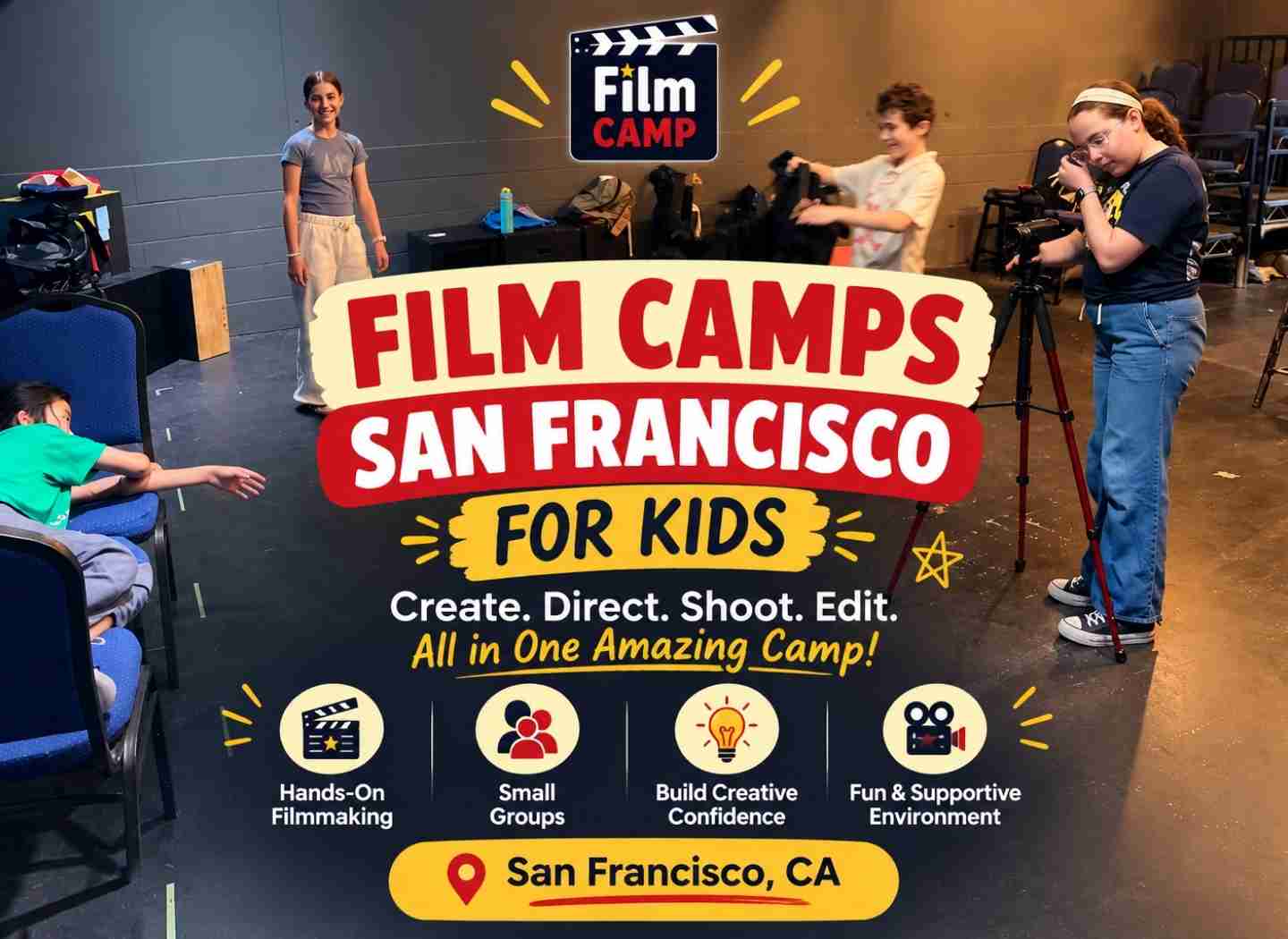
Comparing film camps in San Francisco? This guide shows five signs of a great one, what fair pricing looks like, how safety works, and how to choose the right summer camp confidently.
Read >.jpg)
Break weeks leave working parents scrambling. A holiday film camp covers the workday while kids write, shoot, and edit a short film in five days, ending with a family premiere.
Read >.png)