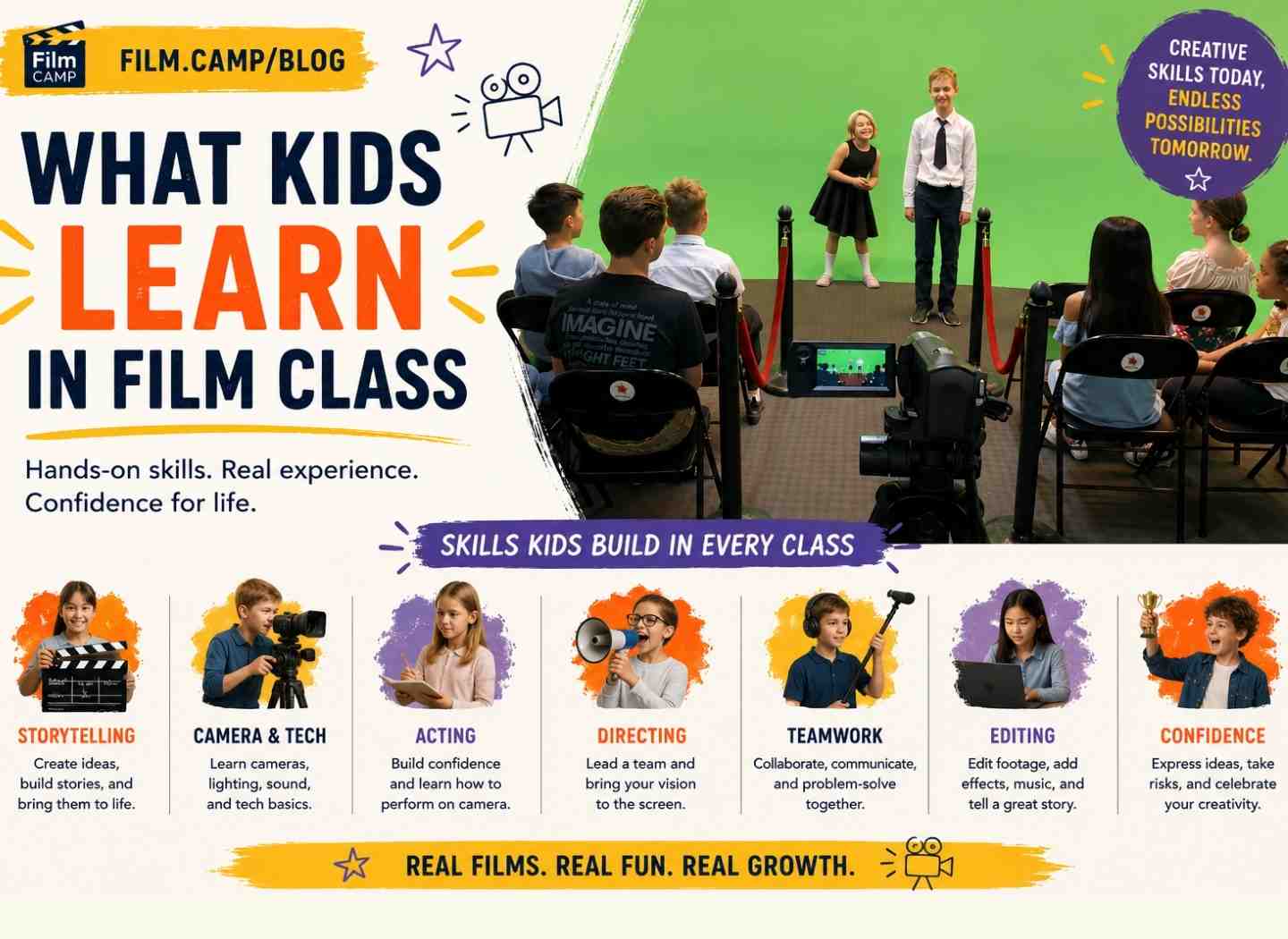
A full term of film class teaches kids storytelling, camera, sound, and editing skills. They build teamwork and confidence, then finish a real short film to call their own.
You sign your kid up for film class. Then one quiet worry shows up. Will they actually learn real skills, or just play with cameras?
Here's the honest answer. A full term teaches far more than filming. Kids learn to tell stories, work as a team, and finish something real.
They write. They direct. They solve problems on the fly. By the end, they walk away with a short film and a lot more confidence.
This guide breaks down every skill a child gains across a full term. Let's start with the big picture.
Film class looks like fun. Under the surface, it builds serious skills. Kids learn creative thinking, technical craft, and real teamwork.
Each part connects to the next. A story needs a plan. A plan needs a crew. A crew needs trust. That's where the growth happens.
Below, we group the learning into clear buckets. Read on for the fast version first.
In a full term, kids learn to turn an idea into a finished film.
They build creative skills, technical skills, and people skills at the same time. They write a story, shoot it with a team, and edit it into something they're proud of. Most leave more confident than when they started.
Creativity is the heartbeat of film class. Kids learn to imagine, then make it real.
They turn a wild idea into a clear story. They picture scenes before filming. They make choices and own them.
Here's what creative growth looks like in practice:
These skills don't stay on set. They help with school projects, writing, and everyday choices too.
Film class is hands-on from day one. Kids touch real gear and learn how it works.
They build practical skills step by step:
No prior experience is needed. The focus stays on learning by doing, not on memorizing theory.
Filmmaking is a team sport. No one makes a movie alone.
Kids learn to listen, share roles, and back each other up. A shy child runs sound. A bold child directs. Everyone matters.
One day a student holds the boom mic. The next, they call "action." That switch builds pride and courage.
By the end of the term, quiet kids speak up. Loud kids learn to listen. That balance is real growth.
Think of a film like building a house. You plan it, build it, then add the finish. Filmmaking follows the same flow.
A full term moves through four clear stages. Kids see how a small idea becomes a finished movie. Each stage teaches a new skill.
Here's the journey, start to finish.
Every film starts on paper, not on camera. This is where kids plan.
They write a short script. They draw a storyboard. They map out each scene before anyone films.
Planning saves time later. When the crew knows the plan, the shoot runs smooth. Kids learn that good prep beats chaos every time.
Now the fun gets loud. Cameras roll and the set comes alive.
Kids rotate through crew roles. One films. One records sound. One directs the actors.
They shoot scene by scene, take by take. They learn to stay focused and work fast. Every role shapes the final shot.
Raw footage isn't a movie yet. Editing turns clips into a story.
Kids choose the best takes. They cut, reorder, and trim. They add music and titles.
Editing teaches real decision-making. Should this shot stay or go? Each choice changes the story. That's powerful thinking for a young mind.
Then comes the best part. The lights dim and the film plays.
Family and friends watch the kids' work on a big screen. The room claps. The young filmmakers beam.
This moment makes the whole term real. See past projects on the Film Camp showcase page.
Wondering what each week actually looks like? Here's the full path.
This sample term runs ten weeks. Each week builds on the last. Skills stack until a finished film appears.
Week one sparks the spark. Kids meet their crew and explore what a film really is.
They watch clips and break down simple stories. They learn that every great movie starts with one strong idea. Curiosity leads the way.
Now ideas hit the page. Kids write short scripts and sketch their scenes.
A storyboard works like a comic strip. It maps the film shot by shot. This week turns imagination into a clear plan.
Kids step in front of the lens. They learn to act for camera, not a stage.
They also try directing. They guide a scene and give gentle notes. Confidence grows on both sides of the camera.
This week is pure discovery. Kids learn how camera choices tell a story.
A low angle feels powerful. A close-up feels personal. They practice framing shots that match the mood they want.
Ever notice bad sound ruins a good scene? Kids learn this fast.
They record clean dialogue and keep sets quiet. They add fun sound effects too. Good audio makes a film feel real.
Now the world takes shape. Production design is like dressing the story.
Kids plan the look of each scene:
Small details bring big imagination to life.
The big day arrives. Cameras roll for real.
Kids take on crew roles and shoot their first scenes. Excitement fills the room. They learn how a real set runs, one shot at a time.
Real sets bring surprises. A prop breaks. A line feels off.
Kids learn to adapt and fix it together. They keep filming and stay calm. Problem-solving becomes second nature this week.
The shoot wraps up. Kids grab any missing shots, called pickups.
Then they organize all their footage. They label and sort each clip. Good habits here make editing far easier.
The final week ties it all together. Kids edit their footage into a finished film.
They add music, titles, and final touches. Then they preview the movie as a team. The screening day is next, and parents won't want to miss it.
Most parents picture cameras first. But storytelling is the skill kids use for life.
Film class teaches kids to think in stories. They learn structure, characters, and clear communication. These skills boost writing and confidence at school too.
Storytelling sits at the center of every great film. Here's how kids build it.
Big films start as tiny ideas. A robot. A lost dog. A secret door.
Kids learn to grow that spark into a full story. They ask what happens next, and why it matters.
This is story development. It teaches kids to think ahead and connect ideas. Watching a vague idea become a real plot feels like magic.
Strong stories need three things. Kids learn each one.
Kids relate conflict to their own lives. A sibling fight. A tough choice. That link makes writing feel natural and fun.
A storyboard is a roadmap for a trip. It shows where the film is going.
Kids sketch each shot before they film. They plan angles, action, and order. They see the whole movie on paper first.
This visual planning builds creative confidence. When kids can see their film, they trust their own ideas more.
Film writing isn't just for film. It sharpens every kind of communication.
Kids learn to write clear dialogue. They pitch ideas to the group. They explain their choices out loud.
These habits carry into the classroom. Kids who tell stories well often speak and write with more ease.
Film class is hands-on, not theory-heavy. Kids learn the craft by making real things.
They master camera basics, clean sound, and smart editing. The focus stays on fundamentals, not on fancy gear. Skills beat equipment every time.
Let's break down each technical skill kids gain.
The camera is a storytelling tool. Kids learn to use it with purpose.
They practice the building blocks:
Each choice sends a feeling. Kids learn to film with intention, not by accident.
Here's a secret pros know. Bad sound sinks a good film fast.
Kids learn to capture clean dialogue. They keep the set quiet during takes. They add effects that boost each scene.
Most beginners ignore sound. Film class trains kids to respect it early. That attention to detail sets their work apart.
Editing is where a film truly comes alive. Kids learn to shape the final story here.
They review every take and pick the best. They arrange clips in order. They trim the boring parts.
This builds critical thinking. Each cut is a decision. Kids learn to judge, choose, and improve their own work.
Worried about buying a pricey camera? You can relax.
Film Camp provides the gear. Kids learn on shared, standard equipment. That keeps the class fair and the focus on skills.
Ownership doesn't make a filmmaker. Practice does. Your child just needs to show up ready to create.
Film class grows more than skills. It grows the child.
Kids gain confidence, voice, and leadership. Many of these wins happen behind the camera, not just in front of it. The personal growth is real and lasting.
Here's how acting and directing build a braver kid.
Acting gives kids permission to express. They try on feelings and play big.
The goal isn't perfect acting. It's clear communication. Kids learn to show emotion and connect with others.
Ever seen a shy kid light up in a scene? That spark often follows them home. Confidence grows one take at a time.
Directing puts a kid in charge. That's a powerful lesson.
They guide the crew. They give clear notes. They make calls under pressure.
A director must decide and explain why. This naturally builds leadership and communication. Kids learn to lead with kindness, not just authority.
Not every child wants the spotlight. That's completely fine.
Shy kids can shine behind the scenes. They run camera, sound, or editing. They contribute in big ways without performing.
Many famous filmmakers started behind the camera. A quiet role can spark a lifelong passion. Every child finds a place to belong.
Starting a project feels exciting. Finishing one feels unforgettable.
When kids complete a film, something clicks. They proved they could do it. That belief stays with them.
Completion builds deeper confidence than just joining in. A finished film is proof. Your child made something real, start to end.
A film set is a teamwork machine. Every role affects the final movie.
Kids learn collaboration, listening, and problem-solving. They make friends and build trust. These social skills matter as much as any camera trick.
Here's how kids grow together on set.
A film crew is a small team with big jobs. Kids try them all.
They direct, film, record sound, and manage props. Each role teaches a new way to contribute. Kids learn that every job counts.
Rotating roles also builds respect. Kids see how hard each task is. That makes them better teammates.
Great films mix many minds. Kids learn to listen well.
They hear out their crew. They build on each other's ideas. They learn that the best idea can come from anyone.
This active listening creates belonging. Every child feels heard. That bond turns a group into a real team.
Should the hero win or lose? Kids won't always agree.
Film class teaches them to work through it. They talk it out and find a middle path. They learn to disagree with respect.
This builds resilience and patience. Kids learn that conflict isn't bad. Handled well, it makes the story stronger.
One film. One team. One shared goal.
Kids pull together to finish their movie. Each person carries a piece. The whole only works when everyone shows up.
When the film plays, the pride is shared. They built it together. That feeling is what the final screening is all about.
Will the class fit my child's age? Great question.
Film Camp meets kids where they are. The learning shifts with each stage. Younger kids explore. Older kids take real ownership.
Here's how skills grow from age seven to fourteen.
Young kids lead with imagination. The class leans right into that.
They play, pretend, and tell simple stories. They learn the basics of film without pressure. The goal is exploration, not mastery.
Confidence grows through fun. A seven-year-old who tells a story on camera feels like a star. That joy hooks them on creating.
This age loves a real job. The class gives them one.
Kids dive into crew roles and teamwork. They learn story structure with a clear beginning, middle, and end. They thrive on rotating set jobs.
Collaboration becomes the big lesson here. Kids learn their part matters to the whole. Teamwork confidence climbs fast.
Older kids want control. The class hands it over.
They lead scenes and make editing choices. They defend their creative calls with reasons. They take real ownership of the film.
Parents often underestimate this shift. Teens start making bold decisions. That independence is a huge sign of growth.
Mixed ages might sound tricky. In film, it's a strength.
Older kids guide younger ones. Younger kids bring fresh energy. Everyone learns from the mix.
Teaching a skill locks it in. When a twelve-year-old helps an eight-year-old, both grow. The whole group rises together.
The real proof shows up at home. Parents see the change.
Kids speak with more confidence. They understand how movies work. They carry new skills and real pride.
Here's what most parents notice by the final week.
The biggest change is often confidence. Quiet kids start speaking up.
They share ideas at the dinner table. They explain their choices clearly. They aren't afraid to be heard.
This comes from weeks of pitching and directing. Kids learn their voice matters. That confidence shows up everywhere.
Movies stop being magic. Kids now see the craft behind them.
They spot camera angles in shows. They notice editing and sound. They watch films with smarter eyes.
This is media literacy in action. Kids learn how stories get built. That understanding lasts a lifetime.
Film class leaves kids with real, usable skills. These transfer far beyond the set.
By the end of the term, most kids can:
These skills help in school, projects, and life.
Nothing beats the screening moment. The film plays and the room reacts.
Kids watch their own work on the big screen. Their faces glow. They did this.
This pride often becomes their favorite memory. It's proof that hard work pays off. That feeling can shape how they see themselves.
Still unsure if film class fits your kid? Let's clear that up.
The truth is, many kinds of kids thrive here. Creative kids, shy kids, social kids, and tech-loving kids all find a place. Here's how to tell.
Does your kid binge movies or make YouTube clips? They'll feel right at home.
Film class turns that passion into skill. Story-loving kids learn to create, not just watch. They finally build the worlds in their heads.
If your child loves to act or imagine, this is their stage.
Shy kids worry some parents. Film class is built for them too.
Quiet kids can start behind the camera. They contribute without the spotlight. Slowly, they find their voice.
Many shy kids leave braver than they arrived. A safe, creative space works wonders. Confidence grows at their own pace.
Some kids light up around others. Film class loves that energy.
Movies are made by teams. Social kids thrive on the collaboration. They make friends while making art.
If your child enjoys group projects, a film set is the perfect playground.
Film is where art meets tech. It's pure STEAM in action.
Kids mix creativity with cameras and editing tools. They paint with images and code-like logic. Both sides of the brain get a workout.
Curious, hands-on kids find endless room to explore.
Location matters for young filmmakers. The right city adds real inspiration.
Film Camp runs programs in three creative hubs. Each city brings its own energy and opportunity. Here's what makes them special.
A creative city is like rich soil. Young talent grows faster in it.
These cities buzz with artists, studios, and stories. Kids feel part of something bigger. Inspiration is everywhere they look.
Growing up around film makes the dream feel real. Your child sees that creativity can be a true path.
Austin is a creative powerhouse. Music, film, and art fill the city.
Kids here join a community that celebrates indie storytelling. The vibe is bold and original. It's a perfect fit for young creators.
Explore the Austin film classes for kids and find your child's spot.
San Francisco mixes art and innovation. The Bay Area loves new ideas.
Kids here learn film in a tech-forward city. Creativity and technology blend naturally. It sparks fresh, modern storytelling.
Discover the San Francisco film classes for kids today.
Los Angeles is the heart of film. The whole city breathes movies.
Kids here learn where the industry lives. The energy is pure ambition and possibility. Young dreamers feel right at home.
Check out the Los Angeles film classes for kids now.
So how do you pick the right class? Start with what matters most.
Use this simple checklist:
Put teaching and curriculum first. A short drive isn't worth a weak class. Ready to start? Visit the enrollment page to secure a spot.
Picking a program is a big choice. The right questions make it easy.
Smart parents look past the gear. They ask about teachers, structure, and safety. Here are the questions that matter most.
Always ask about the instructors first. They shape your child's whole experience.
Look for teachers with both film and teaching skills. Ask if staff are background-checked. A great instructor blends real craft with patience.
The best programs are proud to share these details. Learn more on the about us page.
Yes, good programs provide the gear. You don't need to buy a thing.
Standard equipment keeps the class fair and simple. Every child learns on the same tools. That speeds up learning for the whole group.
Ask how kids get their roles. Fair rotation is the goal.
Good programs rotate jobs across the term. Each child tries directing, filming, and sound. No one gets stuck or left out.
This rotation builds well-rounded skills. It also helps every child feel included. Belonging matters as much as craft.
Yes, a screening is the grand finale. You'll see the full result.
Most programs end with a showcase. Families watch the finished films together. It's a proud, joyful moment.
A screening creates a stronger memory than any certificate. It celebrates real, completed work.
No experience is needed at all. Beginners are always welcome.
Film Camp builds classes for first-timers. Kids start from zero and grow fast. Curiosity is the only requirement.
Beginner-friendly programs often see the quickest growth. Your child just needs to show up.
Safety comes first, always. Ask clear questions here.
Check on supervision ratios and classroom rules. Ask how staff manage the group. A safe space lets kids focus and create.
Good programs answer these questions with ease. Have more? Reach out through the contact page for peace of mind.
Film class starts with cameras. It ends with a changed kid.
Across one term, your child learns to create, lead, and finish. They gain skills that reach far beyond the screen. The growth is real.
Here's what your child truly walks away with.
Your child won't just take a class. They'll make a movie.
A finished short film is proof of real work. It's something to show, share, and keep. That pride is unforgettable.
The skills run deep. Kids leave braver and bolder.
They trust their ideas. They work well with others. They believe in what they can build. These gifts last a lifetime.
This is the heart of it all. Kids learn to make ideas real.
They start with a spark and end with a film. That skill shapes how they solve problems forever. It's creativity they can use anywhere.
Ready to give your child that experience? Browse the Film Camp blog or enroll today.
Got more questions? Here are quick answers to what parents ask most.
Kids learn storytelling, camera work, sound, and editing. They also build teamwork and confidence. Over a full term, they write a story, film it with a crew, and edit it into a short movie. The skills cover both creative and technical sides of filmmaking.
Yes, film class is great for kids. It builds creativity, communication, and confidence. Kids learn to plan, lead, and finish a real project. These skills help in school and life. The mix of art, tech, and teamwork makes it a strong choice for many children.
Kids can start filmmaking as young as seven. Programs adapt to each age group. Younger kids focus on imagination and simple stories. Older kids learn structure, crew roles, and editing. Film Camp welcomes ages seven to fourteen, so most kids can join and thrive.
No, kids need no acting experience. Beginners are welcome. Many kids prefer working behind the camera anyway. Film class teaches every role, from directing to sound. Your child can find their strength without ever acting if they choose.
No, children do not need their own camera. Film Camp provides all the gear. Kids learn on shared, standard equipment. This keeps the class fair and lets every child focus on skills, not on buying tools.
The term ends with a film screening. Kids show their finished short film to family and friends. The room watches their work on screen. It's a proud, exciting moment that celebrates a full term of hard work and creativity.
Yes, shy kids often love film class. They can start behind the camera. Roles like editing and sound let them contribute without the spotlight. Many shy kids leave more confident. The creative, supportive space helps them grow at their own pace.
A short film usually takes a full term. Most programs run around ten weeks. Kids plan, film, and edit step by step. Each week adds a new skill. By the end, they have a finished movie to call their own. See the FAQ page for more.
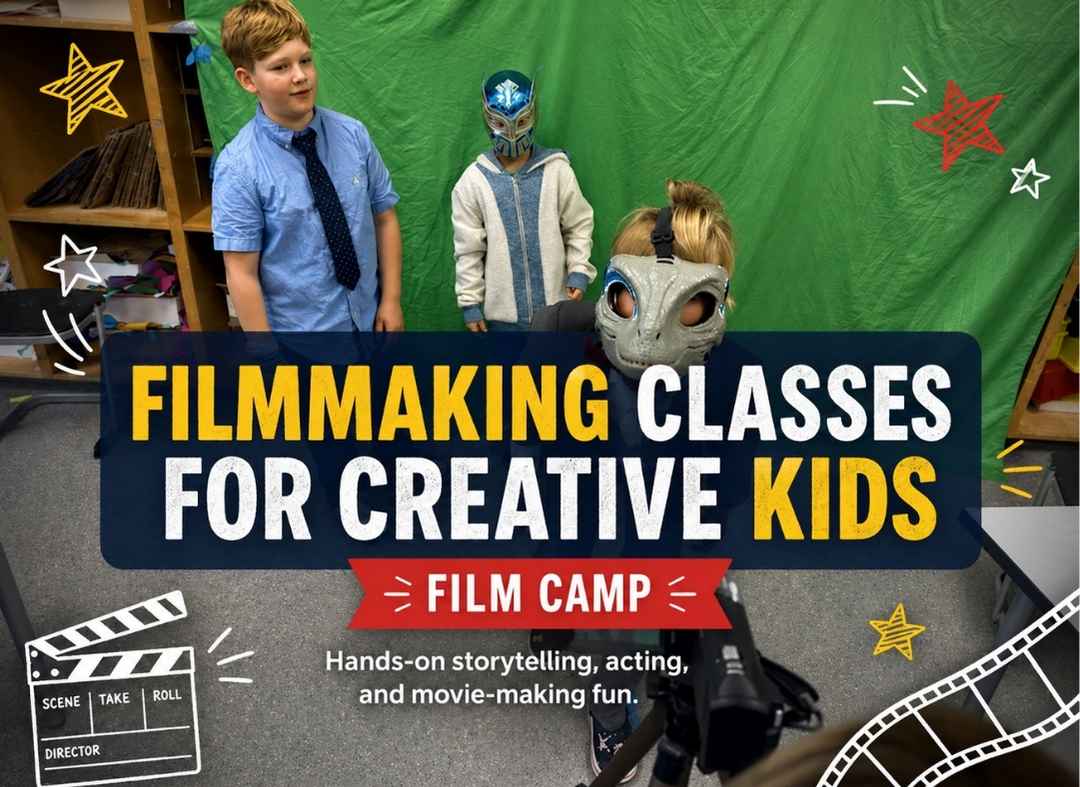
Discover why filmmaking classes help creative kids build confidence, teamwork, and storytelling skills through hands-on movie projects at Film Camp Los Angeles, where beginners learn by creating real short films.
Read >.jpg)
Weekend film classes in Los Angeles teach kids ages 8 to 14 filmmaking every Sunday in Glendale. Compare real costs, curriculum, safety, and what to ask before enrolling your child.
Read >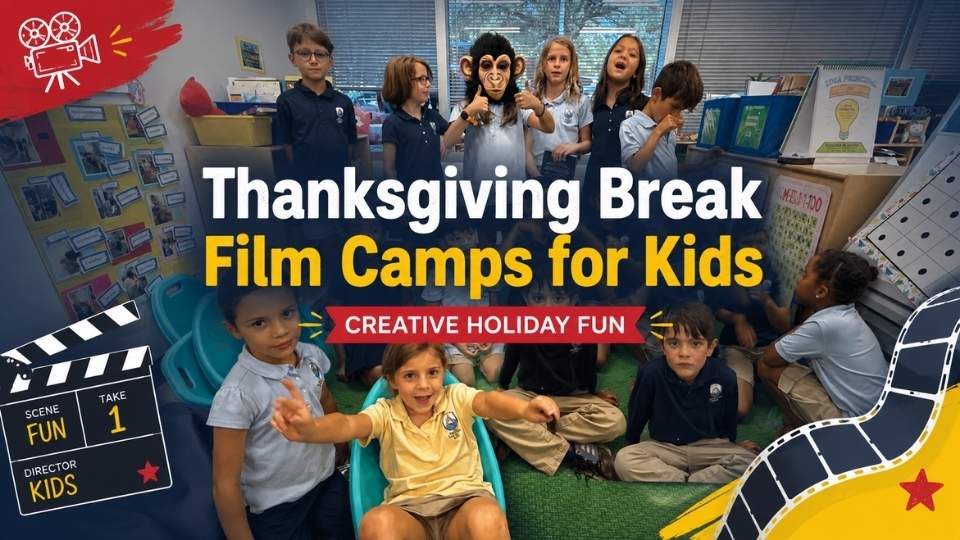
Thanksgiving break film camps fill the three school-free days in Austin, Los Angeles, and San Francisco. Kids ages 7 to 14 write, shoot, edit, and premiere their own short film.
Read >.jpg)
Discover how kids ages 7–14 learn screenwriting, acting, directing, camera work, editing, teamwork, and confidence at Los Angeles Film Camp in Glendale while creating and premiering their own short film.
Read >.png)