Weekend film classes for kids guide ages 7-14 through writing, shooting, and editing a real short film. Learn how 10 weekends build creative confidence, teamwork, and a finished movie.
.jpg)
Most kids start a creative project. Few get to finish one. That gap is exactly where weekend filmmaking earns its place.
Weekend film classes for kids are built around one promise: your child walks away with a real, finished short film. Not a clip. Not a worksheet. A complete story they helped write, shoot, and edit with a team of other young creators.
And here's the part most parents miss. The cameras and the lighting kits look impressive in photos. The real signal of a strong program is much simpler. Does every group finish a film? If the answer is yes, your child gets something most kids' programs never deliver: a sense of accomplishment they can replay on a screen.
This guide walks you through how it actually works. What "finished" means in a youth filmmaking class. How ten weekends turn one wild idea into a real movie. What kids learn along the way. And how to pick a program that ships, not stalls.
Ready to see how the magic gets made?
Parents hear "finished short film" and picture something between a YouTube vlog and a Pixar trailer. The reality sits in a much better place.
A finished student film tells a complete story with a clear beginning, middle, and end. It has real characters, real dialogue, real edits, and real credits. It doesn't need expensive effects. It doesn't need film festival polish. Kids do not need a perfect movie. They need a finished movie.
That distinction matters. A finished film teaches discipline, planning, and follow-through. A perfect film teaches frustration. The student film project your child takes home should feel like a real movie made by real kids, on purpose.
Here's what "finished" actually looks like in a quality youth film production.
Every finished short film follows simple story structure for kids. Something happens. Someone reacts. The story moves forward. Then it lands.
A movie without an ending is like a book missing its last chapter. Yet most beginner films fail right there. Kids get excited about the opening scene. They forget to plan the finish.
Good short film storytelling stays small on purpose. One main character. One clear goal. One satisfying ending. That's it.
Hands-on filmmaking means your child touches every stage. They pitch ideas in the writing room. They run the camera on set. They sit at the editing computer and watch their footage become a movie.
Kids retain creative skills faster when they get to do every stage, not just watch it. A six-year-old can frame a shot. A ten-year-old can direct a scene. A thirteen-year-old can edit a full sequence.
That's the heart of real student film production. Kids own the work because they did the work.
At the end of the term, families gather for a student film screening. The lights go down. The title card appears. Your child's name shows up in the credits.
Public screenings dramatically increase project completion rates. Knowing a real audience will watch the finished movie project changes how kids work all term long.
It's the moment parents remember most. Popcorn, applause, and a child who realizes they made something real.
A lot of parents quietly worry their child's film won't be "good enough." Here's the secret: that's not the goal.
The goal is project completion skills. The kind of grit and follow-through that show up in school, sports, and life. Professional filmmakers often learn more from completing a small project than from endlessly tinkering on a big one.
Done is often better than perfect. A finished film teaches a kid that ideas don't have to live in their head forever. They can be built. Wrapped. Shared. That lesson outlasts any creative learning outcome on paper.
Filmmaking looks like chaos from the outside. Cameras everywhere. Kids running around with props. Someone yelling "action."
Inside, it's actually a process. A really clean one. The strongest filmmaking process for kids breaks the work into eight repeatable steps, and the best weekend programs build every session toward production. No random craft hours. No filler. Every weekend feeds the same goal: one finished movie.
Here's how that movie making class workflow unfolds, step by step.
What would your kid film if no one said no? Day one starts there.
Story development begins with wild, messy, brilliant ideas. A talking dog. A haunted lunchbox. A robot stuck in detention. Instructors capture everything. Nothing gets shot down. Creative storytelling thrives when kids feel safe being silly first.
Then comes the realism check. A spaceship chase sounds amazing. Filming it in a classroom does not.
Film project planning helps kids pick an idea they can shoot with their crew, in their location, in the time they have. A haunted backpack beats a haunted castle every time. That swap is not a downgrade. It's smart production planning, and kids learn it fast.
Now the idea takes shape on paper. Scriptwriting for kids is simpler than people think. A few scenes. A handful of lines. A clear ending.
The script is the recipe. Without it, the kitchen burns. With it, everyone knows what to cook. Even reluctant writers get hooked once they see their lines come to life. Screenplay writing teaches structure, voice, and editing in one move.
Words on a page are great. Pictures are better.
Storyboarding for children turns the script into rough sketches, one box per shot. Stick figures are perfect. The point is visual storytelling, not art class. A storyboard acts like a map before a road trip. You still might take a detour. But at least you know where you're headed.
Now everyone gets a job. Director. Cinematographer. Sound. Production design. Editor. Actors.
Film crew roles give every kid a seat at the table. The quiet kid who hates the spotlight finds a home behind the camera. The kid who loves to perform owns the lead role. Mixed teams mirror a real student film crew, where different strengths build one finished movie. Nobody sits out. Nobody is just "watching."
Then it's go time. Multiple weekends. Multiple scenes. Real cameras. Real lights. Real microphones.
The film production experience teaches what no slideshow ever could. Batteries die. Sun moves. An actor forgets a line. The crew adjusts. Each filming project builds problem-solving muscles kids will use long after the credits roll. And every successful take builds momentum into the next weekend.
Footage isn't a film. Footage is raw clay.
Film editing classes show kids how to cut, trim, and sequence shots into something that actually plays as a story. Video editing for kids opens up a wild new skill: discovery. Suddenly they see how pacing, music, and silence shape emotion. Editing is where hundreds of puzzle pieces become one picture.
This is the moment everyone waits for. The student film showcase.
Families show up. Lights dim. The film plays. And every weekend of work suddenly clicks into place. A film screening is not just an event. It reinforces every skill learned throughout production. Pacing, framing, sound, storytelling. The kids see it all working together for the first time.
When kids see their names in the credits, they realize they created something real. That feeling of celebrating student success is exactly why weekend programs exist. It's the sense of accomplishment they remember years later.
A good filmmaking program for kids does not feel like ten random Saturdays. It feels like a film production timeline. Each weekend has a job. Each weekend builds on the last.
Programs that separate skills from projects often struggle to produce completed films. The strongest filmmaking curriculum bakes production into every session. Kids do not simply learn filmmaking. They actively make a film, one weekend at a time.
Here's a realistic ten-weekend roadmap for a project-based film learning program.
What kind of story would your child love to tell? Weekend one starts there.
The storytelling workshop opens with games, group exercises, and idea pitches. Kids meet their crew, share their favorites, and start to bond. Strong productions begin with team chemistry, not cameras. Creative storytelling and teamwork skills set the tone for everything that follows.
Now the idea becomes a plan. Kids draft short scenes, write quick dialogue, and sketch shot lists.
Scriptwriting for kids stays light and approachable. No fancy software. No 100-page screenplays. Simple scripts usually create stronger student films than overly ambitious concepts. Storyboarding for children locks in the visual plan. The script becomes the blueprint for everything that follows.
Cameras don't care about loud voices or stage projection. They care about honesty.
Acting for camera teaches subtlety, eye lines, and small expressions. Directing basics teach kids how to give clear notes, lead a scene, and make decisions on the spot. Both skills build something every parent loves: confidence, communication, and the ability to make a call under pressure.
This is where kids fall in love with the craft.
Camera skills for kids start simple. What stays in the frame? What gets cut out? Where does the light fall? A camera frame works like a picture frame. What stays inside matters. Students improve quickly when they understand visual storytelling before equipment complexity. Big lenses can wait. Good eyes come first.
Bad sound kills more student films than bad visuals. Every. Single. Time.
Sound recording for film teaches kids how to listen. Wind, traffic, footsteps, room tone. Production audio turns a "neat home video" into something that feels like a real movie. Great video attracts attention. Great sound keeps attention. Once kids hear the difference, they never go back.
The world of the movie comes alive on weekend six.
Production design covers sets, props, and the little details that sell a scene. Costume design helps actors disappear into their roles. Kids often become more invested when they help create the film's visual style. A flashlight becomes a lightsaber. A hoodie becomes a superhero cape. The movie starts feeling like theirs.
Lights. Camera. Nerves.
The first film shoot is a wild ride. Things run long. Plans get rewritten. Hands-on filmmaking suddenly feels real. And that's the magic. The first shoot teaches adaptability more than any classroom lesson could. Kids leave tired, proud, and already planning what to fix next week.
By weekend eight, the crew is sharper. Faster. Calmer.
The filming experience starts to click. Kids know their roles. They anticipate the next shot. Confidence often increases dramatically by the second shoot. The student production stops feeling like a class. It starts feeling like a real movie set, run by real young filmmakers.
The last shoot wraps the production phase. Then comes a key step most parents never hear about.
Footage review. The crew sits together and watches every take. They see what worked, what didn't, and why. Production wrap becomes a learning moment, not just a finish line. Reviewing footage helps students understand how planning shapes results. It's quiet, focused work. And it lands hard.
Then the curtain rises.
Film editing brings everything together. Music, sound effects, transitions, color. The student film screening turns ten weekends of work into one shared moment. Family in the seats. Friends cheering. A finished short film on the screen. The sense of accomplishment is enormous. The screening reinforces every lesson learned throughout production. The best time to celebrate a dream is when it becomes real.
Filmmaking skills for kids are only half the story. The other half is everything filmmaking builds around the camera.
Creative education works best when it teaches transferable skills. The strongest programs use project-based learning to grow real-world abilities kids carry into school, friendships, and future careers. Confidence building. Leadership growth. Creative problem-solving.
Here's what your child actually picks up between weekend one and the final screening.
Every film starts with a story. Every story starts with a writer.
Creative writing skills grow naturally when kids see their words come to life on screen. Storytelling skills sharpen because every choice matters. A line cut. A scene moved. A new ending. Stories are bridges between ideas and audiences, and kids learn how to build them.
Acting for kids isn't about fame. It's about feeling comfortable being seen.
Camera confidence helps in interviews, school presentations, and group projects. Kids who once froze in front of a phone learn to breathe, focus, and deliver. That self-confidence stays with them long after the final shot.
Leadership skills don't grow in lectures. They grow on set.
Directing basics teach kids how to make decisions, give feedback, and own outcomes. They learn to listen first, lead second, and adjust quickly when plans change. It's responsibility in its purest form: a real team relying on real choices.
Visual storytelling is its own language.
Camera techniques teach kids how angle, distance, and movement shape meaning. A close-up feels different than a wide shot. A low angle feels different than a high one. It's like learning music. Once kids hear the notes, they can't unhear them. Their curiosity explodes.
Audio production teaches one of the rarest skills in the world: deep listening.
Kids learn to notice background noise, voice clarity, and pacing. Listening skills sharpen on set and stick around at home. Loud kids learn to slow down. Quiet kids learn their ears are a superpower.
Video editing turns kids into builders, not just consumers.
Digital literacy grows fast in an edit suite. File management. Project structure. Color and sound and rhythm. Editing is where rough footage becomes a story, and where kids realize software is a creative tool, not just a screen to swipe.
Films are not solo sports.
Teamwork skills grow because every role depends on another. The actor needs the lighting. The lighting needs the sound. The sound needs the schedule. Problem-solving skills sharpen because the schedule never quite holds. Many hands make light work. And on a film set, every hand counts.
Kids change a lot between seven and fourteen. So should their creative challenges.
The best filmmaking classes for ages 7-14 grow with the child. Younger kids get simple roles and big imagination. Tweens get story structure and crew responsibility. Teens get leadership, technical depth, and complex storytelling. Age-appropriate film classes feel just right, not too easy and not too hard.
Here's how strong youth filmmaking education adjusts to each stage.
Little kids are giant idea machines. They just need a way to use them.
Beginner filmmaking for this age focuses on play. Acting out scenes. Holding a real camera. Helping with props. Creative confidence grows when their ideas are taken seriously, even if the story stars a flying pizza. The goal isn't polish. It's joy. And joy at this age sticks.
Tweens are ready for real responsibility, and they know it.
Collaboration skills grow as crews tackle bigger scenes and tighter schedules. Story structure becomes a real tool, not just a worksheet. They learn how scenes connect, how characters change, and how teamwork actually works under deadline. They start to own the production, not just attend it.
Teens want to make something they're proud of. Filmmaking gives them the platform.
Filmmaking leadership lets older students direct, run sound, or lead editing. Advanced storytelling pushes them into theme, tone, and character arc. They learn to follow directions. Then they learn to lead projects. The work gets serious. So do the results.
Mixing ages sounds risky. In a strong program, it's a feature, not a bug.
Collaborative filmmaking thrives when student crew roles match age and skill. A seven-year-old can run a clapper. A thirteen-year-old can run the camera. Mixed-age teams often mirror real film productions where different skill levels contribute to one goal. A rising tide lifts all boats. Younger kids look up. Older kids step up. Everyone wins.
Does your child love movies but avoid the spotlight? They're not alone. This is one of the most common worries parents bring to filmmaking classes for shy kids.
Here's the relief. Filmmaking isn't acting. Acting is one small part of filmmaking. The rest is camera, sound, lighting, design, directing, editing, and producing. Filmmaking classes for beginners are designed to give every kid a place to belong, whether they want to be on camera or quietly run the show.
In fact, many students who start behind the camera eventually volunteer for on-camera roles. Once they feel comfortable with their classmates, the spotlight feels less scary. Quiet, observant kids often make the strongest filmmakers.
Here's how a supportive learning environment makes that growth possible.
Behind-the-camera roles fill almost every spot on a film set.
Director. Cinematographer. Sound recordist. Editor. Production designer. Script supervisor. Many future directors, editors, and cinematographers began as students who never wanted to act. Some kids love performing. Others love creating. Both belong on a film set. Film crew positions are the heart of any real filmmaking skills program.
Confidence is not switched on. It's grown.
Some children need time before they feel ready to speak up. That's perfectly normal. Strong confidence building activities give shy kids a low-pressure entry point. Hand them a clapboard. Let them run sound. Soon they're whispering ideas to the director, then sharing them out loud. Creative confidence often grows through participation, not pressure.
Acting alone on a stage is scary. Working with friends to make a movie is fun.
Collaborative filmmaking spreads the spotlight. No one is the whole show. The director needs the actor. The actor needs the crew. A film crew works like a puzzle. Every piece matters. Teamwork skills lower the pressure and raise the sense of belonging. Shy kids tend to thrive in exactly this kind of shared environment.
Want to know if a program supports shy or non-acting kids? Ask the right questions.
Ask how instructors support students who prefer technical or creative roles instead of acting. Ask whether kids can rotate between jobs or pick a single specialty. Ask how often roles are reassigned. Ask if there's a quiet space for kids who need a breather. The best filmmaking classes for kids have clear, confident answers to every one of those questions. If a filmmaking program for kids can't answer them, keep looking.
A finished short film does not happen by accident. It happens because filmmaking instructors quietly steer the ship.
The best age-appropriate filmmaking programs use experienced mentors who know how to scale ideas to fit the time, the locations, and the resources a class actually has. A safe learning environment is the baseline. Guided filmmaking is the standard. Parent confidence comes from knowing every minute on set is supervised by someone who has done this work before.
Good instructors do not limit creativity. They guide creativity. Here's what that looks like in practice.
Kids dream big. Instructors translate.
Story development guidance turns a forty-character space epic into a tight three-character scene with the same heart. Strong films start with one clear idea, not ten competing ideas. Film project planning teaches kids how to choose, cut, and focus. That's a life skill, not just a film skill.
Some ideas need a little gentle steering.
Safe filmmaking practices keep age-appropriate projects on track. Instructors guide content choices, location safety, and equipment use. They build clear rules around stunts, themes, and respectful collaboration. Boundaries are not limits. They're guardrails that often improve creativity, because kids know exactly where the road is.
Inclusive learning is non-negotiable.
Every kid gets a real job that matches their interests and abilities. Student crew roles rotate often enough that no one is stuck doing the same task all term. Role assignment should match both skill level and personal interest. The quiet kid finds her place. The bold kid finds his stretch. The artist, the techie, and the storyteller all get a seat at the table.
Too much freedom creates chaos. Too much structure kills imagination.
Guided filmmaking lives in the middle. Students need room to explore. They also need a roadmap. A strong filmmaking curriculum gives kids clear weekly goals while leaving space for their wildest creative choices. Instructors set the lanes. Students drive the car. That balance is what turns scattered weekends into one finished movie.
Three programs. Three very different experiences. So which one fits your child?
Choosing between weekend film classes vs film camp vs acting classes comes down to what you want them to walk away with. A finished film? Intense summer learning? Performance training? Each option has strengths, and the best filmmaking classes for kids are the ones aligned with your child's actual goals.
Here's a quick, honest side-by-side.
Weekend filmmaking program structure is built around consistency.
Kids attend regularly over weeks or months. They learn one concept, apply it the next session, and build toward a real, finished film. Project-based learning pacing helps students absorb concepts and revisit them. The schedule fits real family life. School happens Monday to Friday. Filmmaking happens on the weekend. The result is steady progress and a finished short film.
Summer film camps go full immersion.
One or two weeks of nonstop filmmaking. Kids dive deep, fast. Intensive filmmaking works beautifully for students who enjoy concentrated learning experiences and want a major creative summer milestone. Energy stays high. Friendships form fast. The work moves quickly. It's the right call for families wanting a focused, vacation-friendly burst of creativity.
Acting classes for kids zoom in on one piece of the puzzle.
The focus is performance, not production. Kids work on voice, presence, scene study, and audition skills. Acting training builds confidence and stage presence. What it doesn't typically deliver is a finished short film, a full crew experience, or hands-on time with cameras, sound, and editing. It's a great fit if performance is the goal. It's a smaller slice of the filmmaking pie.
Here's the cheat sheet.
If your child wants to make a real, finished short film over time, choose weekend film classes. If your child wants a deep summer experience, choose a film camp. If your child wants to focus only on acting and performance, choose acting classes. Many families do all three at different stages.
Choosing film classes well means matching the format to your child's interests, learning style, and creative goals. The best path is not the one everyone chooses. It's the one that fits your child.
Every program says kids will "make a movie." Few actually deliver one.
The best filmmaking classes for kids share a clear pattern. They have a defined production schedule. They assign real roles. They book editing time. They plan a final screening. Choosing a film program is much easier when you know which signals to look for.
Use this checklist when you're researching filmmaking programs for children or searching for weekend film classes near me. A great class teaches skills. A great program teaches skills and finishes projects.
Marketing photos are easy. Finished short films are not.
Ask for two or three recent student film examples. Watch them. Are they complete stories or quick montages? Completed student films give you stronger proof of outcomes than any brochure ever could. If a program can't show you finished work, that tells you everything you need to know.
A great filmmaking curriculum lays out a clear week-by-week plan.
Ask for a sample schedule. Look for a path that moves from story to production to editing to screening. Project-based learning shows up in the structure itself. Random weekly themes are a red flag. A defined roadmap is a green one.
Film equipment training matters more than the gear list.
Ask which cameras, microphones, lights, and editing tools kids will actually touch. The goal is not expensive equipment. The goal is meaningful access to equipment. Hands-on filmmaking means real time with real gear, not a quick demo while everyone watches.
Class size shapes the whole experience.
Smaller crews give more chances for role rotation, mentor attention, and student participation. Ask about the student-to-instructor ratio. Ask how many crews share one project. Small groups feel like real productions. Big groups feel like field trips.
Crew role rotation is one of the strongest signals of a quality program.
Ask how filmmaking roles are chosen and whether kids try multiple jobs over the term. Rotation helps students experience different parts of production. It also keeps things fair. No single kid hogs the camera. No single kid sits in the corner.
Things go sideways. Strong programs plan for it.
Ask how the program handles weather days, missed shoots, or scheduling conflicts. Project completion improves when the production schedule has a buffer. What's the backup plan if a key actor is sick? What happens if a location falls through? Confident answers signal a real production mindset.
Parent updates are not a nice-to-have. They're a quality signal.
Ask how often you'll hear from instructors. Weekly updates? Photos from set? End-of-term reports? Family communication builds trust and helps you support what your child is learning. Frequent updates often mean a tightly run program. Silence often means the opposite.
Location shapes the filmmaking experience. So does the city's creative energy.
Each of these cities offers something different for young filmmakers. Austin's indie spirit. San Francisco's tech and storytelling culture. Los Angeles' direct line to the film industry. The best location is often the one that balances convenience, instructor quality, and production opportunities.
Here's a quick look at what each city offers families searching for weekend film classes near me.
Austin is a creative town through and through.
Austin filmmaking classes tap into the city's indie film scene, music festivals, and storytelling culture. Kids feel surrounded by real artists making real work. Austin film programs for kids often have small, tight-knit crews and instructors who actually work in production. It's a great launchpad for young creators who want both community and craft. Explore weekend and summer film options in Austin to see what's available near you.
San Francisco brings a different flavor to youth filmmaking.
San Francisco filmmaking classes blend storytelling with the city's deep tech culture. Bay Area film classes often lean into digital tools, animation, and innovative storytelling. Kids learn to think like creators and like makers. The city's creative and tech background naturally supports digital storytelling and visual experimentation. Check San Francisco filmmaking programs for current schedules and crews.
Los Angeles is filmmaking's hometown. That changes the whole experience.
Los Angeles filmmaking classes give kids proximity to the real industry. Instructors often come from working sets. Locations look like the ones in the movies kids already love. Exposure to filmmaking culture helps students visualize future creative careers. LA film school for kids is a strong fit for families who want their child surrounded by real industry energy. Explore the LA filmmaking program options for ages 7-14.
Geography matters less than consistency.
The best local filmmaking programs are the ones your child can attend regularly without burning out the family schedule. Nearby film classes that fit the calendar will always beat distant classes that feel like a chore. The best camera is the one you have with you. The best class is the one your child will attend. Pick the city, instructor, and schedule that align with your real life.
Filmmaking doesn't stop when class ends. Some of the best learning happens at home, in small, low-pressure moments.
Filmmaking activities for kids work best when they feel like fun, not homework. Home filmmaking projects extend learning, deepen connection, and turn weekend skills into weekday habits. Creative learning at home matters because small conversations often reinforce learning more effectively than additional formal instruction.
Here are four simple ways to support your young filmmaker between sessions.
Sounds simple. Works wonders.
Filmmaking reflection sparks real conversation. Ask what role they had, what they liked, and what they would do differently. You'll learn more in five minutes than from any class report. The connection grows. So does their confidence.
Family film learning is one of the easiest wins on this list.
Pick a short film, a Pixar short, or an age-appropriate music video. Watch it twice. The first time for fun. The second time to talk about shots, music, and story choices. That shared experience helps your child see films the way they're now learning to make them.
Phones are tiny filmmaking machines. Use them.
DIY filmmaking can be as simple as a 30-second story shot in the kitchen. A LEGO chase scene. A cooking show with a sibling. A book trailer. The point isn't quality. The point is creativity. Encouragement at home keeps the muscle warm between weekends.
Praise the process. Not just the product.
Creative confidence grows when kids hear their effort matters. Mention their teamwork skills. Notice when they solve a tricky problem. Celebrate when they keep going after a tough shoot. Success is the sum of small efforts repeated day after day. Tell them you see those small efforts adding up.
Imagine this. Ten weekends from now, your child sits in a theater seat. The lights go down. A film they helped write, shoot, and edit lights up the screen. Their name appears in the credits. Their friends cheer.
Parents often underestimate how meaningful a completed creative project can be for a child's confidence and growth. Filmmaking programs for kids are not just about movies. They're about teaching young people that their ideas can become real things, made with real people, finished on a real deadline. That sense of accomplishment changes how kids see themselves.
Here's how to take the next step.
Austin's creative energy is the perfect backdrop for young filmmakers. Tight crews. Real instructors. A finished short film at the end of the term. Explore Austin film classes for kids and see upcoming session dates.
The Bay Area mixes storytelling with cutting-edge tech. It's a great fit for kids who love both creativity and digital tools. See San Francisco film classes for kids and find a session near you.
LA puts your young filmmaker in the heart of the industry. Real sets. Real mentors. Real inspiration. Browse Los Angeles film classes for kids and pick the right crew.
The strongest trust signal is past student work. Watch real films from real young creators before you enroll. Visit the student film showcase and see what your child could create with the right guidance.
What could your child create with ten weekends and the right guidance? Don't guess. Ask. A quick conversation often answers more than hours of online research. Reach out with your questions and enroll with confidence when you're ready.
Kids do real filmmaking. They write short scripts, storyboard scenes, run cameras, record sound, design props, direct actors, and edit footage into a finished short film. Hands-on filmmaking is the heart of every session.
Weekend kids filmmaking classes are structured so every student tries multiple jobs. Some weeks focus on story. Others on production. The final weeks are dedicated to editing and a public screening. The whole term builds toward one shared project the entire crew is proud of.
Yes, when the program is built for it. Kids are not making a Hollywood movie. They are making a complete movie.
Strong programs scale projects to fit the time available. A finished short film for a youth crew might run two to five minutes. Stories stay simple. Crews stay small. Schedules stay realistic. That's why student film project completion rates are high in well-run weekend classes. The work is real, but the scope is right-sized.
Not at all. Most programs expect beginners.
Beginner filmmaking classes are designed from the ground up for first-time students. Instructors teach every skill from scratch, from holding a camera to running an edit timeline. If your child loves stories, movies, or making things, they're ready. No prior experience required.
Usually no. Quality programs provide cameras, microphones, lights, and editing software.
Film equipment training is part of the experience. Kids learn on real gear they probably could not buy on their own. Some programs welcome students who want to bring a personal camera or laptop. Always confirm equipment policy with the program before enrolling so your family knows exactly what to expect.
For most kids, yes. The benefits go well beyond the movie itself.
Filmmaking class benefits include storytelling, leadership, teamwork, public speaking, technical skills, and digital literacy. Kids walk away with a finished short film, new friends, and real creative confidence. Many parents say the personal growth surprises them more than the film does. That's the value of project-based learning done well.
Shy kids often shine in filmmaking. Many parents worry their child is too shy. In reality, many filmmakers start behind the camera.
Filmmaking classes for shy kids offer plenty of behind-the-scenes roles. Camera, sound, editing, production design, and directing all give quiet kids a meaningful job. Confidence grows naturally as they collaborate with the same crew over multiple weekends. By the final screening, many shy students surprise themselves with how much they spoke up.
No. Acting is one role among many.
Film crew roles include director, cinematographer, sound recordist, editor, production designer, and more. Kids choose roles that fit their interests and comfort level. A great program rotates roles fairly while respecting each child's preferences. Your child will never be pushed in front of the camera if they want to be behind it.
Most programs work well for ages 7 through 14, with curriculum adjusted by age.
Filmmaking classes ages 7-14 group kids so the content matches their stage. Younger students focus on imagination and simple roles. Older students take on leadership, technical depth, and complex storytelling. Choose a program that clearly separates age groups or scales responsibilities based on developmental readiness.
Film classes emphasize progression. Film camps emphasize immersion.
A film class vs film camp comparison comes down to schedule and depth. Weekend film classes spread over several weeks and build skills gradually. Film camps run one or two weeks at full intensity. Both can produce finished films. The difference is pacing, family schedule fit, and how deep the learning curve goes during each session.
Three big things. A finished short film. A set of real filmmaking skills. And a noticeable boost in confidence.
A complete student film project is the headline outcome. Underneath that, your child should be able to describe story structure, name the basic film crew roles, explain how editing works, and tell you what they did during each phase of production. The film is the trophy. The skills are the prize.
Safety is the foundation. It's never an afterthought.
Safe filmmaking practices include adult supervision at every shoot, pre-checked locations, age-appropriate equipment training, and clear rules around stunts and content. Strong programs run background-checked instructors, low student-to-staff ratios, and clear communication with families. Always ask about safety policies before enrolling so you know exactly how each shoot is supervised.
They're not better. They're different.
Home projects build creativity. Film classes build process. Filmmaking education adds story structure, crew roles, real equipment, and instructor feedback. Project-based learning teaches kids how to take an idea from start to finish, not just how to film something cool. Many of the best young creators do both. Home videos for fun. Weekend classes for craft.
That happens, and good programs are ready for it.
Every child has weeks when excitement rises and falls. Strong programs are designed for that reality. Student engagement often rebounds when kids switch roles, try a new piece of gear, or see early footage from their own film. Creative learning is rarely a straight line. Talk to the instructor if your child hits a slump. Most programs have proven ways to re-energize a crew.
Every great filmmaker starts with a first project. Every finished film starts with a first step.
Weekend film classes for kids are not just an activity. They're a finished short film. A real crew. A real screening. A real moment of pride your child will carry with them long after the credits roll. Filmmaking classes for kids deliver something most childhood programs can't. A completed creative project, made with friends, watched by family, owned by your child.
That sense of accomplishment is the real outcome. Bringing ideas to life is the real skill. Creative confidence is the real win.
Ready to make it happen? Enroll in filmmaking classes, browse our student film showcase, or check the FAQ for everything else. Your child's first finished film is closer than you think.
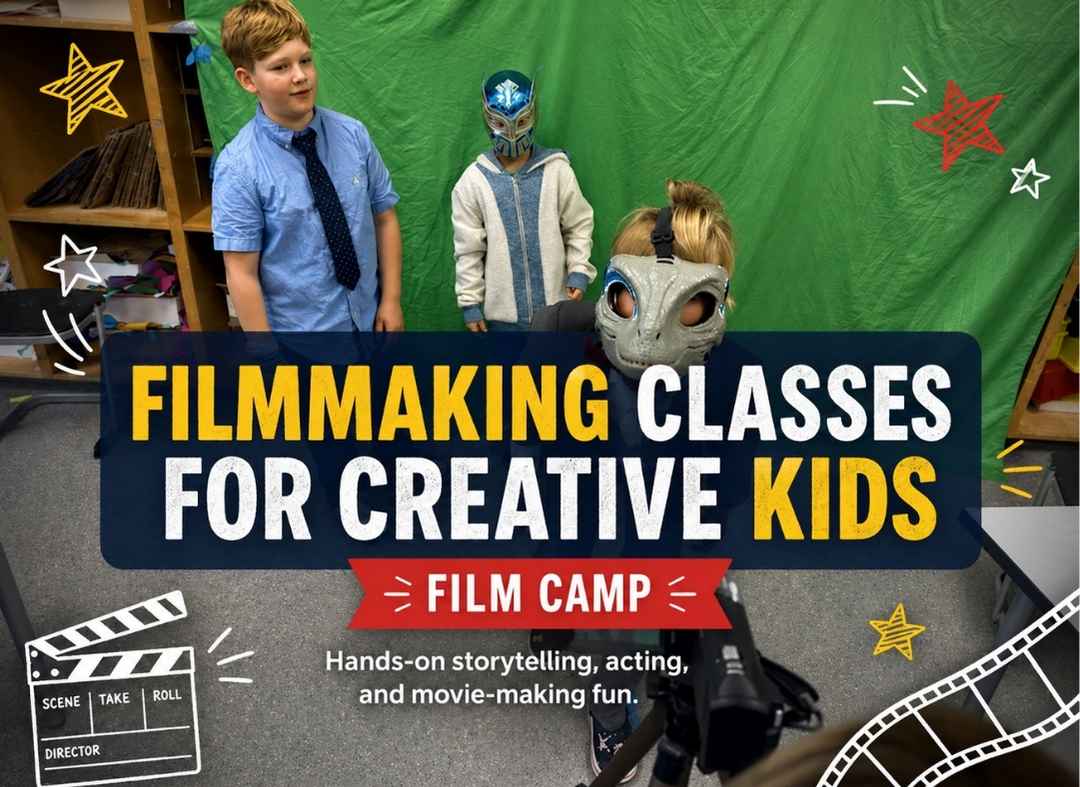
Discover why filmmaking classes help creative kids build confidence, teamwork, and storytelling skills through hands-on movie projects at Film Camp Los Angeles, where beginners learn by creating real short films.
Read >.jpg)
Weekend film classes in Los Angeles teach kids ages 8 to 14 filmmaking every Sunday in Glendale. Compare real costs, curriculum, safety, and what to ask before enrolling your child.
Read >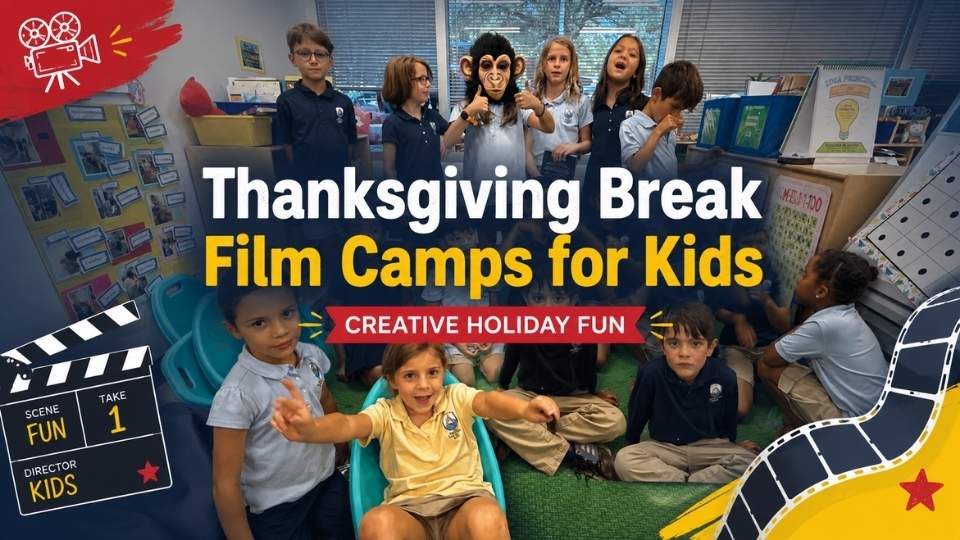
Thanksgiving break film camps fill the three school-free days in Austin, Los Angeles, and San Francisco. Kids ages 7 to 14 write, shoot, edit, and premiere their own short film.
Read >.jpg)
Discover how kids ages 7–14 learn screenwriting, acting, directing, camera work, editing, teamwork, and confidence at Los Angeles Film Camp in Glendale while creating and premiering their own short film.
Read >.png)