Discover real student film projects made at our Austin film camp. From first scripts to premiere night, see how teens shoot, edit, and finish their own short movies together.
.jpg)
Ever wonder what happens when you hand a 14-year-old a real camera, a script idea, and a roomful of friends with the same dream? Magic. Pure, messy, popcorn-scented magic.
At our film camp in Austin, every summer kicks off with kids who barely know each other. By the end, they've made full short movies together. Like, actual movies. With credits and everything.
This post walks you through the kind of stuff our young directors make. Not the polished sales-pitch version. The real one. The "we forgot a prop and used a banana instead" version.
Let's go.
Most folks think a film camp is just kids messing around with phones. Nah. Not even close.
At our film camp austin location, students walk in on day one with zero scripts. By Friday? They've got a full short film with sound, edits, and credits. That's the rhythm.
We split campers by age and interest. Some love screenwriting. Some want to direct. Some just wanna run the camera. Cool. Everyone fits somewhere.
Here's the basic flow each week:
The whole point? Let kids make stuff. Real stuff. Not worksheets. Not lectures. Stuff they can show their grandma.
That's why teen summer camps austin film programs like ours feel different. We treat 13-year-olds like real filmmakers because, well, they are.
Every great movie starts with a "what if." What if a pizza guy was secretly a spy? What if your dog could text? Yeah. Real student ideas. Real scripts.
In our summer film camp, day one is pitch day. Students stand up. Share a one-line idea. The room votes. The winners become group projects.
Then comes the screenplay. We teach them the basic three-act setup. Beginning, middle, end. Beat sheets. Dialogue rules. Scene headings. The works.
Some of our film kids austin crew finish their script in two hours. Others take two days. Both are fine. Speed isn't the goal. Story is.
Common script types our students write:
Our writing coaches sit with each team. They help cut fluff. Add stakes. Sharpen jokes. It's like having a Hollywood mentor in your group chat, except in person.
A good script is half the battle. As the old Texas saying goes, "Don't squat with your spurs on." Translation? Don't rush the prep work, or you'll regret it later.
Here's where stuff gets real. The cameras come out. The clipboards appear. Someone yells "action!" too loud. Always.
We use real gear. Not toy stuff. Real DSLRs, mics, tripods, gimbals. Because if our film camp for teens in austin is gonna feel pro, the tools better feel pro too.
Kids learn shot framing. Rule of thirds. Wide shots vs close-ups. Why a low angle makes someone look powerful. Why a high angle makes them seem small. Basic stuff that totally changes a movie.
Our students master things like:
One group last summer shot a chase scene around the building. They used skateboards as makeshift dollies. Was it perfect? Nope. Was it brilliant? Absolutely.
That kind of problem-solving is what video production camp rrisd parents tell us their kids never stop talking about. The grit. The teamwork. The "we figured it out" energy.
Bad sound kills a good film faster than bad acting. We tell students this on day two. Then we prove it.
We play a clip with great visuals but trash audio. Everyone groans. Then we play the same clip with crisp sound. Everyone leans in. Lesson learned.
In our film camp, students learn to boom mic scenes. They check audio levels. They watch for wind noise. They record room tone for editing later.
Lighting is the next puzzle. Natural light at golden hour. Three-point setups indoors. Bounce boards made from foam core. Real-deal stuff.
Tech roles students take on:
Some campers think they only wanna direct. By day three, they're obsessed with sound. Or color grading. Or making fog machines work. Funny how that happens.
Editing is where the movie actually gets made. That's what we tell every student. The shoot just gives you raw clay. Editing is the sculpting.
Our editing labs run on industry software. DaVinci Resolve. Adobe Premiere. Final Cut Pro on some Macs. Students pick their tool and learn it fast.
A good edit can save a rough shoot. We've seen students take blurry, shaky footage and turn it into a stylish music video. Pure problem-solving in pixels.
Editing skills students learn:
This is also where students discover their "voice." Some love fast cuts. Some love long takes. Some can't get enough of jump scares. All cool. All welcome.
Why does this matter? Because movies aren't just made on set. They're made twice. Once with a camera. Once with a mouse.
You'd think teens would all wanna make horror flicks. Some do. But the genre mix is wild. Every summer, it surprises us.
Comedies are always the top pick. Stuff about middle school crushes. Talking pets. Awkward family dinners. Relatable to anyone who's ever been a kid.
Mysteries hit big too. Mini whodunits with twists. Lost backpacks. Missing pets. Disappearing teachers. The works.
Top genres our young filmmakers explore:
Some campers from our california film summer camp sister sessions made a black-and-white silent film last year. No dialogue. Just music and acting. It blew everyone away.
That's the cool part about a real summer film camp. Genre rules don't apply. You wanna make a kung-fu pirate musical? Go for it. Someone will help you film it.
Let's get specific. Here are some standout past student film projects from recent camps. Real titles. Real teams. Real wins.
"The Last Slice" — A pizza shop closes forever. The delivery guy hatches a plan to save it. Shot entirely in one building. Used real pizza props. Cast ate the props after the take.
"Detention 9-1-1" — Three kids stuck in detention solve a school mystery. Tight script. Great pacing. The lead actress nailed deadpan comedy.
"Quiet Mornings" — A documentary about a local food truck owner. Shot at sunrise for three days. Beautiful camera work. Made everyone cry at premiere night.
"The Fern Effect" — A weird sci-fi short about a plant that grants wishes. Built the plant out of pool noodles and green paint. Best DIY effects of the summer.
"Pixel Pals" — A music video about online friendships. Mixed live action with stop-motion animation. Took 200 hours of editing. Worth every second.
These weren't perfect. The lighting wasn't always right. Sometimes the audio dipped. But the heart? Always there. Always loud.
Parents from our film summer camp los angeles program tell us they show these films at family dinners months later. Like, "look what my kid made." That pride. That's the goal.
Filmmaking is a team sport. Like soccer with cameras. You can't shoot a movie alone, no matter how talented you are.
In our film camp glendale sessions and our Austin base, we group campers into film "crews" of four to six. Each crew has roles. Director. DP (camera lead). Sound. Editor. Talent. Sometimes more.
Every morning, crews meet. They check shot lists. Plan locations. Solve problems from the day before. It's like a mini production company, but with snacks.
Soft skills students sharpen on set:
Conflicts happen. Of course they do. Two writers can't agree on the ending. A director wants more takes. An actor forgets lines. Real movie sets deal with this every day too.
Our staff mentors them through it. Not to fix it for them. To help them fix it themselves. That's the real skill they take home.
Ever notice how the best stories have a little chaos? Camp's the same. The chaos is where the magic hides.
Friday night at camp hits different. The screen lights up. The popcorn pops. The parents pile in. The kids whisper. It's electric.
We treat premiere night like a mini red-carpet event. Posters on the walls. Films on the big screen. Director Q&A after each piece. Real movie magic in a small room.
Each crew introduces their finished short film. They share what worked. What didn't. What they learned. The reflections are sometimes funnier than the films.
What premiere night looks like at our film camp:
Some kids cry. Some kids scream. Some kids just sit there grinning at their work on a giant screen. All of it counts.
This isn't just a wrap. It's a launchpad. Many students walk out of that room wanting to be filmmakers for life. That's not us being dramatic. That's data.
Sure, kids leave with a finished movie. But the better stuff? You can't fit it in a USB drive.
Confidence is the big one. Watch a shy kid pitch an idea on Monday. Then watch them direct five peers by Wednesday. Same kid. Different person.
Then there's the technical skill set. By week's end, our film kids austin crew can edit, shoot, light, and write at a level most adults haven't touched.
Skills students walk away with:
But honestly? The friendships matter most. Camp friends turn into film school co-collaborators years later. We've seen it happen. Two campers from 2019 are now applying to NYU Tisch together. No joke.
That's the real product of a great film camp. Not the films. The filmmakers.
Parents ask us tough stuff. They should. Safety, mentorship, gear, schedules, snacks, everything. We love it.
Here's what they hear back. Small class sizes. Background-checked staff. Real industry mentors. Locked locations. Daily updates. Good food.
We've grown from a single Austin session to multiple programs. Our teen summer camps austin film spot is the original. But we now offer sister camps for California families too.
Reasons families pick our film camp:
Kids leave proud. Parents leave shocked. We leave tired but happy. It works.
We've also seen siblings sign up year after year. Older brother comes once. Younger sister begs to join the next summer. That kind of word-of-mouth means we're doing something right.
Our film camp runs on a layered curriculum. Beginner kids get the basics. Returning campers level up into advanced tracks.
Year one focuses on the fundamentals. Story. Shot framing. Basic editing. Working in a crew. Just the bones of how films get made.
Year two and beyond dives into specialized skills. Cinematography. Sound design. Advanced editing. Color grading. Even producing and budgeting.
Curriculum highlights by track:
We update the curriculum every year. New tech. New software. New techniques. Because filmmaking keeps changing. Why should camp stay frozen?
Whether you're picking a summer film camp in Texas, a film camp glendale option, or a film summer camp los angeles session, your kid will get a real-deal education. Not just a hobby class.
Look, signing up your kid for a camp is a big call. Money. Time. Trust. We get it. Here are the questions we hear most.
"Does my kid need experience?" Nope. Zero filmmaking background needed. We start everyone at the basics. Some kids have never held a camera. They thrive too.
"What if my kid is shy?" Even better. Quiet kids often become amazing editors or writers. We help every kid find their lane. No one gets pushed in front of the camera if they don't want to be.
"Is the gear really professional?" Yes. Real DSLRs. Real mics. Real software. We don't believe in dumbing it down. Kids handle the real stuff with care.
"What's the camper-to-staff ratio?" Usually around six to one. Small enough for personal attention. Big enough to make real movies.
"Can siblings sign up together?" Of course. We even split them into different crews so they each get their own experience.
"What if my child doesn't like it?" Most kids who come once come back. But if it's a no-go, we offer a flexible refund window. Talk to us.
We don't want surprises. Contact us with anything. That's why we list our number and email plain as day.
Loads of summer programs exist. Sports. Coding. Art. Music. So what makes a film camp different from the rest of the pack?
Honestly? The output. Most camps end with a craft project to take home. We end with a movie. A finished, polished, watchable short film. That's the difference.
We also bring in working pros. Not just teachers. Actual filmmakers. Editors. Directors. Folks who've shot real commercials and indie features. Kids learn from people who do this for a living.
What makes our film camp unique:
Some of our alums have gone to USC, NYU, UT Austin film school, and more. A few have already started getting paid for freelance video work. In high school. Wild stuff.
That's why families looking at california film summer camp options, or video production camp rrisd programs near Austin, often land here. The track record speaks for itself.
Ready to dive in? Here's how to sign up and get your kid started.
Step one: pick your dates. Our summer film camp offers multiple sessions every summer. Mix and match weeks. Stack two for a deeper experience.
Step two: choose your track. Beginner or returning camper? Director path or editor path? We can help you decide on a quick call.
Step three: register online or by phone. We keep enrollment simple. No long forms. No surprise fees.
Reach out anytime:
We'll answer questions fast. We'll send you a schedule. We'll save your spot. Done.
Spots fill quickly, especially for our film camp for teens in austin sessions. Don't wait till May. The earlier you book, the more flexibility you get.
So whether you're searching for a film camp austin option or comparing film summer camp los angeles programs, we'd love to chat. Real talk. Real movies. Real summer fun.
Years from now, your kid might not remember every math worksheet from sixth grade. But they'll remember the summer they made a movie with their friends.
That short film with the bad lighting and the banana prop? They'll show it to their college roommate. Their first date. Their kids one day. It sticks.
That's the power of a great film camp. It's not just about making movies. It's about giving kids a story to tell about themselves.
Our doors are open. The cameras are charged. The popcorn is ready. We just need your filmmaker.
Let's roll.
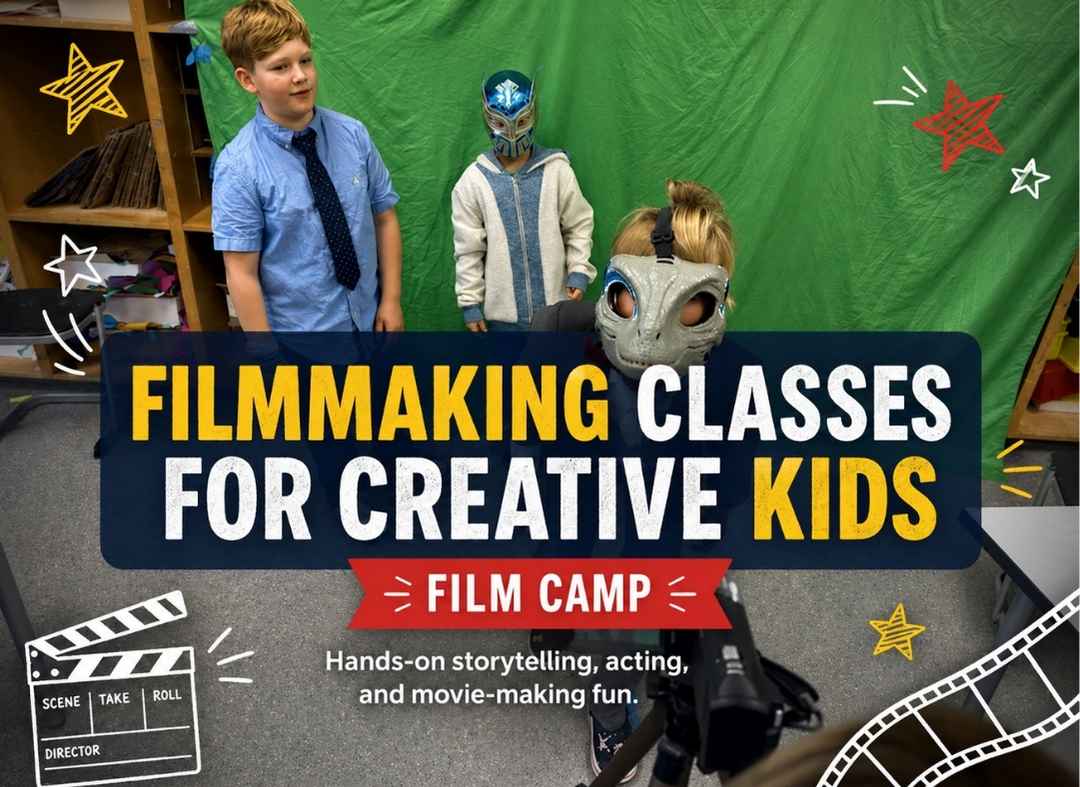
Discover why filmmaking classes help creative kids build confidence, teamwork, and storytelling skills through hands-on movie projects at Film Camp Los Angeles, where beginners learn by creating real short films.
Read >.jpg)
Weekend film classes in Los Angeles teach kids ages 8 to 14 filmmaking every Sunday in Glendale. Compare real costs, curriculum, safety, and what to ask before enrolling your child.
Read >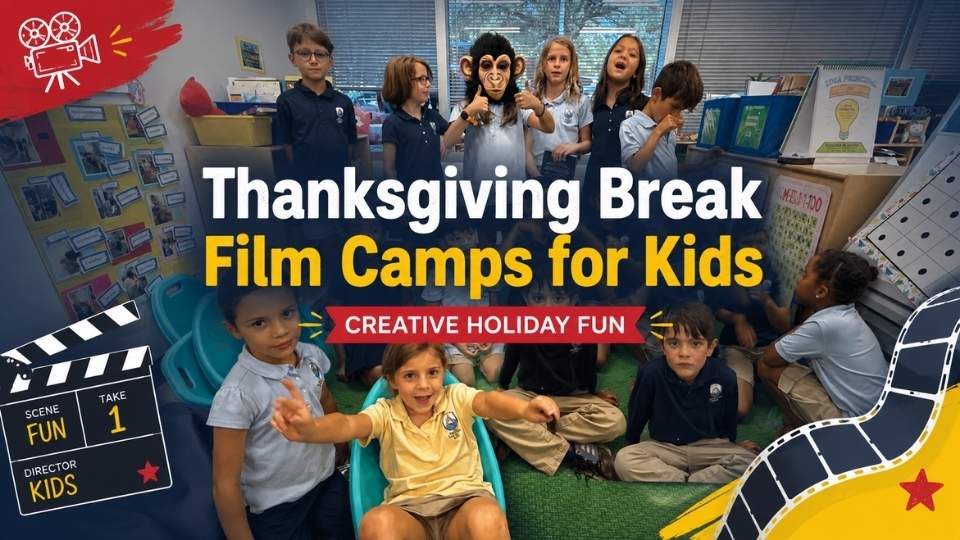
Thanksgiving break film camps fill the three school-free days in Austin, Los Angeles, and San Francisco. Kids ages 7 to 14 write, shoot, edit, and premiere their own short film.
Read >.jpg)
Discover how kids ages 7–14 learn screenwriting, acting, directing, camera work, editing, teamwork, and confidence at Los Angeles Film Camp in Glendale while creating and premiering their own short film.
Read >.png)