Discover why families choose Film.Camp through real parent reviews. Learn what makes a great summer film camp, from safety and mentorship to creative skill-building and lifelong confidence.

Picking a summer camp feels like betting on your kid's whole summer. You want them safe. You want them happy. And honestly? You want them to come home with something real, not just a sunburn and a half-finished friendship bracelet.
That's why so many parents end up at Film.Camp.
Below, we've pulled together what families actually say about the experience, what to look for in a film program, and how to know if it's the right fit for your child. No fluff. Just the stuff that helps you decide.
Before we get to the reviews, here's what shows up again and again on parent wishlists. These five things separate forgettable camps from the ones kids beg to return to.
Safety is the floor, not the ceiling. Parents want to know who's watching their kid, what training those adults have, and how the camp handles the unexpected. Background checks, certified counselors, and clear emergency plans aren't perks. They're the baseline. You can read more about our team and approach on our About Us page.
Cardboard cameras don't cut it. Parents notice when their child comes home talking about cinema lenses, lavalier mics, or color grading. Real gear means real learning. It also signals that the camp respects kids enough to teach them like artists, not babysit them like toddlers.
A finished short film is a story your kid can tell for years. It's also something they can show a teacher, a college admissions officer, or a future internship. Take a look at what past campers have created in our Showcase. Parents love camps that hand kids a tangible result, not just a participation certificate.
Filmmaking is a team sport. Directors give notes. Actors take them. Editors negotiate. Crews problem-solve at 4 PM when the light is fading. Parents see their kids come home a little taller, a little more sure of themselves.
Here's the paradox: a film camp gets kids off their phones. They're behind cameras, not scrolling. They're talking to humans, not commenting on TikToks. Parents call this "the magic switch," and it's one of the biggest reasons they sign up.
Reviews matter most when they're specific. Here's what families actually share after their kids come home.
Parents talk about the moment their kid pulls up a finished short film on their phone and presses play. Edited. Scored. Credited. It's the kind of thing that makes a grandparent cry and a college essay write itself.
This one comes up a lot. Kids who feel like the "weird one" at school, the ones obsessed with movies or storytelling, suddenly land in a room full of other weird ones. The relief on a parent's face when they describe this is real.
Working filmmakers teach. Real sets get built. Parents see their tuition turn into mentorship from people who've actually shipped projects. That's not summer daycare. That's an early-career investment.
The shy kid who directs a scene. The loud kid who learns to listen on set. The perfectionist who learns to let the cameras roll. Parents share these moments because they're the ones that stick.
Repeat enrollment is the loudest review there is. When a family signs up year after year, it means the experience delivered, then delivered again, then leveled up. Many families start with a weekend class in Los Angeles or Austin and roll right into summer.
Film camp isn't just about making movies. It's a sneaky-good developmental tool. Here's why educators and child psychologists keep pointing at it.
Most kids consume hours of video a day. Film camp flips that. Suddenly they're asking how was this shot, why does this scene work, what would I do differently. That shift, from audience to author, changes how they see everything.
The actor's late. The battery's dead. The sun moved. Film sets are problem-solving factories, and kids get reps in real time. No worksheet teaches this.
Directing is leadership. Producing is project management. Crewing is teamwork. Kids practice these skills in a setting that feels like play, which is exactly why the learning sticks.
There's a difference between staring at a screen and making something for one. Film camp moves kids into the maker seat. They unplug from passive consumption and plug into creative work.
You can't enjoy any of the upside if you're worried sick. Safety is where trust starts.
Smaller ratios mean every kid gets seen. Parents want to know counselors aren't stretched thin and that supervision is real, not theoretical.
First aid. CPR. Background checks. Child safeguarding training. Parents ask about these because they should, and good camps answer without hesitation. We cover the most common questions on our FAQ page.
What happens if a kid gets sick? Hurt? Homesick? Parents want clear answers, not vague reassurances. Strong camps share their policies openly, including their cancellation policy and privacy policy.
Regular updates. Photo shares. A real person who picks up the phone. Trust is built in small, consistent moments, not glossy brochures. You can always reach out through our Contact page.
Almost every parent worries about this. Here's the honest picture.
Will they cry the first night? Will they call me crying? Will they want to come home early? These worries are normal. They're also usually bigger in your head than in your kid's experience.
Structured first-day routines. Buddy systems. Counselors trained to spot the quiet kid who's struggling. The creative work itself becomes a fast friendship engine. By day three, most kids forget they were nervous.
You'll hear it in their voice. They'll mention names. They'll talk about their scene, their crew, their idea. That sense of ownership is the green light.
Parents often say their child came home noticeably more independent. More patient. Less glued to their phone. These shifts don't always last forever, but they plant something.
Let's talk money, because every parent does.
Film camps cost more than generic day camps. The equipment, the instructor expertise, and the small class sizes all factor in. Knowing what's included matters more than the sticker price. You can review options and pricing on our Enrollment page.
The math parents do isn't price per day. It's price per outcome. A finished film. New friends. Real skills. Confidence. When the value compounds, the price tag shrinks.
Mentorship from working professionals. Real equipment. A tangible creative product. Community. These show up at the top of every "worth it" list.
Traditional camps offer breadth. Film camps offer depth. Kids leave with a specific skill set and a portfolio piece, not just a tan. Both have a place. Parents pick film camp when they want their child's interest taken seriously.
Format matters. Here's how parents pick.
Younger kids often thrive with the rhythm of coming home each night. They get the creative experience without the emotional weight of being away from family. Our day programs in Austin, Los Angeles, and San Francisco are built with this in mind.
Older kids and teens often love the full immersion. Living together creates tighter crews and bigger creative leaps. Parents call out the independence boost as a real bonus.
It's less about age and more about readiness. Has your kid done sleepovers? Are they curious or anxious about being away? Trust your gut here.
Overnight programs ask kids to manage their own time, gear, and responsibilities. That's a feature, not a bug. Many parents say their child came back noticeably more capable.
Picking the right camp is less about finding the best and more about finding the right fit for your kid.
Look for specifics. Generic praise is filler. Real reviews mention names, projects, moments. Those are the ones that tell you what to expect.
A camp can be incredible and still wrong for your kid. Match the program to who they are, not who you wish they'd become. Shorter formats like our spring break camp in Austin, Los Angeles, or San Francisco are a great way to test the waters first. We also offer Thanksgiving programs in Los Angeles, Austin, and San Francisco for families who want a shorter intro.
Look for camps with clear safety policies, established reputations, and visible community feedback. Reputable camps welcome the scrutiny.
You're not the only one researching. Here's where the rest of the conversation lives.
Quick, public, and usually honest. Look for patterns across reviews, not just the loudest one.
Local parent groups are gold. You'll often find unfiltered takes from families in your area.
Anonymous and candid. Reddit threads can surface things no marketing page will tell you.
Sites that aggregate reviews and verify camps add a layer of trust. Use them as a starting point, not a final answer. Our blog also breaks down what to look for when comparing camps.
Most film camps welcome kids from middle school through high school. The right age depends on your child's interest level and attention span more than their birthday.
Nope. Beginners and budding pros both thrive. Good programs meet kids where they are and stretch them from there.
Comfortable clothes, a notebook, an open mind. Camps usually share a full packing list once you enroll, so you're never guessing.
With structured intros, buddy pairings, and counselors trained to spot first-day jitters. Most first-timers settle in within 48 hours.
If you've read this far, you're already most of the way there. Here's how to take the next step.
Head to our enrollment page and pick the program that fits your kid. Whether it's Austin, Los Angeles, or San Francisco, spots fill fast, especially for popular sessions.
Already sent a camper our way? Share your experience through our contact form. Your honest review helps the next parent decide with confidence.
New sessions, special workshops, age-specific tracks. There's likely something coming up that matches your child's interests, from weekend classes in LA and Austin to seasonal break programs.
Follow along, ask questions, meet other film families on our blog and showcase page. The community doesn't end when camp does. It's where the creative spark keeps growing.
Your kid's summer is a blank reel. The question is whose hands you want guiding the camera. For thousands of families, the answer keeps being the same.
Ready to enroll? Reserve your camper's spot today.
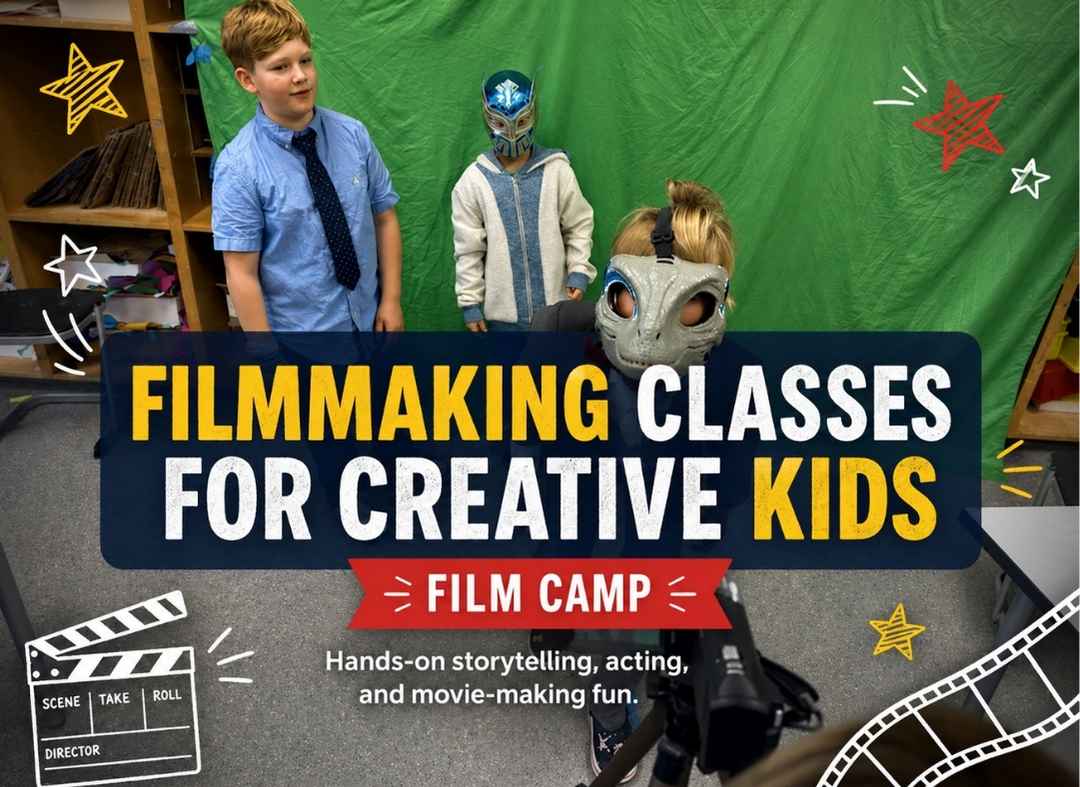
Discover why filmmaking classes help creative kids build confidence, teamwork, and storytelling skills through hands-on movie projects at Film Camp Los Angeles, where beginners learn by creating real short films.
Read >.jpg)
Weekend film classes in Los Angeles teach kids ages 8 to 14 filmmaking every Sunday in Glendale. Compare real costs, curriculum, safety, and what to ask before enrolling your child.
Read >
Thanksgiving break film camps fill the three school-free days in Austin, Los Angeles, and San Francisco. Kids ages 7 to 14 write, shoot, edit, and premiere their own short film.
Read >.jpg)
Discover how kids ages 7–14 learn screenwriting, acting, directing, camera work, editing, teamwork, and confidence at Los Angeles Film Camp in Glendale while creating and premiering their own short film.
Read >.png)