Kids choose film genres at camp by sharing favorites, pitching ideas, and deciding as a team. Instructors guide the process so every child builds creative confidence and a finished film.

Ever wonder why one child wants to make a mystery while another dreams up a comedy? The answer starts long before the camera turns on. It starts with what your child already loves.
Here's the part most parents miss. Kids rarely show up with a finished movie idea. They show up with interests. A favorite show. A funny voice. A wild "what if." Good camps turn those sparks into stories.
Your child can succeed at film camp without any filmmaking experience. Genre choice is guided, age-appropriate, and built around curiosity. This guide walks you through the whole process, from first idea to final premiere.
Genre acts like a map before the storytelling journey begins. It tells kids what kind of movie they're making. Funny? Spooky? Adventurous? The genre sets the mood and the rules.
Think of it the way kids already think about movies. A comedy makes you laugh. A mystery keeps you guessing. Genre is just the type of story, in plain words. No film-school terms needed.
A film genre is the category a movie belongs to. Comedy, adventure, mystery, fantasy, and sci-fi are all genres.
Kids already know this from the movies they watch. Ask a child if they want something funny or scary, and they'll answer fast. That answer is a genre. Camp just gives it a name.
Without a genre, ideas drift. With a genre, ideas connect.
A blank page can freeze even creative kids. A genre fixes that. Once a child picks "adventure," the choices get easier. Where's the quest? Who's the hero? What's the danger?
A framework doesn't shrink creativity. It frees it. Kids stop staring at nothing and start building something.
Genre touches every part of a film, not just the plot. It guides each creative job on set.
Pick a genre and the whole crew knows the plan.
Genre choice is where the real learning starts. It's the first big decision kids make as a team. And ownership beats instruction every time.
When kids choose the genre, they care more about the result. They show up engaged. They solve problems faster. That's the magic our instructors see every week at Film Camp.
What's the hardest part of making a movie? Often it's the very first step. Blank-page syndrome is real, even for kids.
A genre removes that fear. It hands kids a doorway instead of a wall. Once the door opens, the story almost writes itself.
There's a special pride in saying "I made this." Genre choice plants that feeling early.
When a child picks the direction, the film becomes theirs. They defend it. They improve it. Ownership turns a school-style task into a personal mission.
Kids move from consuming stories to creating stories. That shift changes everything.
Instead of watching a screen, your child builds what goes on it. That's hands-on, productive screen time. Less scrolling. More making.
Here's a peek behind the curtain. The genre rarely comes from one kid with a perfect plan. It grows out of a group, step by step.
The best stories often come from brainstorming together, not solo planning. Below is how a typical week starts.
It starts with favorites. Kids talk about the films, shows, and games they can't stop thinking about.
You'll hear a lot of overlap. Funny videos. Big adventures. Spooky tales. Those shared loves become the raw material for a story.
"I love space" isn't a movie yet. That's where instructors step in.
They ask the right questions. What happens in space? Who's there? What goes wrong? Slowly, a big interest becomes a real, filmable idea.
Next, kids share their ideas out loud. These pitches stay simple and friendly.
A camper might say, "A robot gets lost and finds a friend." That's enough to start. Pitching builds confidence and communication, one sentence at a time.
One pitch can't win alone. The group talks, votes, and blends ideas.
Some kids lead. Some kids build on others. Everyone gets heard. Choosing together is the first taste of real teamwork.
A story often finds its own path once production begins.
Maybe a comedy grows a mystery twist. Maybe an adventure gets a spooky scene. That's normal and welcome. Flexibility makes films better, not messier.
You don't build the boat during the storm. Instructors help kids plan before they shoot. That's where good guidance shows up.
Our team has years of hands-on filmmaking and teaching experience. You can meet them on our About Us page. They guide without taking over.
Big ideas are great. Filmable ideas are better. Instructors bridge that gap.
They help kids trim a giant concept into one clear story. A focused idea is easier to shoot and far more fun to finish.
A week is short. So instructors keep ideas grounded.
No exploding cities. No 50-person casts. Just a strong story the group can actually make. Realistic goals lead to finished films, not abandoned ones.
Smart filmmakers work with what they have. Kids learn this fast.
If the camp has a hallway, the story uses a hallway. If there are five campers, the cast is five. Working within limits is a real production skill.
Limits don't reduce creativity. Limits focus creativity.
Many professional filmmakers start with constraints and build stronger stories because of them. Kids do the same. A small budget of options sparks bigger ideas.
Every genre opens a different creative door. Kids gravitate toward the ones that match how they think and play.
Here's a quick tour of the favorites. The best camp films usually come from genres kids truly enjoy, not the ones adults pick for them.
Want the easiest entry point? Comedy is it. Kids already know how to be funny.
Comedy teaches timing, character, and quick thinking on set. It rewards play, so shy kids loosen up fast. Who doesn't want to make their friends laugh?
Adventure is all action and forward motion. There's a goal, a journey, and a payoff.
It works great for groups. Everyone can join the quest in some way. Big energy and clear stakes keep the whole crew involved.
What happened? Who did it? Mystery hooks curious minds instantly.
It teaches cause-and-effect thinking in a natural way. Kids learn to plant clues and connect dots. The twist at the end feels like a reward.
Fantasy gives imagination a stage. Magic, creatures, and invented worlds all welcome.
It often helps younger campers express ideas that are hard to say directly. A dragon can carry a feeling a kid can't name yet.
Sci-fi is the genre of "what if." Robots, space, and the future all live here.
It pushes world-building and problem-solving. Kids invent rules, then solve problems inside them. That's creative thinking in action.
Some kids feel the beat before the story. Music videos are made for them.
This format teaches visual storytelling without leaning on dialogue. Pictures, motion, and rhythm carry the whole piece. Confidence grows with every take.
Picture a fake documentary about a very real classroom hamster. That's a mockumentary.
The casual format helps shy performers relax. There's no "big acting" pressure. Improv and humor do the heavy lifting.
Some kids want truth, not make-believe. Documentaries let them dig in.
This genre builds interviewing and observation skills. Kids learn to ask, listen, and capture real moments. It's storytelling with a notebook.
If you've worried that a spooky story might become too intense, you're not alone. Many parents feel the same.
Camp keeps it light. Most kids' spooky stories lean on mystery and suspense, not fear. Think creaky doors and silly surprises, not nightmares. Instructors guide the tone the whole way.
You probably already know which kind of kid you have. Personality often drives genre choice more than age or skill.
There's no wrong style here. Every type finds a home at camp. See if any of these sound familiar.
Class clowns, this is your genre. Funny kids turn jokes into stories.
Comedy and mockumentary reward their instincts. The kid who makes everyone laugh becomes the kid who makes the movie.
Does your child ask a hundred questions a day? That curiosity has a genre.
Mystery and documentary feed the urge to investigate. They get to chase answers and share what they find.
Some kids live in invented worlds. Fantasy and sci-fi give those worlds a home.
These genres turn daydreams into scenes. The bigger the imagination, the bigger the playground.
Born to be in front of people? Performers thrive on camera.
Music videos and character roles let them shine. Energy, expression, and confidence all get a spotlight.
Not every child wants the spotlight, and that's perfectly fine. Quiet kids often shine behind the camera.
Directing, editing, and camera work need focus and big ideas. Many future filmmakers discover their passion behind the camera, not in front of it. Some of the best creative calls happen off-screen.
A 7-year-old and a 13-year-old don't tell the same kind of story. Age changes complexity, but creativity shows up at every stage.
Here's how genre choice shifts as kids grow. Mixed-age groups bring out the best in both.
Younger kids think in pictures and play. Their stories are bright and direct.
Expect talking animals, silly quests, and bold colors. Simple plots leave room for huge imagination. The fun is right on the surface.
Older campers want more control and more depth. Their stories grow layers.
They take on leadership and dig into editing and camera choices. This is where filmmaking starts to feel like a craft.
Many hands make light work. Mixed-age teams prove it every week.
Older campers often mentor younger ones without being asked. Younger kids bring fresh ideas. Older kids bring structure. Together they make something neither could alone.
Take a breath. This is the most common starting point, not a problem. Most first-time campers discover their favorite genre during camp, not before it.
Your child does not need a plan to belong here. Curiosity is enough.
There's zero homework before camp. No script. No pitch. No pressure.
Kids arrive open and leave inspired. A blank slate is a great place to start.
What if your toys came alive at night? Prompts like that unlock ideas fast.
Instructors use playful questions to spark direction. One good prompt can reveal a child's whole creative style.
Worried your child is too shy? Camp is built for that.
Participation grows naturally when kids feel ownership and support. There's a safe role for every personality. No one gets left out.
Not every storyteller acts. Not every leader stands in front of the camera.
Behind-the-scenes kids shape the film in big ways. Some of the most important creative decisions happen off-camera. Directing and editing carry real power.
Pitching sounds fancy. It's really just sharing an idea out loud. And it teaches kids to organize thoughts before they ever touch a camera.
Here's how camp turns nervous kids into confident communicators.
Could a pitch be one sentence? Absolutely. That's where most kids start.
"I want to make a funny movie about a dog detective." Done. Most strong pitches start with a simple idea, not a complex plot.
A good pitch answers four questions. Camp makes them easy to remember.
The strongest kid-created stories often begin with a memorable character.
Many kids feel nervous sharing ideas at first, and that's completely normal. Pitching helps that fade.
Each pitch builds public-speaking muscle in a friendly room. This skill shows up long before formal presentations at school.
Good feedback doesn't replace ideas. Good feedback strengthens ideas.
Kids learn to listen, adjust, and keep what they love. Improving an idea without abandoning it is a real creative skill.
Different opinions are not a problem. They're part of the craft. Professional filmmakers rarely agree on everything.
Camp treats disagreement as a chance to learn. Here's how it plays out.
The goal is not winning an argument. The goal is building the best story.
Instructors help kids find common ground fast. Compromise becomes a tool, not a loss.
Genres can mix together like colors on an artist's palette. Many memorable films do exactly that.
A comedy can hide a mystery. An adventure can add fantasy. Blending ideas often beats picking just one.
Two heads are better than one. Real film sets prove it daily.
No movie gets made by one person. Kids learn that teamwork is the job, not a side task.
No one rides the bench at camp. Every kid gets a real job.
Successful camps create opportunities for every personality type. Actor, director, editor, or designer, each role matters.
The movie is the prize. The skills are the real win. Parents often focus on the final film while the biggest learning happens during collaboration.
Here's what your child practices without even noticing.
Listening is a skill, not a reflex. Group genre choice builds it.
Kids hear ideas that aren't their own and learn to value them. Real listening makes better teammates.
How does a group decide? Through fair, real choices.
Kids vote, blend ideas, and accept group calls. Decision-making becomes a shared, fair process.
Leadership in film camp often comes from helping others, not directing them.
Kids learn to lead by lifting the group up. The best leaders stay flexible and keep the team moving.
"We made this." Few phrases feel better to a kid.
The finished film belongs to everyone who built it. Shared success creates pride that lasts.
Worried your child will just remake their favorite film? It's a fair question. Professional creators use inspiration constantly. The skill is turning it into something new.
Camp teaches that skill from day one.
Inspiration is the starting line, not the finish. Instructors keep it that way.
They show kids how to borrow a feeling, not a scene. Loving a movie is fine. Copying it isn't the goal.
"Adventure" is a genre. One famous adventure film is not. Kids learn the difference fast.
A genre is a wide field of possibility. That field has room for a brand-new story.
Inspiration should provide direction, not duplication. A favorite film is a launchpad.
Kids take the spark and make it their own. The result feels familiar but fresh.
A new character changes everything. Suddenly the story belongs to the kid.
Original characters carry a child's own ideas and humor. That personal stamp is what makes the film feel real. See what campers create on our Showcase.
Safety and tone come first, always. Age-appropriate storytelling often leads to more creative solutions than mature content.
Here's how camp keeps every story fun and safe.
A chase can be exciting without being scary. Instructors keep that balance.
They guide every tense or spooky scene with care. Suspense stays playful, never frightening.
Every good story needs a problem. That problem can stay kid-friendly.
A lost puppy or a missing trophy works great. Strong conflict doesn't mean unsafe content.
Movie magic does the heavy lifting. Kids learn the fun, fake side of film.
Costumes, simple effects, and smart editing sell the story. Imagination handles what reality can't.
Have a concern? Just ask. We welcome it.
Reach out anytime through our Contact Us page. Open answers build trust before day one.
Let's talk about the worries head-on. Addressing concerns openly often builds more trust than avoiding them.
Here are the questions we hear most, with honest answers.
Yes. Every story stays suited to the camper's age.
Instructors guide tone, content, and themes the whole way. You can relax. The story will fit your child.
Big ideas get a gentle redirect. Camp channels them into safe suspense.
A "scary" idea becomes a fun, spooky mystery instead. The thrill stays. The fear goes.
That's a normal starting point, not a worry. Instructors turn copying into creating.
Kids learn to use a favorite as a springboard. The final film ends up original and personal.
Shy kids belong here too. Many start quiet and end proud.
Pitching starts small and stays supportive. Confidence grows one friendly step at a time.
This one surprises a lot of parents. Kids handle it well.
Children often become just as excited about a group-created idea as their own. The shared story becomes everyone's favorite.
Choice is the secret ingredient. Ownership is one of the strongest motivators in creative education.
When kids choose, they grow. Here's how that happens.
Nothing motivates like being heard. When ideas matter, kids lean in.
Their choices shape the film, so they stay invested. Ownership turns effort into pride.
Every choice is practice. Genre choice is a safe place to practice big ones.
Kids weigh options and commit to a path. Decision-making is a skill they'll use for life.
Making a movie means working with others. That builds empathy fast.
Kids learn to share, listen, and support teammates. Connection is the quiet lesson behind every film.
The premiere isn't just a screening. It's proof that an idea became something real.
Families gather. The lights dim. The film plays. Publicly sharing their work often becomes the moment kids remember most.
Kids don't just learn filmmaking. They learn how to think creatively. Parents often enroll for the movies and stay impressed by the communication, teamwork, and problem-solving.
Here's the skill set hiding inside every short film.
Storytelling gives imagination a blueprint. It balances wild ideas with clear structure.
Kids learn beginnings, middles, and endings. Free imagination plus simple structure equals a real story.
A director makes the calls. Young directors learn to balance creativity with collaboration.
They guide the team and own the choices. That's leadership in its most fun form.
Acting pulls feelings to the surface. Kids learn to express them on purpose.
Each take builds a little more courage. Confidence on set carries into real life.
A camera changes how kids see the world. They start thinking in frames.
Where's the light? What's in the shot? Visual thinking sharpens focus and attention.
Filming captures ideas. Editing shapes ideas.
Kids learn that great stories are built through revision. Patience and problem-solving live in the edit.
Where kids make a film changes the films they make. Local culture often shapes story ideas more than parents realize.
Here's how our three cities inspire different stories.
Austin runs on creativity and community. That energy shows up on screen.
Kids here lean into music, comedy, and local color. The vibe is hands-on and friendly. Explore our Austin film camps.
LA breathes movies. Kids feel that history in the air.
Stories here often borrow big, studio-style energy. The dream factory is right outside the door. See our Los Angeles film camps.
San Francisco celebrates the original and the offbeat. Kids feel free to be different.
Stories here tend toward quirky, character-driven ideas. Independent spirit is the local language. Discover our San Francisco film camps.
Different cities inspire different stories. Different stories inspire different filmmakers.
Environment shapes themes without kids even noticing. The backdrop becomes part of the story.
Kids pull ideas from what they know. Familiar places and faces show up in their films all the time.
Here's how each city's culture sparks story ideas.
Austin loves music and a good laugh. Kids soak that up.
Their films often feel warm, funny, and community-minded. The city's creative buzz becomes the camper's tone.
Hollywood is the hometown industry. Kids feel its pull.
Their stories often aim big and cinematic. Studio culture sets a high, exciting bar.
The Bay Area rewards originality. Kids notice and respond.
Their films lean indie and character-first. Different is celebrated, not corrected.
Local settings become characters in the story. A real place beats a generic one.
A familiar park or street adds instant personality. Specific places make stories more memorable.
You can set your child up for a great week. The key is to spark creativity, not pressure performance.
Try these simple, low-key steps at home.
Start with one easy question. Keep it open and playful.
Ask what kind of movie sounds fun to make. Their answer reveals more than you'd expect.
Movie night doubles as research. Watch a few films together.
Point out funny, spooky, or exciting moments. Shared viewing plants creative seeds.
What makes a character great? Ask your child and listen.
Talk about favorite heroes, places, and feelings. These chats uncover real storytelling interests.
Many hands make light work. Remind your child that camp is teamwork.
Flexibility often leads to stronger final stories. Going in open-minded makes the week smoother.
Open-ended questions often reveal more than direct ones. Use these as gentle conversation starters.
No right answers here. Just exploration.
This opens the door wide. Let your child dream out loud.
Funny? Scary? Magical? Any answer is a clue. Fun is the best first filter.
Give a few options to spark a choice. It makes deciding easier.
One word often points straight to a genre. Their pick is a head start for camp.
Not every kid wants the spotlight. This question finds their lane.
Some love acting. Some love the gear. Every role is a real filmmaking job.
Favorites are great fuel. The trick is using them, not copying them.
Ask what they love and why. That "why" becomes original inspiration.
Camp is a team sport. This question preps your child for that.
It gently builds a teamwork mindset. Openness makes the whole week more fun.
We all want to help. But well-meaning guidance can limit creativity if it gets too directive.
Here are easy traps to avoid, and better moves to try.
It's tempting to steer. Try to let your child explore first.
Your suggestion can quietly become their ceiling. Space to choose builds independence.
Acting is only one path. Camp has many.
Directing, editing, and camera work matter just as much. Behind-the-scenes kids belong front and center.
No finished idea required. Really.
Most campers find their story during the week. A curious mind beats a finished script.
Simple ideas can become powerful stories. Silly ideas can become memorable films.
Playfulness often leads to the biggest creative breakthroughs. Never underestimate a goofy idea.
Watch a week turn an idea into a movie. The final film matters, but the journey matters even more.
Here's the arc your child travels.
It starts with a spark. Then it gets written down.
Kids shape a loose idea into a real script. The first page makes it official.
Next, the script gets a plan. Kids break it into scenes.
They figure out shots, spaces, and order. Planning turns words into a roadmap.
Then comes the fun part. Cameras roll and scenes come alive.
Kids act, direct, and capture every shot. The story leaps off the page and onto the screen.
What started as an idea on day one becomes something families can watch, celebrate, and remember together.
The premiere is the grand finale. For many families, it's the highlight of the whole camp. Pride, applause, and a finished film. That's the payoff.
Your child does not need to be the next movie director to benefit from film camp. The strongest sign of success is curiosity, not experience.
See if any of these fit your kid.
Film camp gives imagination a place to grow. Big dreamers thrive here.
If your child invents worlds and stories, this is their space. Imagination is the main ingredient.
On camera or off, there's a role for your child. Both paths lead to a finished film.
Many campers discover talents they never expected. Performers and planners both find their fit.
Does your child love screens and stories? That love has a home here.
Camp turns that interest into hands-on creating. Watching becomes making.
Zero experience needed. Most campers start with curiosity, not skill.
Beginners get full guidance and a real finished film. Day one is the perfect starting line.
Kids share the movies and stories they love. Instructors help shape those interests into ideas.
Campers pitch, the group talks, and a direction wins. It's a guided, collaborative process from start to finish. No one decides alone.
Yes. Every camper gets a chance to share ideas.
Pitches stay short, friendly, and pressure-free. Every voice counts in the final choice.
A few favorites show up again and again. Each fits a different kind of kid.
Music videos and mockumentaries are rising fast too.
Yes to all of them. These genres are camp favorites.
Your child helps pick the direction with the group. The genre fits the kids, not the other way around.
Yes, in a safe, age-appropriate way. Instructors guide the tone.
Scary becomes spooky. Action stays playful. The thrill stays. The fear and risk don't.
No problem at all. Acting is just one role.
Kids can direct, film, edit, or design instead. Some of the best creative work happens off-camera.
Disagreement is part of filmmaking. Camp treats it as a skill.
Instructors guide kids toward compromise and blended ideas. The team always lands on a story everyone can build.
Not at all. Most campers are total beginners.
Camp teaches every step along the way. Curiosity is the only requirement.
Yes. The week ends with a family premiere.
Families gather to watch the finished short film. It's the proud, exciting payoff of the whole week.
Have more questions? Visit our full FAQ page.
Yes, and many older kids love it for that reason. It feels grown-up and real.
They take on leadership, tech roles, and deeper stories. It's a creative program, not just a day camp.
Watching content is passive. Creating content is active.
Making media develops different skills than consuming it. Kids build, plan, and collaborate, not just stare at a screen. That's screen time with purpose.
Absolutely. Shy kids often thrive here.
They can start behind the camera and grow into more. Support and ownership build confidence over the week.
Why does choice matter so much? Because it fuels motivation.
Kids who pick their camp show up more excited. Ownership turns a sign-up into a passion.
That's a great entry point, not a red flag. Interests open the door to deeper learning.
Camp builds real skills on top of those interests. A YouTube fan can become a real storyteller.
Today's story idea could become next week's family premiere. The spark is already there. Camp gives it a place to grow.
Your child brings the curiosity. We bring the guidance, the gear, and the finished film. A simple idea today can become a movie your family remembers for years.
Ready to start? Visit our Enrollment page or explore a city below.
Austin kids make warm, funny, community-driven films. The creative energy is contagious.
Find dates and details for our Austin film camps. A local story is waiting to be made.
LA kids dream big in the heart of the movie world. The inspiration is everywhere.
See programs and dates for our Los Angeles film camps. The dream factory is closer than you think.
A simple idea today can become a finished film your family remembers for years.
Bay Area kids make original, character-driven stories. Browse our San Francisco film camps. Original voices start here.
Still deciding? Watch real camper films on our Showcase, or read more on the Film Camp blog.
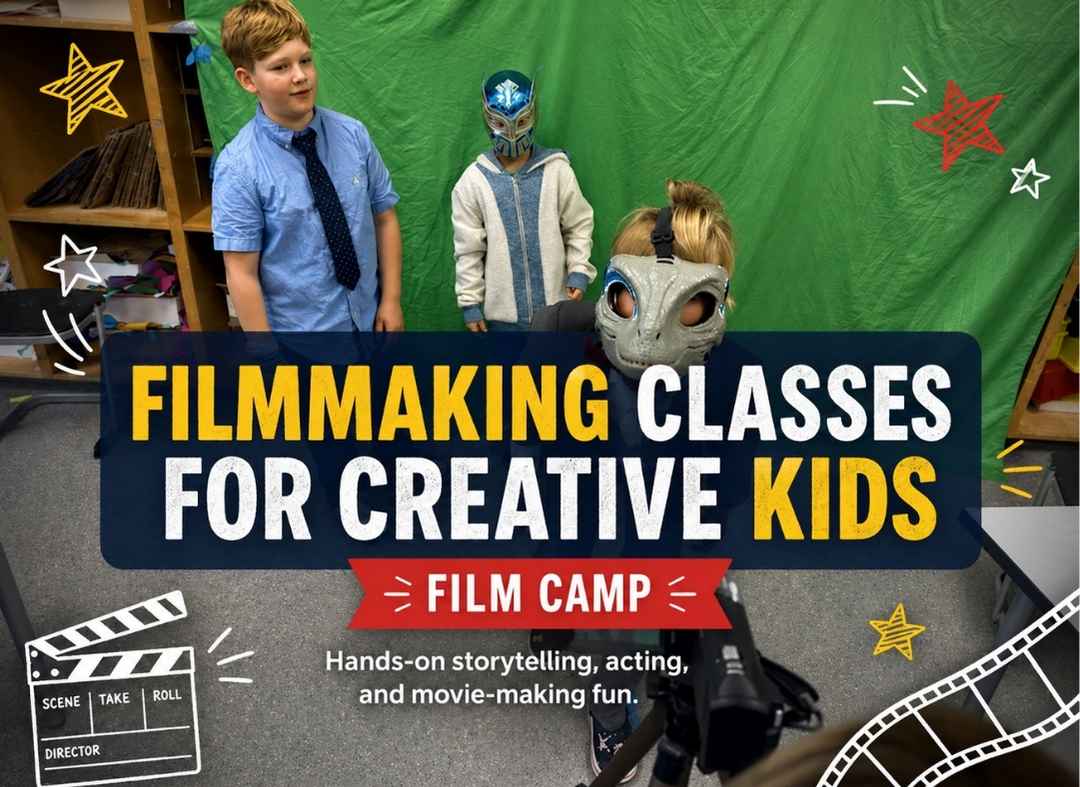
Discover why filmmaking classes help creative kids build confidence, teamwork, and storytelling skills through hands-on movie projects at Film Camp Los Angeles, where beginners learn by creating real short films.
Read >.jpg)
Weekend film classes in Los Angeles teach kids ages 8 to 14 filmmaking every Sunday in Glendale. Compare real costs, curriculum, safety, and what to ask before enrolling your child.
Read >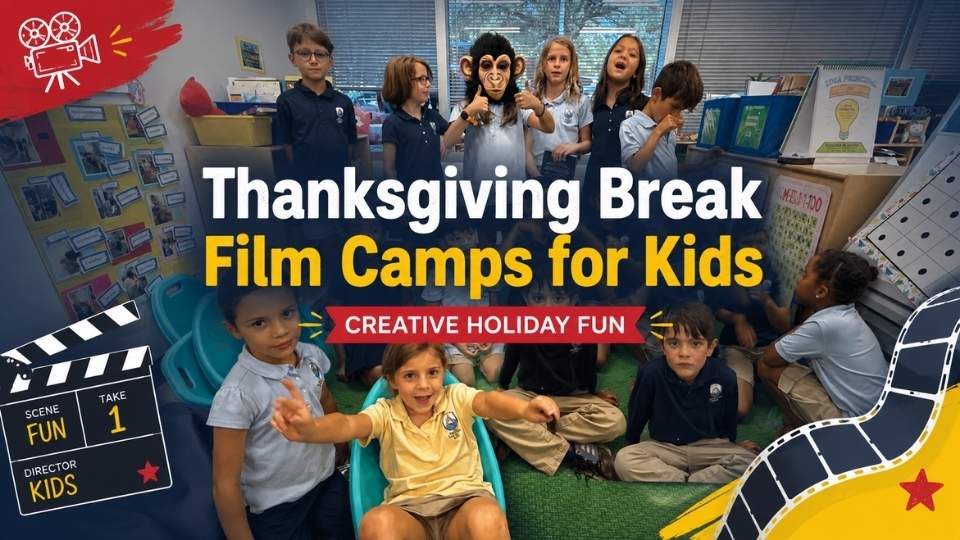
Thanksgiving break film camps fill the three school-free days in Austin, Los Angeles, and San Francisco. Kids ages 7 to 14 write, shoot, edit, and premiere their own short film.
Read >.jpg)
Discover how kids ages 7–14 learn screenwriting, acting, directing, camera work, editing, teamwork, and confidence at Los Angeles Film Camp in Glendale while creating and premiering their own short film.
Read >.png)