Film camp helps shy kids build confidence through small crews, real filmmaking roles, public speaking, teamwork, creative problem-solving, and final screenings, turning nervous campers into expressive, capable young storytellers.

Last June, a 13-year-old named Mia hid behind her mom at drop-off. She wouldn't make eye contact. Her shoes scuffed the floor like she wanted to disappear into it.
Two weeks later, she stood on a stage. She pitched her short film to 60 people. Her voice didn't shake once.
That's not magic. That's what a good film camp does to a kid.
We see this shift every summer at our film camp Austin location. It happens fast. Sometimes too fast for parents to believe.
This blog walks you through the real before-and-after. No fluff. No fake "she found her voice" stuff. Just what actually changes when a shy kid spends a few weeks behind a camera.
Most parents think confidence means a loud kid. It doesn't. Confidence is quieter than that.
Before camp, the signs of low confidence look like this:
Sound familiar? You're not a bad parent. Lots of kids are like this. School doesn't always help. Group projects can feel like a battlefield.
A good summer film camp changes the rules of the game. Suddenly the quiet kid has a job. They hold the boom mic. They check the shot. They matter on set.
Texas folks say it best: "All hat, no cattle." Confidence isn't about looking big. It's about doing the work.
Real confidence shows up when a kid does something hard and lives through it. Camp gives them that chance every single day.
School moves slow on purpose. It has to. Thirty kids in one room means nobody gets seen much.
At our teen summer camps Austin film programs, we work in tiny crews. Five to seven kids per group. Each kid has a real job. Each job matters.
Here's why that speed matters:
1. Real stakes. The film gets shown on the last day. Parents come. Friends come. That's a deadline kids actually care about.
2. Small teams. You can't hide in a group of six. You have to talk. You have to choose.
3. Hands-on tools. Real cameras. Real lights. Real sound gear. Kids feel trusted right away.
4. Mistakes are okay. Every film has bad takes. Every set has goof-ups. Kids learn that messing up is just part of making movies.
Compare that to a regular classroom. The kid who raises their hand most gets called on most. The shy kid stays shy.
Ever watched a kid press the record button for the first time? Their whole face changes. Like a light switch flipped somewhere inside them.
Day one, most kids whisper. By day three, they're shouting "rolling" across the room.
That's not us pushing them. That's the job pulling them out.
Film sets need clear talk. You can't whisper "cut" because the boom op won't hear you. You can't mumble your line because the mic catches everything. So kids learn to speak up. Not because we make them. Because the work needs it.
Here's what we see week by week:
A boy named Theo came to our film camp for teens in Austin last year. His mom said he hadn't raised his hand in class since fourth grade.
By the end of week two, he was directing his crew. Real directing. Telling actors how to deliver lines. Asking the DP to tilt the camera up. That kid took the wheel.
His mom cried at the screening. Not sad cried. The other kind.
This part shocks parents the most. Kids who came alone leave with three best friends.
Why? Because making a movie is like building a fort together. You can't do it solo. You have to trust the kid holding the slate. You have to trust the actor saying the lines. You have to trust the editor who'll cut your work later.
Trust gets built in the small moments:
That's deeper than a school friendship. School friends sit next to you. Film camp friends build something with you.
At our film camp Austin site, we hear it every year. Kids ask if their crew can come back next summer. Many parents tell us their kid still texts camp friends from across the country.
Some of these friendships last a lifetime. We've had counselors who first met as 14-year-old campers. They're now in college together. Wild, right?
Stage fright is real. It hits hard in the teen years. The body shakes. The voice cracks. The brain blanks.
Most schools don't teach kids how to deal with it. They just expect kids to push through. That doesn't work for everyone.
A summer film camp flips this on its head. We don't ask shy kids to perform first. We hand them a camera. Behind the lens is the safest spot on set.
From there, the shift happens slow and steady:
By step five, the same kid who hid behind their hoodie is running the set. Not because we tricked them. Because each step was small enough to feel safe.
Here's the thing about confidence. It's not built by big leaps. It's built by tiny wins, one after another. A film set gives kids dozens of these every day.
Most kids don't realize they've changed. They just feel normal. But parents see it the second their kid walks off the bus.
We get the same emails every August:
"He talked the whole car ride home. Like, the whole ride. I didn't know what to do."
"She introduced herself to our neighbor without me prompting. That's never happened."
"He asked if he could pick the family movie. Then he had OPINIONS about it."
"She told her grandma about her short film. Grandma cried. We all cried, honestly."
That last one came from a parent at our film kids Austin sessions. The girl had been so quiet her grandma rarely heard her voice on phone calls. After camp? She narrated her whole film over speakerphone.
Parents tell us the change shows up in weird places. The dinner table. The grocery store. The doctor's office. The kid speaks up. Asks for what they need. Pushes back when something feels wrong.
Is it the camp? Is it just growing up? Honestly, it's probably both. But the camp lights the match.
We run programs in a few spots. Austin is home base. We also love working with kids from film camp Glendale vibes and the bigger film summer camp Los Angeles scene.
Here are three quick stories. Names changed. Hearts not.
Maya signed up for a video production camp RRISD parents had recommended. She was 12. Loved Pixar movies. Hated being on camera.
She came to our Austin location and joined the editing track. By day four, she was teaching other kids how to color grade. By the screening, her short film got the biggest laugh of the night.
Her parents told us she now runs a small YouTube channel for her cousins. She edits everything herself. She's 13 now.
Jordan flew in from California. He'd done a California film summer camp before but felt lost in the bigger groups. His mom wanted him in a smaller setting.
In our Austin program, he wrote a script about his grandpa who passed away the year before. The story made his whole crew cry during the table read. Real, ugly crying.
That kid went home with a finished short film and a notebook full of new story ideas. He told his mom he wants to make movies for a living. She's terrified. She's also proud.
Sofia had tried a few teen summer camps Austin film options and other LA programs. None stuck. She was burned out on stuff that felt like school.
Our camp clicked because she got to make the kind of weird, funny stuff she actually liked. A horror-comedy about a haunted vending machine. Not joking.
Her dad emailed us a month later. Sofia had pitched a similar idea to her 8th-grade film elective. She got picked to direct.
Camp ends. The skills don't.
This is the part that gets us excited. Because movies are just the surface. The real stuff goes deeper.
Hard skills kids take home:
Soft skills that quietly change their lives:
Some kids go on to film school. Most don't. But all of them carry these tools into whatever comes next. A future doctor uses public speaking. A future lawyer uses story structure. A future engineer uses problem solving.
The camera is just the doorway. What's on the other side is bigger than film.
Not every film camp is the same. Some are huge. Some are tiny. Some focus on tech. Some focus on story. Some are basically daycare with cameras.
If you're thinking about signing your kid up, here's what to look for:
Look for camps with 6-10 kids per crew. Bigger groups mean less hands-on time. Less hands-on time means less growth.
Phones are fine for hobbyists. But a real camp should put actual cameras, mics, and lights in kids' hands. That's where the magic shows up.
If kids don't walk away with a real short film, what was the point? A finished movie is the proof. The trophy. The keepsake.
A good camp pulls kids from everywhere. Our summer film camp brings in kids from Austin, the film summer camp Los Angeles crowd, and beyond. The mix makes the work better.
Ask about the staff. Are they working filmmakers? Do they actually like kids? You can usually tell on a quick call.
Pitches and screenings are huge for confidence. If the camp skips the show-off part, that's a red flag.
Read the reviews. Look for the ones that mention how the kid changed. Not just "it was fun." Look for "she came home different."
Why does that one summer matter so much? Because kids are wet cement during the teen years. The shape they take depends a lot on the hands that touch them.
The car ride home is the first sign. They talk more. They show you stuff on their phone. They have plans.
In the days that follow, look for these little shifts:
They make stuff. Phone videos. Drawings. Stories. Stuff they wouldn't have made before.
They ask questions. Real ones. Not just "what's for dinner."
They take initiative. Loading the dishwasher without being asked. Texting a friend first. Trying a new food.
They handle no better. When something doesn't go their way, they bounce back faster. Camp teaches grit without saying the word.
They miss their crew. This part is hard for them. Hold space for it. Let them text. Let them rewatch their film a hundred times.
Some kids hit a small slump a week or two after camp. The high wears off. Real life feels boring again. That's normal. The growth doesn't go away. It just settles in deeper.
What you saw at the screening is who they are now. Not who they were pretending to be. The shy version was the costume. The confident version is the kid.
We're biased, sure. But hear us out.
Sports camps build confidence through bodies. That's great if your kid is athletic. Not great if they're not.
Music camps build confidence through performance. Great for kids who love to play. Tough for kids who freeze up.
Coding camps build confidence through screens. Great for solo kids. Hard for ones who need a crew.
A summer film camp mixes all of it. Body work (lugging gear, running set). Performance (acting, directing). Tech (cameras, editing software). Plus story, art, and team work.
It's like a Swiss Army knife of confidence building. Kids find at least one corner that fits them. Most find three or four.
That's why we see growth in kids who flunked at every other camp. They tried soccer camp. They tried band camp. They tried code camp. Then film camp finally clicked.
Here's something we tell every new camper on day one. You're gonna mess up. A lot.
Acting on camera means redoing the same line 15 times. Directing means giving the wrong call sometimes. Editing means deleting an hour of work because it didn't fit.
Most kids panic at first. By the end of week one, they shrug it off.
That shrug is everything.
In school, mistakes feel huge. One bad grade. One wrong answer in front of the class. The pain sticks for weeks.
On a film set, mistakes happen every 30 seconds. There's no time to dwell. You reset. You go again. You laugh at the bad take and move on.
Kids who learn this rhythm carry it home. They start treating their school mistakes the same way. Reset. Go again. Don't make it bigger than it is.
That mindset alone is worth the tuition. Honestly.
We won't oversell this. Camp isn't therapy. It isn't a cure for anxiety. It isn't a personality transplant.
If your kid has deeper stuff going on, camp helps but it's not enough on its own. Some kids need real support beyond what we offer. We always tell parents that.
What camp does well:
What camp doesn't replace:
A great film camp Austin experience is a spark. You still have to keep the fire going at home. Sign your kid up for the film club. Buy them a used camera. Watch their weird YouTube experiments without making fun.
The match is the easy part. The fire takes longer.
We could list a hundred things. We'll keep it tight.
1. Real working filmmakers as counselors. Not college kids reading a script. Folks who've actually made films you can watch.
2. Austin location with national reach. We pull kids from the film summer camp Los Angeles scene and beyond. Texas hospitality meets Hollywood standards.
3. Small crews. We mean it. Six to seven kids per group. No exceptions.
4. Real gear, not toys. Cinema cameras. Lavalier mics. LED light kits. The works.
5. Story first. Tech is cool. Story is king. We teach both, but story wins every time.
6. End-of-camp red carpet screening. Full setup. Big screen. Family invited. The works.
7. Year-round community. Camp ends in August. Our community keeps going through online meetups, project shares, and reunions.
Some kids come back three or four summers in a row. We've watched campers grow from 12 to 17 right in front of us. Then they apply to be junior counselors. Wild ride.
If you're reading this and wondering "is this worth it for my kid?" here's our honest take.
You know your kid better than anyone. If they light up at movies, even a little. If they have a wild imagination they don't share much. If they need a place to feel seen. A film camp will probably crack them open.
It's not for every kid. Some kids hate cameras. Some don't care about story. That's totally fine. Pick a different camp.
But if you've ever caught your kid mouthing lines from a favorite show. Or making up stories during car rides. Or watching the same movie scene 50 times to figure out why it works. That kid needs this.
Don't worry if they say they don't want to go. Most do say that. Then they get there and forget you exist for two weeks.
The before-and-after isn't a sales pitch. It's just what we watch happen, summer after summer. Cement to clay. Clay to sculpture. Sometimes you can almost see it shaping right in front of you.
If you're ready or just curious, here's how to reach us:
Film Camp 5900 Balcones Drive, Suite 100 Austin, TX 78731 Phone: (323) 471-5941 Email: hello@film.camp
We have sessions in Austin all summer. We also welcome kids flying in from California, including those who've tried a California film summer camp or film camp Glendale option in past years.
Got a kid in the video production camp RRISD area? They can join our day camp sessions in north Austin.
Spots fill up by April most years. Don't sleep on it.
Confidence is weird stuff. You can't buy it. You can't fake it for long. You can only build it through doing.
Film camp gives kids the chance to do, again and again, in a place where messing up is allowed. By the end of two weeks, they've handled gear, led a crew, written a story, and stood in front of a crowd.
That's a lot for any human. Especially one who's still figuring out who they are.
Will your kid leave camp totally different? Maybe not on the outside. But on the inside, something will have shifted. We've seen it too many times to call it a coincidence.
The shy kid behind mom on day one. The confident director at the screening on day fourteen. Same kid. Different scene. Same person, finally cast in the lead role of their own story.
That's what a great film camp does. That's why we keep doing this every summer.
See you at the screening.
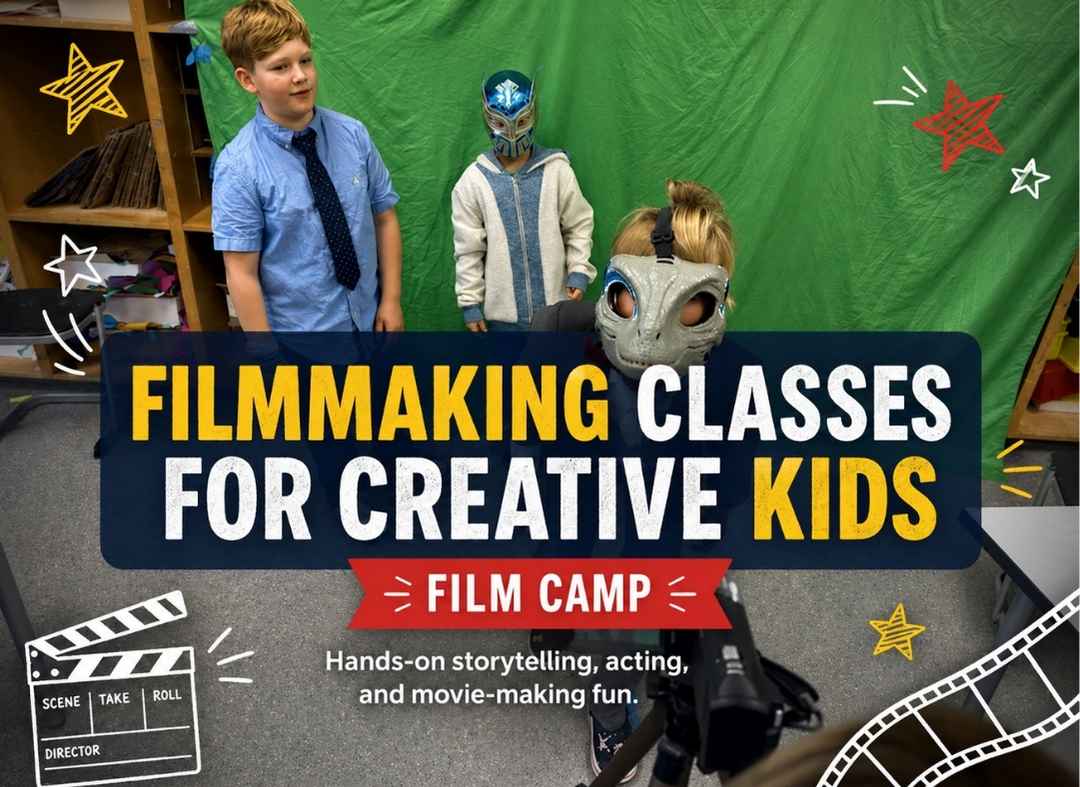
Discover why filmmaking classes help creative kids build confidence, teamwork, and storytelling skills through hands-on movie projects at Film Camp Los Angeles, where beginners learn by creating real short films.
Read >.jpg)
Weekend film classes in Los Angeles teach kids ages 8 to 14 filmmaking every Sunday in Glendale. Compare real costs, curriculum, safety, and what to ask before enrolling your child.
Read >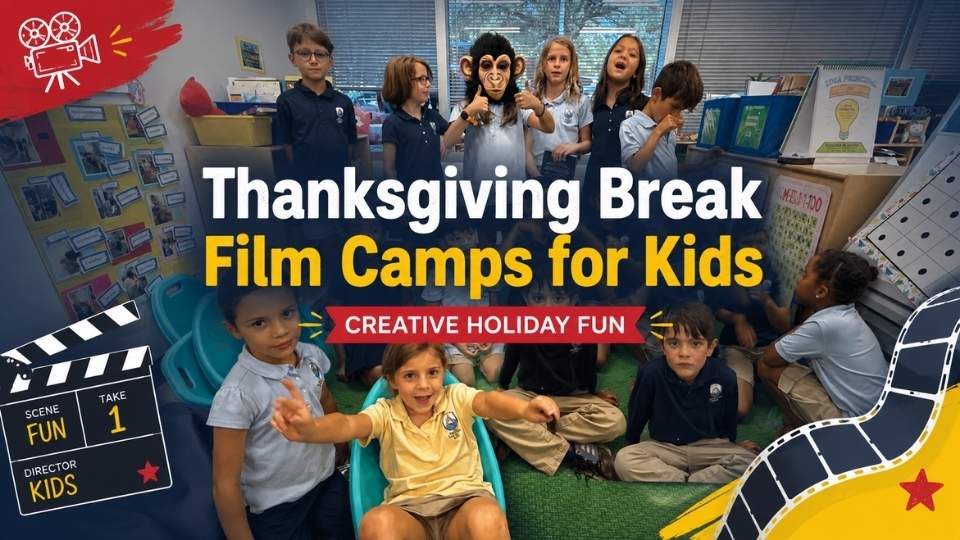
Thanksgiving break film camps fill the three school-free days in Austin, Los Angeles, and San Francisco. Kids ages 7 to 14 write, shoot, edit, and premiere their own short film.
Read >.jpg)
Discover how kids ages 7–14 learn screenwriting, acting, directing, camera work, editing, teamwork, and confidence at Los Angeles Film Camp in Glendale while creating and premiering their own short film.
Read >.png)