Wondering how long an after-school film program should run? Most kids do best with a 10 to 12 week term, once weekly. Here's how to pick the right schedule.
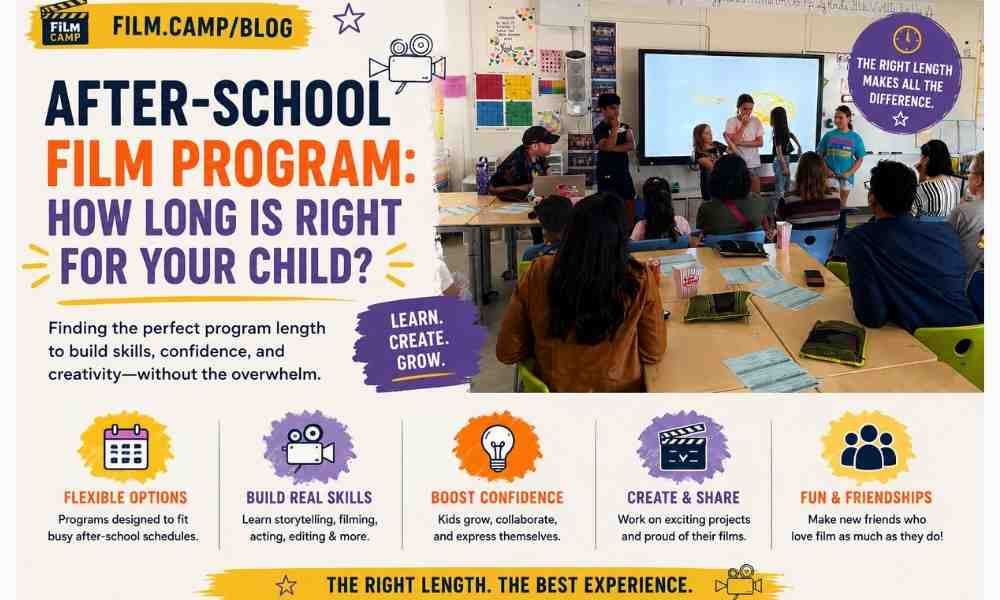
How much time will filmmaking really take? That's the first question most parents ask.
Here's the short answer. Most kids do best in a 10 to 12 week film term. Classes meet once a week. That's it.
Filmmaking isn't a casual arts club. It's structured, hands-on, and project-based. Your child writes, films, and edits a real short movie.
Kids don't just watch movies here. They learn to make them.
This guide breaks down term length, weekly schedules, and class structure. We'll compare 8, 10, and 12-week programs. We'll walk through a full sample schedule too. By the end, you'll know exactly what fits your child and your week.
The best after-school film program runs 10 to 12 weeks, once a week.
That length gives kids time to learn the craft and finish a real short film.
Parents want certainty. So let's keep this simple.
Eight weeks is a clean introduction. Kids try the basics and shoot something small. Ten weeks is the balanced sweet spot. Twelve weeks delivers a full production with polish.
Shorter isn't worse. It just serves a different goal. A great program matches the term length to what your child wants to walk away with.
Term lengthWhat it delivers8 weeksIntroduction and a small first project10 weeksBalanced learning plus a finished short film12 weeksFull production cycle with editing and a showcase
Ready to see real options? Browse our enrollment page to find current terms near you.
Don't pick a number first. Pick an outcome. The right schedule flows from what you want for your child.
Some kids want a taste of filmmaking. Others want to direct, shoot, and finish a movie. Match the goal, and the weeks fall into place.
GoalSuggested lengthExplore filmmaking8 weeksComplete a short film10 weeksFull production cycle12 weeks
Don't dig a well when you're already thirsty. Plan the term around the result, and the timing takes care of itself.
Filmmaking looks like one activity. It's really four crafts stacked together.
Kids learn to write, direct, film, and edit. Each step builds on the last. You can't rush a story onto the screen in a single afternoon.
First comes the idea. Then the script. Then rehearsals, filming, and the long, satisfying work of editing. Skip a stage, and the movie falls apart.
Think of it this way. Making a film is more like building a treehouse than snapping together a toy. It takes planning, hands-on effort, and a few tries to get it right.
That's why a real term needs weeks, not days. The extra time is where the learning lives.
So what does a normal week actually look like? Less than you might fear.
Most after-school film programs meet once a week. Sessions run from one to two hours. That's the whole commitment.
Here's a typical rhythm:
Kids keep their other activities. Homework still happens. Family dinner still happens. One creative afternoon fits a busy week without taking it over.
More classes don't mean faster progress. For beginners, weekly is the magic number.
One session a week gives kids room to absorb each skill. They practice, rest, and come back fresh. That space is where confidence grows.
Too little practice slows growth. Too many sessions cause burnout. Weekly sits right in the middle.
It also keeps the program fun. Kids stay excited when class feels like a treat, not a chore.
Younger kids need shorter sessions. Older kids can handle more. Here's a simple guide.
Age groupIdeal class lengthAges 7 to 960 to 90 minutesAges 10 to 1490 to 120 minutes
Shorter blocks keep little filmmakers focused. Longer blocks give older kids time for real production. Both leave class on a high note, not a tired one.
Timing matters as much as length. The sweet spot is right after school.
Most programs run between 3:30 and 6:00 p.m. Kids still have energy. The day's structure carries over into creative work.
Most parents know the challenge of squeezing one more activity into a packed weekday. A late-afternoon class solves that. It slots in before dinner and homework, not after.
This is the choice most parents weigh. So let's compare them side by side.
There's no single winner here. Each length fits a different child and a different goal. Short programs introduce skills. Longer programs build mastery.
Feature8 weeks10 weeks12 weeksBest forFirst-timersMost familiesCommitted kidsFinishes a filmSmall projectYes, a short filmYes, fully polishedEditing timeLightSolidDeepFamily showcaseOptionalYesYesCommitmentLowBalancedHigher
An 8-week term is the easy first step. It's perfect for testing the waters.
Kids learn the basics and shoot a small project. The commitment stays light. If your child has never tried film, this is a low-risk start.
Best for: first-timers, younger kids, and busy seasons. It proves whether filmmaking clicks before you commit to more.
If you want one safe pick, choose 10 weeks. It works for almost everyone.
Ten weeks balances learning and doing. Kids master the core skills and finish a real short film. The pace feels steady, not rushed.
This is our recommended option for most families. It delivers a complete experience without overloading the school week.
Some kids want the whole thing. A 12-week term gives it to them.
This is the full production cycle. Kids plan, shoot, edit, and polish a finished film. They get extra time for sound, music, and titles.
By the end, they don't just have a movie. They have proof of what real creative work feels like, start to finish.
Wondering what 12 weeks actually looks like? Here's a real week-by-week path.
Every week builds on the last. Kids move from idea to script to screen. By Week 12, students premiere something many parents never expect.
Kids meet their crew and learn how films come together. They explore film crew roles and the basics of moviemaking. The goal is simple. Spark curiosity and build a team.
This week is all about imagination. Kids brainstorm story ideas, build characters, and pick genres. They start to own the movie they'll make together.
Now ideas become a plan. Kids write simple scripts and sketch storyboards. They learn how scriptwriting and drawing shape every scene before filming.
Time to step in front of and behind the camera. Kids practice acting for camera and learn directing basics. Confidence grows fast when they lead a scene.
This is where the magic starts. Kids discover camera shots, angles, and movement. They learn how cinematography turns a flat scene into an exciting one.
Great films sound and look intentional. Kids explore film lighting and sound recording. They also try different production roles on a working set.
Before cameras roll, the crew plans. Kids rehearse scenes and map out their shoot. The cameras haven't rolled yet, but this week often decides whether filming succeeds.
Now the fun explodes. Kids film their short movie scene by scene. Each child takes a turn directing, shooting, and acting.
The set buzzes with energy. Mistakes become lessons. Real teamwork carries the project across the finish line of production.
This is where the story comes alive. Kids cut clips, add music, and build titles. They learn how post-production shapes the final cut.
Editing is where raw footage becomes a story. Kids see their scattered shots turn into a real movie.
The big finish has arrived. Kids premiere their film at a family screening. Parents watch, cheer, and ask questions in a short Q&A.
This isn't just movie night. It's proof of months of growth. The final screening isn't only about watching a film. It's about seeing what your child can do when creativity meets commitment.
Want a peek at what kids create? Visit our student showcase to see real films.
Ever wonder how a group of kids goes from idea to finished movie in a few weeks? It starts with one well-run class.
Every session follows a clear, calm structure. Kids know what to expect. That structure builds trust and keeps learning on track.
Here's how a typical class flows, step by step.
Kids arrive straight from school, so they ease in. A quick snack and a warm-up reset their focus. This gentle start turns school-brain into creative-brain. It also helps kids feel like they belong.
Each class teaches one clear skill. It might be a camera move or a story trick. What makes one movie scene feel exciting while another feels flat? Kids find out, one focused lesson at a time. One concept per class helps it stick.
Lessons don't stay on paper. Kids grab the gear and try the skill right away. They shoot a scene, test an angle, or record sound.
Knowledge becomes muscle memory when kids pick up the camera. Doing the work is how they truly learn it.
No one sits on the sidelines. Kids rotate through crew jobs across the term. One week they direct. The next week they run the camera.
This rotation builds teamwork and quiet leadership. Every child gets to lead, create, and support the group.
Class ends with a short, friendly recap. Kids share wins and what they learned. Then they get a teaser for next week. "Next week, students begin turning their ideas into scenes." That preview keeps them excited to come back.
Where you live shapes the schedule a little. We run programs in Austin, San Francisco, and Los Angeles. Each city has its own rhythm.
The skills stay the same everywhere. The timing just flexes to fit local family life. Here's how each city works.
Austin families love convenience and community. Many programs run right after school or on weekends. That makes pickup and drop-off easy on busy weekdays.
Local schedules lean flexible and family-first. Explore current Austin film camp options to see what fits your week.
San Francisco families value efficiency. Programs here often use compact, well-located schedules. Short commutes and tight timing keep weeknights calm.
The Bay Area pace rewards smart planning. Check our San Francisco film camp options for convenient sessions.
Los Angeles breathes film. Kids here grow up surrounded by movie culture. That energy makes every class feel a little bigger.
Few cities connect kids to filmmaking culture the way LA does. Weekend options add even more flexibility. See our Los Angeles film camp options to start.
After-school isn't the only path. Weekends and summer work too. The right format depends on your family's calendar.
Each option serves a different need. After-school programs build steadily. Summer camps move quickly. Here's how to choose.
FormatPaceBest forAfter-schoolSlow and steadySchool-year skill buildingWeekendFlexibleBusy school nightsSummer campFast and immersiveDeep, full-time focusSchool-break campAcceleratedFinishing a film fast
After-school classes are the slow-cook option. Kids learn one skill a week across the term. The steady pace lets confidence grow naturally.
Slow and steady wins the race. Weekly practice during the school year builds real, lasting craft.
Some weeknights are just too packed. Weekend classes fix that. They keep school nights free for homework and rest.
Most parents know the relief of a clear weeknight. A Saturday class delivers creative time without the weekday rush.
Summer is for going all in. Camps pack big learning into full days. Kids dive deep and finish films fast.
Summer camps are like creative sprints. The energy is high, and the results come quickly. Explore our summer film camps to see immersive options.
Short breaks are perfect for short, intense projects. School-break camps compress production into a few packed days. Kids start and finish a film fast.
What can a child create in just one week off school? Often more than parents expect.
You want your child to grow creatively. But you don't want every afternoon stuffed with activities. That tension is real, and it's fair.
Here's the good news. One weekly film class rarely overloads a school week. The key is reading your own child's signals.
Let's look at what a healthy fit looks like, and what to watch for.
A good schedule shows up in your child's mood. Watch for these green lights:
If most of these ring true, the fit is working. Creativity is adding to the week, not crowding it.
Sometimes the week gets too full. These gentle warning signs are worth noticing:
If you see these, it's okay to pause and adjust. Less can be more during heavy school stretches.
Balance isn't about doing less of everything. It's about smart structure. A few small habits keep the week calm.
Busy schedules need structure, not stress. Creative growth needs consistency, not overload. Keep it simple, and the year stays steady.
The best programs answer your questions before you ask them. Still, it helps to come prepared.
Use this checklist to compare any film program. Strong answers signal a quality experience. Vague answers are a red flag.
Always ask the total length first. It tells you what's possible. Short programs introduce skills. Longer programs develop mastery. Programs under 8 weeks often can't finish a full production cycle.
Class length shapes your whole week. Look for 60 to 120 minutes, based on age. Most parents want a class long enough to matter, but short enough to fit family life.
Life happens, so ask about missed classes. Strong programs offer catch-up resources or recaps. A clear makeup policy means your child won't fall behind after one sick day.
This is the question that matters most. Ask if kids complete an actual short film. A finished project is one of the strongest signs of program quality. Walking away with a real movie proves the learning was real.
Every child should get a turn at every job. Ask if kids rotate through directing, camera, acting, and crew. Kids learn more when they take part, not when they watch.
You shouldn't need to buy gear. Good programs supply cameras, sound tools, and editing software. That removes barriers and keeps things fair for every family.
Safety comes first, always. Ask about background checks and screening. The best instructors bring both creative skill and proven child-safety practices.
A finish line raises everyone's game. Ask if the term ends with a family screening. Public premieres build motivation and pride. Many parents discover talents they never knew their child had during the final showcase.
Ready to compare real terms? Our enrollment page lists current programs by city. Have a question first? Reach out through contact us.
A film term teaches far more than filmmaking. Every technical skill doubles as a life skill.
Film projects become laboratories for creativity and teamwork. Here's what your child actually walks away with.
What makes a story stick with you? Kids learn the answer. They build characters, shape plots, and write real scripts. Strong storytelling improves how kids communicate in every subject, not just film.
Many kids freeze at the idea of being on camera. Then something shifts. Acting builds confidence one small scene at a time. By the end, quiet kids often surprise everyone, including themselves.
Directing puts kids in charge of a scene. They make calls and guide their crew. Following an order is easy. Leading a team is a skill. Directing teaches responsibility and clear communication.
Kids discover how movies are made for real. They learn camera shots, angles, and sound recording. Hands-on practice turns curiosity into genuine technical skill.
Editing is the secret sauce. Kids cut footage, add music, and build the final story. Editing is where ideas become stories. It teaches patience and an eye for detail.
Film sets run on teamwork. Kids solve problems together when shots go wrong. Film production naturally builds people skills. Many hands make light work, and every child feels the win.
There's no universally perfect schedule. The best fit depends on your child. So let's match the program to the kid.
Find your child below. Each profile comes with a simple recommendation.
New to film? Start small and low-pressure. An 8 to 10 week term is the perfect on-ramp. Kids learn the basics without feeling overwhelmed. The goal here is fun, comfort, and a first finished project.
Some kids are bursting with ideas. Give them room to run. A 10 to 12 week program lets their creativity stretch. Longer terms reward big imaginations with bigger projects.
Worried your quiet child won't speak up? Film is built for them. Shy kids can start behind the camera and grow at their own pace. Small crews and clear roles help them find their voice gently.
Already filming on a phone? Time to level up. Solo videos build habits. Real crews build skills. Challenge these kids with leadership roles and advanced production. A 10 to 12 week term keeps them growing.
Let's cut through the noise. You don't need the perfect plan. You need the right next step.
The best choice ties to outcomes, not just weeks. Here's our simple guidance by age and goal.
For younger or first-time kids, keep it light. Choose once a week for 8 to 10 weeks. That builds skills and confidence without crowding the school year.
For older or eager kids, go bigger. A 10 to 12 week term gives them the full experience. They get deeper skills, real production, and a polished final film.
Here's the real measure of a great program. Your child finishes a real short film. Then they premiere it at a family showcase.
That moment is worth more than any brochure. The real success isn't the movie. It's the confidence your child gains while making it.
Find the right term for your child. Explore current programs on our enrollment page, or see what kids create in our showcase.
Most after-school film programs work best at 10 to 12 weeks. That gives kids time to write, film, and edit a complete short movie. Programs under 8 weeks rarely finish a full production cycle.
Once a week is ideal for most kids. Weekly classes build skills steadily without crowding the school week. They also leave time for homework and rest.
Plan on 60 to 90 minutes for ages 7 to 9. Older kids ages 10 to 14 do well with 90 to 120 minutes. Filming and editing days may run longer.
Yes. In a 10 to 12 week term, kids plan, write, film, and edit a real short film. Most terms end with a family showcase where students premiere their work.
Filmmaking is great for shy kids. They can start behind the camera and grow into bigger roles. Small crews and clear jobs help quiet kids find their voice.
No experience needed. Good programs teach every skill from scratch. Kids learn writing, directing, camera work, and editing step by step.
Neither is better. They fit different needs. After-school classes build skills slowly across the term. Summer camps offer fast, full-day immersion in a short window.
Most kids can start around age 7. Ages 7 to 9 enjoy hands-on stories and simple camera work. Ages 10 to 14 are ready for full short film production.
Still weighing your options? Read more on our blog or check the full FAQ. When you're ready, head to enrollment to claim a spot.
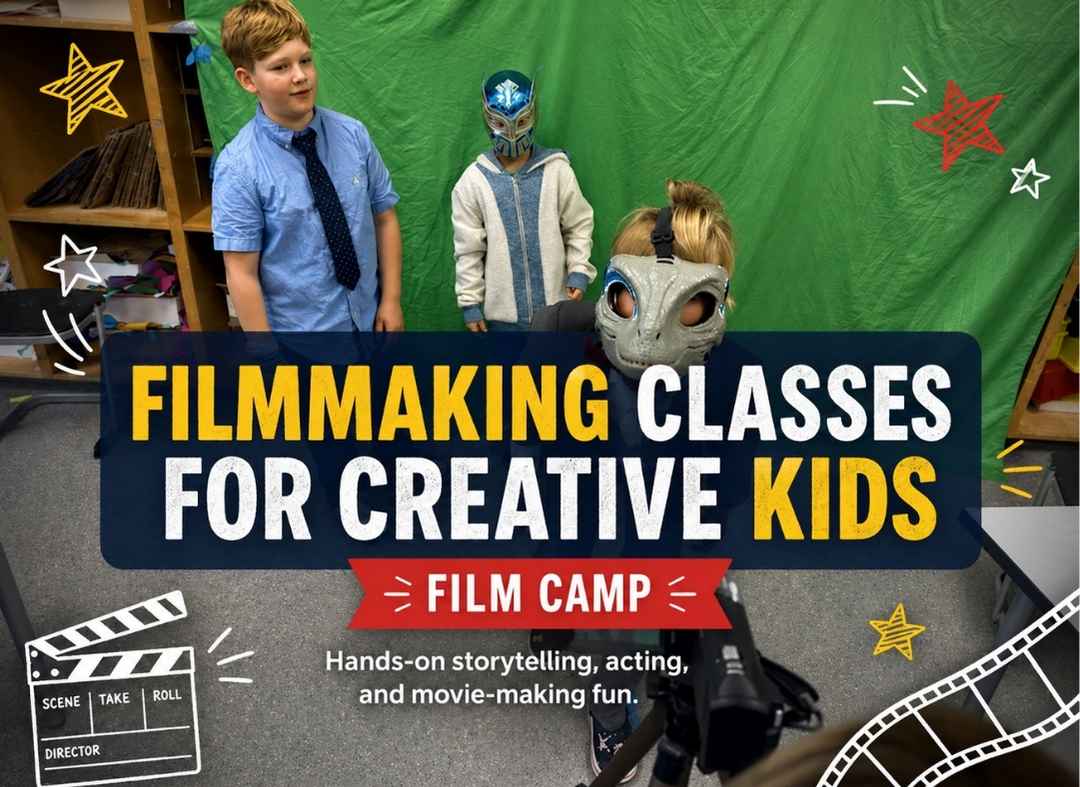
Discover why filmmaking classes help creative kids build confidence, teamwork, and storytelling skills through hands-on movie projects at Film Camp Los Angeles, where beginners learn by creating real short films.
Read >.jpg)
Weekend film classes in Los Angeles teach kids ages 8 to 14 filmmaking every Sunday in Glendale. Compare real costs, curriculum, safety, and what to ask before enrolling your child.
Read >
Thanksgiving break film camps fill the three school-free days in Austin, Los Angeles, and San Francisco. Kids ages 7 to 14 write, shoot, edit, and premiere their own short film.
Read >.jpg)
Discover how kids ages 7–14 learn screenwriting, acting, directing, camera work, editing, teamwork, and confidence at Los Angeles Film Camp in Glendale while creating and premiering their own short film.
Read >.png)